

Pausing Enhanced Pandemic Pathogen Research Act of 2023 This bill generally prohibits the National Institutes of Health from conducting or supporting gain-of-function research through March 30, 2028. The bill defines gain-of-function research as any research that could enhance the transmissibility, virulence, or pathogenicity of any pathogen or non-pathogen agent in a way that could lead to (1) moderate or high transmissibility, virulence, or pathogenicity in human populations; (2) significant morbidity or mortality in humans; or (3) severe threats to public health or U.S. national security. The prohibition does not apply to the characterization or testing of naturally occurring influenza virus or coronavirus unless the characterization or testing could increase viral pathogenicity or transmissibility.
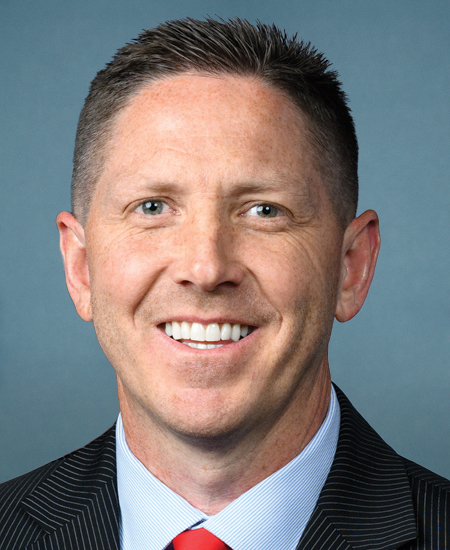
Rep. Josh Brecheen
Sponsored bills
Defund China's Allies Act This bill prohibits providing U.S. foreign assistance, including humanitarian assistance and security assistance, to certain countries that do not have full diplomatic relations with Taiwan. The countries barred from foreign assistance by the bill are Honduras, Nicaragua, Dominica, Antigua and Barbuda, Grenada, Cuba, Bahamas, Barbados, Jamaica, Trinidad and Tobago, Panama, Costa Rica, Dominican Republic, El Salvador, Bolivia, Uruguay, Guyana, Suriname, Venezuela, Solomon Islands, and Kiribati. The prohibition shall be lifted the earlier of (1) 30 days after the President certifies to Congress that the country has resumed or established full diplomatic relations with Taiwan, or (2) 10 years after the date of the bill's enactment.
Maddy summaryThe Safe Students Act (HR 2502) repeals the Gun-Free School Zones Act of 1990, which had prohibited possessing firearms in federally designated school zones under federal law. It also amends related sections of Title 18 (U.S. Code) to remove references to the repealed law and adjust section numbering. This bill does not establish a new federal rule for school zones; it solely eliminates the existing federal prohibition on firearms in school zones. The repeal means the federal government would no longer enforce this specific ban, though state laws may continue to regulate firearms in schools.
Maddy summaryHR 1581, the America Works Act of 2023, modifies work requirement exemptions for the Supplemental Nutrition Assistance Program (SNAP). It expands direct exemptions to include individuals medically certified as unfit for work, parents or caregivers of children under 7, and pregnant women, while removing a specific enforcement clause (Section 6(o)(4)(A)(ii)). The bill adjusts existing exemption rules to clarify that certain exemptions apply retroactively to cases beginning before the bill's enactment date. These changes directly affect SNAP recipients who would otherwise face work requirements under federal law.
Maddy summaryHR 1362, the Saving America’s Energy Future Act, prohibits federal agencies from banning new oil and gas leasing or drilling permits on federal lands. It directly prevents the Secretaries of Agriculture (for National Forest System lands) and Interior (for other public lands) from implementing moratoriums on these activities. The bill’s key mechanism is a clear statutory ban requiring agencies to continue processing new leases and permits without delay. This policy change affects oil and gas companies seeking access to federal land resources by ensuring leasing processes remain active. The bill does not create new programs or alter environmental standards, only blocking a specific regulatory action.
This joint resolution nullifies the final rule issued by the Consumer Financial Protection Bureau titled Small Business Lending under the Equal Credit Opportunity Act (Regulation B) and published on May 31, 2023. The rule requires financial institutions to collect and report to the bureau credit application data for small businesses. On July 31, 2023, the U.S. District Court for the Southern District of Texas ordered the bureau not to implement or enforce the rule until a related pending case is resolved.
Maddy summaryHR 1768, the NIH Reform Act, reorganizes the National Institutes of Health (NIH) by splitting the existing "National Institute of Allergy and Infectious Diseases" into three distinct institutes: the National Institute of Allergic Diseases, the National Institute of Infectious Diseases, and the National Institute of Immunologic Diseases. The bill updates titles, responsibilities, and leadership structures in the Public Health Service Act, including requiring presidential appointments with Senate confirmation for directors of the new institutes, each serving 5-year terms (with one possible reappointment). It mandates a transition period where the NIH Director oversees the new institutes until their directors are appointed, and updates all references to the former institute in federal law. This change directly affects NIH’s internal structure, leadership appointments, and administrative documentation, without altering research funding or policy priorities.
Maddy summaryHR 1794 authorizes the minting of commemorative coins to honor the 2028 Los Angeles Olympic and Paralympic Games. It specifies four coin types ($5 gold, $1 silver, half-dollar clad, and proof silver $1) with defined weights, sizes, and mintage limits (e.g., up to 100,000 gold coins). A surcharge is added to each coin sale (e.g., $35 for gold coins), with all surcharge funds directed to the U.S. Olympic and Paralympic Properties to support legacy programs and the Games' operations. The coins must be issued only during 2028 and are legal tender, though the bill focuses solely on commemorative coinage, not policy changes.
Ensuring Lawful Collection of Hidden Assets to Provide Order Act or the EL CHAPO Act This bill requires the forfeited profits of Joaquin Archivaldo Guzman Loera (El Chapo) from his illicit drug trafficking enterprise to be reserved for border security measures between the United States and Mexico, including the completion of a wall. Additionally, it requires the forfeited funds from the felony conviction of a member of a drug cartel to be reserved for border security measures between the United States and Mexico, including the completion of a wall.
Maddy summaryHR 1623 amends the Homeland Security Act to exclude specific propane storage facilities from certain Department of Homeland Security chemical security standards. It directly affects facilities storing propane for residential use (as defined in the Fair Housing Act), agricultural production (per CFR), or small rural businesses (per the Small Business Act). The bill adds a new exclusion criterion for these facilities and requires the DHS Secretary to report to Congress and notify owners if a facility doesn't qualify for the exclusion. This changes the current security requirements for these specific propane storage locations without altering broader DHS chemical security rules.