

The bill adds a requirement, as part of mandatory health insurance coverage of preventive health care services, that health plans cover an annual mental health wellness examination of up to 60 minutes that is performed by a qualified mental health care provider. The coverage must: Be comparable to the coverage of a physical examination; Comply with the requirements of federal mental health parity laws; and Not require any deductibles, copayments, or coinsurance for the mental health wellness examination. The bill appropriates $13,347 from the division of insurance cash fund to the division of insurance in the department of regulatory agencies for personal services to implement the bill. (Note: Italicized words indicate new material added to the original summary; dashes through words indicate deletions from the original summary.) (Note: This summary applies to the reengrossed version of this bill as introduced in the second house.)
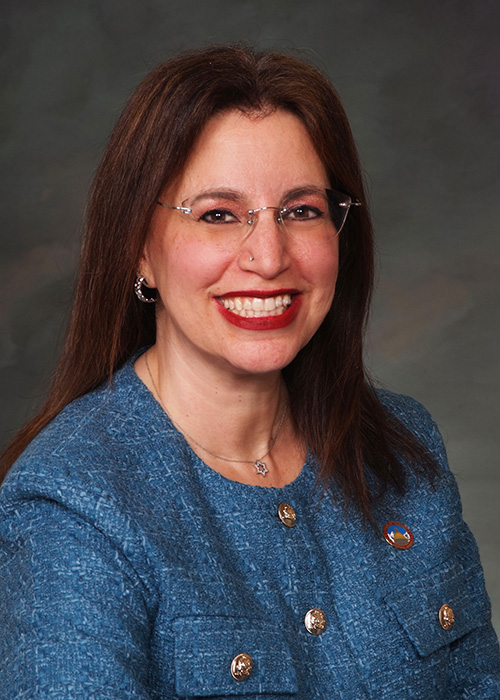
Rep. Dafna Michaelson Jenet
Sponsored bills
The bill enacts the "Genetic Counselor Licensure Act". On and after June 1, 2021, a person cannot practice genetic counseling without being licensed by the director of the division of professions and occupations in the department of regulatory agencies. To be licensed, a person must have been certified by a national body; except that the director may issue a provisional license to a candidate for certification pursuant to requirements established by rule. The bill gives title protection to genetic counselors and standard licensing, rule-making, and disciplinary powers to the director. Genetic counselors must have insurance. The bill repeals the act on September 1, 2027, subject to sunset review. Genetic counselors are subject to the mandatory disclosures of the "Michael Skolnik Medical Transparency Act of 2010". The bill appropriates $35,895 from the division of professions and occupations cash fund to the division of professions and occupations in the department of regulatory agencies, of which $15,990 is reappropriated to the department of law, to implement the act. (Note: Italicized words indicate new material added to the original summary; dashes through words indicate deletions from the original summary.) (Note: This summary applies to the reengrossed version of this bill as introduced in the second house.)
Veterans who have disabilities may obtain a special license plate without paying taxes or fees. For additional vehicles, the veteran pays the normal fees plus 2 one-time fees of $25, one of which goes to the highway users tax fund and the other goes to the licensing services cash fund. The bill creates a license plate that honors United States women veterans who have disabilities. The requirements and benefits are substantially the same as they are for a disabled veteran license plate. To implement the bill, $9,675 is appropriated from the Colorado DRIVES vehicles services account in the highway users tax fund for the division of motor vehicles. (Note: Italicized words indicate new material added to the original summary; dashes through words indicate deletions from the original summary.) (Note: This summary applies to the reengrossed version of this bill as introduced in the second house.)
The bill authorizes a physician or a mental health professional (professional) to evaluate or treat a minor patient (minor) for a behavioral health disorder with the consent of only one parent or legal guardian of the minor if both parents have legal decision-making authority over the minor, but not when there is an existing court order providing that the parents or legal guardians have joint-decision making authority concerning the medical or behavioral health decisions of the minor . The professional shall act in the best interest of the minor and provide services for a behavioral health disorder only in accordance with the professional's own advice or recommendation. The bill defines a minor as a person who is under 15 years of age. (Note: Italicized words indicate new material added to the original summary; dashes through words indicate deletions from the original summary.) (Note: This summary applies to the reengrossed version of this bill as introduced in the second house.)
The bill amends provisions concerning students in out-of-home placement that mandate cooperation between schools and county departments of human services relating to education. Specifically, the bill: Amends the definition "student in out-of-home placement" to align with those students in custody of county departments of human or social services; Streamlines billing practices for transportation services provided to students in out-of-home placement by requiring the use of invoices and forms approved by both the department of education and the state department of human services; and Authorizes school districts and the state charter school institute establishing transportation plans with county departments of human or social services, as required by law, to establish transportation plans by region or through a board of cooperative services. (Note: This summary applies to this bill as introduced.)
School Safety Committee. Under current law, the safe2tell program is required to provide awareness and educational materials to preschools. The bill repeals this requirement. The bill clarifies that safe2tell does not have to provide information about a call to law enforcement and school personnel if the call was forwarded to the statewide crisis response system. The bill directs the department of law to devise a process and develop standardized protocols so that any communication related to mental health or substance use received by safe2tell may be transferred to the statewide crisis response system. The bill requires the safe2tell program to: Develop training materials outlining appropriate responses to safe2tell tips to ensure standardized messaging; Devise a process so that all calls and texts are received initially by a crisis operator and then non-crisis calls and texts are routed appropriately; Align the process and procedures for tips received via all communication methods; and Conduct an annual advertising campaign regarding awareness, use, and misuse of safe2tell. The bill allows the attorney general to disclose to law enforcement personnel any materials or information obtained through the implementation or operation of the program if the attorney general reasonably deems such disclosure necessary for the prevention of imminent physical harm or serious bodily injury to one or more persons. The bill appropriates $50,000 from the general fund to the department of law to implement the bill. (Note: Italicized words indicate new material added to the original summary; dashes through words indicate deletions from the original summary.) (Note: This summary applies to the reengrossed version of this bill as introduced in the second house.)
The bill requires the department of education (department) to give preference to grant applicants that articulate a strong, comprehensive approach to significantly reduce the use of school policing, school resource officers, and invasive security technologies and practices, and implement evidence-based or promising practices designed to promote school safety and healthy learning environments. The department shall also give preference to grant applicants that demonstrate the applicant's current use of evidence-based or promising practices designed to promote school safety and healthy learning environments. The preference criteria only applies to the student re-engagement grant program, the expelled and at-risk student services grant program, the school bullying prevention and education grant program, and the behavioral health care professional matching grant program. (Note: This summary applies to this bill as introduced.)
The bill creates the hospice and palliative care license plate for vehicles. A person is qualified to be issued the plate if the person makes a donation to a designated nonprofit organization. Portions of the fees for the issuance of the plate or a personalized version of the plate are credited to the highway users tax fund and the licensing services cash fund. (Note: This summary applies to this bill as introduced.)
School Safety Committee. Current law requires school districts to adopt a written policy setting forth the school district's attendance requirements. The bill requires the policy to include excused absences for behavioral health concerns.(Note: This summary applies to the reengrossed version of this bill as introduced in the second house.)
Existing law authorizes the executive director of a state agency to assign a state-owned motor vehicle to an officer or employee of the state agency (officer or employee) for commuting. A state-owned motor vehicle may also be used by an officer or employee for traveling away from home in connection with his or her job responsibilities. Pursuant to federal internal revenue service regulations, the commuting use of a state-owned motor vehicle is taxable to an officer or employee while the use of a state-owned motor vehicle for traveling away from home is not taxable to an officer or employee. Currently, a state-owned motor vehicle may be parked at an officer or employee's residence for more than one day per month only if the executive director of the state agency has assigned the vehicle to the officer or employee. The parking limitation does not distinguish between use of the state-owned motor vehicle for commuting and use of the vehicle for traveling away from home. This has caused confusion among state agencies regarding whether use of the vehicle is taxable to the officer or employee when a vehicle is parked at an officer or employee's residence for more than one night for the purpose of traveling away from home rather than for commuting. The act clarifies the provision regarding the number of nights a state-owned motor vehicle may be parked at an officer or employee's personal residence and specifies that the limitation does not apply if the officer or employee is using the state-owned motor vehicle for the purpose of traveling away from home. In addition, the act clarifies that commuting does not include traveling away from home as defined by the federal internal revenue service and that an officer or employee shall not use a state-owned motor vehicle for commuting unless such use is authorized pursuant to law. (Note: This summary applies to this bill as enacted.)