

Under existing law, the statute of limitations to bring a civil claim based on sexual assault or a sexual offense against a child is 6 years, but the statute is tolled when the victim is a person under disability or is in a special relationship with the perpetrator of the assault. The act defines sexual misconduct and removes the limitation on bringing a civil claim based on sexual misconduct, including derivative claims and claims brought against a person or entity that is not the perpetrator of the sexual misconduct. The statutory period to commence a civil action described in the act applies to a cause of action that accrues on or after January 1, 2022, or a cause of action accruing prior to January 1, 2022, so long as the applicable statute of limitations has not yet run as of January 1, 2022.The act removes the provision that a plaintiff who is a victim of a series of sexual assaults does not need to establish which act in the series caused the plaintiff's injuries.The act repeals the limited waiver of the doctor- or psychologist-patient privilege for claims brought by a person under disability.Under existing law, a plaintiff who brings a civil action alleging sexual misconduct 15 years or more after the plaintiff turns 18 is limited to recovering only certain damages. The act repeals this limitation.Under existing law, a victim who is a person under disability or is in a special relationship with the perpetrator of the assault may not bring an action against a defendant who is deceased or incapacitated. The act eliminates this restriction.Under existing law, a claim for negligence in the practice of medicine that is based on a sexual assault is exempt from the statute of limitations for claims involving sexual assault and instead is subject to the same limitation as any other claim for negligence in the practice of medicine. The act removes this exemption.(Note: This summary applies to this bill as enacted.)
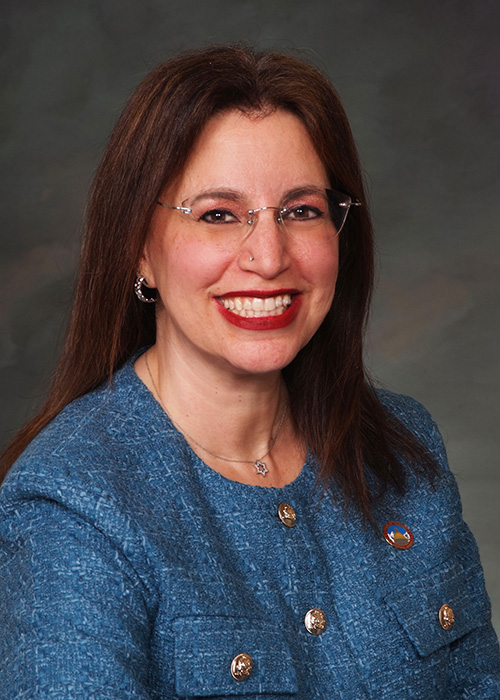
Rep. Dafna Michaelson Jenet
Sponsored bills
The act implements recommendations of the department of regulatory agencies in its sunset review and report on the regulation of mental health professionals as follows: Continues the regulation of mental health professionals for 9 years, until September 1, 2029; Clarifies that mental health professionals may possess, furnish, and administer opiate antagonists; Exempts students who are enrolled in a school program and are practicing as part of a school practicum or clinical program; Grants title protection to additional persons practicing in the mental health field; Makes the conviction of a crime that is related to mental health practice a violation of the mental health practice acts; Authorizes the appropriate mental health board to suspend a mental health professional's license, certification, or registration for the failure to comply with a board-ordered mental or physical examination; and Repeals the requirement that members of the mental health boards must be United States citizens. In addition to implementing the sunset recommendations, the act: Allows the staff of a mental health board to approve applications for licensure, certification, and registration without ratification from the respective board unless the board deems ratification necessary; Clarifies that licensees, certificate holders, and registrants are not required to form a professional service corporation; Exempts persons performing auricular acudetox from licensing, certification, and registration requirements; Creates the mental health disciplinary record work group for the purpose of making legislative and rulemaking recommendations concerning records that impact the initial licensure, certification, registration, and ongoing practice of mental health professionals; Clarifies when a mental health professional may disclose a client's confidential communications; Clarifies that it is not a prohibited activity for a mental health professional to offer or accept payment for services provided in connection with a referral as long as the payment is not for the referral itself; Prohibits a contract entered into by a mental health professional for marketing, office space, administrative support, or any other overhead expense from providing remuneration for referrals of clients or patients or otherwise creating financial benefit or incentive to the mental health professional; Allows supervision of an applicant for a social worker license to be done virtually and by a person other than a licensed social worker; Creates a registration process for clinical social work candidates; States that, for licensed social workers or licensed clinical social workers, course work is the only professional competency activity that can fulfill all the continuing competency requirements; Requires applicants for psychology licensure to complete a name-based criminal history record check upon initial application; Requires applicants for a professional counselor license to complete 2,000 hours of practice in counseling, including at least 1,500 hours of face-to-face direct client contact under clinical supervision; Changes the name of "registered psychotherapists" to "unlicensed psychotherapists", allows current psychotherapists to continue to practice as unlicensed psychotherapists, and prohibits the registration of any new psychotherapists with the board of unlicensed psychotherapists; Repeals the provision allowing a licensed mental health professional or a licensure candidate to register with the database of unlicensed psychologists; and Changes the titles of certified addiction counselors to "certified addiction technicians" and "certified addiction specialists" and changes the scope of practice and educational requirements for the certificate holders.(Note: This summary applies to this bill as enacted.)
The act authorizes the state medical assistance program (medicaid) to cover routine costs associated with phase I through phase IV clinical trials involving the prevention, detection, diagnosis, or treatment of life-threatening or debilitating diseases or conditions. The medicaid recipient's (recipient's) treating physician must determine that the recipient has a qualifying disease or condition and that the recipient meets the selection criteria for the clinical trial. The clinical trial must be an approved clinical trial, as described in the act, and must be conducted by agencies and organizations specified in the act. As used in the act, "routine costs" include medically necessary items or services included under the medicaid program for a recipient, to the extent that the provision of such items or services to the individual outside the course of such participation would otherwise be covered under the medical assistance program, without regard to whether the recipient is participating in a clinical trial. Routine costs do not include items specified in the act, including the investigational item, device, or service itself; items and services provided solely to satisfy data collection and analysis needed for the clinical trial; and items, drugs, or services that would otherwise be provided by the clinical trial or provided for free to any individual participating in the clinical trial. (Note: This summary applies to this bill as enacted.)
The act requires the state board to adopt standards related to Holocaust and genocide studies on or before July 1, 2021. The adoption of standards is conditional on the receipt of gifts, grants, or donations. The act requires each school district board of education and charter school to incorporate the standards on Holocaust and genocide studies adopted by the state board into an existing course that is currently a condition of high school graduation for school years beginning on or after July 1, 2023, if the standards are adopted by the state board on or before July 1, 2023. The act requires the department of education to create and maintain a publicly available resource bank of materials pertaining to Holocaust and genocide courses and programs, which must be available for access by public schools no later than July 1, 2021. (Note: This summary applies to this bill as enacted.)
The act creates a requirement that of the 90 hours of professional development training currently required for renewal of a teacher's license during the term of the teacher's license, at least 10 of those hours must include some form of behavioral health training that is culturally responsive and trauma- and evidence-informed and increases awareness of laws and practices relating to educating students with disabilities in the classroom, including child find and inclusive learning environments. The 10 clock hours may be obtained by any combination of related courses, so long as at least 1 of the 10 clock hours is related to behavioral health training and at least 1 of the 10 clock hours is related to educating students with disabilities in the classroom. The act requires teacher preparation programs to include in program graduation requirements that each teacher candidate in an initial educator licensure program complete at least 1 semester- or quarter-length course in behavioral health training that is culturally responsive and trauma- and evidence-informed. (Note: This summary applies to this bill as enacted.)
The act creates the Colorado interagency working group on school safety. The working group consists of 14 voting members. The mission of the working group is to enhance school safety through the cost-effective use of public resources. The working group shall: Study and implement recommendations of the state auditor's report regarding school safety released in September 2019; Consider program organization and recommend reorganization if necessary; Identify shared metrics to examine program effectiveness; Facilitate interagency coordination and communication; Increase transparency and accessibility of state grants and resources, particularly for school districts without a grant writer, which includes improving outreach and may include developing common grant applications; Facilitate and address data sharing, including allowable data sharing at the local level, when appropriate and allowable under state and federal law; and Address school safety program challenges in a coordinated way. The working group may contract with a consultant to optimize the alignment and effectiveness of the school safety efforts in Colorado and identify evidence-based best practices. The general assembly may appropriate money to the working group for a consultant, and the working group can accept gifts, grants, and donations. The working group only meets if the department of public safety identifies sufficient funding to cover the costs associated with the working group. The act repeals the working group on September 1, 2022, but the department of regulatory agencies shall review the working group prior to its repeal. (Note: This summary applies to this bill as enacted.)
The act clarifies that an offender sentenced pursuant to the "Colorado Sex Offender Lifetime Supervision Act of 1998" may be released to a community corrections program only if the offender meets certain requirements for an offender being released on parole including that: The offender has successfully progressed in sex offender treatment as determined by the department of corrections and would not pose a threat to the community if released to community corrections; There is a strong and reasonable probability that the offender would not thereafter commit a new criminal offense; and After considering criteria established by the sex offender management board and other relevant factors, the executive director of the department of corrections finds that release to community corrections is appropriate.(Note: This summary applies to this bill as enacted.)
The act appropriates money from the cares subfund in the general fund to the department of human services, the department of public health and environment, the department of higher education, and the department of law for behavioral health programs and services that were not accounted for in the state budget most recently approved as of March 27, 2020, and are necessary to respond to the COVID-19 public health emergency. All of the appropriations must be expended on or before December 30, 2020. (Note: This summary applies to this bill as enacted.)
Under existing law, the statute of limitations to bring a civil claim based on sexual assault or a sexual offense against a child is 6 years, but the statute is tolled when the victim is a person under disability or is in a special relationship with the perpetrator of the assault. The bill defines sexual misconduct and removes the limitation on bringing a civil claim based on sexual misconduct, including derivative claims and claims brought against a person or entity that is not the perpetrator of the sexual misconduct. The statutory period to commence a civil action described in the bill applies to a cause of action that accrues on or after January 1, 2021, or a cause of action accruing prior to January 1, 2021, so long as the applicable statute of limitations has not yet run as of January 1, 2021. The bill removes the provision that a plaintiff who is a victim of a series of sexual assaults does not need to establish which act in the series caused the plaintiff's injuries. Under existing law, a plaintiff who brings a civil action alleging sexual misconduct 15 years or more after the plaintiff turns 18 is limited to recovering only certain damages. The bill eliminates this restriction. Under existing law, a victim who is a person under disability or is in a special relationship with the perpetrator of the assault may not bring an action against a defendant who is deceased or incapacitated. The bill eliminates this restriction. Under existing law, a claim for negligence in the practice of medicine that is based on a sexual assault is exempt from the statute of limitation for claims involving sexual assault and instead is subject to the same limitation as any other claim for negligence in the practice of medicine. The bill removes this exemption. (Note: Italicized words indicate new material added to the original summary; dashes through words indicate deletions from the original summary.) (Note: This summary applies to the reengrossed version of this bill as introduced in the second house.)