

The bill creates the home visiting expansion grant program (grant program) in the department of human services (department). The purpose of the grant program is to expand the number of children and families served by nationally recognized, evidence-based home visiting models (models) throughout the state and thus improve school readiness of Colorado children. The grant program has 2 cycles of 3 years each and shall award up to a total of $2 million in grants for each cycle, payable in equal annual amounts. The state board of human services is authorized to promulgate rules that specify the criteria for the grant program, including eligibility of applicants and models, timeline, and review and selection criteria. The department is required to prepare an evaluation report at the conclusion of each grant cycle and present that report as part of its next "SMART Act" report to its committee of reference. The grant program is repealed, effective September 1, 2028. (Note: This summary applies to this bill as introduced.)
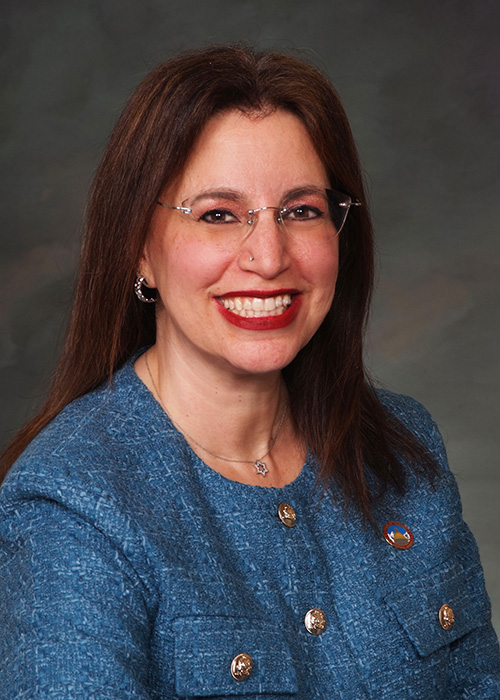
Rep. Dafna Michaelson Jenet
Sponsored bills
School Safety Committee. The bill instructs the school safety resource center (center) to convene a working group of necessary and interested stakeholders to assess the needs of school districts with respect to the adequacy and availability of residential mental health treatment for children and youth who have been identified by school personnel as having severe behavioral or mental health disorders and potential ways to resolve such needs. The working group is directed to gather information on the availability, need, and cost associated with residential treatment services for children and youth in Colorado. The center shall use the data to prepare a report and make any legislative recommendations to address the mental health needs of children and youth in Colorado. The center is required to present the report and any legislative recommendations as part of its presentation to its committee of reference at a hearing held pursuant to the "State Measurement for Accountable, Responsive, and Transparent (SMART) Government Act" in January 2021. (Note: This summary applies to this bill as introduced.)
The bill enacts the "Genetic Counselor Licensure Act". On and after June 1, 2020, a person cannot practice genetic counseling without being licensed by the director of the division of professions and occupations in the department of regulatory agencies. To be licensed, a person must have been certified by a national body, except that the director may issue a provisional license to a candidate for certification pursuant to requirements established by rule. The bill gives title protection to genetic counselors and standard licensing, rule-making, and disciplinary powers to the director. Genetic counselors must have insurance. The bill repeals the act on September 1, 2026, subject to sunset review. Genetic counselors are subject to the mandatory disclosures of the "Michael Skolnik Medical Transparency Act of 2010". The bill makes conforming amendments to harmonize the bill with the title 12 recodification bill, House Bill 19-1172. The bill appropriates $33,622 to the department of regulatory agencies from the division of professions and occupations cash fund to implement the act. (Note: This summary applies to the reengrossed version of this bill as introduced in the second house.) Read More
Physicians - mental health care providers - conversion therapy for minors prohibited - disciplinary action. The act prohibits a licensed physician specializing in psychiatry or a licensed, certified, or registered mental health care provider from engaging in conversion therapy with a patient under 18 years of age. A licensee who engages in these practices is subject to disciplinary action by the appropriate licensing board. "Conversion therapy" means efforts to change an individual's sexual orientation, including efforts to change behaviors or gender expressions or to eliminate or reduce sexual or romantic attraction or feelings toward individuals of the same sex. Specified provisions of the act are contingent upon House Bill 19-1172 becoming law. (Note: This summary applies to this bill as enacted.) Read More
Aid to the needy disabled program - applications - navigation assistance - appropriation. The act creates a program to help persons with disabilities participating in the state aid to the needy disabled program navigate the application process for federal disability benefits, including supplemental security income and social security disability insurance. The program is provided by participating county departments of human or social services (county departments) and is administered by the state department of human services (state department). Funding for the program is distributed to participating county departments pursuant to an allocation formula determined by state department rules after the state department receives input from counties, county representatives, and other relevant stakeholders. The act describes the services that may be provided by county departments participating in the program, including assistance with compiling and drafting supporting documentation for the application for federal disability benefits and assistance in completing and submitting the application. The state department shall evaluate the program pursuant to the time frame set forth in the act to determine if the program is meeting the program goals described in the act. The act creates the disability benefits application assistance fund and requires the state treasurer and controller to annually transfer to the fund money appropriated for the aid to the needy disabled program that remains unencumbered and unexpended at the end of the fiscal year. For the 2019-20 state fiscal year, the act appropriates $1,450,000 from the marijuana tax cash fund to the department of human services for adult assistance programs and disability benefit application program funding. (Note: This summary applies to this bill as enacted.) Read More
Smoking restrictions - application to vape and e-cigarette use - exemptions - age restrictions in permitted smoking areas - signage - penalties. The act amends the "Colorado Clean Indoor Air Act" by: Adding a definition of "electronic smoking device" (ESD) to include e-cigarettes and similar devices within the scope of the act; Citing the results of recent research on ESD emissions and their effects on human health as part of the legislative declaration; Eliminating the existing exceptions for certain places of business in which smoking may be permitted, such as airport smoking concessions, businesses with 3 or fewer employees, designated smoking rooms in hotels, and designated smoking areas in assisted living facilities; Repealing the ability of property owners and managers to designate smoking areas through the posting of signs; Exempting FDA-approved nebulizers, inhalers, and vaporizers, as well as humidifiers that emit only water vapor, from the definition of an ESD; Amending signage requirements for tobacco businesses and vape shops that must notify customers of prohibitions on entry by persons under the age of 18; Increasing the radius of an "entryway", the area around the doorway to a building where smoking is not permitted, from a minimum of 15 feet to a minimum of 25 feet except where existing local regulations permitted a smaller radius when construction or renovation of a business commenced, on or before July 1, 2019; and Creates a grace period, affirmative defenses, and graduated penalties for enforcement of the amended signage requirements and age restrictions for tobacco businesses and vape shops. The act takes effect July 1, 2019, except for the provisions requiring exclusion of minors and the posting of appropriate signage relating to the exclusion, which provisions take effect October 1, 2019. (Note: This summary applies to this bill as enacted.) Read More
Juvenile justice reform - committee - membership - duties - juvenile detention working group - additional duties - district attorneys and juvenile probation use of screening tools - appropriation. The act establishes a committee on juvenile justice reform (committee) in the department of public safety (department) and establishes its membership. The act specifies duties of the committee including: By September 1, 2019, adopting a validated risk and needs assessment tool or tools to be used throughout the juvenile justice system; Selecting a mental health screening tool for juvenile offenders; Selecting a validated risk screening tool to be used by district attorneys in determining a juvenile's eligibility for diversion; By July 1, 2020, selecting a vendor to assist in the implementation of and provide training on the tools; and Developing plans for measuring the effectiveness of the tools. Under current law, there is a working group under the division of youth services on detention of juvenile offenders and alternative services to detention. The act adds to the working group's duties that by January 1, 2021 it must: Adopt a research-based detention screening instrument, develop a plan for training on the new instrument, and submit a report on the use of the new instrument; Establish criteria for the alternative services and report on the effectiveness of the alternative services; Adopt a relative information form for parents and guardians to complete; and Develop a system of graduated responses and reward for juvenile parole officers. On and after January 1, 2021, the act requires district attorney's offices to use the risk screening tools and the results of the tools in determining a juvenile's eligibility for diversion and need for services. It specifies grounds that may not be used to deny diversion and directs the division of criminal justice to collect data and report on juvenile diversion programs. The act restricts removing a juvenile from the custody of a parent, unless the detention screening is conducted and specified findings are made, and directs that unless physical restriction is required, custody of the juvenile is given to kin or another person. It limits which juveniles may be placed in detention. In releasing a juvenile from detention, the act requires the juvenile court to use the detention screening instrument. For juvenile probation, the act requires the state court administrator to: By January 1, 2021, develop a statewide system of graduated responses and incentives to change a juvenile's behavior and address violations; and By July 1, 2021, develop statewide standards for juvenile probation supervision and services and provide annual training on the standards. For the 2019-20 state fiscal year, the act appropriates $68,598 from the general fund to the judicial department; $500,000 from the general fund to the department of human services for the division of youth services; and $6,315 from the general fund to the legislative department. (Note: This summary applies to this bill as enacted.) Read More
Court-appointed special advocate programs - program oversight. The act relocates provisions concerning the statewide oversight of court-appointed special advocate (CASA) programs. The office of the child's representative (office) is required to enter into an agreement with a nonprofit entity (state CASA entity) to enhance the CASA program in Colorado. The state CASA entity is required to submit a report to the office concerning the performance of its duties within one month prior to receiving an allocation of money for CASA programs and, at least annually, must certify to the office the amount that each local CASA program receives from each allocation.(Note: This summary applies to this bill as enacted.) Read More
Juvenile advisement of rights - accompanying adult's adverse interest - admissibility. Under current law, statements by a juvenile concerning delinquent acts committed by the juvenile are admissible against the juvenile so long as the juvenile is accompanied by one or more specified adults during the advisement of constitutional rights and during the interrogation. A court decision found this to be legally sufficient even if the adult was shown to have an interest adverse to the juvenile. Under the act, if an issue concerning the adult's adverse interest is raised, the prosecution must prove by a preponderance of the evidence that the person conducting the interrogation reasonably believed that the adult did not have an interest adverse to the juvenile and helped safeguard the juvenile's constitutional rights to remain silent or obtain counsel during the interrogation.(Note: This summary applies to this bill as enacted.) Read More