Issue · Criminal Justice

Criminal Justice

Every criminal justice bill, vote, and legislator stance in Colorado, automatically classified by Maddy, our AI policy reader.

Total bills
65
2026 Regular Session
Top supporter
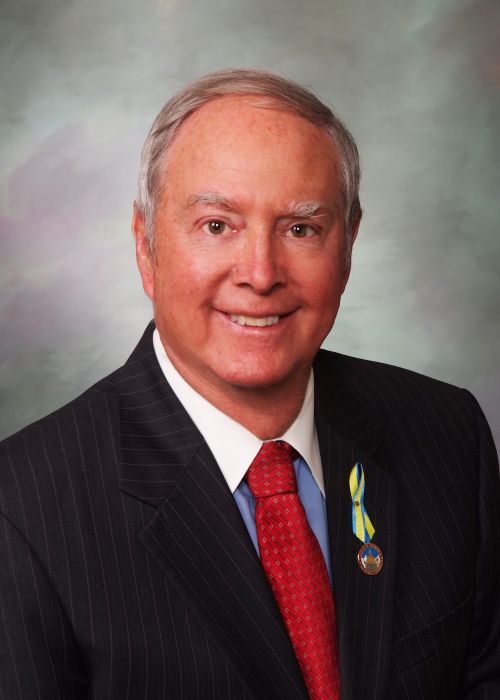
Julie Gonzales
100% support rate
Top opponent
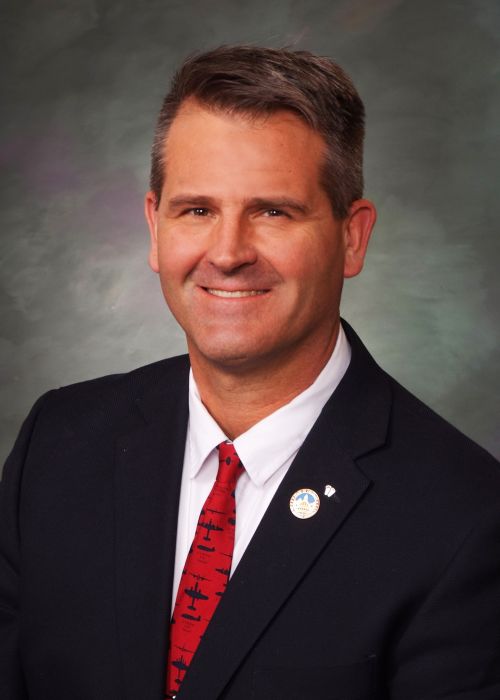
Larry Liston
0% support rate
Ranked legislators
10
5 support · 5 oppose
Key legislators

Who's moving criminal justice in Colorado

Legislators moving criminal justice in Colorado
Legislator Party Stance Support rate Votes
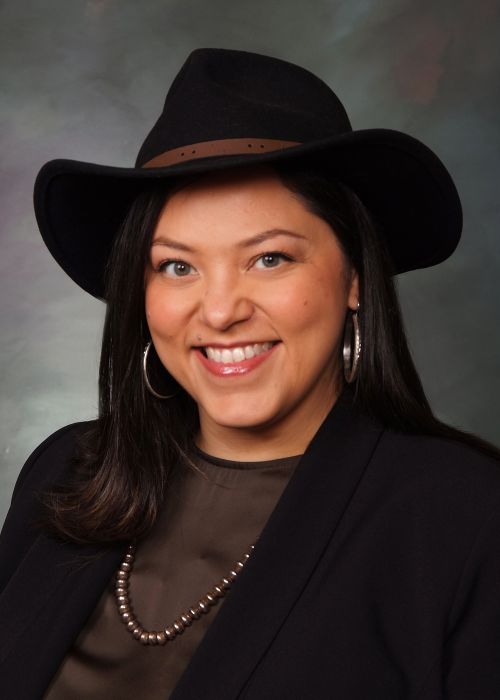
Julie Gonzales
Julie Gonzales Senate · District 34
D
Strong +
100% 37
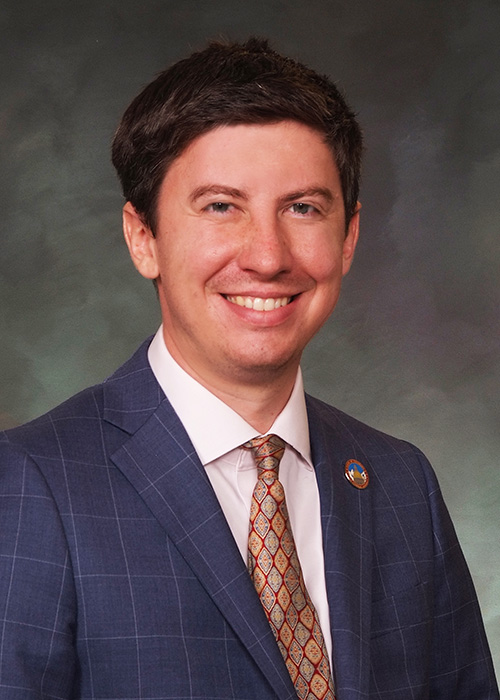
William Lindstedt
William Lindstedt Senate · District 25
D
Strong +
100% 30
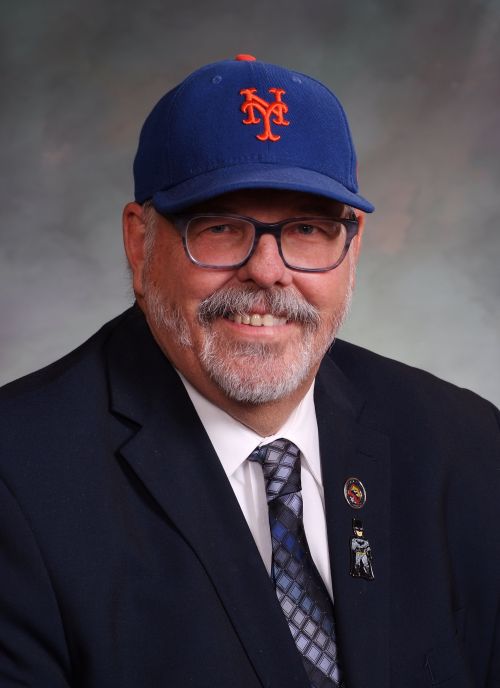
Tom Sullivan
Tom Sullivan Senate · District 27
D
Strong +
100% 20
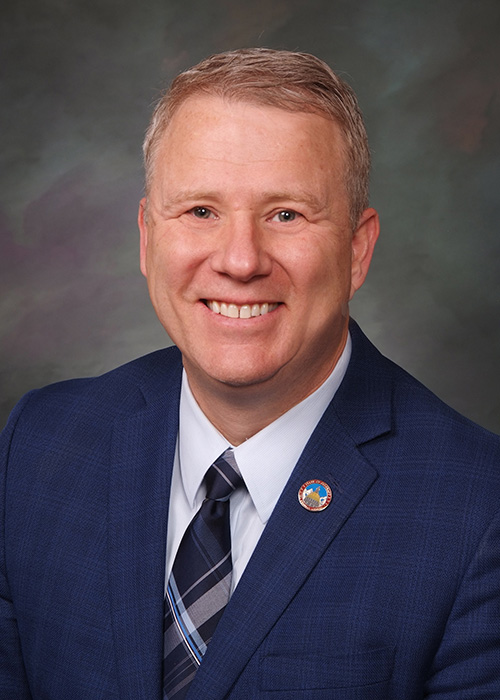
Chris Kolker
Chris Kolker Senate · District 16
D
Strong +
92% 45
Judy Amabile
Judy Amabile Senate · District 18
D
Strong +
90% 31
Larry Liston
Larry Liston Senate · District 10
R
Strong −
0% 39
Barbara Kirkmeyer
Barbara Kirkmeyer Senate · District 23
R
Strong −
10% 31
Byron Pelton
Byron Pelton Senate · District 1
R
Oppose
23% 36
Lynda Zamora Wilson
Lynda Zamora Wilson Senate · District 9
R
Oppose
25% 55
Ken DeGraaf
Ken DeGraaf House · District 22
R
Oppose
29% 102
Showing 31–40 of 65 bills

All criminal justice bills

signed · Colorado · House May 7, 2026

HB 1101: Criminal Offenses Related to Critical Infrastructure Metals

The act defines critical infrastructure material as any component or part used in covered infrastructure that is made of or contains a commodity metal, the theft of which poses an imminent threat to life or the physical safety of a person, including through serious harm to the basic supply of covered infrastructure to the population or to the exercise of a core function of covered infrastructure. The act adds critical infrastructure materials to regulations in existing law on the sale and possession of commodity metals.     The act prohibits an owner, keeper, or proprietor (owner) of a junk shop, junk store, salvage yard, or junk cart or other vehicle, and every collector of or dealer in junk, salvage, or other secondhand property who buys a critical infrastructure material (buyer) from paying cash for the critical infrastructure material unless the seller is paid by means of any process in which a picture of the seller is taken or the transaction is worth less than $300.     The act prohibits a buyer from possessing critical infrastructure material without an affidavit from the seller or donator of the commodity metal. Unlawful possession of critical infrastructure materials is a class 2 misdemeanor if the amount is less than $1,000, a class 2 misdemeanor if the amount is $1,000 to $2,000, and a class 6 felony if the amount is $2,000 or more.     A buyer who unknowingly takes possession of critical infrastructure material as part of a load of otherwise noncritical infrastructure materials with an affidavit stating they can transfer the noncritical infrastructure material has a duty to notify the appropriate law enforcement agency or municipal code enforcement agency. Failure to report stolen critical infrastructure materials is a class 2 misdemeanor if the amount is less than $1,000, a class 2 misdemeanor if the amount is $1,000 to $2,000, and a class 6 felony if the amount is $2,000 or more.     An owner of a junk shop, junk store, salvage yard, or junk cart must make their book or register available to a law enforcement agency or municipal code enforcement agency upon request.     The act modifies existing criminal penalties related to the theft of commodity metals so that it is a class 6 felony for any amount that is $2,000 or more.(Note: This summary applies to this bill as enacted.)
passed · Colorado · House May 12, 2026

HB 1281: Homicide Criminal Offenses

Under current law, if a person engages in conduct that creates a grave risk to human life with an extreme indifference to the value of human life and causes the death of another person, the person commits first degree murder. The bill requires that the person:Cause the death of more than one person;Cause the death of one person and cause serious bodily injury to 2 or more persons by means of a deadly weapon;Cause the death of a child who is under 12 years old; orCause the death of a peace officer, emergency medical service provider, emergency medical care provider, or firefighter engaged in the performance of their duties.     The bill creates a new charge of murder in the second degree if a person engages in conduct that creates a grave risk to human life with an extreme indifference to the value of human life and causes the death of only one other person.      The bill expands the conduct by which a person can commit criminally negligent homicide to include proximately causing the death of another person while operating or driving a motor vehicle with criminal negligence.     The bill creates the offense of aggravated vehicular homicide by operating a motor vehicle in a reckless manner or while under the influence of or impaired by alcohol or other drugs and causing the death of another person when the person also:Has been convicted twice of driving under the influence or driving while ability impaired;Has been convicted of vehicular homicide or vehicular assault;Commits the offense while eluding or attempting to elude law enforcement;Commits the offense while in flight from the commission of another felony offense, not including a traffic offense; orCommits the offense while driving at a high rate of speed, creating an imminent risk of death or serious bodily injury to another person.      The bill creates the new offense of negligent vehicular homicide if a person drives a motor vehicle with criminal negligence and causes the death of another person. Negligent vehicular homicide is a class 5 felony.(Note: Italicized words indicate new material added to the original summary; dashes through words indicate deletions from the original summary.)(Note: This summary applies to the reengrossed version of this bill as introduced in the second house.)
in committee · Colorado · Senate Mar 25, 2026

SB 99: Governor Temporary Classify Controlled Substance Analog

Under current law, any material, compound, mixture, or preparation that is a controlled substance analog that is substantially similar to the chemical structure of a controlled substance in schedule II (analog to a schedule II controlled substance) is treated as a controlled substance in schedule II.The bill authorizes the governor to temporarily classify a material, compound, mixture, or preparation as an analog to a schedule II controlled substance, subject to conditions.(Note: This summary applies to this bill as introduced.)
Sub-Topics Drug Policy
signed · Colorado · House Jun 4, 2026

HB 1250: Procedures Related to Civil Asset Forfeiture

The act clarifies an existing requirement for the criminal conviction of a property owner by requiring that one or more criminal charges be brought as a prerequisite to any nuisance abatement or forfeiture proceeding.     Existing law provides an exception to the conviction requirement for noninnocent owners who are not subject to criminal charges that no criminal conviction is necessary of the nonowner criminal defendant if the plaintiff proves its case by clear and convincing evidence that the property subject to the forfeiture proceeding is traceable proceeds of the charged offense or related criminal activity. The act clarifies this exception to first require a conviction of the nonowner criminal defendant before the noninnocent owner's property may be forfeited, while retaining other various exceptions that allow forfeiture actions to proceed against the interest of a claimant.     The act establishes a right for indigent civil asset forfeiture defendants to access forfeiture defense counsel and creates a procedure for the appointment of forfeiture defense counsel in nuisance abatement and forfeiture proceedings. The state court administrator shall enter into a contract for services with a private contractor who regularly provides legal services for indigent clients or litigants to provide a legal defense to a civil asset forfeiture proceeding. The private contractor is subject to certain reporting requirements.     The act creates a forfeiture defense counsel fund (fund) to pay for contracted forfeiture defense counsel who are authorized to represent persons against whom a nuisance abatement or forfeiture proceeding has been filed in connection with criminal charges. The fund is capped at $500,000, and starting in state fiscal year 2027-28, no general fund money is allowed to finance the fund. The balance of the fund over $500,000 is credited to the law enforcement community services grant program fund. The act transfers any unexpended and unencumbered money from the law enforcement community services grant program fund to the forfeiture counsel defense fund.     The act alters the disposition of property and proceeds ordered forfeited in a nuisance abatement or forfeiture action. Currently, forfeited property and proceeds are applied first toward restitution and cost recovery for a list of stakeholders, and of the remainder, 50% is granted to the local governmental body with authority over the seizing agency, 25% is granted to the local behavioral health administrative services organization, and 25% is granted to the law enforcement community services grant program fund. The act amends the disposition of the remainder so that 50% is granted to the local governmental body with authority over the seizing agency, 25% is granted to the fund, and 25% is granted to the local behavioral health administrative services organization.     The act appropriates $556,750 to the judicial department from the fund for civil asset forfeiture defense contracting and $55,000 to the department of local affairs from the fund for civil asset forfeiture portal administration.(Note: This summary applies to this bill as enacted.)
in committee · Colorado · House Mar 17, 2026

HB 1275: Law Enforcement Identification & Immigration Training Requirements

The bill prohibits local and state law enforcement officers from concealing their identity while interacting with the public, with certain exceptions.The bill clarifies state criminal jurisdiction to cover criminal conduct committed by a federal law enforcement officer in the state, even if the officer was acting under color of federal authority. Federal criminal immunity or defense from prosecution does not prohibit state criminal prosecution of a federal law enforcement officer.The bill requires the peace officer standards and training board (P.O.S.T. board) to deny certification to an individual who has previously been employed or who is currently employed by the United States immigration and customs enforcement agency or the United States customs and border protection agency.The bill requires the P.O.S.T. board to prescribe a training for all current and future peace officers regarding immigration law, a peace officer's duty to intervene, excessive force policies, and a peace officer's jurisdictional limit.A peace officer is required to intervene to prevent a federal law enforcement officer from using excessive force.The bill expands the conduct that can constitute the crime of impersonating a peace officer to include a person performing a law enforcement act while concealing the person's identity.(Note: This summary applies to this bill as introduced.)
Sub-Topics Law Enforcement
signed · Colorado · Senate Jun 3, 2026

SB 115: Post-Conviction Relief for Certain Offenders

The act sets forth a process for a person in prison to petition within the next 3 years for resentencing and for a court to impose a new sentence if the petitioner is 60 years old or older at the time of filing the petition and has served at least 20 calendar years incarcerated for the offense. A person is not eligible to petition if the person is incarcerated as a result of conviction for a sex offense, human trafficking, an offense that resulted in a sentence to life imprisonment without the possibility of parole, an offense for which the victim was a child younger than 12 years old, or an offense against a first responder engaged in the performance of their duties.     At the hearing on the petition, the petitioner has the burden to show by a preponderance of the evidence that the petitioner no longer presents an identifiable danger to the safety of any person or the community and that there is good cause for the court to modify the sentence. Upon the court finding that the petitioner has met their burden, the petitioner is permitted to file a motion for reconsideration and reduction of the initial sentence pursuant to the Colorado rules of criminal procedure. At the hearing on the motion, the court shall determine and impose the appropriate sentence.     If a person in prison is not eligible for resentencing pursuant to the act, the district attorney's office that prosecuted the offense resulting in the conviction may petition the court requesting that the court grant post-conviction relief. If the district attorney's office petitions the court, the same procedures apply as if an eligible person petitioned.     The act appropriates $50,840 to the judicial department for use by the public defender and $50,326 to the department of corrections for use by community services, and reduces the appropriation in the annual general appropriation act for the 2026-27 state fiscal year to the department of corrections for payments to local jails by $168,980.(Note: This summary applies to this bill as enacted.)
vetoed · Colorado · House May 28, 2026

HB 1255: Social Media Duty to Report & Search Warrants

The act requires an operator of a social media platform (operator) to ensure that its social media platform provides a streamlined process to allow law enforcement agencies to contact the social media platform. The process must be available to law enforcement agencies at all times and make available a staffed hotline for the purposes of:Receiving and responding to questions about search warrants;Acknowledging the receipt of a search warrant within 8 hours after receipt; andProviding status updates on search warrant compliance to a requesting law enforcement agency.     With certain exceptions, an operator must comply with a search warrant within 24 hours if certain conditions apply. A court may reasonably extend this time if the court makes a written finding that the operator or social media platform has shown good cause for the extension and that an extension would not cause an adverse result. The act sets forth enforcement options for the attorney general and district attorneys regarding operators' compliance with search warrants.     The act requires an operator to report to a social media platform user's (user's) local law enforcement agency within 24 hours if the operator's social media platform takes any one of certain described adverse actions against a user. A violation of the reporting requirement is a violation of the 'Colorado Consumer Protection Act'.     In current law, 'social media platform' is defined as an internet-based service, website, or application that satisfies certain criteria, including having more than 100,000 active users in Colorado. The act removes this criterion.     The act makes conforming amendments as necessary to Senate Bill 26-011, as enacted in the 2026 regular legislative session, to have Senate Bill 26-011 conform with the provisions of the act.(Note: This summary applies to this bill as enacted.)
signed · Colorado · House May 4, 2026

HB 1103: Report Child Sexual Assault & Courtroom Testimony

The act requires a law enforcement entity that receives a report alleging an offense involving sexual assault or abuse of a child to conduct a minimal facts interview and record certain information, including the child's name, the alleged offender's name, and a summary of the alleged incident. After receiving the report, a law enforcement entity must notify a child advocacy center within the judicial district where the alleged crime occurred, or another appropriate child advocacy center, within one week after taking the report. The law enforcement entity is required to collaborate with the child advocacy center in requesting a forensic interview for the alleged child victim if the law enforcement entity deems a forensic interview is necessary and appropriate.     The act changes the definition of a child witness for purposes of testifying using closed-circuit television from a person who is 12 years old or younger, to a person who is younger than 18 years old. The act requires a judge to make findings on the record regarding a witness who is a child or a person who has an intellectual and developmental disability, specifically, if the witness will suffer serious emotional distress or trauma from courtroom testimony when the defendant is present.(Note: This summary applies to this bill as enacted.)
signed · Colorado · Senate Jun 4, 2026

SB 132: Voluntary Alcohol Breath Test

SB 132, known as the "Magnus Law," requires Colorado law enforcement officers to offer drivers involved in collisions resulting in death or suspected serious injury the opportunity to voluntarily take a breath test for alcohol. The bill mandates officers provide clear, plain-language advisement that the test is voluntary, refusal carries no penalty, and results cannot be used in court. It applies when officers reasonably suspect the driver was at fault and the driver isn't critically injured, creating a standardized protocol to ensure consistent investigation of potential impairment at serious crash scenes. This change aims to preserve evidence that might otherwise be lost, without altering existing legal standards for driving under the influence.
Sub-Topics Courts Law Enforcement
signed · Colorado · Senate May 21, 2026

SB 124: Colorado Survivor Justice Act

Current law requires that the automated protection order notification system (notification system) include information about whether a restrained person completed and submitted a firearm purchase or transfer application that indicated the restrained person was ineligible to possess a firearm pursuant to state or federal law. The act repeals this provision.     Current law requires the Colorado bureau of investigation to make the information in the notification system available to the division of criminal justice (division) for the purpose of providing the information to a protected person. The act requires the Colorado integrated criminal justice information system program to also make the information available to the division.(Note: This summary applies to this bill as enacted.)
Sub-Topics Firearms
Showing 31 to 40 of 65 bills
Previous 1 3 4 5 7 Next