

Existing law establishes the Office of Small Business Advocate within the Governor's Office of Business and Economic Development, also known as "GO-Biz," to and provides for the appointment by the Governor of the Small Business Advocate, also known as the Director of the Office of Small Business Advocate, to, among other things, serve as the principal advocate in the state on behalf of small businesses. This bill would establish the California Music Festival Preservation Grant Program within the office, under the direct authority of the director, to provide grants to eligible independent live music events promoters to support their continued ability to provide equitable access to the arts for all Californians. The bill would specify requirements for eligibility and, subject to appropriation by the Legislature, would require the office to allocate the sum of $20,000,000 in grants to eligible independent live music events promoters that meet those requirements.
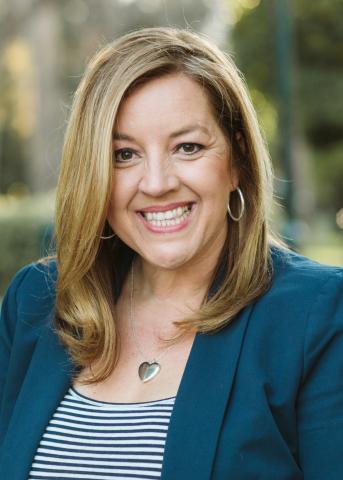
Sen. Angelique Ashby
Sponsored bills
(1) Existing law, the California Public Employees' Pension Reform Act of 2013, establishes various limits on retirement benefits generally applicable to a public employee retirement system, as specified. Existing law requires a public employee who is a member of a public retirement system to forfeit accrued rights and benefits in the public retirement system if the individual is convicted of certain felonies, including for conduct arising out of or in the performance of their official duties, relating to salary, disability retirement, service retirement, or other benefits, or that is committed against a child, as specified. Existing law limits this forfeiture to rights and benefits earned or accrued from the earliest date of the commission of the felony. This bill would require a correctional officer or other prison staff member employed by the Department of Corrections and Rehabilitation who is a current member of a public retirement system, convicted of sexually assaulting an inmate within the prison system, to forfeit all rights and benefits in the public retirement system, as prescribed. The bill would also require a correctional officer or other prison staff member employed by the department who first becomes a member of a public retirement system on or after January 1, 2026, who is convicted of sexually assaulting an inmate within the state prison system, to forfeit all rights and benefits in the retirement system. The bill would establish procedures governing the forfeiture process, including authorizing a public retirement system to assess a public employer a reasonable amount for reimbursement of specified costs. The bill would require a public retirement system to implement these provisions in a manner that protects an innocent or former spouse and is consistent with existing law governing the division of community property. (2) Existing law provides the Department of Corrections and Rehabilitation with jurisdiction over prisons and institutions, including, among others, the California Correctional Institution in the City of Tehachapi and the Central California Women's Facility, and sets forth its powers and duties regarding the administration of correctional facilities and the care and custody of inmates. Existing law also authorizes the secretary of the department to construct and equip suitable buildings, structures, and facilities for, among others, the California Correctional Institution in the City of Tehachapi for the confinement of males under the custody of the secretary. This bill would require the department to construct and establish one new building with 100 additional single-cell housing units at the Central California Women's Facility state prison located in the City of Chowchilla for the confinement of women under the custody of the secretary. The bill would also require the department to install fixed cameras by January 1, 2028, in all designated locations that have been ordered by the court or the Legislature, install thermal sensor cameras that track body movements in inmate bathrooms, and eliminate solo shifts for correctional officers, in women's state prison facilities. The bill would also authorize a correctional lieutenant on the site of a state prison facility to grant permission to an inmate, upon the inmate's request, to be transferred to restrictive housing.
The Personal Income Tax Law allows various credits against the taxes imposed by that law. This bill would allow a credit against those taxes for taxable years beginning on or after January 1, 2026, and before January 1, 2031, in an amount equal to the unreimbursed amount paid or incurred by a qualified teacher during the taxable year for instructional materials and classroom supplies, as defined, not to exceed $250. The bill would define qualified teacher as a teacher in a public, charter, or private school offering instruction in kindergarten or any of grades 1 to 12, inclusive, for at least 900 hours during a school year. Existing law requires any bill authorizing a new tax expenditure to contain, among other things, specific goals that the tax expenditure will achieve, detailed performance indicators, and data collection requirements. This bill also would include additional information required for any bill authorizing a new tax expenditure. This bill would take effect immediately as a tax levy.
Maddy summaryThis Senate Resolution amends the standing rules for the California Senate's 2025-26 legislative session, specifically updating how bills are assigned to standing committees. The bill directly affects the Senate's internal operations by reorganizing the list of 25 standing committees and clarifying which subject areas each committee handles. Key provisions include detailed descriptions of each committee's jurisdiction, such as assigning bills related to technology and data privacy to the Privacy, Digital Technologies, and Consumer Protection committee, and designating the Judiciary committee to handle civil and criminal law matters. These changes take effect on February 1, 2026, and serve as a guide for the Committee on Rules while remaining non-binding on that committee's final decisions.
Maddy summarySCR 103 designates the week of July 20-26, 2025, as "Probation Services Week" in California. This concurrent resolution recognizes the work of probation services professionals across the state. It is a symbolic observance with no new laws, regulations, or direct impact on individuals or policies. The bill does not alter existing statutes or create obligations for any entity.
(1) Existing law, the Psychology Licensing Law, establishes the Board of Psychology to license and regulate psychologists and the practice of psychology. Existing law repeals the provision establishing the board on January 1, 2026. This bill would extend operation of the board to January 1, 2030. Existing law authorizes a person who is licensed as a psychologist at the doctoral level in another state or territory of the United States or Canada to offer psychological services in this state for up to 30 days per year. Existing law authorizes a person other than a licensed psychologist to perform psychological functions in preparation for licensure as a psychologist if the person is registered with the board as a registered psychological associate, and establishes requirements in that regard. This bill would require an out-of-state licensee to satisfy certain conditions to offer psychological services, including informing the client of the limited timeframe of the services and that the person is not licensed in California. The bill would require an applicant for registration as a psychological associate who was trained in an educational institution outside the United States or Canada to demonstrate to the satisfaction of the board that the applicant possesses a doctoral degree in psychology or education that is equivalent to a degree earned from a regionally accredited academic institution in the United States or Canada, as specified. Existing law establishes qualifications for registration as a psychological testing technician, including proof of completion of a bachelor's degree or graduate degree, or proof of current enrollment in a graduate degree program in psychology or in education with a field of specialization in educational psychology, counseling psychology, or school psychology. Existing law also establishes various fees relating to the licensure and regulation of the practice of psychology. This bill would expand the list of authorized areas of study for registration as a psychological testing technician to include neuroscience, cognitive science, or behavioral science, and would specify that the board shall make the final determination as to whether a degree or degree program meets the educational requirements. The bill would establish a fee of $25 to add or change a supervisor for a psychological testing technician. Existing law provides that a psychologist's license shall be suspended automatically during any time the holder of the license is incarcerated after conviction of a felony, and provides for the continued suspension of the license if, after a hearing, it is determined in the hearing that the felony for which the licensee was convicted is substantially related to the qualifications, functions, or duties of a licensee. Existing law requires any discipline ordered to cease if the conviction is overturned on appeal. This bill would revise and recast those provisions, including authorizing the board to decline to set aside the suspension when it appears to be in the interest of justice to do so. The bill would revise and recast provisions relating to suspended, revoked, and surrendered licenses and obtaining a new license after a license is void after not being renewed within 3 years. The bill would make various technical and other changes to the Psychology Licensing Law, including defining the term "client." (2) Existing law provides for the registration and regulation of research psychoanalysts and student research psychoanalysts by the Board of Psychology, and establishes acts for which the board may revoke or suspend registration and that are deemed unprofessional conduct. Existing law establishes fees for registration, which are deposited into the Psychology Fund. This bill, among other changes to the provisions regulating research psychoanalysts and student research psychoanalysts, would expand the list of acts constituting unprofessional conduct that would authorize the board to suspend or revoke a registration. The bill would revise education and training requirements for registration as a research psychoanalyst, including requiring an applicant to complete certain coursework or training in detection and treatment of alcohol and other chemical substance dependency, suicide risk assessment and intervention, and aging and long-term care. The bill would establish continuing professional development requirements for research psychoanalysts. The bill would require the board to adopt a program of consumer and professional education in matters relevant to the ethical practice of psychoanalysis. The bill would establish fingerprint hard card processing fees for out-of-state applicants, as specified. Existing law requires certain behavioral health professionals to complete training in human sexuality and to complete coursework or training in child abuse assessment and reporting, as specified. Existing law provides that the Board of Psychology and the Board of Behavioral Sciences are encouraged to include coursework regarding the assessment and reporting of elder and dependent adult abuse in the required training on aging and long-term care issues before licensure or license renewal. Existing law makes findings and declarations related to the training of certain licensed behavioral health professionals in the areas of child, elder, and dependent adult abuse assessment reporting. This bill would include research psychoanalysts in the behavioral health professionals subject to the above-described training requirements and provisions. The bill would make various technical and other changes to the Psychology Licensing Law. (3) Existing law establishes the Board of Behavioral Sciences in the Department of Consumer Affairs to regulate licensees under the Licensed Marriage and Family Therapist Act, the Educational Psychologist Practice Act, the Clinical Social Worker Practice Act, and the Licensed Professional Clinical Counselor Act, and authorizes the board to appoint an executive officer to exercise certain powers and perform specified duties. Existing law repeals the provision establishing the board and authorizing the board to appoint an executive officer on January 1, 2026. Existing law, until January 1, 2026, authorizes a person who holds a license in another jurisdiction of the United States as a marriage and family therapist, a clinical social worker, or a professional clinical counselor to provide those services in this state for a period not to exceed 30 days. Existing law specifies that a person who provides services pursuant to those provisions is deemed to have agreed to practicing under the jurisdiction of the board and to be bound by the laws of this state. This bill would extend the date of the operation of the board and of authorizing the board to appoint an executive officer to January 1, 2030, and would extend the date on which the provision authorizing a person who is licensed out-of-state as a marriage and family therapist, a clinical social worker, or professional clinical counselor to practice in this state to January 1, 2030. The bill would deem a person who is licensed in another jurisdiction who provides services to have attested under penalty of perjury to practicing under the jurisdiction of the board and to be bound by the laws of this state. By expanding the scope of the crime of perjury, the bill would impose a state-mandated local program. Existing law requires a registrant or applicant for licensure as a marriage and family therapist to pass a clinical examination, and establishes a fee of $250, which the board is authorized to increase by regulation to up to $500, for the clinical examination. This bill would specify that the clinical examination may be administered either by the board or by a public or private organization, and would revise the fee requirement so that if the examination is administered by a public or private organization, the fee would be paid directly to the organization. Existing law requires certain applicants for registration or licensure as a marriage and family therapist who completed graduate study on or before December 31, 2018, to submit to the board a certification by the applicant's educational institution that the institution's required curriculum for graduation and associated coursework includes certain instruction in alcoholism and other chemical substance dependency and in spousal or partner abuse assessment, detection, and intervention. This bill would delete that requirement. Existing law requires an applicant for licensure or registration as a professional clinical counselor to obtain a degree in a program that includes a minimum of 280 hours of face-to-face supervised clinical experience counseling individuals, families, or groups. Existing law requires a professional clinical counselor trainee to receive an average of at least one hour of direct supervisor contact for every 5 hours of direct clinical counseling performed each week and specifies that not more than 6 hours of supervision shall be credited during any single week. This bill would delete the provision limiting the number of hours of supervision credited in a single week to 6 hours. Existing law, effective August 29, 2022, until January 1, 2026, revised provisions related to supervision via videoconferencing. In this regard, existing law defines "face-to-face contact" for purposes of the definition of "one hour of direct supervisor contact" to mean in-person contact, contact via 2-way, real-time videoconferencing, or some combination of these. Existing law requires a supervisor within 60 days of the commencement of supervision to conduct a meeting with the supervisee during which the supervisor is required to assess the appropriateness of allowing the supervisee to receive supervision via 2-way, real-time videoconferencing, as specified, and to document the results of that assessment. Existing law prohibits the supervisor from utilizing supervision via 2-way, real-time videoconferencing if their assessment finds it is inappropriate. Existing law repeals these provisions on January 1, 2026. This bill would extend the operation of those provisions indefinitely. By extending the operation of requirements, the violation of which would be a crime, this bill would impose a state-mandated local program. Existing law requires an applicant for licensure as a marriage and family therapist, clinical social worker, or licensed professional clinical counselor to provide copies of tax returns for each year of experience claimed for purposes of satisfying the experience requirement for licensure. This bill would require an applicant to provide the board with a copy of the applicant's most recent pay stub for experience gained during a tax year that has not ended by the date the application for licensure is received. Existing law requires direct supervisor contact for certain experience required for licensure as a marriage and family therapist, clinical social worker, or licensed professional clinical counselor. Existing law, until January 1, 2026, authorizes contact to be via in-person contact, 2-way, real-time videoconferencing, or some combination of these, as specified. Existing law, effective January 1, 2026, authorizes only a supervisee working in an exempt setting, as specified, to obtain direct supervisor contact via 2-way, real-time videoconferencing. This bill would make the above-described authorization related to videoconferencing permanent and would consequently delete the latter provision authorizing direct supervisor contact via videoconferencing in exempt settings. Existing law requires the board to issue a retired license to a marriage and family therapist, licensed educational psychologist, licensed professional clinical counselor, or clinical social worker upon satisfaction of specified requirements. Existing law also authorizes a person who holds a license in another jurisdiction of the United States as a marriage and family therapist, professional clinical counselor, or clinical social worker to practice in this state for a period not to exceed 30 consecutive days if they satisfy certain conditions, and deems a person who provides services pursuant to those provisions to have agreed to practicing under the jurisdiction of the board and to be bound by the laws of this state. The bill would revise the requirements for the issuance of a retired license, including submitting a statement under penalty of perjury that, among other things, the information provided on the application is true and correct. The bill would require out-of-state marriage and family therapists, professional clinical counselors, and clinical social workers, as a condition of practicing in this state, to submit a signed statement under penalty of perjury acknowledging that they are subject to the jurisdiction of the board and agreeing to be bound by the laws of this state. By expanding the crime of perjury, the bill would impose a state-mandated local program. The bill would revise the education, experience, and other qualifications required for licensure as an educational psychologist. The bill would make various technical and other changes to the Licensed Marriage and Family Therapist Act, the Educational Psychologist Practice Act, the Clinical Social Worker Practice Act, and the Licensed Professional Clinical Counselor Act. (4) This bill would incorporate additional changes to Section 27 of the Business and Professions Code proposed by SB 861 to be operative only if this bill and SB 861 are enacted and this bill is enacted last. (5) The California Constitution requires the state to reimburse local agencies and school districts for certain costs mandated by the state. Statutory provisions establish procedures for making that reimbursement. This bill would provide that no reimbursement is required by this act for a specified reason.
(1) Existing law, the Optometry Practice Act, until January 1, 2026, establishes the State Board of Optometry within the Department of Consumer Affairs and sets forth its powers and duties relating to the licensure and regulation of the practice of optometry. Under existing law, the board is responsible for the licensure and regulation of registered dispensing opticians, defined to mean spectacle lens dispensers, contact lens dispensers, nonresident ophthalmic lens dispensers, or registered dispensing ophthalmic businesses, as those terms are further defined. Existing law, until January 1, 2026, authorizes the board to appoint an executive officer to perform duties delegated by the board. Existing law establishes the Optometry Fund in the State Treasury and requires all money collected under the act to be paid into that fund and to be available, upon appropriation by the Legislature, to carry out the provisions of the act. Existing law prohibits the board from maintaining a reserve balance in the fund that is greater than 6 months of the appropriated operating expenses of the board in any fiscal year. Existing law makes a violation of the act, or the above-described provisions governing registered dispensing opticians, a crime. This bill would extend the operation of the board and the authority to appoint an executive officer to January 1, 2030. The bill would increase the maximum permitted reserve balance in the fund to 24 months of the appropriated operating expenses of the board, as specified. Existing law prescribes the minimum and maximum amounts of specified fees and penalties described in the act and set by the board, including renewal of an optometric license and delinquency for renewal of an optometric license. Existing law also specifies the minimum and maximum amounts of fees prescribed in connection with the application for registration, registration, and biennial registration renewal of nonresident ophthalmic lens dispensers and dispensing ophthalmic businesses and for certificates for spectacle lens dispensers and certificates for contact lens dispensers, which are deposited into the Optometry Fund and made available to the board upon appropriation. This bill would increase the minimum and maximum fee described above. The bill would also delete provisions that prescribe the minimum and maximum amounts of fees imposed for a branch office license, the renewal of a branch office license, and the failure to pay the annual fee for renewal of a branch office license. Existing law establishes under the board a dispensing optician committee to advise and make recommendations to the board regarding the regulation of dispensing opticians, spectacle lens dispensers, and contact lens dispensers. Existing law specifies that the committee shall consist of 5 members and describes the appointment, qualifications, and terms of those individuals. This bill would reduce the number of members of the committee to 3 and would make other conforming changes regarding the appointment, qualifications, and terms of the members. (2) Existing law prohibits a person from engaging in the practice of optometry without a valid, unrevoked California optometrist license and prohibits an individual from holding themselves out as a registered dispensing optician without, at that time, having a valid, unrevoked certificate. Existing law requires an applicant for licensure or registration with the board to meet certain requirements, including submitting an application on forms furnished by the board and providing satisfactory proof of having passed certain examinations. Existing law requires the applicant for an optometry license to execute an acknowledgment under penalty of perjury that the information provided is true and correct, as specified. This bill would authorize the board to issue a probationary registration to an applicant subject to terms and conditions, including, but not limited to, enrollment and successful completion of a clinical training program. The bill would require an applicant for licensure, registration, or renewal of licensure or registration who possesses a valid email address, as defined, to report that email address to the board at the time of application. By expanding the crime of perjury, the bill would impose a state-mandated local program. The bill would specify that an email address provided pursuant to the above provisions shall not be considered a public record and shall not be disclosed, except as specified. The bill would provide that information sent from an email account of the board to a valid email address provided by an applicant, registrant, or licensee is presumed to have been delivered to the provided email address. (3) Existing law prohibits a person located outside California from shipping, mailing, furnishing, or delivering in any manner, ophthalmic lenses at retail to a patient at a California address unless the person is registered with the board. Existing law requires a person subject to registration as described above to ship, mail, furnish, or deliver directly to a patient only spectacle lenses and replacement contact lenses provided pursuant to a valid prescription, as specified. This bill would specify that the above-described provisions also apply to entities outside California. (4) Under existing law, registered dispensing opticians are given certain powers and duties, regardless of their specific registration designation. In this regard, existing law authorizes a registered dispensing optician to fit and adjust spectacle lenses and frames or take facial measurements, as specified. Existing law also requires a registered dispensing optician who fits and adjusts spectacle lenses at a health facility or business location to provide to the patient certain written information. This bill would revise the above-described provisions applicable to registered dispensing opticians to, instead, only apply to registered spectacle lens dispensers. By removing the authority of certain registrants to fit and adjust spectacle lenses and frames or take facial measurements under the provisions governing registered dispensing opticians, the violation of which is a crime, the bill would impose a state-mandated local program. Existing law requires a registered dispensing optician fitting contact lenses to maintain accessible handwashing facilities on the premises, as specified. Existing law also requires a registered dispensing optician to comply with certain requirements related to eye examinations, contact lens fittings, and prescriptions, including a prohibition on conditioning the availability of an eye examination, contact lens fitting, or the release of a contact lens prescription on the patient agreeing to purchase contact lenses from that prescriber. This bill would revise the above-described provisions applicable to registered dispensing opticians to, instead, only apply to registered contact lens dispensers. Existing law requires ophthalmic lenses to be sold pursuant to a confirmed, written prescription, as specified. Existing law prohibits a dispenser from altering any of the specifications of an ophthalmic lens prescription, except as specified. This bill would, instead, apply those requirements to the sale of contact lenses. (5) Existing law requires individuals, corporations, and firms to submit an application, verified under oath by the signatory, for a certificate of registration from the California State Board of Optometry, as specified, and requires those entities receive that certificate before engaging in the business of a dispensing ophthalmic business. Existing law, for that purpose, defines dispensing ophthalmic business to mean an individual, corporation, or firm engaged in the business of filling prescriptions of physicians and surgeons licensed by the Medical Board of California or the Osteopathic Medical Board of California, or optometrists licensed by the California State Board of Optometry for prescription lenses and kindred products. This bill would redefine "dispensing ophthalmic business" to mean either a person or entity that is engaged in the business of dispensing prescription ophthalmic devices, as defined, or a person or entity that has executed a lease, sublease, contract, or other written agreement with a licensed physician and surgeon or optometrist or a corporation or other business entity for which a licensed physician and surgeon or optometrist is a shareholder, director, or officer that offers, advertises, or performs optical services for the general public, as specified, and would make conforming changes. To the extent the bill would expand the entities subject to the registration requirements, the bill would impose a state-mandated local program by expanding both the crime of violating those provisions and the crime of perjury. (6) Existing law requires, until July 1, 2035, the owner and operator of a mobile optometric office, as defined, to, among other things, register with the board. Existing law requires the owner and operator of a mobile optometric office to file a quarterly report, except as specified, on a form furnished by the board containing certain information, including a summary of all complaints received by each mobile optometric office, the disposition of those complaints, and referral information. Existing law requires the owner and operator of a mobile optometric office to provide each patient, and, if applicable, the patient's caregiver or guardian, a consumer notice containing, among other things, information on followup care available for the patient, including a list of available Medi-Cal or volunteer optometrists. Existing law requires that list to be subject to inspection by the board. Existing law prohibits the owner and operator of a mobile optometric office from operating more than 12 mobile optometric offices within the first renewal period of 2 years. This bill would instead require the owner and operator of a mobile optometric office to file that report annually, on or before January 1, and would delete the requirement for the report to include the above-described complaint and referral information. The bill would require the above-described consumer notice to be provided at the initial time services are rendered. The bill would require the above-described information on followup care for the patient to include, instead, a list of available Medi-Cal or volunteer optometrists in the area of service who may be able to see the patient for comprehensive services and for purposes of continuity of care, and the timeframe for which the mobile optometric office will be back in the area of service, if available. The bill would require that list to be provided annually to each location of service for a period of 2 years following the initial date of service. The bill would, instead, subject that information to inspection by the board. The bill would delete the above-described limitation on number of mobile optometric offices operated within the first renewal period of 2 years. (7) Existing law required the board to issue a temporary license to practice optometry to a person who, among other things, applied for and was eligible for licensure, as specified, but who was unable to immediately take the Part III - Clinical Skills Examination due to the state of emergency, proclaimed by the Governor on March 4, 2020, in response to the COVID-19 pandemic. In connection with that temporary license, existing law imposed various requirements and restrictions on a temporary licensee and provided that a temporary license would expire upon the date the temporary licensee completed all requirements for licensure, as specified, or 6 months after the end of the state of emergency, whichever occurred first. The act also requires the board to issue, upon application and payment of a specified fee, a retired license to an optometrist who holds a license that is current and active and, among other things, exempts a retired licensee from continuing education requirements, as specified. This bill would require the board to issue, upon application and payment of a specified fee, a retired license to an optometrist who holds a license that is current. This bill would also make a nonsubstantive change to update the name of the above examination. (8) Existing law requires a prescriber or a registered dispensing optician, upon completion of an eye examination or, if applicable, a contact lens fitting process for a patient, to provide the patient with a signed copy of the patient's contact lens prescription, unless that prescription meets specified standards. In this regard, existing law grants a prescriber professional discretion regarding the release of the contact lens prescription for patients who wear certain types of contact lenses. This bill would delete the above-described exception to the requirement to provide a patient with a signed copy of the patient's contact lens prescription. The bill would require a prescriber to abide by specified federal regulations pertaining to contact lens prescriptions and eye examinations. (9) Existing constitutional provisions require that a statute that limits the right of access to the meetings of public bodies or the writings of public officials and agencies be adopted with findings demonstrating the interest protected by the limitation and the need for protecting that interest. This bill would make legislative findings to that effect. (10) The California Constitution requires the state to reimburse local agencies and school districts for certain costs mandated by the state. Statutory provisions establish procedures for making that reimbursement. This bill would provide that no reimbursement is required by this act for a specified reason.
Existing law establishes a workers' compensation system, which generally requires employers to secure the payment of workers' compensation for injuries incurred by their employees that arise out of and in the course of their employment. Existing law entitles, among others, local law enforcement and probation officers and firefighters employed on a regular full-time basis to a leave of absence without loss of salary while disabled by injury or illness arising out of and in the course of their duties. Existing law provides that a leave of absence under those provisions is in lieu of temporary disability payments or maintenance allowance payments otherwise payable under the workers' compensation system. This bill would expand these provisions to entitle specified peace officers who are employed on a regular, full-time basis by a county of the eighth class, as defined, to this leave of absence.
Existing law, the Automotive Repair Act, provides for the registration and regulation of automotive repair dealers by the Bureau of Automotive Repair in the Department of Consumer Affairs. A violation of these provisions is a misdemeanor unless otherwise specified. Existing law authorizes the Director of Consumer Affairs to adopt and enforce those rules and regulations that the director determines are reasonably necessary to carry out the purposes of the act and declare the policy of the bureau. Existing law authorizes the director to include in the citation system a process for informal review of and recommendation on citations, as specified. Existing law subjects the bureau to review by the appropriate policy committees of the Legislature, as specified, and requires that review to be performed as if the act were scheduled to be repealed on January 1, 2028. Existing law authorizes the director to include in the citation system a process for an automotive repair dealer to prevent disclosure of the citation on the internet, as specified and subject to a certain eligibility requirement. Existing law also authorizes the bureau to require any employee of the automotive repair dealer who was involved in the violation resulting in the bureau's issuance of the citation to attend remedial training with the automotive repair dealer to prevent disclosure of the citation. Existing law repeals these provisions on July 1, 2026. This bill would extend the effective date of these provisions until January 1, 2028. By extending these provisions, the violation of which is a crime, this bill would impose a state-mandated local program. The Real Estate Law establishes the Department of Real Estate in the Business, Consumer Services, and Housing Agency to license and regulate real estate licensees under that law, including real estate brokers and real estate salespersons. The Real Estate Appraisers' Licensing and Certification Law establishes within the Department of Consumer Affairs the Bureau of Real Estate Appraisers to license and regulate real estate appraisers. Under existing law, the powers and duties of the Department of Real Estate and the Bureau of Real Estate Appraisers under those laws, respectively, are subject to review by the appropriate policy committees of the Legislature as if those laws were to be repealed on January 1, 2026. This bill would extend that date to January 1, 2030. Existing law requires the department to register a service member or spouse of a service member who relocated to this state because of military orders for military service within this state and who holds a professional license in good standing outside of California, subject to satisfaction of specified requirements, and deems the person to be a licensee of the department for specified purposes. This bill would add conforming provisions to the Real Estate Law. Existing law requires the department to compile information on military, veteran, and spouse licensure and submit an annual report to the Legislature and specifies the information required to be included in the report. This bill would require additional information to be included in the report, including the number of applicants who requested to apply military education, training, or experience towards meeting licensure requirements. The bill would require the department, in every application for licensure, to inquire as to whether the applicant is serving or has served in the military and whether the applicant intends to apply military experience and training toward licensure requirements. The bill would require the department to post specified information on the department's internet website about applying military experience and training toward licensure requirements. This bill would delete obsolete provisions relating to applications for licensure received by the commissioner before October 1, 2007. The bill would deem a salesperson license issued to an applicant who applied before October 1, 2007, whose license was suspended for failing to satisfy specified requirements to be deemed expired 4 years following the date of issuance of the license. The bill would make conforming changes. Existing law requires a fingerprint-based criminal history information check required by statute to be requested from the Department of Justice and to be applicable to the person identified in the referencing statute. Existing law also requires the agency or entity identified in the statute to submit to the Department of Justice fingerprint images and related information required by the Department of Justice of the types of applicants identified in the referencing statute, for the purpose of obtaining certain conviction and arrest information. Existing law requires the department to disseminate certain criminal history information when certain conditions are met, including that the information is to be used for employment, licensing, or certification purposes. This bill would require the Department of Real Estate to submit to the Department of Justice fingerprint images and related information required by the Department of Justice for certain applicants and licensees, as specified. The bill would also require the Department of Justice to provide a state- or federal-level response pursuant to the above-described criminal history information dissemination provisions. Existing law requires every real estate broker and salesperson licensee to provide their current email address to the commissioner. This bill would specify that a licensee's email address shall not be considered a public record subject to disclosure under the California Public Records Act. The bill would specify that information sent from an email account to a valid email address provided by the applicant or licensee is presumed to have been delivered to the email address provided. Existing law authorizes the Real Estate Commissioner to require proof as they may deem advisable concerning the honesty and truthfulness of certain applicants for a license, designated agents, and others, as specified, before authorizing the issuance of a license for a location. Existing law also authorizes the commissioner to hold a hearing and to refuse to issue a license to an applicant who does not furnish satisfactory proof of their honesty and truthfulness or of the honesty and truthfulness of the corporate officers, directors, and shareholders. To assist in this determination, existing law requires the fingerprinting of every original applicant, including designated agents, officers, directors, and persons owning 25 percent or more of the shares of the corporate applicant. This bill would also require, for that purpose, the fingerprinting of persons owning or controlling a beneficial ownership interest of 25 percent or more in the entity making application. Existing law establishes, within the Real Estate Fund, a Consumer Recovery Account, which is funded by fees and fines imposed on licensees. Existing law authorizes an aggrieved person to file an application with the department for payment from the Consumer Recovery Account for the unpaid amount of a final judgment or an arbitration award that the aggrieved person has obtained against a defendant for fraud, misrepresentation, or deceit, made with intent to defraud, or conversion of trust funds, arising out of a transaction in which the defendant, while licensed, performed acts for which a license was required. Existing law specifies that all matters finally adjudicated in the underlying action are conclusive as to the judgment debtor and applicant in the proceeding against the Consumer Recovery Account. Existing law requires the claimant to serve a notice to the judgment debtor with a specified statement, and requires the commissioner to give notice of a decision rendered with respect to the application to the claimant and judgment debtor that contains a specified statement relating to denial or payment of the claim. Existing law provides that the license of the broker, salesperson, or prepaid rental listing service license shall be automatically suspended upon the date of payment from the Consumer Recovery Account. This bill would instead specify that all matters finally adjudicated in the underlying action are conclusive if the final judgment was established by proof by clear and convincing evidence or the commissioner determined that the applicant provided clear and convincing evidence of the judgment debtor's fraud, misrepresentation, deceit, or conversion of trust funds. The bill would authorize the commissioner to grant payment on an application if the final judgment was established by proof by preponderance of the evidence or a higher standard of proof. Under the bill, the above-described requirement for the automatic suspension of the license upon the date of payment from the Consumer Recovery Account would be conditioned on the final judgment being established by proof by clear and convincing evidence or the commissioner determining that the claimant provided clear and convincing evidence of the fraud, misrepresentation, deceit, or conversion of trust funds. The bill would revise the statements in the notices specified above, including revising the statement on the notice required to be given by the commission after the decision rendered, depending on whether the decision includes suspension of the judgment debtor's license. Existing law establishes the Real Estate Appraisers Regulation Fund, consisting of moneys raised by fees and assessments imposed pursuant to the Real Estate Appraisers' Licensing and Certification Law. Existing law further establishes within that fund the Administration Account and the Recovery Account and requires 5% of the amount of any license or certificate fee under the Real Estate Appraisers' Licensing and Certification Law to be credited to the Recovery Account, a continuously appropriated fund. Existing law requires the Bureau of Real Estate Appraisers to adopt regulations for the administration of the Recovery Account relating to claims, funding, and administrative procedures, as specified. This bill would repeal the provisions providing for the adoption of regulations and would instead enact provisions relating to claims, funding, and the administration of the Recovery Account. The bill, among other things, would establish eligibility, application, and notice requirements and procedures for the bureau's consideration and investigation of applications. The bill would authorize the bureau to transfer funds between the Administration Account and the Recovery Account under specified circumstances. By authorizing the transfer of funds into a continuously appropriated fund, the bill would make an appropriation. The bill would require a real estate appraiser's license to be automatically suspended upon payment from the Recovery Account of a settlement of a claim or toward satisfaction of a judgment based on clear and convincing evidence of fraud, misrepresentation, or deceit with intent to defraud. The bill would require a claimant who is an electronic filer who signs the application using an electronic signature to declare under penalty of perjury that the information submitted is true and correct, and would make it a misdemeanor for a person to file documents with false information. By expanding the crime of perjury and creating a new crime, the bill would impose a state-mandated local program. The bill would repeal all of the provisions relating to the Real Estate Appraisers Regulation Fund on January 1, 2030. This bill would require the Bureau of Real Estate Appraisers, on and after July 1, 2026, to post specified information about the Recovery Account on the bureau's internet website, including eligibility requirements and the application process. The bill would require the bureau, upon receipt of a complaint by a licensee or a member of the public, to provide a notification to the complainant that includes information regarding eligibility and the application process. The bill would require the bureau, on or before January 1, 2027, and annually thereafter, to submit to the Legislature a report that includes specified information relating to the Recovery Account, including the balance of the account for the prior fiscal year and the total payments made from the Recovery Account. This bill would require the bureau to conduct a study on the feasibility of mandatory licensing for real estate appraisers in California and to report its findings to the appropriate committees of the Legislature on or before December 31, 2028. The bill would require the report to include, among other things, the types of real estate appraisal assignments for which a license is currently not required in California and the bureau's recommendations on specified matters, including recommended amendments to existing law. The bill would repeal those provisions on January 1, 2030. The bill would make other conforming and technical changes to various provisions of the Real Estate Law, including eliminating gendered pronouns and updating cross-references. Existing constitutional provisions require that a statute that limits the right of access to the meetings of public bodies or the writings of public officials and agencies be adopted with findings demonstrating the interest protected by the limitation and the need for protecting that interest. This bill would make legislative findings to that effect. The California Constitution requires the state to reimburse local agencies and school districts for certain costs mandated by the state. Statutory provisions establish procedures for making that reimbursement. This bill would provide that no reimbursement is required by this act for a specified reason.
Existing law authorizes the limit line, intersection, or other places where a driver is required to stop to be equipped with an automated traffic enforcement system if the governmental agency utilizing the system meets certain requirements, including identifying the system with signs and ensuring that the system meets specified criteria on minimum yellow light change intervals. Existing law authorizes, until January 1, 2032, the Cities of Los Angeles, San Jose, Oakland, Glendale, and Long Beach, and the City and County of San Francisco to establish a speed safety system pilot program for speed enforcement that utilizes a speed safety system in specified areas, if the system meets specified requirements. Existing law prescribes specified requirements for a notice of violation issued pursuant to these provisions, and requires a violation of a speed law that is recorded by a speed safety system to be subject only to a specified civil penalty. This bill would additionally authorize a city, county, or city and county to establish an automated traffic enforcement system program to use those systems to detect a violation of a traffic control signal, if the system meets specified requirements. The bill would require a violation of a traffic control signal that is recorded by an automated traffic enforcement system to be subject to escalating civil penalties, as specified. The bill would, among other things, provide for the issuance of a notice of violation, an initial review, an administrative hearing, and an appeals process, as specified, for a violation under this program. The bill would clarify that a local jurisdiction may utilize an automated traffic enforcement system pursuant to these provisions or the above-described provisions authorizing the utilization of an automated traffic enforcement system. The bill would require a local jurisdiction utilizing the above-described provisions to take into account the relative risk to traffic and pedestrian safety posed by prohibited right turns on red compared to proceeding through the intersection against a red signal. Existing law establishes a $25 filing fee for specified appeals and petitions. This bill would require a $25 filing fee for an appeal challenging a notice of violation issued as a result of an automated traffic enforcement system. Existing provisions require that a statute that limits the right of access to the meetings of public bodies or the writings of public officials and agencies be adopted with findings demonstrating the interest protected by the limitation and the need for protecting that interest. This bill would make legislative findings to that effect. This bill would incorporate additional changes to Section 70615 of the Government Code proposed by AB 289 to be operative only if this bill and AB 289 are enacted and this bill is enacted last.