

Existing law establishes in the Business, Consumer Services, and Housing Agency the Department of Real Estate to license and regulate real estate licensees, and the Department of Consumer Affairs, which is composed of various boards that license and regulate various businesses and professions. This bill would authorize the Department of Real Estate and boards under the jurisdiction of the Department of Consumer Affairs to waive the application of certain provisions of the licensure requirements that the board or department is charged with enforcing for licensees and applicants who reside in or whose primary place of business is in a location damaged by a natural disaster for which a state of emergency is proclaimed by the Governor, as specified, or for which an emergency or major disaster is declared by the President of the United States, including certain examination, fee, and continuing education requirements. The bill would require a board to notify the director of the Department of Consumer Affairs in writing of any waiver approved by that board, and would prohibit the waiver from taking effect for a period of 5 business days after the director receives the notification from the board. The bill would authorize the director to approve or disapprove a waiver within the 5 business days described above, and require the director to notify the board of any decision to approve or disapprove a waiver within those 5 business days. The bill would prohibit a waiver from taking effect if the director disapproves the waiver, and require a waiver that is approved by the director, or that fails to be approved or disapproved by the director within the 5 business days described above, to take effect the following day. The bill would require the Department of Consumer Affairs to, among other things, post each waiver that takes effect on its website. The bill would exempt the above-described licensees of boards from, among other requirements, the payment of duplicate license fees. The bill would require all applicants and licensees of the boards under the Department of Consumer Affairs to provide the board with an email address. The bill would prohibit a contractor licensed pursuant to the Contractors State License Law from engaging in debris removal unless the contractor has one of specified license qualifications or has been authorized by the registrar of contractors during a declared state of emergency or for a declared disaster area due to a natural disaster. The bill would require a licensee authorized to perform debris removal to pass an approved hazardous substance certification examination, and comply with certain occupational safety and health requirements concerning hazardous waste operations and emergency response, as specified. The bill would require the Real Estate Commissioner, immediately upon the declaration of a natural disaster for which a state of emergency, emergency, or major disaster is proclaimed or declared as described above, to determine the nature and scope of any unlawful, unfair, or fraudulent practices, as specified, and provide specified notice to the public regarding those practices. The bill would authorize the commissioner to suspend or revoke a real estate license if the licensee, until one year following the declaration of a natural disaster for which a state of emergency, emergency, or major disaster is proclaimed or declared as described above, makes an unsolicited offer to an owner of real property to purchase or acquire an interest in the real property, when that property is located in an area included in a declared federal, state, or local emergency or disaster, for an amount less than the fair market value, as defined, of the property or interest of the property, as specified. This bill would declare that it is to take effect immediately as an urgency statute.
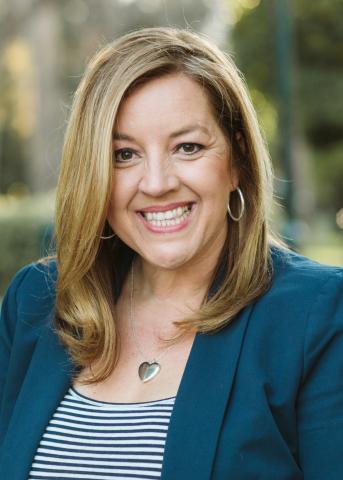
Sen. Angelique Ashby
Sponsored bills
Existing federal law provides for the Supplemental Nutrition Assistance Program (SNAP) , known in California as CalFresh, under which supplemental nutrition assistance benefits allocated to the state by the federal government are distributed to eligible individuals by each county. Under existing state law, households are eligible to receive CalFresh benefits to the extent permitted by federal law. Existing federal law provides that students who are enrolled in college or other institutions of higher education at least half time are not eligible for SNAP benefits unless they meet one of several specified exemptions, including participating in an employment and training program for low-income households that is operated by a state or local government, as specified. Existing law requires the State Department of Social Services, on or before May 31, 2022, to issue a guidance letter to counties, the office of the Chancellor of the California Community Colleges, the office of the Chancellor of the California State University, and the office of the President of the University of California that clarifies the state and federal eligibility requirements for a campus-based program to be a state-approved local educational program that increases employability that qualifies for the CalFresh student eligibility exemption and that clarifies the application and approval process for a campus-based program to be approved by the department as a state-approved local educational program that increases employability. This bill would repeal the existing approval process for a campus-based program to be approved by the department as a state-approved local educational program that increases employability, and would, commencing on or before July 1, 2026, instead require that any campus-based program of study at a public institution of higher education be considered as a state-approved local educational program that increases employability, as specified. The bill would require the office of the Chancellor of the California Community Colleges and the office of the Chancellor of the California State University to, and would request the office of the President of the University of California to, submit to the department a list of their offered campus-based programs of study, and would require the department to approve those programs, as specified. The bill would require the department to implement these provisions through all-county letters or similar instruction, and would require the department to issue a guidance letter to the office of the Chancellor of the California Community Colleges, the office of the Chancellor of the California State University, and the office of the President of the University of California to notify them of these changes. To the extent the bill would increase the duties of counties, the bill would impose a state-mandated local program. Existing law, the Cal Grant Program, establishes the Cal Grant A Entitlement Awards, the Cal Grant B Entitlement Awards, the California Community College Expanded Entitlement Awards, the California Community College Transfer Entitlement Awards, the Competitive Cal Grant A and B Awards, the Cal Grant C Awards, and the Cal Grant T Awards under the administration of the Student Aid Commission. Existing law requires the commission to prescribe the use of standardized student financial aid applications to be used for the Cal Grant Program, among other financial aid programs. The Cal Grant Reform Act revises and recasts the provisions establishing and governing the existing Cal Grant Program into a new Cal Grant Program. Existing law specifies that the act becomes operative only if General Fund moneys over the multiyear forecasts beginning in the 2024–25 fiscal year are available to support ongoing augmentations and actions, and if funding is provided in the annual Budget Act to implement the act. The act requires the commission to determine the timelines and procedures for the application process for awards, as provided. This bill would require the State Department of Social Services and the commission to develop a data-sharing agreement under which the commission is required to share student contact information with the department for the sole purpose of identifying, supporting, and linking students to on- and off-campus basic needs services and resources, including CalFresh direct outreach. The bill would also authorize the department to share student information, pursuant to that data agreement, with the appropriate county human services agency and the appropriate public postsecondary education systemwide office of the campus in which the student is enrolled for the same purpose. The bill would require each campus of the California Community Colleges and the California State University, and would request each campus of the University of California, if data has been shared, commencing with the 2027–28 academic year, to contact those students who opted in to have their information shared with the department for the previously described purpose. This bill would require the commission, upon entering into the above-described data-sharing agreement, to amend the commission's Grant Delivery System to ensure (1) students that might be eligible for the CalFresh program are identified and (2) identified students are able to provide their separate and distinct consent for their contact information to be shared, as specified, for the previously described purpose. The California Constitution requires the state to reimburse local agencies and school districts for certain costs mandated by the state. Statutory provisions establish procedures for making that reimbursement. This bill would provide that, if the Commission on State Mandates determines that the bill contains costs mandated by the state, reimbursement for those costs shall be made pursuant to the statutory provisions noted above.
Existing law authorizes a dealer to charge the purchaser or lessee of a vehicle a document processing charge for the preparation and processing of documents, disclosures, and titling, registration, and information security obligations imposed by state and federal law. Existing law authorizes a dealer that has a contractual agreement with the Department of Motor Vehicles to be a private industry partner to set the document processing charge at up to $85 and authorizes all other dealers to set the document processing charge at up to $70. This bill would, until January 1, 2031, subject to specified requirements, authorize a dealer to charge a document processing charge that exceeds those amounts if the charge does not exceed 1% of the total price of the vehicle and does not exceed $260. The bill would exempt the sale of vehicles to the State of California and any local governmental entity from these provisions. The bill would make a conforming change.
Existing law, the Knox-Keene Health Care Service Plan Act of 1975, provides for the licensure and regulation of health care service plans by the Department of Managed Health Care and makes a willful violation of the act a crime. Existing law provides for the regulation of disability insurers by the Department of Insurance. Existing law requires a health care service plan or disability insurer to allow an individual to enroll in or change their health benefit plan as a result of a specified triggering event. This bill, the PARENT Act, would make pregnancy a triggering event for purposes of enrollment or changing a health benefit plan. Because a willful violation of this provision by a health care service plan would be a crime, the bill would impose a state-mandated local program. The California Constitution requires the state to reimburse local agencies and school districts for certain costs mandated by the state. Statutory provisions establish procedures for making that reimbursement. This bill would provide that no reimbursement is required by this act for a specified reason.
Existing law establishes various public social services programs, including, among others, CalWORKs and the State Supplementary Program for the Aged, Blind and Disabled. Existing law sets forth the purposes of public social services for which state grants are made to counties that include, among others, providing reasonable support and maintenance for needy and dependent families and persons, as specified. This bill would make technical, nonsubstantive changes to those provisions.
Existing law establishes various public social services programs, including, among others, the California Work Opportunity and Responsibility to Kids (CalWORKs) program and CalFresh. Existing law states that the purpose of its provisions relating to public social services is to provide protection, care, and assistance to the people of the state in need of them, and to promote the welfare and happiness of all of the people of the state by providing appropriate aid and services to those who are needy and distressed. This bill would make technical, nonsubstantive changes to that provision.
This measure would, among other things, reaffirm California's commitment to universal human rights and call for the end to the humanitarian catastrophe in Gaza and the immediate release of all hostages.
Existing law provides for the licensure and regulation of residential care facilities for the elderly (RCFEs) by the State Department of Social Services. Under existing law, a licensee of an RCFE that sends a notice of eviction to a resident is required to include in that notice specified information, including the effective date of the eviction and resources available to assist the resident in identifying alternative housing. Under existing law, the RCFE is also required to notify, or mail a copy of the notice to quit to, the resident's responsible person. Existing law requires that a licensee of an RCFE provide a resident with a 30-day notice of eviction, except where the department has approved the RCFE to provide a 3-day notice. Under existing law, a violation of those provisions is generally a misdemeanor. This bill would extend the length of notice that a licensee is required to provide to a resident to 30, 60, or 90 days, depending on the length of the resident's residency in the RCFE, among other factors relating to nonpayment of the rate for basic services within 10 days of the due date. The bill would additionally require a licensee of an RCFE to include in a notice of eviction documentation of the licensee's reasonable efforts to create a safe discharge plan, and would require the plan to include a list of the resident's posteviction needs, goals, and preferences, and a list of discharge locations that meet specified criteria, such as being financially practicable for the resident. The bill would require that a copy of the notice be provided to the local long-term care ombudsman. The bill would prohibit an RCFE from refusing entry to a resident or prohibit a resident from residing in the facility until the notice period has elapsed and the eviction process has concluded. The bill would make refusal of entry in violation of these provisions subject to civil and criminal penalties. Because the bill would create a new crime, the bill would impose a state-mandated local program. The California Constitution requires the state to reimburse local agencies and school districts for certain costs mandated by the state. Statutory provisions establish procedures for making that reimbursement. This bill would provide that no reimbursement is required by this act for a specified reason.
Existing law requires the Judicial Council to collect and maintain statistics, and to publish them at least on a yearly basis, about the compliance of the superior court of each county and each branch court with the standards for the timely disposition of cases, as specified. Existing law requires criminal justice agencies to compile records and data, including a summary of arrests, pretrial proceedings, the nature and disposition of criminal charges, sentencing, incarceration, rehabilitation, and release, about criminal offenders. Existing law requires agencies to report this information to the Department of Justice for each arrest made. This bill would require the Department of Justice to collect and publish, as specified, on its internet website annual statistical reports providing monthly information for each county related to convictions of certain statutes pertaining to, among other things, petty theft and possession of a hard drug, including, by month, the number of people convicted of these statutes and, for each conviction, whether the conviction was classified as a misdemeanor or a felony. This bill would also require every county to submit to the department specified data and information, including the county's annual allocation and expenditure of state and federal funds on sheriff, probation, and court activities, by category and specific grant program, including reimbursement. The bill would require the department, commencing on January 1, 2027, to post this data and information on its internet website. This bill would require, for each person charged under a certain statute pertaining to possession of a hard drug, each superior court to submit specified metrics to the Judicial Council. For each person charged under the above provisions, the bill would require each superior court to submit the outcomes of judicial review proceedings mandated by those statutes, as specified, to the Judicial Council. Commencing January 1, 2027, the bill would require the Judicial Council to publish an annual report related to the specified metrics on its internet website. By requiring counties to submit specified data to the Department of Justice, this bill would create a state-mandated local program. The California Constitution requires the state to reimburse local agencies and school districts for certain costs mandated by the state. Statutory provisions establish procedures for making that reimbursement. This bill would provide that, if the Commission on State Mandates determines that the bill contains costs mandated by the state, reimbursement for those costs shall be made pursuant to the statutory provisions noted above.
Existing law establishes a single system for providing support to local educational agencies and schools and for specified federal educational programs. Existing law provides that the purpose of the statewide system of support is to build the capacity of local educational agencies, as specified. Existing law requires the State Department of Education and the California Collaborative for Educational Excellence to establish a process, administered by the department, to select, subject to approval by the executive director of the State Board of Education, an expert lead agency based on specific expertise in an area of need to conduct activities and build statewide capacity to address that area of need within the statewide system of support, as well as geographic lead agencies for other specified purposes, as provided. This bill, contingent upon an appropriation for these purposes, would require the California Collaborative for Educational Excellence and the Superintendent of Public Instruction, on or before July 1, 2026, to select an applicant county office of education to serve as a Statewide School Library Lead to work collaboratively with the State Board of Education, the department, and the California Collaborative for Educational Excellence, among others, to establish library and literacy services that support the statewide system of support. The bill would require the selected county office of education to employ at least one fully credentialed teacher librarian. The bill would specify that the Statewide School Library Lead's duties include, among other things, enhancing the state's investment in literacy and aligning those efforts with the California Comprehensive State Literacy Plan and working directly with school districts, county offices of education, and charter schools to build capacity to develop excellent school library services and accelerate literacy and learning, including coordinating support, providing direct technical assistance, and delivering professional learning.