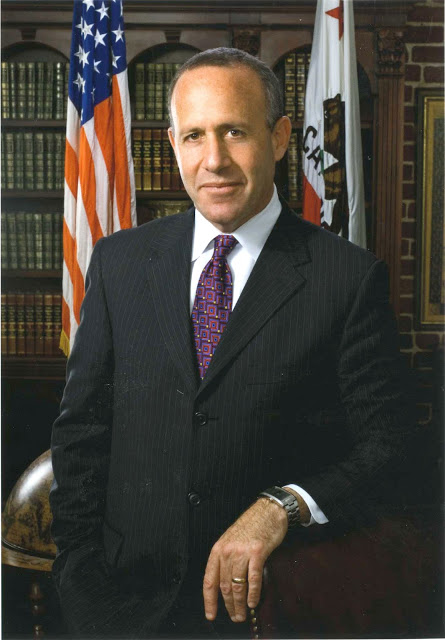
Photo of Darrell Steinberg
D California Senate · District 6

Sen. Darrell Steinberg

Compare
Total votes
41,589
all sessions
Attendance
98%
698 missed
Near the chamber average
With party
99%
of cast votes
Near the chamber average
Bipartisan score
0%
crosses aisle rarely
Near the chamber average
Sponsored
1,496
bills & resolutions
Higher than 97% of chamber peers
Committees
0
assignments
1,496 bills and resolutions

Sponsored bills

Total
1,496
Primary
401
Co-sponsor
1,095
This page
1,496
matching current filters
Co-sponsor SCR 69
Signed into law · California Senate · Co-sponsor
Relative to California Autism Awareness Month.

This measure would designate April 2012 as California Autism Awareness Month, would affirm the Legislature's commitment to the important issues related to autism spectrum disorders (ASDs) , and would emphasize that each and every individual with an ASD is a valued and important member of our society.

Signed into law May 3, 2012 1 co-sponsor
Co-sponsor SB 829
Signed into law · California Senate · Co-sponsor
Public contracts: public entities: project labor agreements.

Existing law sets forth the requirements for the solicitation and evaluation of bids and the awarding of contracts by public entities and authorizes a public entity to use, enter into, or require contractors to enter into, a project labor agreement for a construction project if the agreement includes specified taxpayer protection provisions. Existing law also provides that if a charter provision, initiative, or ordinance of a charter city prohibits the governing board's consideration of a project labor agreement for a project to be awarded by the city, or prohibits the governing board from considering whether to allocate funds to a city-funded project covered by such an agreement, state funding or financial assistance may not be used to support that project, as specified. This bill would additionally provide that if a charter provision, initiative, or ordinance of a charter city prohibits, limits, or constrains in any way the governing board's authority or discretion to adopt, require, or utilize a project labor agreement that includes specified taxpayer protection provisions for some or all of the construction projects to be awarded by the city, state funding or financial assistance may not be used to support any construction projects awarded by the city, as specified.

Signed into law Apr 26, 2012 1 co-sponsor
Co-sponsor SB 1470
In committee · California Senate · Co-sponsor
Mortgages and deeds of trust: foreclosure.

(1) Existing law, until January 1, 2013, requires a mortgagee, trustee, beneficiary, or authorized agent to contact the borrower prior to filing a notice of default to explore options for the borrower to avoid foreclosure, as specified. Existing law requires a notice of default to include a declaration stating that the trustee, beneficiary, or authorized agent has contacted the borrower, or has tried with due diligence to contact the borrower, or that no contact was required for a specified reason. This bill would additionally require the borrower to be provided, if applicable, with a deadline for the borrower to submit an initial application for a loan modification. The bill would require the declaration to also state that the borrower was not a servicemember or dependent of a servicemember entitled to benefits under the federal Servicemembers Civil Relief Act, that the mortgagee, trustee, beneficiary, or authorized agent has possession of the note and mortgage, or deed of trust, and other specified documents that evidence the right to foreclose, and has attached copies thereof to the declaration, as specified, or a separate declaration containing specified information, if the above described documents cannot be located. The bill would prescribe procedures and notices that must be sent by the mortgagee, trustee, beneficiary, or authorized agent if the notice of default was filed prior to January 1, 2013, and a notice of rescission was not subsequently recorded. The bill would prohibit recording a notice of default unless a specified written notice has been sent at least 14 days before a notice of default is recorded. The bill would prohibit a notice of default from being recorded while a loan modification application is pending, under specified conditions, and would establish additional procedures to be followed regarding the loan modification application before a notice of default could be recorded. (2) Existing law imposes various requirements that must be satisfied prior to exercising a power of sale under a mortgage or deed of trust, including, among other things, recording a notice of sale. This bill would impose additional requirements pertaining to applications for loan modifications that must be satisfied prior to recording a notice of sale in order to exercise a power of sale. The bill would require a written notice to the borrower after the postponement of a foreclosure sale in order to advise the borrower of any new sale date, time, and location when the new sale date is at least 10 calendar days after the date of postponement, as specified. The bill would establish procedures for a loan modification application process to be used after a notice of sale has been recorded. The bill would prohibit a notice of sale from being recorded under certain conditions, including, among others, if the borrower is in compliance with a loan modification plan, forbearance, or loan repayment plan, as specified, or if a short sale or deed-in-lieu of foreclosure has been approved, as specified. The bill would require mortgagees, trustees, beneficiaries, or authorized agents to track and record specified data pertaining to loan modification agreements. The bill would prohibit the collection of late fees while a loan modification or short sale is being considered, if certain criteria are met. The bill would authorize a borrower to seek an injunction of a pending trustee's sale if a notice of sale has been recorded and the borrower reasonably believes that the mortgagee, trustee, beneficiary, or authorized agent failed to comply with specified requirements. The bill would authorize the greater of actual damages or $10,000 in statutory damages if there is a failure to comply with specified requirements by the mortgagee, trustee, beneficiary, or authorized agent and the property is sold at a foreclosure sale. The bill would authorize the greater of treble damages or $50,000 in statutory damages if the failure to comply is found to be intentional or reckless or resulted from willful misconduct, as specified. The bill would establish the Office of Homeowner Protection, which would have responsibility, among other things, for responding to inquiries and complaints from individuals regarding foreclosures and other procedures and requirements as described above, attempting to seek compliance by mortgagees, trustees, beneficiaries, or authorized agents regarding foreclosures and other procedures and requirements as described above, and maintaining an Internet Web site that is capable of receiving inquiries and complaints from individuals and that provides information to the public about publicly available resources intended to help individuals avoid foreclosure. The bill would express the intent of the Legislature that the office be funded by payments made available to the Attorney General via the Special Deposit Fund, created pursuant to specified federal settlement agreements. (3) The bill would repeal duplicate provisions of law.


In committee Apr 17, 2012 1 co-sponsor
Primary SB 654
Passed · California Senate · Lead sponsor
Redevelopment.

Existing law suspends various activities of redevelopment agencies and prohibits the agencies from incurring indebtedness for a specified period. Existing law also dissolves redevelopment agencies and community development agencies, as of October 1, 2011, and designates successor agencies, as defined. Existing law requires successor agencies to wind down the affairs of the dissolved redevelopment agencies and to, among other things, repay enforceable obligations, as defined, and to remit unencumbered balances of redevelopment agency funds, including housing funds, to the county auditor-controller for distribution to taxing entities. Existing law authorizes the city, county, or city and county that authorized the creation of a redevelopment agency to retain the housing assets, functions, and powers previously performed by the redevelopment agency, excluding amounts on deposit in the Low and Moderate Income Housing Fund. This bill would revise the definition of the term "enforceable obligation" and modify provisions relating to the transfer of housing funds and responsibilities associated with dissolved redevelopment agencies. The bill would provide that any amounts on deposit in the Low and Moderate Income Housing Fund of a dissolved redevelopment agency be transferred to specified entities. The bill would make conforming changes. Existing law provides that upon a specified date, agreements, contracts, or arrangements between the city or county, or city and county that created the redevelopment agency and the redevelopment agency are invalid. Notwithstanding this provision, an agreement that provided loans or other startup funds for the agency that was entered into within 2 years of the formation of the agency is valid and binds the successor agency. The bill would expand this exception to include an agreement involving a loan specific to a project area and other specified obligations.

Passed Apr 16, 2012 0 co-sponsors
Primary SB 547
Vetoed · California Senate · Lead sponsor
Public school performance accountability.

(1) Existing law requires the Superintendent of Public Instruction, with the approval of the State Board of Education, to develop an Academic Performance Index (API) , consisting of specified indicators, to measure the performance of schools and pupils. This bill would make these provisions inoperative on July 1, 2014, and repeal them as of January 1, 2015. The bill would require the Superintendent, in consultation with a specified advisory committee, to develop an Education Quality Index (EQI) , which would replace the API and consist of a State Assessment Index, a Graduation Rate Index, a College Preparedness Index, and a Career Readiness Index. The bill would require that these indices consist of specified criteria. In developing the EQI, the Superintendent and this advisory committee would be required to consult with the University of California, the California State University, the California Community Colleges, the Employment Development Department, and other appropriate entities. The bill would require the state board to provide opportunities for public input, make changes as necessary, and adopt the EQI no later than August 1, 2014. Commencing with the 2014–15 school year, the bill would require that all schools and school districts be evaluated using an EQI value. The bill would require the Superintendent to report to the Governor and the appropriate policy and fiscal committees of the Legislature by July 1, 2013, and annually thereafter, specified information relating to the creation of additional indices. The bill also would require the Superintendent, in consultation with a specified advisory committee, and subject to an appropriation in the annual Budget Act or another statute for this purpose, to contract for an independent evaluation of the effectiveness and reliability of the EQI and any statutory changes recommended for improvement, and to submit the evaluation and recommendations in a report to the Governor and the appropriate policy and fiscal committees of the Legislature by July 1, 2018. To the extent that this bill would impose new duties on school districts in connection with the establishment of the EQI, including, but not limited to, new reporting duties, it would impose a state-mandated local program. This bill would also make conforming and clarifying changes relating to the duties of a specified advisory committee. The bill would require this advisory committee, for purposes of work relating to the EQI, to seek input through the establishment of subcommittees or other methods from persons with expertise in various areas, and, commencing January 1, 2012, through July 1, 2016, to hold a public meeting at least once each quarter per year. (2) The California Constitution requires the state to reimburse local agencies and school districts for certain costs mandated by the state. Statutory provisions establish procedures for making that reimbursement. This bill would provide that, if the Commission on State Mandates determines that the bill contains costs mandated by the state, reimbursement for those costs shall be made pursuant to these statutory provisions.

Vetoed Mar 1, 2012 0 co-sponsors
Primary SCR 62
Signed into law · California Senate · Lead sponsor
Relative to Spay/Neuter Awareness Month.

This measure would declare the month of February 2012, to be Spay/Neuter Awareness Month, request that Californians observe that month by having their dogs or cats spayed or neutered and by contributing to organizations that provide spay and neuter services, and request veterinarians to work with animal shelters and rescue groups that provide spay and neuter services.

Signed into law Feb 28, 2012 0 co-sponsors
Primary SB 653
died · California Senate · Lead sponsor
Local taxation: counties: school districts: community college districts: county offices of education: general authorization.

The California Constitution prohibits the Legislature from imposing taxes for local purposes, but allows the Legislature to authorize local governments to impose them. This bill would authorize the governing board of any county or city and county, any school district, any community college district, and any county office of education subject to specified constitutional and voter approval requirements, to levy, increase, or extend a local personal income tax, transactions and use tax, vehicle license fee, and excise tax, including, but not limited to, an alcoholic beverages tax, a cigarette and tobacco products tax, a sweetened beverage tax, and an oil severance tax, as provided. This bill would require the State Board of Equalization, the Franchise Tax Board, or the Department of Motor Vehicles to perform various functions incident to the administration and operation of a local tax if the county or city and county, the school district, the community college district, or the county office of education contracts with the state agency to perform those functions. This bill would, for each fiscal year, also require a county or city and county, a school district, a community college district, and a county office of education to reimburse the state for any losses incurred by the state General Fund due to any deductions allowed under the Personal Income Tax Law and the Corporation Tax Law for any local taxes levied, increased, or extended pursuant to this authorization by that county or city and county, school district, community college district, or county office of education, as specified. This bill would, for each fiscal year, require the Franchise Tax Board, with the assistance of the State Board of Equalization, to estimate the losses incurred by the state General Fund attributable to each county or city and county, a school district, a community college district, or a county office of education due to any local taxes levied, increased, or extended by that county or city and county, school district, community college district, or county office of education.

died Feb 1, 2012 0 co-sponsors
Co-sponsor AB 181
Failed · California Assembly · Co-sponsor
Foster youth: mental health bill of rights.

Existing law provides that, when a child is removed from his or her family by the juvenile court, placement of the child in foster care should secure, as nearly as possible, the custody, care, and discipline equivalent to that which should have been given the child by his or her parents. Existing law provides enumerated rights for children who are placed in foster care. Existing law establishes the Office of the State Foster Care Ombudsperson to disseminate specified information, including the stated rights of foster youth, and to investigate and attempt to resolve complaints made by or on behalf of children placed in foster care, related to their care, placement, or services. This bill would enumerate rights for foster youth relating to mental health services. The bill would require the office, in consultation with various entities, to develop, no later than July 1, 2012, standardized information explaining the rights specified and to distribute this information to foster youth.

Failed Feb 1, 2012 1 co-sponsor
Primary SB 652
died · California Senate · Lead sponsor
Professional sports teams: relocation agreements.

Existing law regulates contracts for particular transactions, including contracts for health studio services, the lease or rental of athletic facilities, and the sale of sport memorabilia. This bill would prohibit a professional sports team that has previously entered into a financial agreement with a public entity from entering into a relocation agreement, as defined, unless it first provides to the public entity a bond, undertaking, or deposit in an amount adequate to ensure that its obligations under the financial agreement will be satisfied. The bill also would prohibit a professional sports team from entering into a relocation agreement if that team is in breach or default of any financial agreement, or if entry into a relocation agreement would cause a breach or default of any financial agreement, unless and until the breach or default is cured. The bill would provide that any agreement entered into in violation of these prohibitions is contrary to public policy and is unenforceable. The bill would authorize the home public entity and home community, as defined, to seek, and would require the court to grant, an injunction to enjoin performance of any act under a relocation agreement that is made unenforceable by this bill. The bill would provide that performance under a relocation agreement entered into in violation of these prohibitions shall not be enjoined if all of the financial obligations the professional sports team owes to a home public entity and home community under a financial agreement are satisfied in full. The bill would require that any action or proceeding pursuant to these provisions be brought in a court of competent jurisdiction in the county in which the home public entity and home community are located. The bill would provide that these provisions apply to any relocation agreement entered on or after January 1, 2011. This bill would declare that it is to take effect immediately as an urgency statute.

died Feb 1, 2012 0 co-sponsors
Primary SB 148
In committee · California Senate · Lead sponsor
Partnership academies: Clean Technology and Renewable Energy Job Training, Career Technical Education, and Dropout Prevention Program.

Existing law establishes the partnership academies program as a school-business partnership program to provide occupational training to educationally disadvantaged high school pupils. Under existing law, the Superintendent of Public Instruction is required to award grants to school districts maintaining high schools to plan, establish, and maintain these partnership academies. Existing law requires the surcharge imposed on the consumption of electricity in the state to be transferred to the Energy Resources Programs Account in the General Fund, which is available, upon appropriation by the Legislature, for ongoing energy programs and projects. This bill would require the Controller annually to allocate $8,000,000 from the Energy Resources Program Account, upon appropriation by the Legislature, to the Superintendent of Public Instruction for expenditure in the form of grants to school districts to be allocated pursuant to the existing provisions for creating and maintaining partnership academies. The bill would require a grantee to implement or maintain a partnership academy that focuses on employment in clean technology businesses and renewable energy businesses and provides skilled workforces for the products and services for energy or water conservation, or both, renewable energy, pollution reduction, or other technologies. The bill would require the State Energy Resources Conservation and Development Commission, in consultation with the State Department of Education, to develop guidelines, which would be exempted from the Administrative Procedure Act, to ensure that programs receiving grants reflect current state energy policies and priorities as well as provide skills and education linked to the needs of relevant industries. The bill would authorize a school district to apply for planning grants for implementing a partnership academy and would allow the Superintendent to expend up to 5% of the funds transferred to the Superintendent to pay the costs incurred in the administration of this program. The bill would require the Superintendents, in consultation with the State Energy Resources Conservation and Development Commission, to provide a report to the Legislature that includes a description of the curriculum and substance of the programs funded by grants awarded pursuant to these provisions, and specified data. The bill would provide that the bill's provisions would become inoperative on June 30, 2017, and, as of January 1, 2018, would repeal these provisions.

In committee Jan 31, 2012 0 co-sponsors
Showing 191 to 200 of 1,496 bills
Previous 1 19 20 21 150 Next