

Existing law, the California Residential Care Facilities for the Elderly Act, provides for the licensure of residential care facilities for the elderly by the State Department of Social Services and makes a violation of those provisions a crime. Existing law authorizes a person to request an inspection of a facility by transmitting notice of an alleged violation of law to the department. Existing law requires the department to review a complaint and conduct an onsite inspection within 10 days and requires the department to provide the substance of the complaint to the licensee no earlier than the time of the inspection. This bill, beginning July 1, 2015, would make various changes to this complaint procedure, including prohibiting the department from giving a licensee advance notice of an investigation regarding a complaint and requiring the department to conduct an onsite investigation within one working day of receiving a complaint if the complaint alleges physical abuse, sexual abuse, or a threat of imminent danger. The bill would state the intent of the Legislature that the department conduct investigations in the manner required to ensure maximum effectiveness while respecting the rights of residents and to complete an investigation, except as specified, within 90 days of receiving a complaint, or within 30 days when the complaint alleges physical abuse, sexual abuse, or a threat of imminent danger. The bill would prohibit a licensee, or officer or employee of the licensee, from interfering with or obstructing an investigation conducted pursuant to these provisions and would require the department to assess an immediate civil penalty, as specified, per day per violation for violations of that prohibition. Because a violation of this prohibition would also be a crime, the bill would impose a state-mandated local program. The bill would authorize a complainant who is dissatisfied with the department's investigation, findings, or enforcement to file an appeal, as specified, and would require the department to inform the complainant of these appeal rights, as specified. Existing law prohibits a licensee from discriminating or retaliating in any manner against a person receiving the services of the licensee's residential care facility for the elderly, or against an employee of the licensee's facility, on the basis, or for the reason that, the person or employee or any other person has initiated or participated in the filing of a complaint, grievance, or a request for inspection with the department, or has initiated or participated in the filing of a complaint, grievance, or request for investigation with the appropriate local ombudsman, or with the state ombudsman. This bill would require the department to assess an immediate civil penalty, as specified, per day for each violation of these provisions. The California Constitution requires the state to reimburse local agencies and school districts for certain costs mandated by the state. Statutory provisions establish procedures for making that reimbursement. This bill would provide that no reimbursement is required by this act for a specified reason.
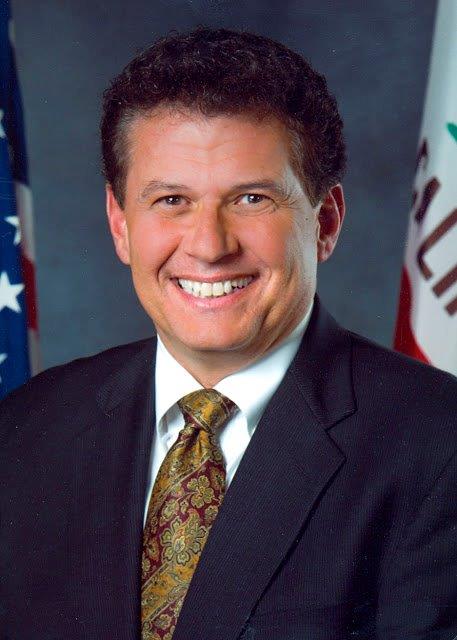
Sponsored bills
(1) Under existing law, the Public Utilities Commission, commonly known as the PUC, has regulatory authority over public utilities, including electrical corporations, as defined. The Public Utilities Act prohibits any electrical corporation from beginning the construction of, among other things, a line, plant, or system, or of any extension thereof, without having first obtained from the PUC a certificate that the present or future public convenience and necessity require or will require that construction. A violation of the act, or an order, decision, rule, direction, demand, or requirement of the PUC is a crime. Existing federal law requires an operator of a nuclear fission thermal powerplant to obtain from the United States Nuclear Regulatory Commission a license for the operation of the powerplant. This bill would enact the Nuclear Energy Planning and Responsibility Act and would require the PUC to require an applicant electrical corporation applying for ratepayer funding, or reopening an existing application for ratepayer funding, for the relicensing of a nuclear fission thermal powerplant with a generation capacity of 50 megawatts or greater by the United States Nuclear Regulatory Commission, to submit a detailed study of the project needs and costs in order to assess the cost-effectiveness of the continued operation of the nuclear fission thermal powerplant. Because a violation of this provision would be a crime, this bill would impose a state-mandated local program. The bill would require the PUC to make the study available on its Internet Web site and to independently review the study to assess the cost-effectiveness of the continued operation of the nuclear fission thermal powerplant. (2) The California Constitution requires the state to reimburse local agencies and school districts for certain costs mandated by the state. Statutory provisions establish procedures for making that reimbursement. This bill would provide that no reimbursement is required by this act for a specified reason.
Existing law, the California Residential Care Facilities for the Elderly Act, provides for the licensure and regulation of residential care facilities for the elderly by the State Department of Social Services. Existing law requires that every residential care facility for the elderly be subject to unannounced visits by the department, that reports on the results of each inspection, evaluation, or consultation shall be kept on file by the department, and that all inspection reports, consultation reports, lists of deficiencies, and plans of correction shall be open to the public. This bill would require the department to post, on the department's Internet Web site, all inspection reports, consultation reports, violations, and plans of correction. This bill would also require the department to post on the department's Internet Web site the number and nature of complaints filed against a facility within each calendar year, including whether a complaint is undergoing investigation, whether it has been substantiated or unsubstantiated, and whether it has been found to be inconclusive.
Existing law requires the Department of Veterans Affairs to disburse funds, appropriated to the department for the purpose of supporting county veterans service officers pursuant to the annual Budget Act, on a pro rata basis, to counties that comply with certain conditions. This bill would authorize the department, in conjunction with the California Association of County Veterans Service Officers, no later than July 1, 2015, to develop an allocation formula based upon performance standards that encourage innovation and reward outstanding service by county veterans service officers, and, if that allocation formula is developed, the bill would require those moneys appropriated for support of county veterans service offices in the annual Budget Act to be allocated in accordance with that formula, as specified.
(1) Existing law authorizes the governing board of a school district or a county office of education to offer independent study to meet the educational needs of pupils in accordance with prescribed criteria. This bill would, notwithstanding any other law, commencing with the 2015–16 school year and ending on June 30, 2022, authorize a school district or county office of education to offer independent study courses in accordance with prescribed conditions, including, among others, that the courses be taught under the general supervision of certificated employees who hold the appropriate subject matter credential, that the courses are annually certified, by school district or county office of education governing board resolution, to be of the same rigor and educational quality as equivalent classroom-based courses, and that certificated employees assess whether each pupil is making satisfactory educational progress and conduct teacher-pupil meetings in person at least twice per calendar month. The bill would provide that statewide testing results for pupils enrolled in these courses shall be reported and assigned to the school in which a pupil is enrolled for classroom-based courses and to any school district or county office of education within which that school's testing results are aggregated. The bill also would provide that a signed learning agreement, as specified, shall be completed and on file, and would specify the computation of average daily attendance for these courses. The bill would prohibit pupils from being required to enroll in the courses. (2) Existing law requires the ratio of average daily attendance for independent study pupils 18 years of age or less to full-time equivalent certificated employees responsible for independent study to not exceed a specified ratio. This bill would revise the pupil-to-teacher ratios by grade span, as specified.
Existing law, as amended by Proposition 21, as approved by the voters at the March 7, 2000, statewide primary election, provides that any person who actively participates in any criminal street gang with knowledge that its members engage in or have engaged in a pattern of criminal gang activity, and who willfully promotes, furthers, or assists in any felonious criminal conduct by members of that gang, shall be punished, as specified. Existing law defines "a pattern of criminal gang activity" as the commission of, attempted commission of, conspiracy to commit, or solicitation of, sustained juvenile petition for, or conviction of, 2 or more listed offenses. Proposition 21 may be amended by a statute passed by a 23 vote of the membership of each house of the Legislature. This bill would add human trafficking as an offense that may be used to establish a pattern of criminal gang activity. Because this bill would amend Proposition 21, the bill requires a 23 vote. Because this bill would change the definition of a crime and require a higher level of service from local prosecutors in pleading and proving the enhancement, it would impose a state-mandated local program. The bill would also correct cross-references and make conforming changes. The California Constitution requires the state to reimburse local agencies and school districts for certain costs mandated by the state. Statutory provisions establish procedures for making that reimbursement. This bill would provide that no reimbursement is required by this act for a specified reason.
Existing law provides that certain peace officers, firefighters, and other specified state and local public employees are entitled to a leave of absence without loss of salary while disabled by injury or illness arising out of and in the course of employment. The leave of absence is in lieu of temporary disability payments or maintenance allowance payments otherwise payable under the workers' compensation system. This bill would extend this leave of absence entitlement to certain peace officers who are not already described in these provisions, including, but not limited to, any deputy sheriff employed in a custodial assignment, a marshal or deputy marshal of a superior court or county, certain park rangers designated by a local agency, and members of a California Community College police force.
Existing law vests the Public Utilities Commission with regulatory authority over public utilities, including electrical corporations. Pursuant to its existing authority, the commission issued Electrical Rule 21 establishing operational and metering requirements for a generation facility to be connected to an electrical corporation's distribution system. Existing law relative to private energy producers requires every electric utility, as defined, to develop a standard contract or tariff providing for net energy metering, as defined, and to make this contract or tariff available to eligible customer-generators, as defined, upon request for generation by a renewable electrical generation facility, as defined. The existing definition of an eligible customer-generator requires that the generating facility use a renewable source of energy, as specified, and have a generating capacity of not more than one megawatt. Existing law requires that every electric utility ensure that requests for an interconnection agreement from an eligible customer-generator are processed in a time period not to exceed 30 working days from the date it receives a completed application form from the eligible customer-generator for an interconnection agreement. This bill would require the commission to determine criteria that would allow an independent generation facility, as defined, to apply for interconnection to the utility electric distribution grid under the fast track review process, as defined under Rule 21. Under existing law, a violation of an order, rule, direction, demand, or requirement of the commission is a crime. Because a failure of an electric utility to process an interconnection request from an independent generation facility pursuant to Rule 21 would be a crime, this bill would impose a state-mandated local program. The California Constitution requires the state to reimburse local agencies and school districts for certain costs mandated by the state. Statutory provisions establish procedures for making that reimbursement. This bill would provide that no reimbursement is required by this act for a specified reason.
Existing law, the California Residential Care Facilities for the Elderly Act, provides for the licensure of residential care facilities for the elderly by the State Department of Social Services. Existing law requires any person seeking a license for a residential care facility for the elderly to file an application with the department, as specified. Among other required application information, if the applicant is a firm, association, organization, partnership, business trust, corporation, or company, evidence of reputable and responsible character is required to be submitted as to the members or shareholders thereof, and the person in charge of the residential care facility for the elderly for which the application for issuance of license or special permit is made. This bill would, among other things, delete the above requirement to submit evidence of reputable and responsible character as to members or shareholders of a firm, association, organization, partnership, business trust, corporation, or company and the person in charge of the facility, and instead would require the applicant to disclose whether the licensee is a for-profit or not-for-profit provider, the names and license numbers of other facilities owned, managed, or operated by the same licensee, and the names and addresses of any persons or organizations listed as owner of record in the real estate, including the buildings and grounds appurtenant to the buildings. The bill would require an applicant to provide additional information, including, but not limited to, the applicant's history of compliance with the requirements imposed under specified facility licenses or a similarly licensed facility, applicable state and federal laws and regulations, and requirements governing the operators of those facilities. The bill would also require that specified applicant information be cross checked with the State Department of Public Health to determine if the applicant has a prior history of operating, holding a position in, or having ownership in, specified licensed facilities. Existing law requires the Director of Social Services to establish an automated license information system on licensees and former licensees of licensed residential care facilities for the elderly. The system is required to maintain a record of any information that may be pertinent for licensure. A violation of the provisions of the act is a crime. This bill would require the department, among other things, by July 1, 2015, to post on its Internet Web site residential care facility for the elderly profiles, with specified data. The bill would require, upon completion of a new community care licensing data system, or as soon as the current data system permits, each licensee of a residential care facility for the elderly to submit a profile of resident characteristics to the department on an annual basis, including, but not limited to, the number of residents in the facility who are bedridden, nonambulatory, receiving hospice care, have one or more allowable health conditions, have one or more restricted or prohibitive health conditions, or who have dementia. The bill would also require the department to develop and implement a ratings system by July 1, 2019, as provided. Because the bill would create a new crime, it would impose a state-mandated local program. Existing law authorizes the department to deny any application for a residential care facility for the elderly license or to suspend or revoke those licenses on certain grounds, including, but not limited to, a violation by the licensee of applicable provisions or of the rules and regulations adopted under those provisions, conduct that is inimical to the health, morals, welfare, or safety of either an individual in or receiving services from the facility or the people of the state, or engaging in acts of financial malfeasance concerning the operation of a facility. This bill would require the department to deny an application for licensure or authorize it to subsequently revoke a license on the grounds that the applicant knowingly made a false statement of fact with regard to information that was required by the application for licensure, and would authorize the department to deny an application for licensure or subsequently revoke a license on the grounds that the applicant did not disclose enforcement actions on the application as required. The bill would also authorize the department to deny an application for licensure on the grounds that the applicant has a history of noncompliance with the requirements imposed under specified facility licenses or a similarly licensed facility in another state, applicable state and federal laws and regulations, and the requirements governing the operators of those facilities. The California Constitution requires the state to reimburse local agencies and school districts for certain costs mandated by the state. Statutory provisions establish procedures for making that reimbursement. This bill would provide that no reimbursement is required by this act for a specified reason.
The Personal Income Tax Law conforms to specified provisions of the federal Mortgage Forgiveness Debt Relief Act of 2007, relating to the exclusion of the discharge of qualified principal residence indebtedness, as defined, from a taxpayer's income if that debt is discharged after January 1, 2007, and before January 1, 2010, as provided. The federal Emergency Economic Stabilization Act of 2008 extended the operation of those provisions to debt that is discharged before January 1, 2013. This bill would extend the operation of the exclusion of the discharge of qualified principal residence indebtedness to debt that is discharged on or after January 1, 2013, and before January 1, 2014. The bill would become operative only if SB 391 is enacted and takes effect. This bill would declare that it is to take effect immediately as an urgency statute.