

(1) Existing law, the Safe, Clean, and Reliable Drinking Water Supply Act of 2012, if approved by the voters, would authorize the issuance of bonds in the amount of $11,140,000,000 pursuant to the State General Obligation Bond Law to finance a safe drinking water and water supply reliability program. Existing law provides for the submission of the bond act to the voters at the November 4, 2014, statewide general election. This bill would repeal these provisions. (2) Under existing law, various measures have been approved by the voters to provide funds for water supply and protection facilities and programs. Existing law, the Safe Drinking Water, Water Quality and Supply, Flood Control, River and Coastal Protection Bond Act of 2006, an initiative measure approved by the voters as Proposition 84 at the November 7, 2006, statewide general election, authorizes the issuance of bonds in the amount of $5,388,000,000 for the purposes of financing safe drinking water, water quality and supply, flood control, natural resource protection, and park improvements. Existing law, the Disaster Preparedness and Flood Prevention Bond Act of 2006, approved by the voters as Proposition 1E at the November 7, 2006, general statewide election, authorizes the issuance of bonds in the amount of $4,090,000,000 for the purposes of financing disaster preparedness and flood prevention projects. Existing law, the Water Security, Clean Drinking Water, Coastal and Beach Protection Act of 2002, an initiative measure approved by the voters as Proposition 50 at the November 5, 2002, statewide general election, authorizes, for the purposes of financing a safe drinking water, water quality, and water reliability program, the issuance of bonds in the amount of $3,440,000,000. Existing law, the Costa-Machado Water Act of 2000, approved by the voters as Proposition 13 at the March 7, 2000, statewide primary election, authorizes the issuance of general obligation bonds in the amount of $1,970,000,000 for the purposes of financing a safe drinking water, clean water, watershed protection, and flood protection program. Existing law, the Safe, Clean, Reliable Water Supply Act, approved by the voters as Proposition 204 at the November 5, 1996, statewide general election, authorizes the issuance of general obligation bonds in the amount of $995,000,000 for the purposes of financing a safe, clean, reliable water supply program. Existing law, the Water Conservation and Water Quality Bond Law of 1986, approved by the voters as Proposition 44 at the June 3, 1986, statewide primary election, authorizes the issuance of general obligation bonds in the amount of $150,000,000 for the purposes of financing a water conservation and water quality program. This bill would enact the Water Quality, Supply, and Infrastructure Improvement Act of 2014, which, if approved by the voters, would authorize the issuance of bonds in the amount of $7,120,000,000 pursuant to the State General Obligation Bond Law to finance a water quality, supply, and infrastructure improvement program. This bill, upon voter approval, would reallocate $425,000,000 of the unissued bonds authorized for the purposes of Propositions 1E, 13, 44, 50, 84, and 204 to finance the purposes of a water quality, supply, and infrastructure improvement program. This bill would provide for the submission of these provisions to the voters at the November 4, 2014, statewide general election. (3) This bill would declare that it is to take effect immediately as an urgency statute.
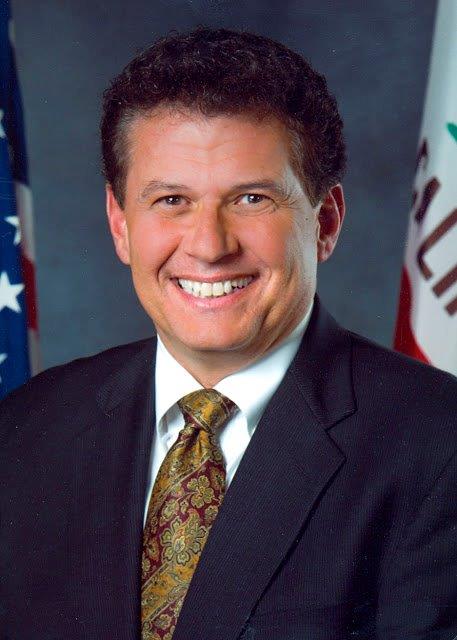
Sponsored bills
Existing law, the Leroy F. Greene School Facilities Act of 1998, requires the State Allocation Board to allocate to applicant school districts prescribed per-unhoused-pupil state funding for construction and modernization of school facilities, including hardship funding and supplemental funding for site development and acquisition. Existing law requires all new construction projects submitted to the Division of the State Architect pursuant to the act to include locks that allow doors to classrooms and rooms with an occupancy of 5 or more persons to be locked from the inside, except as specified. This bill, on and after January 1, 2016, would additionally require all modernization projects submitted to the Division of the State Architect pursuant to those provisions to include those locks, except as specified. The bill would require the State Allocation Board to adopt regulations to adjust the modernization per-pupil grant allowance to reflect the associated cost of installing the locks. This bill would, if federal funding becomes available for purposes of school safety, require a school district to first consider using these funds to install locks that are lockable from the inside in every classroom and every room with an occupancy of 5 or more persons, except as specified. By imposing new requirements on school districts, the bill would impose a state-mandated local program. The California Constitution requires the state to reimburse local agencies and school districts for certain costs mandated by the state. Statutory provisions establish procedures for making that reimbursement. This bill would provide that, if the Commission on State Mandates determines that the bill contains costs mandated by the state, reimbursement for those costs shall be made pursuant to these statutory provisions.
Existing law provides for the compensation of victims and derivative victims of specified types of crimes by the California Victim Compensation and Government Claims Board from the Restitution Fund, a continuously appropriated fund, for specified losses suffered as a result of those crimes. Existing law sets forth eligibility requirements and specified limits on the amount of compensation the board may award. This bill would include victims of financial elder or dependent adult abuse within the definition of crimes that are eligible for compensation under these provisions, as specified, and provide reimbursement for financial counseling, as specified, for those victims. The bill would make a derivative victim ineligible for compensation if the only crime the victim suffered was financial elder or dependent adult abuse. The bill would also provide related legislative findings and declarations. By expanding the authorization for the use of moneys in the Restitution Fund, a continuously appropriated fund, this bill would make an appropriation.
The California Constitution prohibits the state from discriminating against, or granting preferential treatment to, any individual or group on the basis of race, sex, color, ethnicity, or national origin in the operation of public employment, public education, or public contracting. This measure would eliminate this prohibition on state discrimination or preference in the operation of public education.
This measure would proclaim the week of April 23 to April 30, 2014, inclusive, as Black April Memorial Week, a special time for Californians to remember the countless lives lost during the Vietnam War era, and to hope for more justice and liberty for the people of Vietnam.
Existing law, the Political Reform Act of 1974, provides for the comprehensive regulation of campaign financing, including requiring the reporting of campaign contributions and expenditures and imposing other reporting and recordkeeping requirements on campaign committees. Existing law additionally imposes disclosure statement requirements with respect to advertisements supporting or opposing a candidate or ballot measure paid for by donors making contributions of specified amounts or by independent expenditures and defines several terms and phrases for these purposes. Existing law makes a knowing or willful violation of the Political Reform Act of 1974 a misdemeanor and subjects offenders to criminal penalties. This bill would repeal and recast several definitions. The bill would modify a committee identification requirement and a disclosure statement requirement relating to advertisements for or against any ballot measure paid for by a committee. The bill would impose new disclosure statement requirements for political advertisements regarding a ballot measure that are radio advertisements, prerecorded telephonic messages, television or video advertisements, or mass mailing or print advertisements that would require the identification of identifiable contributors, ballot measures, and other funding details, as specified. By introducing new disclosure requirements, the violation of which would be a misdemeanor, the bill would create a new crime, thereby imposing a state-mandated local program. Existing law creates the Fair Political Practices Commission, and gives it primary responsibility for the impartial, effective administration and implementation of the Political Reform Act of 1974. The bill would require the Fair Political Practices Commission to promulgate regulations related to identifying and reporting persons who are the original sources of funds transferred through committees or other persons to determine identifiable contributors by January 1, 2016. The bill would require the Commission to promulgate regulations prohibiting a recipient of funds transferred by an identifiable contributor from depositing the funds until required applicable reports have been received by the recipient. This bill would incorporate additional changes in Section 84511 of the Government Code proposed by A.B. 510, that would become operative only if A.B. 510 and this bill are both chaptered and become effective on or before January 1, 2015, and this bill is chaptered last. The California Constitution requires the state to reimburse local agencies and school districts for certain costs mandated by the state. Statutory provisions establish procedures for making that reimbursement. This bill would provide that no reimbursement is required by this act for a specified reason. The Political Reform Act of 1974, an initiative measure, provides that the Legislature may amend the act to further the act's purposes upon a 23 vote of each house and compliance with specified procedural requirements. This bill would declare that it furthers the purposes of the act.
Existing law requires the Secretary of State to appoint a competent person to the position of Keeper of the Archives. Existing law specifies that the Keeper of the Archives is responsible for the preservation and indexing of material deposited in the State Archives, and shall make the material readily available for use. This bill would, on July 1, 2014, change the name of the Keeper of the Archives to the Chief of Archives. Existing law, the State Records Management Act, provides for the Department of General Services to manage state records, as specified. This bill would, on July 1, 2014, provide that the Secretary of State would manage state records and that the Department of General Services would store state records, as specified. Existing law provides that the Workers' Compensation Appeals Board may, with the approval of the Department of Finance, destroy or otherwise dispose of a file kept by it in connection with a proceeding regarding workers' compensation and insurance, as provided. This bill would instead, on July 1, 2014, provide that the Workers' Compensation Appeals Board may, with the approval of the Secretary of State, destroy or otherwise dispose of a file kept by it in connection with a proceeding. This bill would also, on July 1, 2014, make technical, nonsubstantive, and conforming changes to these provisions. This bill would provide that it shall become operative only if funds are appropriated to the Secretary of State for the California Records and Information Management Program. This bill would require the Secretary of State to provide notice to the Legislative Counsel and post notice on its Internet Web site when the appropriation has been made.
Existing law establishes the California State University, which is administered by the Trustees of the California State University, as one of the segments of public postsecondary education in this state. Existing law authorizes the trustees to, by rule, require all persons to pay fees, rents, deposits, and charges for services, facilities, or materials provided by the trustees to such persons, and requires the trustees to control and expend all money appropriated for the support and maintenance of the California State University. This bill would appropriate $22,000,000 to the California State University for purposes of enrolling additional students. The bill would express legislative intent that the appropriated funds be used for specified matters and would include legislative findings and declarations related to student enrollment.
Existing law requires the Department of Motor Vehicles, upon proper application, to issue driver's licenses and identification cards. The federal Western Hemisphere Travel Initiative facilitates travel within the western hemisphere by authorizing the use of enhanced driver's licenses and identification cards meeting specified requirements as travel documents. This bill would authorize the Department of Motor Vehicles to enter into a memorandum of understanding with a federal agency for the purpose of facilitating travels within the western hemisphere pursuant to the federal Western Hemisphere Travel Initiative through the issuance of an enhanced driver's license, instruction permit, provisional license, or identification card. The bill would authorize the department to issue or renew, upon request, an enhanced driver's license, instruction permit, provisional license, or identification card for specified persons. The bill would require a person applying for the initial issuance or renewal of an enhanced driver's license, instruction permit, provisional license, or identification card to submit, under the penalty of perjury, additional proof of identity, residency, and citizenship that satisfies the requirements of the federal Western Hemisphere Travel Initiative. Because the knowledge of the submission of fraudulent information is a crime, the bill would create a new crime, thereby imposing a state-mandated local program. The bill would, except as specified, prohibit the disclosure of information submitted to the department. Because a violation of the Vehicle Code is a crime, this bill would impose a state-mandated local program. The bill would prohibit an employer from requiring an employee to apply for, or use, an enhanced driver's license or identification card as a condition of employment or to discriminate or otherwise retaliate against an employee who refuses to apply for, or use, an enhanced driver's license or identification card. Because a violation of this provision would be a crime, this bill would impose a state-mandated local program. The bill would also require the department to submit an annual report to specified committees of the Legislature on the implementation of the enhanced driver's license and identification card. The bill would require a person applying for an enhanced driver's license, instruction permit, provisional license, or identification card to submit an additional application fee. The bill would require the department to set, by regulation, the application fee in an amount not to exceed the reasonable regulatory cost of issuing or renewing the license, permit, or identification card, or $55, whichever is less, and to provide specified information to the applicant. The bill would establish the Enhanced Driver's License and Identification Card Subaccount in the Motor Vehicle Account and would require the additional fee to be deposited into the subaccount. The bill would, upon appropriation by the Legislature, require the moneys in the subaccount to be expended by the department in implementing the above provisions. The California Constitution requires the state to reimburse local agencies and school districts for certain costs mandated by the state. Statutory provisions establish procedures for making that reimbursement. This bill would provide that no reimbursement is required by this act for a specified reason.
Existing law, the Alcoholic Beverage Control Act, regulates the application, issuance, and suspension of alcoholic beverage licenses by the Department of Alcoholic Beverage Control. Existing law, known as tied-house restrictions, generally prohibits specified holders of alcoholic beverage licenses from having an ownership interest in any on-sale license or giving anything of value to a person operating, owning, or maintaining an on-sale premises where alcoholic beverages are sold. Existing law specifically grants the department the authority to investigate violations of tied–house restrictions. This bill would specifically grant the Department of Alcoholic Beverage Control the authority to investigate violations relating to beer price posting and marketing regulations and provisions relating to labeling and containers. The bill would direct and authorize the department to hire six, full-time equivalent personnel, additional to the department's current staff, to investigate and prosecute violations of the tied-house laws. The bill would make a statement of legislative findings and delete obsolete cross-references.