

Existing law declares that small water suppliers and rural communities are often not covered by established water shortage requirements, and that the state should provide guidance to improve drought planning for small water suppliers and rural communities. Existing law required the Department of Water Resources, in consultation with the State Water Resources Control Board and other relevant state and local agencies and stakeholders, to use available data to identify, no later than January 1, 2020, small water suppliers and rural communities that may be at risk of drought and water shortage vulnerability. To implement this directive, the department formed a stakeholder advisory group, the County Drought Advisory Group. Existing law required the department, in consultation with the state board, to propose to the Governor and the Legislature, by January 1, 2020, recommendations and guidance relating to the development and implementation of countywide drought and water shortage contingency plans to address the planning needs of small water suppliers and rural communities, as provided. This bill would require small water suppliers, as defined, serving 1,000 to 2,999 service connections, inclusive, and nontransient noncommunity water systems that are schools, no later than July 1, 2023, to develop and maintain an abridged Water Shortage Contingency Plan that includes specified drought-planning elements. The bill would require a small water supplier serving fewer than 1,000 service connections to add drought planning elements to its emergency notification or response plan and submit the plan to the state board. The bill would require these water systems to report annually specified water supply condition information to the state board through the state board's Electronic Annual Reporting System or other reporting tool, as directed by the state board. The bill would require small water suppliers and nontransient noncommunity water systems that are schools to implement, subject to funding availability, specified drought resiliency measures, including, among others, having at least one backup source of water supply and metering each service connection. The bill would exempt from these provisions small water suppliers, or small water suppliers integrated into larger water systems, that voluntarily choose to instead comply with specified existing law relating to urban water management plans. This bill would require a county to establish a standing county drought and water shortage task force to facilitate drought and water shortage preparedness for state small water systems and domestic wells within the county's jurisdiction, as provided. The bill would authorize a county, in lieu of establishing a standing task force, to establish an alternative process that facilitates drought and water shortage preparedness for state small water systems and domestic wells within the county's jurisdiction, as provided. The bill would provide that a county that establishes a drought task force on or before January 1, 2022, shall be deemed in compliance with these requirements as long as the task force continues to exist. The bill would require a county to develop a plan that includes potential drought and water shortage risk and proposed interim and long-term solutions, as provided. Because the bill would impose additional duties on counties, the bill would impose a state-mandated local program. This bill would require the department to take specified actions to support implementation of the recommendations from the County Drought Advisory Group. The bill would require the department to establish a standing interagency drought and water shortage task force to, among other things, facilitate proactive planning and coordination, both for predrought planning and postdrought emergency response, which shall consist of various representatives, including representatives from local governments. Because the bill would impose additional duties on local governments, the bill would impose a state-mandated local program. The California Constitution requires the state to reimburse local agencies and school districts for certain costs mandated by the state. Statutory provisions establish procedures for making that reimbursement. This bill would provide that, if the Commission on State Mandates determines that the bill contains costs mandated by the state, reimbursement for those costs shall be made pursuant to the statutory provisions noted above.
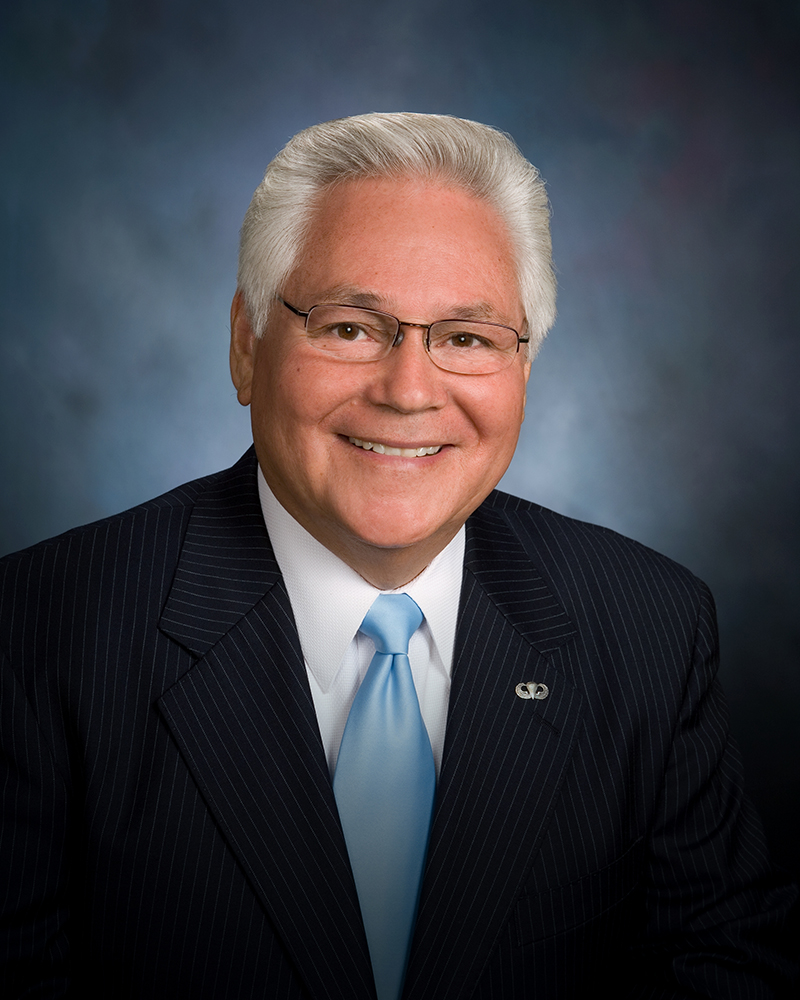
Sen. Bob Archuleta
Sponsored bills
Existing law, the Alcoholic Beverage Control Act, which is administered by the Department of Alcoholic Beverage Control, regulates the application, issuance, and suspension of alcoholic beverage licenses. Existing law authorizes licensed winegrowers and brandy manufacturers to exercise their license privileges away from their licensed premises at, or from, branch offices or warehouses or United States bonded wine cellars located away from the place of production or manufacture, subject to specified exceptions. One of the exceptions to this authorization is the sale or delivery of wine to consumers in containers supplied, furnished, or sold by the consumer. This bill would delete the exception to the authorization applicable to winemakers, as described above, and would thus allow them to sell and deliver wine to consumers in containers supplied, furnished, or sold by the consumer away from their licensed premises.
This measure would recognize August 15, 2021, as India's Independence Day, and urge all Californians to join in celebrating India's independence.
This measure would commemorate the 100th Anniversary of the Tomb of the Unknown Soldier at Arlington National Cemetery.
Existing law authorizes the Adjutant General and the Military Department to establish support programs and educational programs for the benefit of the Military Department and its soldiers, airmen, cadets, and their family members, and to enter into agreements with nonprofit military or veteran foundations, military organizations, or other entities, to conduct California Military Department Support Fund activities. Existing law further authorizes the Adjutant General and the Military Department to solicit and accept funds or other donations for deposit into the California Military Department Support Fund and makes these funds available, upon appropriation by the Legislature, for numerous purposes, including these activities. Existing law, including the State Contract Act, requires state agencies to purchase goods and services in a manner that meets certain procedures and requirements. This bill would specifically authorize the Adjutant General and the Military Department to enter into a memorandum of agreement with a nonprofit military or veteran foundation, military organization, or other entity to conduct California Military Department Support Fund activities. The bill would generally exempt these agreements and the support programs and educational programs established by the Adjutant General from specific requirements for state agency contracting, including the State Contract Act. The bill would authorize the Military Department to expend money in the California Military Department Support Fund to pay a nonprofit military or veteran foundation, military organization, or other entity for the sole purpose of supporting California Military Department Support Fund activities if that money was donated for those purposes. By creating a continuous appropriation of these donated moneys, this bill would make an appropriation of special funds. The bill would recast provisions establishing the California Military Department Support Fund and make other technical changes.
Existing law regulates the sale of dogs and cats. Existing law also makes a person who knowingly and fraudulently represents, through verbal or written notice, the person to be the owner or trainer of a canine licensed as, to be qualified as, or identified as, a guide, signal, or service dog, as defined, guilty of a misdemeanor punishable by imprisonment in the county jail not exceeding 6 months, by a fine not exceeding $1,000, or by both that fine and imprisonment. This bill would require a person or business that sells or provides a dog for use as an emotional support dog, as defined, to provide a written notice to the buyer or recipient of the dog stating that the dog does not have the special training required to qualify as a guide, signal, or service dog and is not entitled to the rights and privileges accorded by law to a guide, signal, or service dog, and that knowingly and fraudulently representing oneself to be the owner or trainer of any canine licensed as, to be qualified as, or identified as, a guide, signal, or service dog is a misdemeanor. The bill would require a person or business that sells or provides a certificate, identification, tag, vest, leash, or harness for an emotional support animal to provide a written notice, as specified, to the buyer or recipient. The bill would also prohibit a health care practitioner from providing documentation relating to an individual's need for an emotional support dog unless the health care practitioner complies with specified requirements, including holding a valid license, establishing a client-provider relationship with the individual for at least 30 days prior to providing the documentation, and completing a clinical evaluation of the individual regarding the need for an emotional support dog. The bill would make a violation of the written notice requirements or knowingly and fraudulently representing, selling, or offering for sale, or attempting to represent, sell, or offer for sale, an emotional support dog as being entitled to the rights and privileges accorded by law to a guide, signal, or service dog, subject to a civil penalty, as specified. The bill would state that this provision is not to be construed to restrict or change existing federal and state law related to a person's rights for reasonable accommodation and equal access to housing, as specified.
This measure would urge the United States Congress to pass, and the President of the United States to sign, the Battleship USS Iowa National Museum of the Surface Navy Act of 2021.
This measure would urge the Congress of the United States to work with President Joseph R. Biden to pass comprehensive immigration reform guided by empathy, inclusion, and opportunity, as provided.
This measure would proclaim September 20, 2021, as Latino Veterans Day.
This measure would acknowledge the Department of Veterans Affairs' staff for their service to California's veterans during the COVID-19 pandemic.