

(1) Existing law declares that it is the public policy of the state that environmental marketing claims, whether explicit or implied, should be substantiated by competent and reliable evidence to prevent deceiving or misleading consumers about the environmental impact of plastic products and that, for consumers to have accurate and useful information about the environmental impact of plastic products, environmental marketing claims should adhere to uniform and recognized standards. This bill would further declare that it is the public policy of the state that claims related to the recyclability of a product or packaging be truthful and that consumers deserve accurate and useful information related to how to properly handle the end of life of a product or packaging. This bill would require the Department of Resources Recycling and Recovery, on or before January 1, 2024, in order to provide information to the public to evaluate whether a product or packaging is recyclable in the state and is of a material type and form that routinely become feedstock used in the production of new products and packaging, to update specified regulations to require disposal facility operators, among other operations and facilities, to provide information to the department regarding how material collected or processed by the operations and facilities was collected and what material types and forms are actively recovered, and not considered contaminants, by the operation or facility. The bill would require the department to conduct, publish on its internet website, and update as provided, a characterization study of material types and forms that are collected, sorted, sold, or transferred by solid waste facilities identified by the department for inclusion in the study. The bill would provide that, except as specified, a product or packaging is considered recyclable in the state if, based on the information published by the department, the product or packaging is of a material type and form collected for recycling by recycling programs for jurisdictions that collectively encompass at least 60% of the population of the state, among other statewide recyclability criteria. (2) Under existing law, it is unlawful for any person to make any untruthful, deceptive, or misleading environmental marketing claim, whether explicit or implied. A violation of this requirement is a misdemeanor. This bill would prohibit a person from offering for sale, selling, distributing, or importing into the state any product or packaging for which a deceptive or misleading claim about the recyclability of the product or packaging is made. The bill would provide that, except as specified, a product or packaging that displays a chasing arrows symbol, among other symbols, statements, or directions, is deemed to be a deceptive or misleading claim unless the product or packaging is considered recyclable pursuant to statewide recyclability criteria and is of a material type and form that routinely becomes feedstock used in the production of new products or packaging, as provided. The bill would therefore expand the scope of an existing crime and impose a state-mandated local program. (3) Under existing law, a person who represents in advertising or on the label or container of a consumer good that the consumer good that it manufactures or distributes is not harmful to, or is beneficial to, the natural environment, through the use of environmental terms, is required to maintain in its records specified information and documentation supporting the validity of the representation, including, if applicable, whether the consumer good conforms with the uniform standards contained in the Federal Trade Commission Guidelines for Environmental Marketing Claims for the use of the term "recyclable," among other terms. A violation of this requirement is a misdemeanor. This bill would apply that recordkeeping requirement to a person who makes those representations through the use of a chasing arrows symbol, as defined, or by otherwise directing a consumer to recycle a consumer good. The bill would add to the required information and documentation for the use of the term "recyclable," the use of a chasing arrows symbol, or other representation that advises consumers to recycle a consumer good, whether the consumer good meets the criteria for statewide recyclability. The bill would provide that a direction to a consumer that accurately instructs the consumer to properly dispose of or otherwise properly handle a consumer good at the end of its useful life shall not be considered "otherwise directing a consumer to recycle a consumer good" if the consumer good is subject to one of several enumerated programs. The bill would provide that directing a consumer to compost or properly dispose of a consumer good through an organics recycling program is also not considered "otherwise directing a consumer to recycle a consumer good." A violation of these provisions would be a misdemeanor. The bill would therefore create a new crime and impose a state-mandated local program. (4) Existing law requires all rigid plastic bottles and rigid plastic containers sold in the state to be labeled with a code that indicates the resin used to produce the bottles or containers, with specified numbers and letters placed in relation to a triangle. This bill would prohibit the resin identification code from being placed inside a chasing arrows symbol, unless the rigid plastic bottle or rigid plastic container meets the requirements for statewide recyclability. (5) The California Constitution requires the state to reimburse local agencies and school districts for certain costs mandated by the state. Statutory provisions establish procedures for making that reimbursement. This bill would provide that no reimbursement is required by this act for a specified reason.
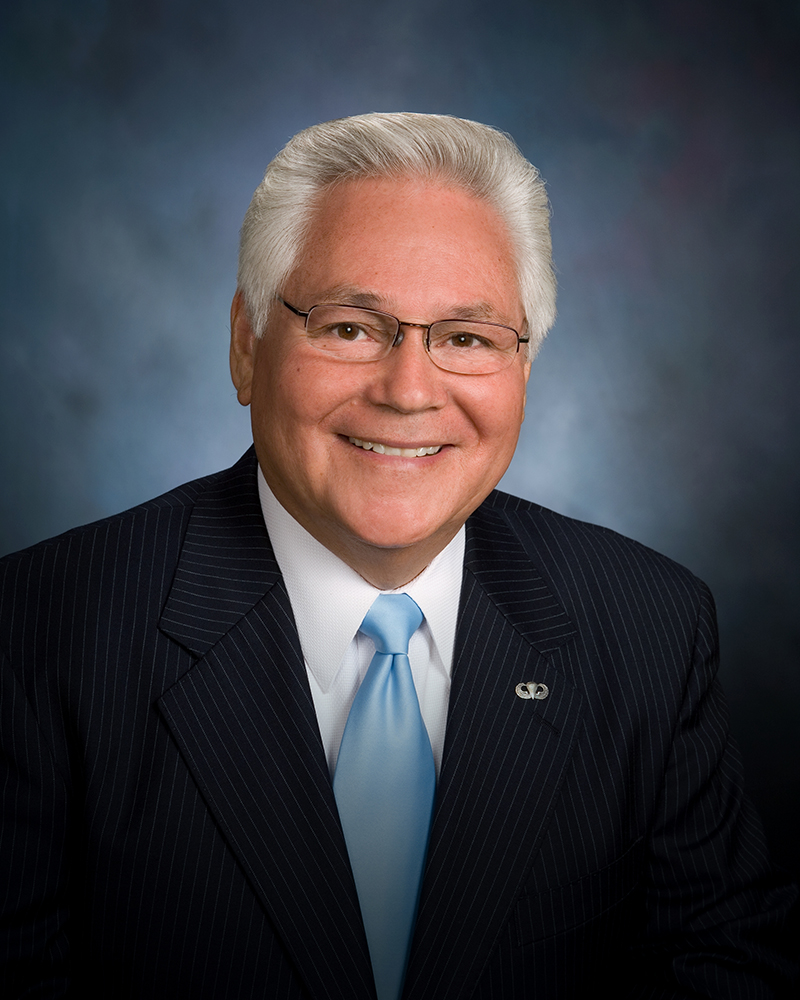
Sen. Bob Archuleta
Sponsored bills
The Control, Regulate and Tax Adult Use of Marijuana Act (AUMA) , an initiative measure approved as Proposition 64 at the November 8, 2016, statewide general election, authorizes a person who obtains a state license under AUMA to engage in commercial adult-use cannabis activity pursuant to that license and applicable local ordinances. The Medicinal and Adult-Use Cannabis Regulation and Safety Act (MAUCRSA) , among other things, consolidates the licensure and regulation of commercial medicinal and adult-use cannabis activities. MAUCRSA establishes the Department of Cannabis Control and imposes duties on the department with respect to the creation, issuance, denial, suspension, and revocation of licenses issued pursuant to MAUCRSA. MAUCRSA imposes a civil penalty on a person engaging in commercial cannabis activity without a license as required by the act, of up to 3 times the amount of the license fee for each violation. This bill would impose a civil penalty on persons aiding and abetting unlicensed commercial cannabis activity of up to 3 times the amount of the license fee for each violation, but in no case more than $30,000 for each violation. The bill would prohibit filing an action for civil penalties brought against a person pursuant to MAUCRSA 3 years after the discovery of the violation. The bill would require a court to consider certain factors in assessing a penalty for engaging in or aiding and abetting unlicensed commercial cannabis activity. The bill would require that certain factors be demonstrated in order to prove that a person aided and abetted an unlicensed cannabis activity. The bill would authorize an action for civil penalties on persons aiding and abetting unlicensed commercial cannabis activity to be brought exclusively by the Attorney General, or in jurisdictions meeting specified population requirements, by the city prosecutor or city or county counsel. MAUCRSA requires civil penalties collected by the Attorney General in an action brought against a person pursuant to the act on behalf of the people to be deposited into the General Fund. This bill would instead require civil penalties collected by the Attorney General in an action brought against a person pursuant to MAUCRSA on behalf of the people, the department, or a participating agency to be first used to reimburse the Attorney General and the department or participating agency for the costs of investigating and prosecuting the action brought for civil penalties, with the remainder collected, if any, to be deposited into the General Fund. By authorizing the expenditure of civil penalties, which are general funds, to be used to reimburse the Attorney General and the department, or participating agency, this bill would make an appropriation. AUMA authorizes the Legislature to amend the act to further the purposes and intent of the act with a 23 vote of the membership of both houses of the Legislature, except as provided. This bill would declare that its provisions further the purposes and intent of the Control, Regulate and Tax Adult Use of Marijuana Act.
Existing law authorizes a person who has been convicted and incarcerated for a felony and later pardoned on the basis of innocence or found to be factually innocent of that crime, as specified, to present a claim against the state to the California Victim Compensation Board for the pecuniary injury sustained by the person through the erroneous conviction and incarceration. Existing law requires the board to recommend to the Legislature that an appropriation be made and the claim paid if a court has made a finding that the person is factually innocent or if the person proves to the board that they are factually innocent. Existing law specifies that there is no presumption in any other proceeding for failure to make a motion or obtain a favorable ruling pursuant to these provisions. Existing law establishes the process and timeframes for the Attorney General to respond to a claim and for the board to set a hearing and make a recommendation on the claim. Under existing law, the person is considered factually innocent if the crime with which they were charged was either not committed at all, or if committed, was not committed by that person. This bill would revise and recast these provisions to instead require the board, upon application by a person whose writ of habeas corpus was granted in state or federal court, or whose motion to vacate the charges was granted by a state court and the charges were dismissed, or if the person was acquitted of the charges on retrial, to recommend to the Legislature that an appropriation be made without a hearing, unless the Attorney General establishes that the claimant is not entitled to compensation. The bill would require the Attorney General, for claims brought under specified provisions, to establish by clear and convincing evidence that the claimant committed the acts constituting the offense in order to establish that the claimant is not entitled to compensation. The bill would prohibit the Attorney General, from relying solely on the trial record of a conviction that has been reversed or dismissed to establish that the claimant is not entitled to compensation. This bill would specify that no res judicata or collateral estoppel finding can be made in any other proceeding for failure to make a motion or obtain a favorable ruling under these provisions.
Existing law requires the Governor to proclaim certain days each year for specified reasons. This bill would designate August 26 of each year as California Farmworker Day, and require the Governor to annually proclaim August 26 as California Farmworker Day. The bill would make legislative findings in this regard.
Existing law authorizes the Department of Toxic Substances Control to undertake response or corrective actions under the hazardous waste control laws or the Carpenter-Presley-Tanner Hazardous Substance Account Act in response to a release or threatened release of hazardous substances. This bill would require the department, where feasible, to at least partially incorporate fixed-price contracting for contracts for the cleanup of hazardous substances released into the environment carried out by the department. The bill would require the department to establish performance milestones for cleanups of hazardous substances released into the environment carried out or overseen by the department to ensure that the cleanups are performed at the appropriate pace and to post on its internet website information regarding those cleanups, including specified information for each cleanup. This bill would require moneys recovered by the state from responsible parties relating to the former Exide Technologies lead-acid battery recycling facility in the City of Vernon to be used to repay the General Fund and the Lead-Acid Battery Cleanup Fund for loans made for the oversight or performance of closure activities and response and corrective actions to protect public health and the environment from hazardous substances or hazardous waste at or near the former Exide Technologies facility, and to repay other sources of state funding for costs incurred for that same purpose. The bill would also require moneys recovered by the state to be used to repay the Lead-Acid Battery Cleanup Fund for repayments to the General Fund.
Existing law, the Real Estate Law, defines real estate brokers and salespersons and provides for their licensure and regulation, the administration of which is committed to the Real Estate Commissioner. Existing law, as of July 1, 2018, removed the Bureau of Real Estate from the Department of Consumer Affairs and instead made it a department within the Business, Consumer Services, and Housing Agency and renamed the bureau to the Department of Real Estate. This bill would make conforming and nonsubstantive changes. Existing law subjects the powers and duties of the department, under specified provisions of law, to review by the appropriate policy committees of the Legislature, performed as if those provisions were scheduled to be repealed as of January 1, 2022. This bill would extend that date to January 1, 2026. Existing law authorizes a person who has passed the applicable license examination, as provided, to apply for a real estate broker license or real estate salesperson license under the Real Estate Law by submitting an application in writing to the commissioner. Existing law authorizes the commissioner to prescribe the format and content of a license application. This bill would require the commissioner to inquire in every application for licensure under the Real Estate Law if the individual applying for licensure is, or previously was, a member of the Armed Forces of the United States, as defined. The bill would require the commissioner to expedite, and authorize the commissioner to assist, the initial licensure process for an applicant who supplies satisfactory evidence to the department that the applicant has served as an active duty member of the Armed Forces of the United States and was honorably discharged. The bill would also require the commissioner to expedite the licensure process for an applicant who (1) supplies evidence satisfactory to the commissioner that the applicant is married to, or in a domestic partnership or other legal union with, an active duty member of the Armed Forces of the United States who is assigned to a duty station in this state and (2) holds a current license in another state, district, or territory of the United States in the profession or vocation for which the applicant seeks a license from the commissioner. Existing law authorizes the commissioner to suspend, revoke, delay renewal of, or deny the issuance of a license for various acts or failures to act. Those acts include an applicant or licensee having acted or conducted themselves in a manner that would have warranted the denial of their application for a real estate license, or either had a license denied or had a license issued by another agency of this state, another state, or the federal government revoked, surrendered, or suspended for acts that, if done by a real estate licensee, would be grounds for the suspension or revocation of a California real estate license, if the action of denial, revocation, surrender, or suspension by the other agency or entity was taken only after giving the licensee or applicant prescribed due process protections and only upon an express finding of a violation of law by the agency or entity. This bill would add receiving an order of debarment by another agency or entity as a basis for suspension, revocation, delay of renewal, or denial of a license by the commissioner. Existing law requires real estate licensees to comply with continuing education requirements adopted by the commissioner as a prerequisite to the renewal of real estate licenses on and after January 1, 1981. Existing law exempts from those continuing education requirements a real estate licensee who submits proof satisfactory to the commissioner that the licensee has been a real estate licensee in good standing for 30 continuous years in this state and is 70 years of age or older. The bill defines "real estate licensee in good standing" for this purpose to mean one who holds an active license that has not been suspended, revoked, or restricted as a result of disciplinary action. This bill would require additionally for good standing that a licensee has not surrendered a license while under investigation or while subject to a disciplinary action, or received an order of debarment. Existing law, the Real Estate Appraisers' Licensing and Certification Law, creates a Bureau of Real Estate Appraisers within the Department of Consumer Affairs to administer and enforce that law. Existing law subjects the powers and duties of the bureau to review by the appropriate policy committees of the Legislature, performed as if that law were scheduled to be repealed as of January 1, 2022. This bill would extend that date to January 1, 2026. This bill would incorporate additional changes to Section 10151 of the Business and Professions Code proposed by SB 263 to be operative only if this bill and SB 263 are enacted and this bill is enacted last.
Existing law, the Real Estate Law, establishes the Department of Real Estate, with the Real Estate Commissioner as its chief officer, and sets forth the powers and duties of the commissioner relating to the licensure and regulation of real estate brokers and salespersons. Existing law requires an applicant for an original real estate broker license examination to successfully complete courses of study in specified subjects, including real estate practice, legal aspects of real estate, and real estate appraisal. Existing law specifies each of these courses to be a 3-semester unit course. Existing law also requires an applicant for a real estate salesperson license examination or for both the examination and license to successfully complete courses of study in specified subjects, including real estate principles and real estate practice. Existing law requires a licensee to successfully complete 45 hours of continuing education as a prerequisite to initial license renewal, including, among other things, a 3-hour course in fair housing. For subsequent renewals, the law requires a licensee to complete 45 hours of continuing education, including an 8-hour update survey course. This bill would revise the real estate practice course for an applicant for a real estate broker or salesperson license to include a component on implicit bias, as specified, and would revise the legal aspects of real estate course for that applicant to include a component on state and federal fair housing laws, as specified. The bill would require that fair housing component to include an interactive participatory component, as specified. The bill would revise the fair housing course requirement for initial license renewals to include an interactive participatory component, as specified. The bill would also require a licensee, as part of the licensee's 45 hours of continuing education, to successfully complete a 2-hour course in implicit bias training, as specified. The bill would increase the hours required for the update survey course to 9 hours. The bill would delay the operation of these provisions until January 1, 2023. This bill would revise the description of the courses required for an applicant for a real estate broker or salesperson license to be 3-unit semester courses.
Existing law authorizes the legislative body of a city or a county to make, by ordinance, any violation of an ordinance subject to an administrative fine or penalty and limits the maximum fine or penalty amounts for infractions, to $100 for the first violation, $200 for a 2nd violation of the same ordinance within one year of the first violation, and $500 for each additional violation of the same ordinance within one year of the first violation. Existing law also sets specific monetary limits on the fines that may be imposed by city or county authorities for any violation of local building and safety codes that is an infraction, as prescribed. Existing law requires a city or county levying fines pursuant to these provisions to establish a process for granting a hardship waiver in certain cases. This bill would, notwithstanding those provisions and with certain exceptions, raise the maximum fines for violation of an ordinance relating to a residential short-term rental, as defined, that is an infraction and poses a threat to health or safety, to $1,500 for a first violation, $3,000 for a 2nd violation of the same ordinance within one year, and $5,000 for each additional violation of the same ordinance within one year of the first violation. The bill would make these violations subject to the process for granting a hardship waiver. This bill would declare that it is to take effect immediately as an urgency statute.
Existing law, the Alcoholic Beverage Control Act, generally prohibits a manufacturer, winegrower, distiller, bottler, or wholesaler, among other licensees, or agents of these licensees, from paying a retailer for advertising. The act creates a variety of exceptions from this prohibition, including permitting specified licensees to purchase advertising space and time from, or on behalf of, an on-sale retail licensee that is an owner, manager, or major tenant at a specified arena in the County of Orange or the County of Los Angeles. This bill would delete the above-described exception as it applies to the County of Orange. The bill would instead authorize specified licensees to sponsor events promoted by, and to purchase advertising space and time from, or on behalf of, an on-sale licensee that is the owner, operator, agent of the operator, or sole assignee of the operator's advertising rights of a mixed-use district located in the County of Orange. The bill would condition this authorization based on specified requirements, including that the mixed-use district consist of at least 90 acres and include office, residential, retail, and other uses, all of which are situated on land surrounding a fully enclosed arena with a fixed seating capacity in excess of 18,000 seats. The bill would authorize the advertising space or time to be purchased only in connection with retail, dining, entertainment, and events conducted on the grounds of the district and would regulate the location of the advertising that is authorized. The bill would make it a misdemeanor for certain licensees to induce, through coercion or other illegal means, the holder of a wholesaler's license to fulfill contractual obligations, as specified, and for an on-sale licensee to solicit certain licensees to purchase advertising space or time, as specified. By creating crimes, this bill would impose a state-mandated local program. This bill would make legislative findings and declarations as to the necessity of a special statute for the County of Orange. The California Constitution requires the state to reimburse local agencies and school districts for certain costs mandated by the state. Statutory provisions establish procedures for making that reimbursement. This bill would provide that no reimbursement is required by this act for a specified reason.
Existing law dissolved redevelopment agencies and community development agencies as of February 1, 2012, and provides for the designation of successor agencies to wind down the affairs of dissolved redevelopment agencies and to, among other things, make payments due for enforceable obligations. Existing law requires the successor agency to dispose of all remaining assets and terminate its existence within a specified period after the final debt payment, and requires any passthrough payment obligations to cease at that time. Existing law requires the county auditor-controller, as a part of the wind down process, to determine the amount of property taxes that would have been allocated to each redevelopment agency if the agencies had not been dissolved and deposit this amount in a county Redevelopment Property Tax Trust Fund. Revenues in the trust fund are to be allocated to various taxing entities in the county and to cover specified expenses of the former agency, including remitting amounts in the Redevelopment Property Tax Trust Fund to specified entities in the county according to passthrough agreements between the former redevelopment agency and the taxing jurisdiction. This bill would authorize a successor agency and one or more taxing agencies to enter into an agreement to modify the interest owed by a former redevelopment agency under a passthrough agreement that was entered into before January 1, 1994, or owed under any successive amendment of that passthrough agreement, and which is owed as interest on passthrough payments agreed to be deferred by the taxing entity under the passthrough agreement, subject to specified terms and conditions, including that the interest rate on a passthrough agreement modified under these provisions be 0%. The bill would additionally authorize an agreement to modify a passthrough agreement under this bill's provisions to forgive the entirety or a portion of the principal amount of outstanding deferred passthrough payment owed by the former redevelopment agency to a taxing entity. The bill would require that the computation of the amount of passthrough payments made under the above-described existing provisions take into account any modification of a passthrough agreement made under this bill's provisions. The bill would make legislative findings and declarations as to the public purpose served by these provisions.