

(1) Existing law establishes the Governor's Office of Business and Economic Development, known as "GO-Biz," within the Governor's office to serve the Governor as the lead entity for economic strategy and the marketing of California on issues relating to business development, private sector investment, and economic growth. This bill would require the office to coordinate with other relevant state and local agencies and national organizations to explore ways to facilitate streamlining of local land use approvals and construction permit processes for projects related to broadband infrastructure deployment and connectivity. (2) Under existing law, the Public Utilities Commission has regulatory authority over public utilities, including telephone corporations. Existing law requires the commission to develop, implement, and administer the California Advanced Services Fund (CASF) to encourage deployment of high-quality advanced communications services to all Californians that will promote economic growth, job creation, and the substantial social benefits of advanced information and communications technologies. Existing law establishes 5 accounts, the Broadband Infrastructure Grant Account, the Rural and Urban Regional Broadband Consortia Grant Account, the Broadband Public Housing Account, the Broadband Adoption Account, and the Federal Funding Account, within the CASF. Existing law provides that the goal of the Broadband Infrastructure Grant Account is, by no later than December 31, 2026, to approve funding for infrastructure projects that will provide broadband access to no less than 98% of California households. Upon the accomplishment of that goal, existing law makes up to $30,000,000 remaining in the Broadband Infrastructure Grant Account available for infrastructure projects that provide last-mile broadband access to households to which no facility-based broadband provider offers broadband service at speeds of at least 10 megabits per second (mbps) downstream and one mbps upstream. Existing law authorizes the commission to impose a surcharge to collect $330,000,000 for deposit into the CASF beginning January 1, 2018, and continuing through the 2022 calendar year. Existing law specifies the amount of surcharge revenues to be deposited into each account within the CASF, subject to appropriation by the Legislature. Existing law authorizes the commission, in administering Broadband Infrastructure Grant Account, to require each infrastructure grant applicant to indicate steps taken to first obtain any available funding from the Connect America Fund program or similar federal public programs that fund broadband infrastructure. This bill would provide that the goal of the Broadband Infrastructure Grant Account is to approve funding for infrastructure projects that will provide broadband access to no less than 98% of California households by no later than December 31, 2032, rather than December 31, 2026. The bill would delete the provision making up to $30,000,000 available for infrastructure projects upon the accomplishment of that goal, as specified. The bill would authorize moneys appropriated from the CASF to be used to fund projects that deploy broadband infrastructure to unserved nonresidential facilities used for local and state emergency response activities, including fairgrounds. The bill would delete the commission's authorization to collect $330,000,000 for deposit into the CASF beginning January 1, 2018, and continuing through the 2022 calendar year. The bill would authorize the commission, through imposition of a surcharge, to collect up to $150,000,000 per year. The bill would delete the commission's authorization to require each infrastructure grant applicant to indicate steps taken to first obtain any available funding from federal public programs, as specified. (3) Under existing law, a violation of the Public Utilities Act or any order, decision, rule, direction, demand, or requirement of the commission is a crime. Because certain of the above provisions would be part of the act and a violation of a commission action implementing this bill's requirements would be a crime, the bill would impose a state-mandated local program. The California Constitution requires the state to reimburse local agencies and school districts for certain costs mandated by the state. Statutory provisions establish procedures for making that reimbursement. This bill would provide that no reimbursement is required by this act for a specified reason. (4) This bill would become effective only if AB 14 of the 2021–22 Regular Session is enacted and takes effect on or before January 1, 2022. (5) This bill would declare that it is to take effect immediately as an urgency statute.
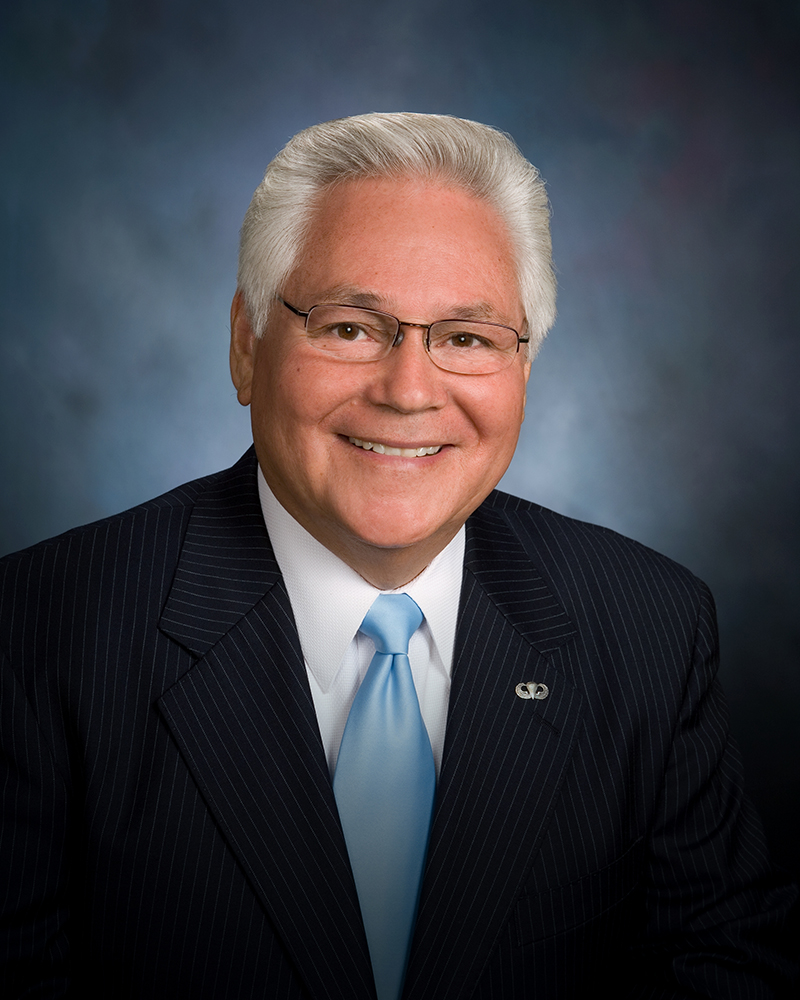
Sen. Bob Archuleta
Sponsored bills
Under existing law, classified employees of school districts and community college districts subject to layoff as a result of the expiration of a specially funded program at the end of a school year are required to be given written notice on or before April 29 informing them of certain rights. Existing law also requires that notice be given not less than 60 days before the effective layoff date if the termination date of a specially funded program is other than June 30, or if classified employees are subject to layoff as a result of a bona fide reduction or elimination of a service performed by a department. This bill instead would revise and recast provisions relating to the layoff of classified employees of school districts and community college districts to require certain notices and opportunities for a hearing when a permanent classified employee's services will not be required for the ensuing year due to lack of work or lack of funds. The bill would, for the purposes of specified notice and hearing rights, define "permanent classified employee" to include both an employee who was permanent at the time the notice or right to a hearing was required and an employee who became permanent after the date of the required notice. The bill would express the intent of the Legislature in enacting the bill to provide permanent classified school employees and those who become permanent classified school employees with the same rights to notice and hearing with respect to layoffs as are provided to certificated employees of school districts, including teachers and administrators, and academic employees of community college districts. If classified positions must be eliminated as a result of the expiration of a specially funded program, the bill would require written notice of the layoff date and certain rights be given to the classified employees not less than 60 days before the effective layoff date. If, after January 1, 2021, the Legislature provides certificated or academic employees with any additional rights to notice or hearing as to layoffs, the bill would require the respective permanent classified employees, as described, to be afforded the same rights by the school district or community college district, as applicable. To the extent school districts and community college districts are required to perform additional duties, the bill would impose a state-mandated local program. The California Constitution requires the state to reimburse local agencies and school districts for certain costs mandated by the state. Statutory provisions establish procedures for making that reimbursement. This bill would provide that, if the Commission on State Mandates determines that the bill contains costs mandated by the state, reimbursement for those costs shall be made pursuant to the statutory provisions noted above.
Under existing law, the Department of Consumer Affairs (department) , under the control of the Director of Consumer Affairs, is comprised of various boards that license and regulate various professions and vocations. Existing law requires an applicant seeking a license from a board within the department to meet specified requirements and to pay certain licensing fees. Existing law requires a board within the department to issue, after appropriate investigation, certain types of temporary licenses to an applicant if the applicant meets specified requirements, including that the applicant supplies evidence satisfactory to the board that the applicant is married to, or in a domestic partnership or other legal union with, an active duty member of the Armed Forces of the United States who is assigned to a duty station in this state under official active duty military orders and the applicant submits an application to the board that includes a signed affidavit attesting to the fact that the applicant meets all of the requirements for a temporary license and that the information submitted in the application is accurate, to the best of the applicant's knowledge. Under existing law, some of the funds within the jurisdiction of a board consist of revenue from fees that are continuously appropriated. Existing law authorizes a board to adopt regulations necessary to administer these provisions. This bill, on and after January 1, 2023, would expand the requirement to issue temporary licenses to practice a profession or vocation to include licenses issued by any board within the department, except as provided. The bill would require an applicant for a temporary license to provide to the board documentation that the applicant has passed a California law and ethics examination if otherwise required by the board for the profession or vocation for which the applicant seeks licensure. The bill would require a board to issue a temporary license within 30 days of receiving the required documentation if the results of a criminal background check do not show grounds for denial and would require a board to request the Department of Justice to conduct the criminal background check and to furnish the criminal background information in accordance with specified requirements. The bill would specifically direct revenues from fees for temporary licenses issued by the California Board of Accountancy to be credited to the Accountancy Fund, a continuously appropriated fund. The bill would require, if necessary to implement the bill's provisions, a board to submit to the department for approval draft regulations necessary to administer these provisions. The bill would exempt from these provisions a board that has a process in place by which an out-of-state licensed applicant in good standing who is married to, or in a domestic partnership or other legal union with, an active duty member of the Armed Forces of the United States is able to receive expedited, temporary authorization to practice while meeting state-specific requirements for a period of at least one year or is able to receive an expedited license by endorsement with no additional requirements superseding those for a temporary license, as described above. The bill would make conforming changes. By expanding the scope of the crime of perjury, the bill would impose a state-mandated local program. The bill's expansion of the requirement to issue temporary licenses would result in revenues from fees for certain licenses being deposited into continuously appropriated funds. By establishing a new source of revenue for those continuously appropriated funds, the bill would make an appropriation. Existing law provides that these temporary licenses shall expire 12 months after issuance, upon issuance of an expedited license, or upon denial of the application for expedited licensure by the board, whichever occurs first. Existing law authorizes the immediate termination of a temporary license upon a finding that the temporary licenseholder failed to meet the requirements for temporary licensure or provided substantively inaccurate information that would affect the person's eligibility for temporary licensure. This bill, on and after July 1, 2023, would instead provide that these temporary licenses are nonrenewable and shall expire 12 months after issuance, upon issuance or denial of a standard license, upon issuance or denial of a license by endorsement, or upon issuance or denial of an expedited license, whichever occurs first. The bill, on and after July 1, 2023, would also require the board to revoke a temporary license if the board finds that the temporary licenseholder engaged in unprofessional conduct or any other act that is cause for discipline by the board. This bill would require the Department of Consumer Affairs to compile an annual report to the Legislature containing specified information relating to the professional licensure of veterans, servicemembers, and their spouses. The bill would also require the Department of Consumer Affairs and each board within the department to post specified information on their internet websites relating to licensure for military spouses, the availability of temporary licenses, and permanent licensure by endorsement or credential for out-of-state applicants. The bill would also require the Department of Real Estate to compile specified information on military, veteran, and spouse licensure into an annual report for the Legislature. Existing law, the Psychology Licensing Law, provides for the licensure and regulation of psychologists by the Board of Psychology. Existing law authorizes a psychologist certified or licensed in another state or Canadian province who has applied to the board for licensure to provide activities and services of a psychological nature without a valid license for a period not to exceed 180 days from the time of submitting their application or from the commencement of residency in the state, whichever occurs first, subject to specified conditions and requirements. This bill would also authorize a psychologist certified or licensed in another state or Canadian province who is married to, or in a domestic partnership or other legal union with, an active duty member of the Armed Forces of the United States and who has applied to the board for licensure to perform activities and services of a psychological nature without a valid license for a period not to exceed 12 months. The California Constitution requires the state to reimburse local agencies and school districts for certain costs mandated by the state. Statutory provisions establish procedures for making that reimbursement. This bill would provide that no reimbursement is required by this act for a specified reason. This bill would incorporate additional changes to Section 2946 of the Business and Professions Code proposed by SB 801 to be operative only if this bill and SB 801 are enacted and this bill is enacted last.
Existing law generally designates the State Air Resources Board as the state agency with the primary responsibility for the control of vehicular air pollution. Existing law requires the State Energy Resources Conservation and Development Commission (Energy Commission) , in partnership with the state board, and in consultation with specified state agencies, to develop and adopt a state plan to increase the use of alternative transportation fuels. This bill would, until January 1, 2030, require the Energy Commission, in consultation with the state board and the Public Utilities Commission, to prepare a statewide assessment of the fuel cell electric vehicle fueling infrastructure and fuel production needed to support the adoption of zero-emission trucks, buses, and off-road vehicles at levels necessary for the state to meet specified goals and requirements relating to vehicular air pollution, as provided. The bill would require, among other things, the statewide assessment to consider all necessary fuel production and distribution infrastructure, as specified, to meet those goals and requirements and to examine existing and future fuel production and distribution infrastructure needs throughout the state, including in low-income communities. The bill would require the Energy Commission to regularly seek data and input relating to fuel cell electric vehicle fuel production and fueling infrastructure from specified state agencies and interested stakeholders. The bill would require the Energy Commission to complete the statewide assessment by December 31, 2023, and to update the statewide assessment at least once every 3 years. The bill would require the Energy Commission to post the initial and updated statewide assessments on its internet website. The bill would provide that the statewide assessment does not constitute a directive instituting a mandate on state funding or limit the ability of the Energy Commission to award funds related to specified categories of projects on a competitive basis.
Existing law, the Medical Practice Act, provides for the licensure and regulation of the practice of medicine by the Medical Board of California and requires a health care provider initiating the use of telehealth to inform the patient, before the delivery of health care via telehealth, about the use of telehealth and obtain verbal or written consent from the patient for the use of telehealth as an acceptable mode of delivering health care services and public health. The act defines "health care provider" to include, among others, an associate marriage and family therapist or marriage and family therapist trainee, as specified. This bill would define health care provider to additionally include an associate clinical social worker and an associate professional clinical counselor, as specified. Existing law establishes the Board of Behavioral Sciences within the Department of Consumer Affairs, and requires the board to license and regulate various registrants and licensees under the Licensed Marriage and Family Therapist Act (LMFTA) , the Educational Psychologist Practice Act (EPPA) , the Clinical Social Worker Practice Act (CSWPA) , and the Licensed Professional Clinical Counselor Act (LPCCA) . Existing law requires the board to appoint an executive officer with certain duties and powers related to the administration and enforcement of those acts. Existing law repeals the provisions relating to the establishment of the board and the appointment, duties, and powers of the executive officer on January 1, 2022. This bill would extend those provisions until January 1, 2026. Existing law authorizes the board to deny, suspend, or revoke a license or registration for unprofessional conduct, which includes, among other things, a conviction of a crime substantially related to the qualifications, functions, or duties of a licensee or registrant. Existing law authorizes the board to take that disciplinary action when the time for appeal has elapsed, or the judgment of conviction has been affirmed on appeal, or when an order granting probation is made suspending the imposition of sentence, irrespective of a subsequent order under a specified provision allowing the person to withdraw a plea of guilty and enter a plea of not guilty or setting aside the verdict of guilty or dismissing the accusation, information, or indictment. This bill, instead, would remove the specification that the board's authority to take that disciplinary action at those times is irrespective of such an order, and would require the board to take the action pursuant to the provisions governing the denial, suspension, and revocation of licenses of boards within the Department of Consumer Affairs. The LMFTA and LPCCA require applicants for licensure or registration to meet certain educational requirements, including, among others, training in assessment, diagnosis, and treatment planning. This bill would include in those educational requirements training in prognosis, as specified. The LPCCA authorizes a licensee to renew an expired license within 3 years of expiration if the licensee, among other requirements, pays all fees that would have been paid if the license had not become delinquent and all delinquency fees. This bill would require that licensee to instead pay a two-year renewal fee prescribed by the board and a delinquency fee. A violation of the LMFTA, EPPA, CSWPA, or LPCCA is a crime. The LMFTA, EPPA, CSWPA, and LPCCA all require a licensee or registrant, as provided, to provide a client with a certain notice written in at least 12-point type relating to a method for contacting the board regarding complaints about services provided by the applicable licensee prior to initiating services. This bill, among other things, would revise that notice requirement to require the notice be delivered prior to initiating services, or as soon as practicably possible thereafter, and would require the delivery of the notice to be documented. The bill would also require an applicant, registrant, or licensee who has an electronic mail address to provide the board with that electronic mail address no later than July 1, 2022, and would require the electronic mail address to be considered confidential and not subject to public disclosure. Because the bill would expand the scope of a crime, the bill would impose a state-mandated local program. Existing law defines the practice of marriage and family therapy as that service performed with individuals, couples, or groups wherein interpersonal relationships are examined for the purpose of achieving more adequate, satisfying, and productive marriage and family adjustments, including relationship and premarriage counseling. Existing law also specifies how marriage and family therapy principles may be applied, including, among others, psychotherapeutic techniques and the use, application, and integration of coursework and training required for licensed marriage and family therapists. This bill would recast those provisions to include within this scope of practice the application of psychotherapeutic and family systems theories, principles, and methods in the delivery of services to individuals, couples, or groups in order to assess, evaluate, and treat relational issues, emotional disorders, behavioral problems, mental illness, alcohol and substance use, and to modify intrapersonal and interpersonal behaviors. The bill would make conforming changes relating to the various ways in which marriage and family therapy principles may be applied. By expanding the scope of practice for marriage and family therapists and thus expanding the application and breadth of the related crimes, this bill would impose a state-mandated local program. This bill would declare that these provisions are declaratory of existing law and would also declare the intent of the Legislature that this bill not be construed to expand or constrict the scope of practice of a licensed marriage and family therapist. The Psychology Licensing Law establishes the Board of Psychology to license and regulate the practice of psychology, and authorizes the board to employ all personnel necessary to carry out that law and to employ an executive officer, as specified. Existing law repeals these provisions on January 1, 2022. This bill would extend the provisions establishing the board and authorizing the board to employ necessary personnel and an executive officer until January 1, 2026. The Psychology Licensing Law, with certain exceptions, prohibits a person from engaging in the practice of psychology, or representing themselves to be a psychologist, without a license issued by the board. The Psychology Licensing Law requires an applicant for licensure to meet certain educational requirements, including, among others, possessing an earned doctoral degree in psychology, educational psychology, or education with the field of specialization in counseling psychology or educational psychology. The Psychology Licensing Law authorizes a person other than a licensed psychologist to perform psychological functions in preparation for licensure as a psychologist if certain requirements are met, including, among others, registering with the board as a "psychological assistant" and having completed a master's or doctoral degree, or having been admitted to candidacy for a doctoral degree, in similar subjects required for licensure. The Psychology Licensing Law requires the psychological assistant to be at all times under the immediate supervision of a licensed psychologist, or a board certified psychiatrist, as specified. This bill would rename the position of psychological assistant as registered psychological associate. The bill, among other things, would revise the qualifying subjects of the doctoral degree an applicant for licensure is required to have to include psychology with the field specialization in clinical, counseling, school, consulting, forensic, industrial, or organizational psychology, or education with the field specialization in counseling psychology, educational psychology, or school psychology. The bill would make similar revisions to the qualifying educational requirements for a registered psychological associate. The bill would revise the supervision requirements by, among other things, requiring a licensed psychologist to be the primary supervisor of the registered psychological associate and authorizing the primary supervisor to delegate supervision as prescribed by the board's regulations. The Psychology Licensing Law requires an applicant for licensure trained in an educational institution outside the United States or Canada to demonstrate to the satisfaction of the board they possess a doctorate degree in psychology that is equivalent to a degree earned from a regionally accredited university in the United States or Canada by providing the board with a comprehensive evaluation of the degree performed by a foreign credential evaluation service that is a member of the National Association of Credential Evaluation Services (NACES) . This bill would additionally allow an applicant to demonstrate their degree is equivalent by having the National Register of Health Services Psychologists (NRHSP) evaluate the degree. The bill would require the evaluation to, among other things, include a transcript in English, or translated into English by the credential evaluation service, of the degree. The bill would require the evaluation to be submitted directly to the board by a member of the NACES or NRHSP. The Psychology Licensing Law provides that a person with specified education and training employed by a specified nonprofit community agency is not restricted or prevented from conducting activities of a psychological nature or the use of the official title of their position, provided that person is performing those activities as part of the duties for which they were employed, is performing those activities solely within the confines of or under the jurisdiction of the organization in which they are employed, and does not offer to render or render psychological services, as specified. The Psychology Licensing Law requires those persons to be registered by the agency with the board at the time of employment and to be identified in the setting as a "registered psychologist." Existing law makes those persons exempt from the Psychology Licensing Law for a maximum period of 30 months from the date of registration. This bill would repeal these provision. The Psychology Law requires an applicant for licensure to complete training in the detection and treatment of alcohol and other chemical substance dependency and to complete coursework in spousal or partner abuse assessment, detection, and intervention. This bill would authorize an applicant to fulfill the above-described requirements by completing coursework or training in those subjects. The Psychology Licensing Law requires an applicant for licensure who began graduate study on or after January 1, 2004, to complete a minimum of 10 contact hours of coursework in aging and long-term care, as specified. The Psychology Licensing Law requires the applicant to submit to the board a certification from the chief academic officer of the educational institution from which the applicant graduated stating that this required coursework is included within the institution's required curriculum for graduation, or within the coursework that was completed by the applicant. This bill, instead, would require an applicant for licensure to complete a minimum of 6 hours of coursework or applied experience in aging and long-term care, as specified. The bill would authorize this requirement to be satisfied by taking a continuing education course, as specified. The bill would revise the requirement that the applicant submit a certification to, among other things, require it to be made and submitted under penalty of perjury. By expanding the crime of perjury, this bill would impose a state-mandated local program. The Psychology Licensing Law requires the board to grant a license to a person who passes the board's supplemental licensing examination and, at the time of application, has been licensed for at least 5 years by a licensing authority in another state or Canadian province if the requirements for obtaining a certificate or license in that state or province were substantially equivalent to the requirements of the Psychology Licensing Law. The Psychology Licensing Law authorizes such an applicant to perform activities and services of a psychological nature without a valid license for a period not to exceed 180 calendar days from the time of submitting their application or from the commencement of residency in this state, whichever comes first. This bill would decrease the number of years the applicant is required to have been licensed to 2 years and would extend these provisions to a person who has been licensed by a psychology licensing authority in a territory of the United States. The Psychology Licensing Law imposes various fees on applicants for licensure and on licensees. This bill, additionally, would impose a file transfer fee of $10. Existing law requires various boards in the Department of Consumer Affairs to provide information concerning the status of licensees on the internet, including information on suspensions and revocations of licenses issued by the entity and other related enforcement actions, and a licensee's address of record. Existing law requires the Board of Psychology to comply with those provisions and disclose information on its licensees, including psychologists, psychological assistants, and registered psychologists. This bill would instead specify that the licensees for which the Board of Psychology is required to disclose this information include psychologists and registered psychological associates. This bill would make conforming and other nonsubstantive changes. This bill would incorporate additional changes to Section 27 of the Business and Professions Code proposed by AB 1534 and SB 826 to be operative only if this bill and AB 1534, SB 826, or both are enacted and this bill is enacted last. This bill would incorporate additional changes to Section 2946 of the Business and Professions Code proposed by AB 107 to be operative only if this bill and AB 107 are enacted and this bill is enacted last. This bill would incorporate additional changes to Sections 4980.01, 4980.43.3, 4996.14, and 4999.22 of the Business and Professions Code proposed by AB 690 to be operative only if this bill and AB 690 are enacted and this bill is enacted last. Existing constitutional provisions require that a statute that limits the right of access to the meetings of public bodies or the writings of public officials and agencies be adopted with findings demonstrating the interest protected by the limitation and the need for protecting that interest. This bill would make legislative findings to that effect. The California Constitution requires the state to reimburse local agencies and school districts for certain costs mandated by the state. Statutory provisions establish procedures for making that reimbursement. This bill would provide that no reimbursement is required by this act for a specified reason.
Existing law, the Davis-Stirling Common Interest Development Act, requires an association to deliver documents to members of a common interest development, if those documents are required to be delivered by individual delivery or notice, by either first-class mail, postage prepaid, registered or certified mail, express mail, or overnight delivery by an express service carrier or by email, facsimile, or other electronic means, if the recipient has consented, in writing or by email, to receive documents by that electronic means. This bill would instead require, on and after January 1, 2023, an association to deliver those documents in accordance with the preferred delivery method specified by the member or, if the member has not provided a preferred delivery method, by traditional mail, as described above. The act requires an owner of a separate interest to annually provide certain written notice to the association, including the address or addresses to which notices from the association are to be delivered, an alternate or secondary address, and the address of the owner's legal representative, if any. The act requires the association to solicit that notice, as provided. This bill would instead require a member to provide the member's preferred delivery method for receiving notices and an alternate or secondary delivery method for receiving notices, and would require the association to include the options of receiving notice by mail, by a valid email address, or both. The bill would require a member to provide a valid email address, if available, of the owner's legal representative, if any, and would define the term "valid email address." The bill would require an association to include certain items in the required solicitation of notice described above, including that the member does not have to provide an email address to the association. Existing law specifies the methods by which an association may provide a document when a provision of the act requires "general delivery" or "general notice," including posting the printed document in a prominent location accessible to all members if designated for the posting of general notices by the association in its annual policy statement. This bill would include posting the notice on the association's internet website among the authorized delivery methods if this method is so designated by the association in its annual policy statement. The act prohibits association records, and any information from them, from being sold, used for a commercial purpose, or used for any other purpose not reasonably related to a member's interest as a member. This bill would prohibit an association or its managing agent from transmitting a member's personal information to a third party without the consent of the member unless required to do so by law, as specified. This bill would also make conforming and nonsubstantive changes. This bill would incorporate additional changes to Section 5200 of the Civil Code proposed by SB 432 to be operative only if this bill and SB 432 are enacted and this bill is enacted last.
(1) Existing law requires the Fish and Game Commission to determine the form of all licenses, permits, tags, reservations, and other entitlements issued pursuant to the Fish and Game Code and the method of carrying and displaying all licenses, except for those programs where the Department of Fish and Wildlife has fee-setting authority, in which case the department retains that authority. Existing law requires all licenses and tags to be exhibited upon demand to any person authorized by the department to enforce any law relating to the protection and conservation of fish. This bill would authorize the department, on or before January 1, 2023, to provide an option to display a sport fishing license, validation, report card, or other sport fishing entitlement issued pursuant to the Fish and Game Code or regulations adopted pursuant to this code electronically on a mobile device, except as provided. The bill would provide that a person who displays a sport fishing entitlement electronically on a mobile device in accordance with this provision shall be deemed to be in compliance with any requirement to possess or affix the entitlement. (2) Existing law requires every person 16 years of age or older who takes any fish, reptile, or amphibian for any purpose other than profit to first obtain a sport fishing license for that purpose, with specified exceptions, and to have that license on their person or in their immediate possession when engaged in carrying out any activity authorized by the license. Existing law governs the issuance of calendar year and short-term sport fishing licenses, including the fees for those licenses. Under existing law, a calendar year license expires at the end of the calendar year, regardless of when issued. Existing law requires the Fish and Game Commission to adjust the amount of the fees for sport fishing licenses, as prescribed, to fully recover, but not exceed, all reasonable administrative and implementation costs of the Department of Fish and Wildlife and the commission relating to those licenses. This bill would, until January 1, 2030, authorize the Director of Fish and Wildlife to allow 12-consecutive-month sport fishing licenses to be issued in addition to certain calendar year licenses. The bill would require the director to provide the Legislature, on or before January 1, 2025, recommendations for increasing fees for all sport fishing licenses to levels that provide adequate resources to fund sport fishing, including all necessary supporting activities, at the department. The bill would require the director, on or before July 1, 2028, to submit a report to the Legislature evaluating all sport fishing licenses, as provided. (3) Existing law requires the Department of Fish and Wildlife to issue a reduced fee sport fishing license to specified applicants, including a resident of the state over 65 years of age if the person's total monthly income from all sources does not exceed a specified amount. This bill would instead make a resident over 65 years of age eligible for a reduced fee sport fishing license if the person receives benefits from specified state programs.
Existing law creates, in the Labor and Workforce Development Agency, the Employment Development Department, which is vested with the duties, purposes, responsibilities, and jurisdiction with respect to job creation activities. The department is authorized to study and make recommendations as to actions that might tend to do several things, including, but not limited to, promoting the prevention of unemployment and the stabilization of employment, reducing and preventing unemployment, and establishing the most effective methods of providing economic security through all forms of social insurance. This bill would require the department to develop and, upon appropriation by the Legislature, implement a recession plan to prepare for an increase in unemployment insurance compensation benefits claims due to an economic recession. The bill would require the plan to detail how to respond to economic downturns with a predetermined strategy that has considered the full effect on the department's operations, and include, but not be limited to, identifying the lessons learned from previous economic downturns, identifying ways to improve self-serve services to avoid long wait times to speak to staff, and enhancing claims processing tools to ensure that the department's identity verification processes are as robust as possible. The bill would require the department to provide a copy of the recession plan to specified legislative committees and the Department of Finance by March 1, 2022, and to update the recession plan and provide a copy to specified legislative committees and the Department of Finance every 2nd year thereafter.
Existing law defines a home inspection as a noninvasive, physical examination, performed for a fee in connection with a transfer of real property, of the mechanical, electrical, or plumbing systems or the structural and essential components of a residential dwelling, as specified. Existing law specifies that a home inspector is an individual who provides home inspections. Under existing law, it is an unfair business practice for a home inspector, a company that employs the inspector, or a company that is controlled by a company that also has a financial interest in a company employing a home inspector, to perform specified acts, including performing or offering to perform for an additional fee, any repairs to a structure on which the inspector, or the inspector's company, has prepared a home inspection report in the past 12 months. This bill would declare that those provisions do not affect the ability of a plumbing contractor who holds a specified license to perform repairs pursuant to the inspection of a sewer lateral pipe connecting a residence or business to a sewer system if the consumer is provided a specified disclosure before authorizing the home inspection.
Existing law, the Pharmacy Law, establishes the California State Board of Pharmacy in the Department of Consumer Affairs. Existing law authorizes a county to establish a voluntary drug repository and distribution program for the purpose of distributing surplus medications through a surplus medication collection and distribution intermediary that is licensed by the board. Existing law authorizes the board to charge a fee in the amount of $300 to issue or renew a license to operate as a surplus medication collection and distribution intermediary. Existing law makes a violation of the Pharmacy Law a crime. This bill would establish, until January 1, 2027, a program for the collection and distribution of eligible unused cancer medications, to be known as the Cancer Medication Recycling Act. The bill would require each participating practitioner, as defined, in the collection and distribution of those medications to be registered with a surplus medication collection and distribution intermediary, as specified, and would require a surplus medication collection and distribution intermediary to create a registry for up to 50 participating practitioners, including developing both a donor and a recipient form containing specified information. The bill would authorize a surplus medication collection and distribution intermediary to charge a fee, not to exceed $300, as specified, to issue or renew the registration certificate of a participating practitioner under the program. The bill would require participating practitioners to meet specified requirements, including establishing criteria for determining medication distribution to patients. This bill would exempt a participating practitioner from licensure as a wholesaler and would require the practitioner to keep and maintain for 3 years records created by the participating practitioner for purposes of the program. The bill would also exempt a donor and other specified persons and entities from criminal or civil liability for an injury caused when participating in the program, including, but not limited to, donating, accepting, or dispensing medication in compliance with the requirements of the act, unless the person or entity acted with gross negligence, recklessness, intentional conduct, or in cases of malpractice unrelated to the quality of the medication. The bill would also exempt a participating practitioner that receives a donated medication and redistributes it from a specified penalty resulting from the condition of the donated medication, except as specified. The bill would authorize the board to prohibit a participating practitioner from participating in the program if the participating practitioner does not comply with the requirements of the bill. Because a violation of the requirements of the bill contained in the Pharmacy Law would be a crime, the bill would impose a state-mandated local program. The California Constitution requires the state to reimburse local agencies and school districts for certain costs mandated by the state. Statutory provisions establish procedures for making that reimbursement. This bill would provide that no reimbursement is required by this act for a specified reason.