

Existing law provides for the establishment of the California Cancer Clinical Trials Program and requests that the University of California establish or designate an institute or office within the university to administer the program, which is governed by a board of at least 5 members appointed by the president of the university. Existing law also authorizes the program administrator to solicit funds from various specified sources for purposes of the program, and requires the program administrator, upon receipt of at least $500,000 in funding, to establish the Cancer Clinical Trials Grant Program to increase patient access to eligible cancer clinical trials in underserved or disadvantaged communities and populations, as specified. This bill would make technical, nonsubstantive changes to those provisions.
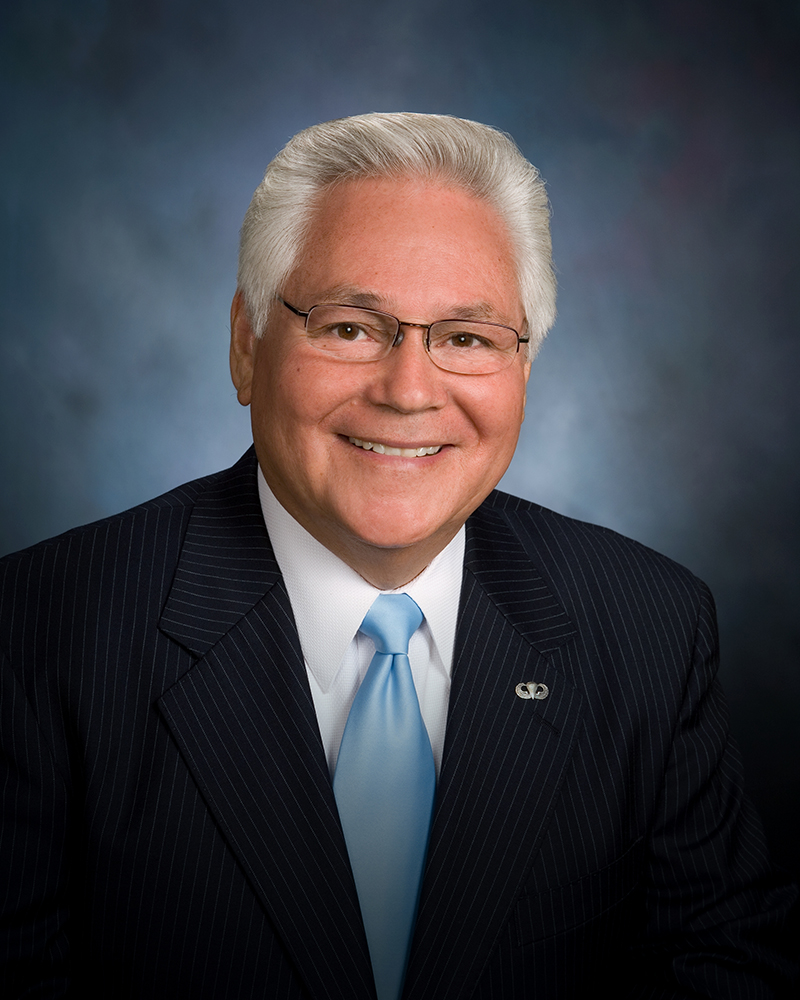
Sen. Bob Archuleta
Sponsored bills
(1) Existing sales and use tax laws impose a tax on retailers measured by the gross receipts from the sale of tangible personal property sold at retail in this state, or on the storage, use, or other consumption in this state of tangible personal property purchased from a retailer for storage, use, or other consumption in this state. Those laws provide various exemptions from those taxes. This bill would exempt from those taxes, on and after January 1, 2022, the gross receipts from the sale in this state of, and the storage, use, or other consumption in this state of, fuel for the operation of a zero-emission medium- or heavy-duty truck that is the subject of a lease entered into after July 1, 2022, with specified characteristics. The Bradley-Burns Uniform Local Sales and Use Tax Law authorizes counties and cities to impose local sales and use taxes in conformity with the Sales and Use Tax Law, and existing laws authorize districts, as specified, to impose transactions and use taxes in accordance with the Transactions and Use Tax Law, which generally conforms to the Sales and Use Tax Law. Amendments to the Sales and Use Tax Law are automatically incorporated into the local tax laws. Existing law requires the state to reimburse counties and cities for revenue losses caused by the enactment of sales and use tax exemptions. This bill would provide that, notwithstanding Section 2230 of the Revenue and Taxation Code, no appropriation is made and the state shall not reimburse any local agencies for sales and use tax revenues lost by them pursuant to this bill. (2) The Vehicle License Fee Law establishes, in lieu of any ad valorem property tax upon vehicles, an annual license fee for any vehicle subject to registration in this state at a specified percentage of the market value of that vehicle. Existing law exempts specified types of vehicles from the vehicle license fee. This bill would exempt from the vehicle license fee a zero-emission medium- or heavy-duty truck that is the subject of a lease entered into after July 1, 2022, with specified characteristics. (3) Existing law requires a registration fee to be paid to the Department of Motor Vehicles for the registration of each vehicle or trailer coach of a type subject to registration under the Vehicle Code, except those vehicles that are expressly exempted from the payment of registration fees. Under existing law, in addition to vehicle registration fees, an annual fee based upon vehicle weight is imposed on commercial motor vehicles. This bill would exempt from those registration fees and weight fees a zero-emission medium- or heavy-duty truck that is the subject of a lease entered into after July 1, 2022, with specified characteristics.
Existing law establishes various programs to provide assistance to homeless persons. Existing law requires a state agency or department that funds, implements, or administers a state program that provides housing or housing-related services to people experiencing homelessness or at risk of homelessness, except as specified, to adopt guidelines and regulations to include enumerated Housing First policies. This bill would require that all state programs created on or after January 1, 2022, providing interim housing, as defined, follow specified low barrier practices. The bill would also establish requirements for the adoption and implementation of these practices for programs existing prior to January 1, 2022, as specified.
Existing law establishes the Office of Small Business Advocate within the Governor's Office of Business and Economic Development for the purpose of advocating for the causes of small business and to provide small businesses with the information they need to survive in the marketplace. This bill, the Keep California Working Act, would establish the Keep California Working Grant Program. The act would require the Small Business Advocate to administer the program and award grants, as specified, to small businesses and nonprofit entities that meet specified criteria, including that the entity has experienced economic hardship resulting from the COVID-19 pandemic. The act would specify that grant money awarded pursuant to the program may be used only for specified purposes, including payroll costs, health care benefits, paid sick, medical, or family leave, and insurance premiums. The act would appropriate $2.6 billion dollars to the Office of Small Business Advocate for those purposes. The Personal Income Tax Law and the Corporation Tax Law, in conformity with federal income tax law, generally define "gross income" as income from whatever source derived, except as specifically excluded, and provide various exclusions from gross income. This bill would exclude from gross income, for state income tax purposes, the amount of a grant awarded pursuant to the Keep California Working Grant Program. Existing law requires a bill authorizing a new tax expenditure to contain, among other things, specific goals, purposes, and objectives that the tax expenditure will achieve, detailed performance indicators, and data collection requirements. The bill also would include additional information required for a bill authorizing a new tax expenditure. This bill would declare that it is to take effect immediately as an urgency statute.
The Rechargeable Battery Recycling Act of 2006 requires every retailer, as defined, to have in place a system for the acceptance and collection of used rechargeable batteries, defined to include lithium-ion batteries, for reuse, recycling, or proper disposal. The act requires the system for the acceptance and collection of used rechargeable batteries to include, at a minimum, specified elements, including, among others, the take-back of a used rechargeable battery at no cost to the consumer. The hazardous waste control laws, among other things, authorize the Department of Toxic Substances Control to regulate the generation and disposal of hazardous waste. Existing law prohibits a person from intentionally disposing of or causing the disposal of a hazardous or extremely hazardous waste at a point not authorized by the hazardous waste control laws, as provided. Under existing department-adopted regulations, specified hazardous wastes, including certain batteries, are designated as "universal waste" and are regulated separately pursuant to universal waste management provisions. This bill would prohibit a person from knowingly disposing of a lithium-ion battery in a container or receptacle that is intended for the collection of solid waste or recyclable materials, unless the container or receptacle is designated for the collection of batteries for recycling pursuant to specified laws. The bill would require the Department of Resources Recycling and Recovery, on or before July 1, 2024, and in consultation with the Department of Toxic Substances Control, to develop a guidance document for use by local governments to better inform, educate, and increase public awareness regarding the proper handling and disposal of lithium-ion batteries and products that contain lithium-ion batteries, as provided. The bill would authorize the Department of Resources Recycling and Recovery, in carrying out that requirement, to solicit and use any expertise available in other state agencies and would authorize the department to convene a specified working group to advise on the content, development, and promotion of the guidance document. The bill would require the Department of Forestry and Fire Protection, before January 1, 2023, in consultation with relevant state agencies and stakeholders, to develop a model protocol that identifies best practices for the detection, safe handling, and suppression of fires that originate from discarded lithium-ion batteries or products that contain lithium-ion batteries on or in solid waste or recycling collection vehicles, transfer or processing stations, or disposal facilities, as provided. The bill would require a solid waste enterprise, before July 1, 2023, after consulting with the county fire marshal of every county in which the solid waste enterprise conducts solid waste collection operations, to adopt, or update if necessary, a protocol and arrange any necessary training for relevant employees that identifies procedures to follow under those same circumstances. By imposing new duties on county fire marshals, the bill would impose a state-mandated local program. The California Constitution requires the state to reimburse local agencies and school districts for certain costs mandated by the state. Statutory provisions establish procedures for making that reimbursement. This bill would provide that, if the Commission on State Mandates determines that the bill contains costs mandated by the state, reimbursement for those costs shall be made pursuant to the statutory provisions noted above.
Existing law requires the Governor to appoint every office whose mode of appointment is not prescribed by law. Existing law also prescribes the manner of the Governor's appointment of those officers. This bill would require the office of the Governor to convene, on or before June 1, 2022, a working group to discuss and make recommendations on the most effective way to ensure the state's leadership on boards and commissions reflects the diversity in age, ethnicity, gender, gender identity, disability status, region, veteran status, and sexual orientation, among other things, that are representative of the state. The bill would require these recommendations to be completed and published on the Governor's internet website no later than March 1, 2023, and contain specified recommendations. The bill would set forth selection and qualification requirements for members of the working group. The bill would also require the working group to hold its first meeting no later than September 1, 2022, and to determine a schedule, at that first meeting, to have 5 additional meetings completed no later than February 1, 2023. The bill would terminate the working group on January 1, 2024. This bill would require the office of the Governor, on or before December 1, 2022, and on or before every December 1 thereafter, to create and deliver to the Legislature a report containing specified information relating to the demographic information, as defined, of individuals appointed by the office of the Governor and relating to information on every state board and commission. The bill would also require, on or before December 1, 2022, and on or before every December 1 thereafter, a portion of that report relating to the boards and commissions of the state to be published on the internet website of the office of the Governor. The bill would also make related findings and declarations.
Existing law establishes the California Conservation Corps in the Natural Resources Agency and requires the corps to implement and administer the conservation corps program. Existing law authorizes the Director of the California Conservation Corps to establish the Education and Employment Reentry Program within the corps to develop, partner with, and create opportunities for certain forestry corps program objectives, collaborate with the Employment Development Department to provide access to workforce services, collaborate with nongovernmental organizations dedicated to providing access to counseling, mentorship, supportive housing, health care, and educational opportunities, and employ collaborations and partnerships available to the corps, as specified. This bill would require the director, upon appropriation and on or before December 31, 2023, upon appropriation and on or before December 31, 2023, in partnership with the Department of Forestry and Fire Protection and the Department of Corrections and Rehabilitation, to establish a forestry training center in northern California to provide enhanced training, education, work experience, and job readiness for entry-level forestry and vegetation management jobs. The bill would require the training center to include counseling, mentorship, supportive housing, health care, and educational services and authorize the training center to provide training modules on specified activities. The bill would require the director to enroll at the training center formerly incarcerated individuals and to prioritize enrollment for those formerly incarcerated individuals who have either successfully served on a California Conservation Camp program crew and were recommended by the Director of Forestry and Fire Protection and the Secretary of the Department of Corrections and Rehabilitation, as provided, or successfully served on a hand crew at the county level and were recommended for participation by county probation and county fire departments. The bill would provide that successful completion of a training program at the training center constitutes qualifying experience for an entry-level forestry or vegetation management position at a state agency. Existing law requires the corps to report by December 31 of each year the total number of corpsmembers in the cohort who permanently separated from the corps, as provided. Existing law requires the report to include specified information. This bill would require the report, commencing December 31, 2023, and annually thereafter, to contain specified information regarding formerly incarcerated individuals enrolled in corps programs or centers, as provided. This bill would make legislative findings and declarations as to the necessity of a special statute for northern California.
Existing law imposes various limitations on the emissions of air contaminants for the control of air pollution from vehicular and nonvehicular sources. Existing law establishes the California Transportation Commission and requires it to advise and assist the Secretary of Transportation and the Legislature in formulating and evaluating state policies and plans for transportation programs in the state. Existing law requires the Department of Transportation to update the California Transportation Plan every 5 years and ensure that the plan addresses how the state will achieve maximum feasible emissions reductions. Existing law also requires the Transportation Agency to prepare a state freight plan on or before December 31, 2014, and every 5 years thereafter, with specified elements to govern the immediate and long-range planning activities and capital investments of the state with respect to the movement of freight. This bill would establish the Clean Freight Corridor Efficiency Assessment, to be developed by the California Transportation Commission, in coordination with other state agencies. In developing the assessment, the bill would require the commission to identify freight corridors, or segments of corridors, throughout the state that would be priority candidates for the deployment of zero-emission medium- and heavy-duty vehicles. The bill would require the commission to submit a report containing the assessment's findings and recommendations to certain committees of the Legislature by December 1, 2023. The bill would require the assessment's findings and recommendations to be incorporated into the development of the California Transportation Plan. The bill would require the state freight plan to include a description of needed infrastructure, projects, and operations for the deployment of zero-emission medium- and heavy-duty vehicles and the development of freight corridors identified in the assessment. Existing law requires the California Transportation Commission, upon appropriation by the Legislature, to allocate certain revenues deposited in the Trade Corridor Enhancement Account and certain federal funds for eligible infrastructure projects, including truck corridor improvements to mitigate emissions from trucks, located on or along specified transportation corridors. This bill would make projects that employ advanced and innovative technology to improve the flow of freight and also environmental and community mitigation or efforts to reduce environmental impacts of freight movement eligible for this funding.
(1) Existing law authorizes the establishment of the Lower Los Angeles River Recreation and Park District by petition or resolution submitted to the Los Angeles County Local Agency Formation Commission before January 1, 2021. Existing law authorizes 10 specified city councils to each appoint one member, and the Los Angeles County Board of Supervisors to appoint 2 members, to serve at the pleasure of the appointing entity on the initial board of directors of the district. Existing law authorizes the city councils of the Cities of Commerce, Downey, Montebello, and Pico Rivera to jointly appoint one member to serve a 2-year term on the initial board of directors of the district. This bill would authorize the city councils of the Cities of Commerce, Downey, Montebello, and Pico Rivera to each appoint one member to serve at the pleasure of the appointing city council on the initial board of directors of the district, rather than to jointly appoint one member to serve a 2-year term. The bill would authorize the Los Angeles County Board of Supervisors to appoint 3 members, rather than 2 members, to serve on the initial board of directors of the district. (2) Existing law authorizes the establishment of the Lower San Gabriel River Recreation and Park District by petition or resolution submitted to the Los Angeles County Local Agency Formation Commission before January 1, 2020. Existing law authorizes specified city councils, including the city council of the City of Montebello, and the Los Angeles County Board of Supervisors to appoint members to serve on the initial board of directors of the district. Under existing law, a violation of any rule, regulation, or ordinance adopted by the board of directors of a recreation and park district is a crime. This bill would extend the deadline to submit the petition or resolution establishing the district from January 1, 2020, to January 1, 2024. The bill would remove the authorization for the city council of the City of Montebello to appoint a member to the district's initial board of directors and would authorize the Los Angeles County Board of Supervisors to appoint one additional public member to the initial board of directors. The bill would also make various nonsubstantive changes. Because a violation of a rule, regulation, or ordinance adopted by the board of directors of the district would be a crime, this bill would impose a state-mandated local program by extending the deadline by which the district may be established. (3) This bill would make legislative findings and declarations as to the necessity of a special statute for the Lower Los Angeles River Recreation and Park District and the Lower San Gabriel River Recreation and Park District. (4) The California Constitution requires the state to reimburse local agencies and school districts for certain costs mandated by the state. Statutory provisions establish procedures for making that reimbursement. This bill would provide that no reimbursement is required by this act for a specified reason.
Existing law establishes the Department of Fish and Wildlife and sets forth the powers and duties of the department with regard to the implementation and administration of, among other things, projects and programs to protect wildlife and wildlife habitat in the state, including a conservation and mitigation banking program and a regional conservation investment strategy program. Under the conservation and mitigation banking program and the regional conservation investment strategy program, existing law authorizes the creation of credits under certain circumstances that may be used to fulfill legal obligations to mitigate impacts to fish and wildlife. This bill would authorize the department to approve compensatory mitigation credits for wildlife connectivity actions taken under the conservation and mitigation banking program or the regional conservation investment strategy program. In order to receive compensatory mitigation credits from the department under this authority, the bill would require the wildlife connectivity action to meet specified requirements. The bill would authorize a compensatory mitigation credit created under this authority to be used to fulfill, in whole or in part, compensatory mitigation requirements established under any state or federal environmental law, as determined by the applicable local, state, or federal regulatory agency. The bill would authorize the department to adopt guidelines and criteria to aid in the implementation of these provisions and would exempt the development, adoption, or amendment of these guidelines or criteria from the Administrative Procedure Act.