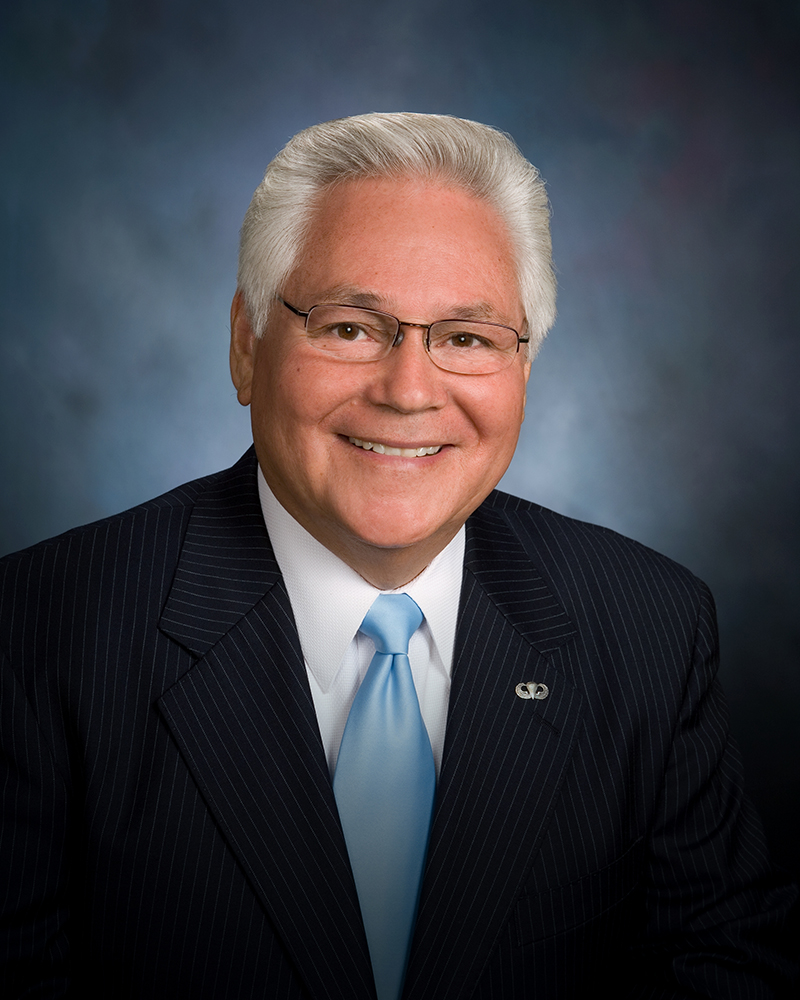
Photo of Bob Archuleta
D California Senate · District 30 On the 2026 ballot

Sen. Bob Archuleta

Compare
Total votes
15,829
all sessions
Attendance
95%
631 missed
Lower than 97% of chamber peers
With party
99%
of cast votes
Near the chamber average
Bipartisan score
0%
crosses aisle rarely
Near the chamber average
Sponsored
545
bills & resolutions
Near the chamber average
Committees
9
assignments
545 bills and resolutions

Sponsored bills

Total
545
Primary
180
Co-sponsor
365
This page
545
matching current filters
Co-sponsor SCR 11
Signed into law · California Senate · Co-sponsor
Relative to the Cancer Patients' Bill of Rights.

This measure would proclaim specified principles as the Cancer Patients' Bill of Rights to make clear the Legislature supports the best cancer care for cancer patients in the state.

Signed into law Sep 10, 2021 1 co-sponsor
Co-sponsor AB 1110
Passed · California Assembly · Co-sponsor
Zero-emission vehicles: Clean Vehicles Ombudsperson: Climate Catalyst Revolving Loan Fund Program.

(1) Existing law, the Economic Revitalization Act, establishes the Governor's Office of Business and Economic Development (GO-Biz) within the Governor's office, under the direct control of a director who is responsible to, and appointed by, the Governor. Existing law requires GO-Biz to serve the Governor as the lead entity for economic strategy and the marketing of California on issues relating to business development, private sector investment, and economic growth. Existing law, the Charge Ahead California Initiative, administered by the State Air Resources Board, includes goals of, among other things, placing in service at least 1,000,000 zero-emission and near-zero-emission vehicles by January 1, 2023, and establishing a self-sustaining California market for zero-emission and near-zero-emission vehicles in which zero-emission and near-zero-emission vehicles are a viable mainstream option for individual vehicle purchasers, businesses, and public fleets. This bill would establish the Clean Vehicles Ombudsperson, to be appointed by and report directly to the Director of GO-Biz, and would require the ombudsperson to consult with appropriate entities in identifying available programs and incentives offered by the state that can help to reduce costs and increase participation in a statewide contract or leveraged procurement agreement, as described below. The bill would also require the ombudsperson to convene 2 or more workshops of an advisory committee to aid the ombudsperson in identifying and publishing best practices in adopting zero-emission fleet vehicles for public agencies and identifying appropriate candidate vehicles for bulk purchase, leveraged procurement, or other means of widespread adoption by public entities, as specified. The bill would also require the ombudsperson to develop, and recommend that DGS adopt, criteria for evaluating vehicle purchase options or other means of widespread and streamline adoption options, as provided. The bill would repeal these provisions establishing and setting forth the powers and duties of the ombudsperson as of January 1, 2027. The bill would require DGS, based on information provided by the ombudsperson and the advisory committee workshops as described above, to evaluate the existing programs the department operates to assess how these programs may be modified, advertised, or expanded to include new options designed to significantly expand participation by public agencies and accelerate zero-emission vehicle adoption, as specified. The bill would require the department to issue a statewide contract or leveraged procurement agreement and, at minimum, to consider establishing standard pricing for the procurement of zero-emission fleet vehicles, taking into consideration any applicable financial incentives and low-cost financing options that are available to public agencies for the purchase of those vehicles. (2) Existing law, the Bergeson-Peace Infrastructure and Economic Development Bank Act, establishes the California Infrastructure and Economic Development Bank (I-Bank) in GO-Biz and, among other things, authorizes the I-Bank to make loans, issue bonds, and provide financial assistance for various types of projects that qualify as economic development facilities or public development facilities, as those terms are defined. Existing law, the Climate Catalyst Revolving Loan Fund Act of 2020, establishes the Climate Catalyst Revolving Loan Fund Program, authorizes the I-Bank to provide financial assistance to any eligible sponsor or participating party for eligible climate catalyst projects, as provided, and defines various terms for these purposes. Existing law requires the Strategic Growth Council, in consultation with the Labor and Workforce Development Agency, to advise the Legislature before the end of each calendar year of potential categories of climate catalyst projects that would focus on the state's key climate mitigation and resilience priorities, as provided. Existing law creates the Climate Catalyst Revolving Loan Fund and makes moneys available, upon appropriation, for expenditure for purposes of the Climate Catalyst Revolving Loan Fund Program. This bill would expressly provide that the acquisition of a zero-emission fleet vehicle pursuant to a statewide contract or leveraged procurement agreement, developed as described above, is a climate catalyst project eligible for financial assistance under the Climate Catalyst Revolving Loan Fund Program. The bill would require the Strategic Growth Council to review and make a recommendation on providing financial assistance under the program to include loan loss reserves, revolving loan funds, and other financial instruments to facilitate climate catalyst projects that consist of the acquisition of zero-emission fleet vehicles pursuant to a statewide contract or leveraged procurement agreement, developed as described above, or other agreements pursued upon the advice of the Clean Vehicles Ombudsperson to accelerate zero-emission vehicle adoption by public agencies.

Passed Sep 9, 2021 1 co-sponsor
Co-sponsor SB 693
Passed · California Senate · Co-sponsor
Pupil instruction: genocide education: the Holocaust.

Existing law requires the State Department of Education to incorporate age-appropriate materials relating to, among other things, genocide and the Holocaust into publications that provide examples of curriculum resources for teacher use, consistent with the subject frameworks on history and social science. Under existing law, the Legislature encourages the incorporation of survivor, rescuer, liberator, and witness oral testimony into the teaching of genocide and the Holocaust. This bill would establish a 15-member Governor's Council on Genocide and Holocaust Education to, among other things, establish best practices for, and promote implementation of, education on genocide, including the Holocaust, and submit an annual report to the Legislature, as specified. The bill would provide that the Governor, the Speaker of the Assembly, and the Senate Committee on Rules would each appoint 5 members of the council, who would be required to be individuals with particular interest in, or expertise on, genocide, including the Holocaust. The bill would make an appropriation by authorizing the department to use funds donated by private individuals or entities for the purpose of reimbursing members of the council for their actual and necessary expenses incurred in the performance of their official duties as members of the council. The bill would strongly encourage local educational agencies, as defined to include school districts, county offices of education, and charter schools, with pupils in grades 4 to 12, inclusive, to integrate the best practices into instruction on genocide, including the Holocaust, that meets existing academic content standards and the history-social science curriculum framework for these pupils. The bill would authorize the department to issue grants to local educational agencies for professional development, and would specify that the grant funds would either be appropriated through the annual Budget Act or another statute, or provided through donations to the department from private individuals or entities. To the extent that the bill would authorize the department to make grants with these donated funds, it would make an appropriation. The bill would require the department to conduct a study on the manner in which the instruction is offered to assess the impact of the instruction.

Passed Aug 26, 2021 1 co-sponsor
Co-sponsor SB 452
Passed · California Senate · Co-sponsor
State government: Immigrant and Refugee Affairs Agency: Office of Immigrant and Refugee Affairs.

Existing law designates 8 agencies in state government and requires the secretary of an agency to be generally responsible for the sound fiscal management of each department, office, or other unit within the agency. Existing law further requires the secretary of an agency to, among other duties, continually seek to improve the organization structure, the operating policies, and the management information systems of each department, office, or other unit. This bill would, until January 1, 2029, establish the Immigrant and Refugee Affairs Agency as an agency within state government, to be headed by a secretary who is appointed by the Governor and subject to Senate confirmation. The bill would specify that the purpose of the agency is to reduce obstacles and enhance immigrant integration, as defined, into the social, cultural, economic, and civic life of the state. The bill would establish the Office of Immigrant and Refugee Affairs within the agency. The bill would transfer functions relating to immigrants and refugees to the office and would declare the intent to incorporate existing and future programs created to assist immigrants and refugees into the office. The bill would transfer the property of any office, agency, or department that relates to functions transferred to the office by these provisions and would transfer the unencumbered balance of any appropriation and any other funds that are available for use in connection with any function transferred to the office. The bill would also provide that every officer and employee who is serving in the state civil service, as provided, and who is transferred to the office, shall retain the status position, and rights. The bill would create the Immigrant and Refugee Integration Fund within the State Treasury, and would make the moneys available in the fund available to the secretary of the office to administer the duties of the office. This bill would establish the duties and responsibilities of the agency and the office which includes, among other duties, establishing a permanent structure within the state to serve immigrants, assisting other state agencies in evaluating their programs for accessibility and effectiveness in providing services to immigrants and refugees, and recommending policy and budget mechanisms for meeting immigrant and refugee integration goals. The bill would prohibit interagency sharing of personal information and would prohibit use of agency resources to directly or indirectly participate or assist in immigration enforcement activity. Existing law establishes the Statewide Director of Immigrant Integration and requires the director serve as the statewide lead for the planning and coordination of immigrant services and policies in California. Existing law requires, among other things, that the director develop a comprehensive statewide report on programs and services that serve immigrants, develop an online clearinghouse of immigrant services, resources, and programs, and monitor the implementation of statewide laws and regulations that serve immigrants. This bill would recast those provisions to rename the director as the Statewide Director of Immigrant and Refugee Integration. The bill would place the director in charge of the office, and would require the director to report to the Governor and the Legislature on programs and services that serve immigrants and refugees by January 1, 2023, and require the director to provide a statewide plan for better implementation and coordination of immigrant and refugee assistance policies and programs. The bill would require the director to incorporate refugee services, resources, and programs into the online clearinghouse by January 1, 2023, and would require the director to monitor statewide laws and regulations that serve refugees, in addition to immigrants. The changes made by this bill would be in effect until January 1, 2029, and as of that date would be repealed. The provisions of this bill would only become operative if funds have been appropriated for the purposes described in the bill in the annual Budget Act or another statute. Existing constitutional provisions require that a statute that limits the right of access to the meetings of public bodies or the writings of public officials and agencies be adopted with findings demonstrating the interest protected by the limitation and the need for protecting that interest. This bill would make legislative findings to that effect.

Passed Aug 26, 2021 1 co-sponsor
Co-sponsor AB 915
Passed · California Assembly · Co-sponsor
Small and disadvantaged business enterprises.

(1) Existing law requires each state agency that significantly regulates or impacts small business to designate at least one person to serve as a small business liaison for the agency. Existing law requires the small business liaison to be responsible for, among other things, receiving and responding to complaints received by the agency from small businesses and assisting in ensuring that the procurement and contracting processes of the entity are administered in order to meet or exceed the goal of 25% small business participation. This bill would also require the small business liaison to develop an "economic equity first" action plan and policy for the agency to provide, among other things, direction, recommendations, and strategies as to how to ensure that disadvantaged business enterprises are effectively involved and benefiting from the procurement process of the agency. The bill would require the action plan and policy to be submitted to the agency secretary, department director, or executive officer by January 1, 2023, and would require adoption of that plan by January 1, 2024. (2) Existing law establishes the Office of Small Business Advocate within the Governor's Office of Business and Economic Development, also known as GO-Biz, and prescribes the duties and functions of the Small Business Advocate, who is also the Director of the Office of Small Business Advocate. Existing law requires the advocate to prepare and submit a written annual report to the Governor and the Legislature that describes the activities and recommendations of the office, including an evaluation of the efforts of state agencies and, where appropriate, specific departments, that significantly regulate small businesses to assist minority and other small business enterprises, and make appropriate recommendations to assist the development of these enterprises. This bill would require the annual report to also include details regarding the office's activities to support procurement participation by small businesses, microbusinesses, disadvantaged business enterprises, and disabled veteran business enterprises, as well as compliance and implementation of specified action plans and policies by state agency liaisons and advocates. Existing law requires the advocate to post certain information on the GO-Biz or the advocate's internet website, including how to receive assistance in certifying as a small business and identifying and participating in state procurement opportunities. This bill would require the above-described information, and also information in receiving assistance in certifying as a disabled veteran business enterprise and disadvantaged business enterprise, to be easily accessible from the homepage of the Go-Biz internet website. (3) Existing law, the Small Business Procurement and Contract Act, declares that it is essential that opportunity is provided for full participation in our free enterprise system by small business enterprises. This bill would also declare that the state economy is strengthened by the diversity and resiliency of its small businesses and that it is essential to ensure all small businesses are able to fully participate in the domestic and global markets, including businesses owned by women and other specified groups. (4) The Small Business Procurement and Contract Act requires the Director of General Services and the heads of other state agencies that enter into contracts for the acquisition of goods, services, and information technology and for the construction of state facilities to establish goals for the participation of small businesses and microbusinesses in these contracts, to provide for a small business preference in the award of these contracts, to give special consideration and special assistance to small businesses, and, whenever possible, to make awards to small businesses, as specified. Existing law defines a "small business" for these purposes as, among other things, an independently owned and operated business that is not dominant in its field of operation that, commencing January 1, 2019, has average annual gross receipts of $15 million, as may be adjusted to reflect changes in the California Consumer Price Index, or less over the previous 3 years. Existing law also defines a "microbusiness" as a small business which, together with affiliates, has average annual gross receipts of, commencing January 1, 2019, $5 million, as may be adjusted to reflect changes in the California Consumer Price Index, or less over the previous 3 years. Existing law requires the director to conduct a biennial review of those average annual gross receipt levels and authorizes the director to adjust the average annual gross receipts threshold to reflect changes in the California Consumer Price Index, as specified. This bill would require the director to communicate and coordinate with the Small Business Advocate to execute this biennial review. The bill would, for purposes of the act, define "disadvantaged business enterprises" to mean "socially and economically disadvantaged individuals," as described by federal law. Existing law requires the directors of the Department of General Services and other state agencies that enter into contracts concerning the provision of goods, information technology, services, and construction of state facilities, to establish goals for the extent of participation of small businesses, including microbusinesses, for those contracts. This bill would instead require those directors to establish a minimum goal of 25% procurement participation for small businesses, including microbusinesses. Existing law also requires the directors of the Department of General Services and other state agencies that enter into contracts for the provision of goods, information technology, services to the state, and construction of state facilities, to provide for a small business preference, in the award of contracts, in solicitations where an award is to be made to the lowest responsible bidder meeting specifications, with the amount being 5% of the lowest responsible bidder meeting specifications. This bill, with respect to public works contracts, would also require a preference for disadvantaged business enterprises, which would be a separate 5% of the lowest responsible bidder meeting specifications. Existing law further requires a small business or microbusiness preference, in solicitations where an award is to be made to the highest scored bidder based on evaluation factors in addition to price, in an amount of 5% of the highest responsible bidders score. This bill, with respect to public works contracts, would also require a preference to disadvantaged business enterprises, which would be a separate 5% of the highest responsible bidder's total score. Existing law, notwithstanding specified advertising and bidding provisions, authorizes a state agency to award a contract for construction or other state improvement of any kind with an estimated value of greater than $5,000 but less than a specified cost limit, to a certified small business, including a microbusiness, or to a disabled veteran business enterprise, so long as the agency obtains written bid submittals from 2 or more certified small businesses or disabled veteran business enterprises. This bill would expand that provision to include, among those businesses to which this type of contract may be awarded, a disadvantaged business enterprise, so long as the agency obtains written bid submittals from 2 or more of the above-described businesses. (5) Existing law establishes the Office of Small Business and Disabled Veteran Business Enterprise Services within the Department of General Services and charges it with specified duties, including making recommendations to the department and other state agencies for simplification of specifications and terms in order to increase the opportunities for small business, microbusiness, and disabled veteran business enterprise participation. This bill would include, with those recommendations, simplification of specifications and terms in order to increase opportunities for disadvantaged business enterprises. Existing law requires the department, during the process of certifying and determining the eligibility of a small business or a disabled veteran business enterprise, to require the applicant or certified firm to submit a written declaration, under penalty of perjury, that the information submitted to the department pursuant to specified law is true and correct. This bill would require the department to establish a fast track small business certification process for business enterprises that hold relevant federal certifications. By expanding the crime of perjury, the bill would create a state-mandated local program. The bill would also permit the Department of General Services to apply relevant federal certifications for the business categories and in its delineated procurement authority to other state agencies. (6) The Small Business Procurement and Contract Act requires the department to make rules and regulations for the purpose of carrying into effect the act. This bill would require the department to consider appropriate remedial actions to be taken in regards to mandatory reporting agencies that failed in 3 out of 5 years to meet their small business or disabled veteran business enterprise goals, and to include department actions in the department's consolidated annual report. (7) Existing law, the State Contract Act, requires the Department of General Services to make available a report on contracting activity containing specified information, including a list of consulting services contracts the state has entered into during the previous fiscal year and the level of participation of business enterprises, as specified. This bill would also require the report to include the level of participation, by agency, of dual certified small business and disadvantaged business enterprises in statewide contracts, including dollar values of contract awards for specified categories. The bill would include related legislative findings. The California Constitution requires the state to reimburse local agencies and school districts for certain costs mandated by the state. Statutory provisions establish procedures for making that reimbursement. This bill would provide that no reimbursement is required by this act for a specified reason.


Passed Aug 26, 2021 1 co-sponsor
Co-sponsor SCR 26
Signed into law · California Senate · Co-sponsor
Relative to Detective Raul Vasquez Gama Memorial Highway.

This bill would designate a specified portion of Interstate 710 in the County of Los Angeles as the Detective Raul Vasquez Gama Memorial Highway. The measure would request that the Department of Transportation determine the cost of appropriate signs showing this special designation and, upon receiving donations from nonstate sources covering that cost, erect those signs.

Signed into law Jul 16, 2021 1 co-sponsor
Co-sponsor SB 347
Signed into law · California Senate · Co-sponsor
Urban forestry: California Community and Neighborhood Tree Voluntary Tax Contribution Fund.

The California Urban Forestry Act of 1978 requires the Department of Forestry and Fire Protection to implement a program in urban forestry to encourage better tree management and planting in urban areas. Under the act, the department has established a grant program to provide grants for, among other projects, projects for urban forest management activities. Existing law authorizes an individual to contribute amounts in excess of their personal income tax liability for the support of specified funds. Existing law sets forth general administrative provisions applicable to voluntary contributions, which, among other things, repeal funds that fail to meet a minimum contribution amount of $250,000 in a given taxable year. This bill would allow a taxpayer to designate an amount in excess of personal income tax liability to be transferred into the California Community and Neighborhood Tree Voluntary Tax Contribution Fund, which the bill would create. The bill would require the Franchise Tax Board to revise the tax return to include a space for this fund for taxable years beginning on or after January 1, 2021, and until January 1, 2028, unless the fund fails to meet an annual minimum contribution amount of $250,000, in which case these provisions would be repealed on December 1 of that year. The bill would require moneys transferred to the California Community and Neighborhood Tree Voluntary Tax Contribution Fund to be continuously appropriated and allocated to the Department of Forestry and Fire Protection to the grant program for urban forest management activities under the California Urban Forestry Act of 1978 and to the Franchise Tax Board and the Controller for related administrative costs, as provided. By continuously appropriating these funds, the bill would make an appropriation.

Signed into law Jul 16, 2021 1 co-sponsor
Showing 411 to 420 of 545 bills
Previous 1 … 41 42 43 … 55 Next