

Existing law directs the State Air Resources Board to coordinate efforts to attain and maintain ambient air quality standards. Existing law creates the Air Quality Improvement Program, administered by the state board, to fund, upon appropriation by the Legislature, air quality improvement projects relating to fuel and vehicle technologies. This bill would require the state board to establish the Zero-Emission Aftermarket Conversion Project (ZCAP) , upon appropriation by the Legislature in the annual Budget Act or other statute or, at the discretion of the state board, using moneys available from another clean transportation program, to provide an applicant who is a California resident with a rebate for an eligible vehicle that has been converted into a zero-emission vehicle. The rebate issued pursuant to the ZACP would be limited to one per vehicle and a value of up to $4,000. The bill would require the state board to establish guidelines for the ZACP that, among other things, define qualifying conversion-types for used vehicles and establish minimum eligibility criteria for an applicant to be eligible for the rebate. The bill would also require the state board's guidelines to require that an eligible zero-emission vehicle have a range of at least 100 miles and have completed an inspection of safety systems and components by a licensee of the Bureau of Automotive Repair, as provided.
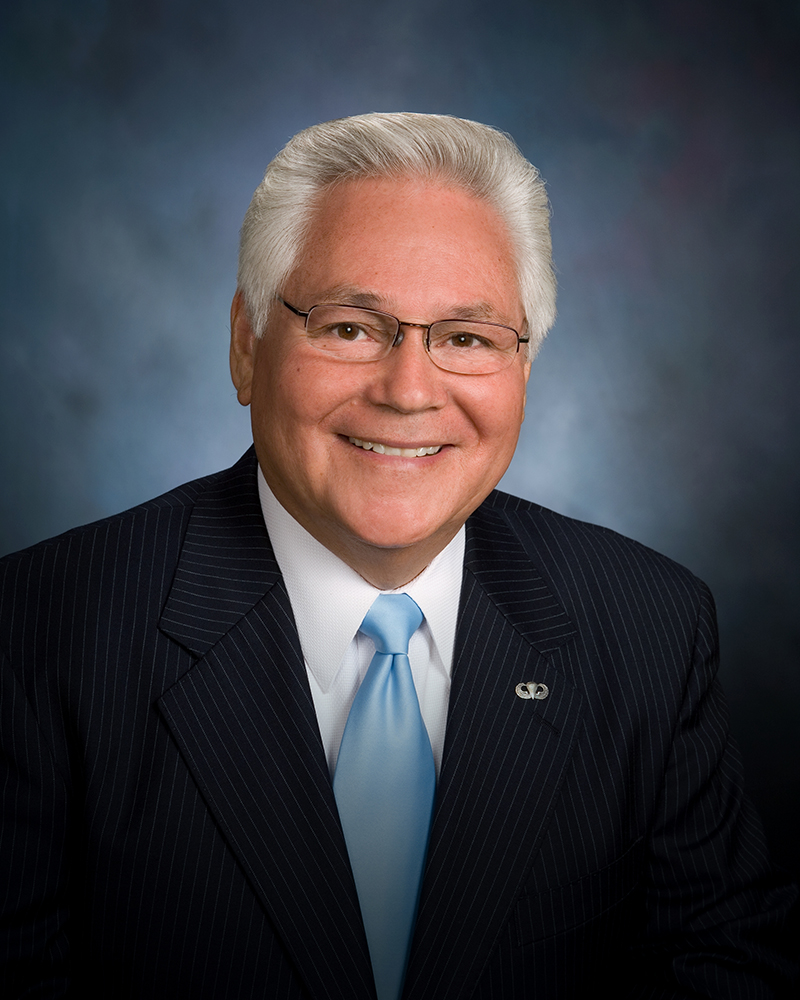
Sen. Bob Archuleta
Sponsored bills
The California Constitution provides that the University of California constitutes a public trust, and requires the university to be administered by the Regents of the University of California, a corporation in the form of a board, with full powers of organization and government, subject to legislative control only for specified purposes. These provisions grant the regents all the powers necessary or convenient for the effective administration of its trust. This measure would require employees of the Regents of the University of California to have the right to, and be covered by, certain basic state labor standards, as provided. The measure would require individuals who perform certain work for the regents to have the right to the payment of a prevailing wage. The measure would authorize the Legislature to enact laws that further these rights, establish, define, or specify the basic state labor standards applicable to the regents, or establish other health, safety, and labor protections for individuals performing work for the regents.
This measure would acknowledge April 2024 as Child Abuse Prevention Month and encourage Californians to work together to support youth-serving child abuse prevention activities in their communities and schools.
Existing law authorizes specified peace officers, including, among others, police officers, probation officers, and members of the California National Guard, in the performance of the officers' duties, to display a steady or flashing blue warning light visible from the front, sides, or rear of their emergency vehicles. This bill would additionally authorize parole officers to display the blue warning light from their emergency vehicles if they complete a 4-hour classroom training course regarding the operation of emergency vehicles that is certified by the Standards and Training for Corrections Division of the Board of State and Community Corrections.
The Consumers Legal Remedies Act makes unlawful certain unfair methods of competition and certain unfair or deceptive acts or practices undertaken by a person in a transaction intended to result or that results in the sale or lease of goods or services to a consumer, including charging or receiving an unreasonable fee, as defined, to prepare, aid, or advise any prospective applicant, applicant, or recipient in the procurement, maintenance, or securing of public social services, as defined to include, among other things, veterans pensions. This bill would expand the definition of public social services to also include other veterans benefits. The bill would also expand the definition of an unreasonable fee to include a fee charged with respect to federal veterans benefits that exceeds the amount that could be charged for those services by an attorney or claims agent accredited by the United States Department of Veterans Affairs. Existing law prohibits a person from, in connection with any transaction or any sale of goods or services, electronically accessing a Common Access Card (CAC) issued to a service member, placing or requiring the placement of such a CAC in a smart card reader, requesting or requesting entry of the personal identification number (PIN) associated with such a CAC, or requiring a service member to log in to any United States Department of Defense or, in the case of a member of the United States Coast Guard, United States Department of Homeland Security computer system. Existing law makes void a transaction or sale entered into in violation of these provisions. This bill would extend the above-described restrictions to prohibit requiring a former or current service member to log in or share their credentials for accessing, or accessing with another person's credentials, any United States Department of Defense, United States Department of Veterans Affairs, or United States Department of Homeland Security computer system. Except as provided, the bill would prohibit a person from, in connection with any transaction or any sale of goods or services, directly or indirectly soliciting, contracting for, charging, or receiving, or attempting to solicit, contract for, charge, or receive, any fee or compensation with respect to the preparation, presentation, or prosecution of any claim for benefits under the laws administered by the United States Department of Veterans Affairs. The bill would also make void a contract performed in violation of these provisions. The bill would make violations of these provisions a misdemeanor. By expanding the scope of a crime, this bill would impose a state-mandated local program. The California Constitution requires the state to reimburse local agencies and school districts for certain costs mandated by the state. Statutory provisions establish procedures for making that reimbursement. This bill would provide that no reimbursement is required by this act for a specified reason.
Existing law establishes the California Community Colleges, under the administration of the Board of Governors of the California Community Colleges, as one of the segments of public postsecondary education in this state. Existing law establishes community college districts throughout the state, and authorizes these districts to provide instruction at the community college campuses they operate and maintain. This bill would prohibit, commencing with the 2025–26 fiscal year, a community college district's annual unrestricted general fund balance, as specified, for a fiscal year from exceeding 16.7% of its unrestricted general fund expenditures for that year, unless the community college district meets specified conditions. The bill would prohibit a community college district from transferring unrestricted general funds to another fund if the receiving fund has an existing balance of 33% or more of the community college district's unrestricted general fund expenditures for that fiscal year or if the transfer would cause the receiving fund to have a balance of 33% or more of the community college district's unrestricted general fund expenditures for that fiscal year. For a community college district that violates the above-described prohibitions, the bill would require a community college district to distribute the amount of the annual unrestricted general fund balance that exceeds 16.7% to nonsupervisory and nonmanagement employees of the community college district, as provided. To the extent that the bill would impose new duties on community college districts, the bill would impose a state-mandated local program. The California Constitution requires the state to reimburse local agencies and school districts for certain costs mandated by the state. Statutory provisions establish procedures for making that reimbursement. This bill would provide that, if the Commission on State Mandates determines that the bill contains costs mandated by the state, reimbursement for those costs shall be made pursuant to the statutory provisions noted above.
Maddy summaryThis Senate Resolution formally recognizes May as Maternal and Mental Health Awareness Month in California to highlight critical issues facing women and birthing people. The document draws attention to disparities in reproductive care, noting that many women lack access to hospitals with obstetrics services and that costs for fertility treatments remain a significant barrier. It also emphasizes the high prevalence of untreated mental health conditions among new mothers, particularly within communities of color and those with lower incomes. While the resolution does not create new laws, it serves to raise public awareness about the need for equitable access to both physical and mental health services during the reproductive years.
Existing law makes it a crime to possess for sale or purchase for purpose of sale, transport, or sell, various controlled substances, including, among others, fentanyl. Existing law requires the court, when granting probation after conviction of any controlled substance offense, as specified, to order as a condition of probation that the defendant secure education or treatment from a local community agency and requires the court or probation department to refer defendants to controlled substance education or treatment programs that adhere to specified standards. Existing law permits a defendant to withdraw their plea of guilty or plea of nolo contendere and enter a plea of not guilty and authorizes a court to set aside a verdict of guilty, if the defendant has met certain requirements. This bill would require a person who is convicted of, or who pleads guilty or no contest to, the above-described crimes as they relate to fentanyl to receive a written advisory of the danger of distribution of controlled substances and that, if a person dies as a result of that action, the distributor can be charged with homicide or murder. The bill would require that the fact the advisory was given be on the record and recorded on the abstract of the conviction. This bill would require a defendant who is charged with the above-described crimes to be ordered to complete a substance education or treatment program, as described above, and would state that a defendant who successfully completes an education or treatment program is eligible for the relief described above. This bill would declare that it is to take effect immediately as an urgency statute.