

Existing law allows a vehicle to park, for up to the posted time limit, in a parking space that is regulated by an inoperable parking meter or an inoperable parking payment center. Existing law defines "inoperable parking payment center" as an electronic parking meter or pay station serving one or more parking spaces that is closest to the space where a person has parked and that cannot accept payment in any form, cannot register that a payment in any form has been made, or cannot issue a receipt that is required to be displayed in a conspicuous location on or in the vehicle. This bill would change the definition for an inoperable parking payment center to clarify that it applies to an electronic parking meter or pay station designated to serve the specific parking space where a person has parked. Existing law sets forth the procedures for citing a registered owner and driver, rentee, or lessee of a vehicle for a parking violation. Under existing law, if a vehicle is unattended during the time of the violation, the peace officer or person authorized to enforce parking laws and regulations is required to securely attach to the vehicle a notice of parking violation with specified information about the violation, including the procedure for the registered owner, lessee, or rentee to deposit the parking penalty or contest the citation. This bill would authorize a ticket to be served via first-class mail for a violation in a prohibited parking location, as specified. The bill would define "prohibited parking location" to mean a no parking area, fire zone, or loading zone. The bill would require a designated employee of a city, county, city and county, or contracted law enforcement agency for a special transit district to review photographs to determine whether a parking violation occurred prior to mailing a ticket. This bill would require the parking penalty for a registered owner who makes a payment to a processing agency, within a set timeframe, for these purposes to be limited to the original parking penalty, as specified.
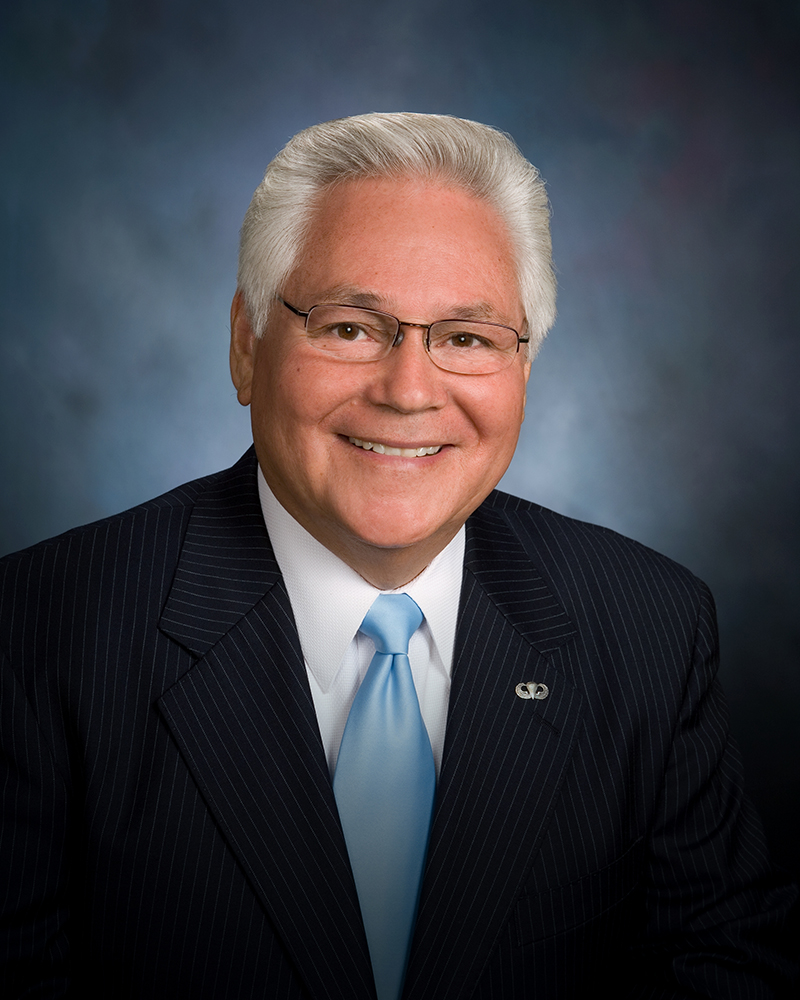
Sen. Bob Archuleta
Sponsored bills
Existing law establishes the Attorney General as the head of the Department of Justice, with charge of all legal matters in which the state is interested, except as specified. Existing law imposes various requirements on the Attorney General related to consumer protection, including, among others, the supervision of charitable trusts and the enforcement of antitrust laws. Existing law, commonly known as the Cartwright Act, identifies certain acts that are unlawful restraints of trade and unlawful trusts and prescribes provisions for its enforcement through civil actions. This bill, the California Preventing Algorithmic Collusion Act of 2024 (the act) , would require a person, as defined, upon request of the Attorney General, to provide to the Attorney General a written report, as specified, on each pricing algorithm, as defined, identified in the request. The act would require that all information submitted in a report under these provisions be treated as confidential and be considered privileged and confidential trade secrets exempt from disclosure under the California Public Records Act. The act would authorize the Attorney General to share the report with the National Institute of Standards and Technology for technical assistance in understanding the report, as specified. This act would prohibit a person from using or distributing any pricing algorithm that uses, incorporates, or was trained with nonpublic competitor data, as defined. If the Attorney General has reason to believe that a person has violated these provisions, the act would authorize the Attorney General to bring a civil action against the person in any court of competent jurisdiction in this state, as specified. The act would provide that certain presumptions are established as applicable, including that the defendant entered into a contract in restraint of trade, as specified, if the Attorney General establishes any of specified requirements, including that the defendant distributed the pricing algorithm to 2 or more persons with the intent that the pricing algorithm be used to set or recommend a price, as defined, or commercial term, as defined, of a product or service in the same market or a related market and 2 or more persons used the pricing algorithm to set or recommend a price or commercial term of a product or service. This act would require a person that has $5,000,000 or more in annual revenue that uses a pricing algorithm to recommend or set a price or commercial term to make certain disclosures, as specified, including to a customer, before the customer purchases the relevant product or service, that the price or a commercial term is set or recommended by a pricing algorithm. The act would provide that failure to comply with these disclosure provisions constitutes an unfair trade practice, as specified. If the Attorney General has reason to believe that a person has violated these disclosure provisions, the act authorizes the Attorney General to bring a civil action against the person in any court of competent jurisdiction in this state, as specified. Existing law establishes the Governor's Office of Business and Economic Development (GO-Biz) , which serves the Governor as the lead entity for economic strategy and the marketing of California on issues relating to business development, private sector investment, and economic growth. Existing law establishes the Department of Financial Protection and Innovation in the Business, Consumer Services, and Housing Agency, headed by the Commissioner of Financial Protection and Innovation. Under existing law, the department has charge of the execution of specified laws relating to various financial institutions and financial services. Existing law requires the commissioner to publish on the department's internet website an annual report detailing actions taken during the prior year, including, among others, recommendations intended to result in improved oversight, greater transparency, or increased availability of beneficial financial products and services in the marketplace. This act would require, on or before January 1, 2027, the office of the Attorney General to publish on its internet website, and notify the Legislature of the publication of, the results of a study conducted in collaboration with GO-Biz and the Department of Financial Protection and Innovation on the use of pricing algorithms using, incorporating, or trained with either or both public and nonpublic data, as specified, including, among other information, the prevalence of pricing algorithms. Existing constitutional provisions require that a statute that limits the right of access to the meetings of public bodies or the writings of public officials and agencies be adopted with findings demonstrating the interest protected by the limitation and the need for protecting that interest. This bill would make legislative findings to that effect.
Existing law, the Safe Neighborhoods and Schools Act, enacted by Proposition 47, as approved by the voters at the November 4, 2014, statewide general election, defines and prohibits an act of shoplifting and prohibits prosecution for an act of shoplifting under any other law. Existing law defines shoplifting as entering a commercial establishment with intent to commit larceny while the establishment is open during regular business hours. This bill would revise the definition of shoplifting to require an intent to steal retail property or merchandise. Existing law provides that a person with a prior conviction for specified sex offenses may be charged with a felony for shoplifting or for theft of property not exceeding $950 in value. This bill would require a person convicted of petty theft or shoplifting, if the person has 2 or more prior convictions for specified theft-related offenses, to be punished by imprisonment in the county jail for up to one year, or for 16 months, or 2 or 3 years, and would make conforming changes. This bill would provide that its provisions would become effective only upon approval of the voters, and would provide for the submission of its provisions to the voters for approval at the next statewide general election.
Existing law, the Planning and Zoning Law, with regard to zoning regulations, requires every city, county, and city and county to administratively approve an application to install electric vehicle charging stations and, until January 1, 2030, hydrogen-fueling stations that meet certain requirements, through the issuance of a building permit or similar nondiscretionary permit, as prescribed. This bill would make nonsubstantive changes to those provisions.
(1) Existing law, the Control, Regulate and Tax Adult Use of Marijuana Act of 2016 (AUMA) , an initiative measure approved as Proposition 64 at the November 8, 2016, statewide general election, authorizes a person who obtains a state license under AUMA to engage in commercial adult-use cannabis activity pursuant to that license and applicable local ordinances. Existing law, the Medicinal and Adult-Use Cannabis Regulation and Safety Act (MAUCRSA) , among other things, consolidates the licensure and regulation of commercial medicinal and adult-use cannabis activities. Under MAUCRSA, the Department of Cannabis Control has sole authority to license and regulate commercial cannabis activity. MAUCRSA authorizes the department to issue state licenses only to qualified applicants. MAUCRSA imposes various requirements on an applicant for a license, including, among other things, requiring an applicant to submit a notarized statement that the applicant will enter into, or demonstrate that it has already entered into, and will abide by the terms of a labor peace agreement, as specified. Existing law imposes the notarized-statement requirement on an applicant with 20 or more employees and, commencing July 1, 2024, on an applicant with 10 or more employees and prohibits the department from renewing a license, on or after July 1, 2024, unless the licensee submits a notarized statement that the licensee has entered into and will abide by the terms of a labor peace agreement. This bill, for purposes of these provisions, would determine the number of employees of an applicant or licensee by reference to the applicant or licensee's federal employer identification number, individual tax identification number, or social security number, as specified. The bill would require an applicant to provide that information. Existing law requires the Contractors State License Board to require, as a condition precedent to the issuance, reinstatement, reactivation, renewal, or continued maintenance of a license, that the applicant or licensee have on file at all times a current and valid Certificate of Workers' Compensation Insurance or Certification of Self-Insurance in the applicant's or licensee's business name, as specified. This bill similarly would require the Department of Cannabis Control to require, as a condition precedent to the issuance, reinstatement, reactivation, renewal, or continued maintenance of a license, that the applicant or licensee have on file at all times a current and valid Certificate of Workers' Compensation Insurance or Certification of Self-Insurance in the applicant's or licensee's business name. The bill would require the department and the Division of Labor Standards Enforcement to enforce this requirement pursuant to their existing enforcement authorities. The bill would impose this requirement on licensees or applicants with 10 or more employees on or before July 1, 2024, and for all other licensees or applicants on or before December 31, 2024. This bill would require a licensee that employs 10 or more workers to provide to the department, by a specified date, the total number of full- and part-time employees, temporary workers, and independent contractors who provide services to the licensee, as described, and the specific employer identification number applicable to each of those workers. (2) Existing law, as established in the case of Dynamex Operations W. v. Superior Court (2018) 4 Cal.5th 903 (Dynamex) , creates a presumption that a worker who performs services for a hirer is an employee for purposes of claims for wages and benefits arising under wage orders issued by the Industrial Welfare Commission. Existing law provides that for specified unemployment insurance and employment purposes, a person providing labor or services for remuneration is considered an employee rather than an independent contractor unless the hiring entity demonstrates otherwise, as described. This bill would apply the law established in the Dynamex case and the provision described above to a worker who performs services for a licensee under MAUCRSA or for a person or entity who is required to obtain such a license, as specified. (3) Existing law requires an employee to furnish, semimonthly or at the time of each payment of wages, either as a detachable part of the check, draft, or voucher paying the employee's wages, to their employee an accurate itemized statement in writing showing, among other things, gross wages earned. Existing law imposes related requirements on the keeping, inspection, and request for itemized statement records, and sets forth remedies and penalties for noncompliance. Existing law also requires employers to provide to each employee a written notice containing certain information regarding their wages and employer information. This bill would require an employer licensed under MAUCRSA to comply with the above-described requirements. (4) This bill would declare that it is to take effect immediately as an urgency statute.
Existing law establishes the Commission on Peace Officer Standards and Training and charges it with, among other duties, establishing minimum standards relating to physical, mental, and moral fitness that govern the recruitment of peace officers. Existing law provides that members of the commission receive no compensation, and that attendance at meetings of the commission is deemed performance by a member of the duties of the member's local governmental employment. This bill would make a technical, nonsubstantive change to those provisions.