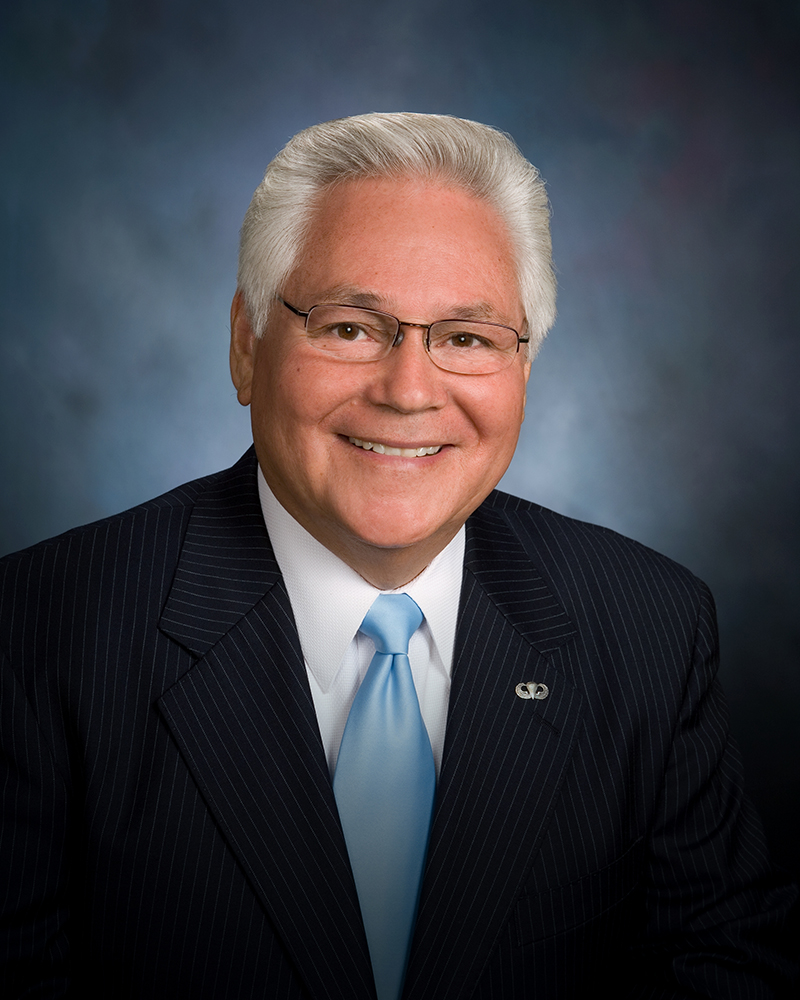
Photo of Bob Archuleta
D California Senate · District 30 On the 2026 ballot

Sen. Bob Archuleta

Compare
Total votes
15,829
all sessions
Attendance
95%
631 missed
Lower than 97% of chamber peers
With party
99%
of cast votes
Near the chamber average
Bipartisan score
0%
crosses aisle rarely
Near the chamber average
Sponsored
545
bills & resolutions
Near the chamber average
Committees
9
assignments
545 bills and resolutions

Sponsored bills

Total
545
Primary
180
Co-sponsor
365
This page
545
matching current filters
Primary SJR 11
In committee · California Senate · Lead sponsor
Relative to Armenian hostages.

This measure would call on the Biden Administration to urge Azerbaijan to immediately return all Armenian hostages, to impose Global Magnitsky Human Rights Accountability Act violations on Azerbaijan, to suspend all United States military and economic assistance to Azerbaijan, and to work with the international community to ensure the protection and preservation of Armenian cultural heritage sites. The measure would also support House Resolution 861, which calls on Azerbaijan to immediately release all prisoners of war and captured civilians.

In committee Feb 13, 2024 0 co-sponsors
Primary SB 855
In committee · California Senate · Lead sponsor
Fair Employment and Housing Act: veterans.

Existing law, the California Fair Employment and Housing Act, prohibits an employer from discriminating against an employee on account of certain characteristics, including a person's veteran or military status. The act prescribes various unlawful employment practices and requires the Civil Rights Department to, among other things, receive, investigate, and prosecute complaints alleging violations of those unlawful practices. This bill would make it an unlawful employment practice to require an employee who is a veteran, as defined, to work on November 11, known as Veterans Day, if specified conditions are met.

In committee Feb 1, 2024 0 co-sponsors
Primary SB 356
In committee · California Senate · Lead sponsor
Housing: Code Enforcement Incentive Program: Community Code Enforcement Pilot Program.

(1) Existing law establishes the Code Enforcement Incentive Program pursuant to which the Department of Housing and Community Development, upon appropriation by the Legislature, makes funds available as matching grants to cities, counties, and cities and counties that operate local building enforcement programs for more than 3 years, as specified. Existing law requires the recipient city, county, or city and county to provide a cash or in-kind local match of at least 25% in the first year, 50% in the 2nd year, and 75% in the 3rd year, and limits the maximum grant to a single recipient under the program to $1,000,000. Existing law requires grant recipients to submit a report to the department on the expanded code enforcement efforts, among other things. Existing law requires the department to summarize the reports and transmit the reports to the Legislature within 6 months after the grant recipient's submission date. Existing law requires the department to award grants under the program on a competitive basis, based on criteria weighted for specified applicants, including local government applicants that propose to identify and prosecute owners with habitual, repeated, and multiple code violations that have remained unabated beyond the period required for abatement. This bill would revise the cash or in-kind local match requirement, described above, to instead require a recipient city, county, or city and county to match at least 35% of the funds awarded over 3 years. The bill would increase the maximum grant to a single recipient under the program from $1,000,000 to $2,000,000, and require the department to adjust that amount for inflation at least once every 5 years. The bill would require the department to transmit the above-described reports as part of the department's next annual report one year after the grant recipient's submission date, as specified. The bill would revise the criteria for awarding grants, as specified, including additionally awarding local government applicants that propose to prevent displacement of lower income renter or owner households as a result of code enforcement and local government applicants that have employed, or propose to employ by the end of the grant period, a certified code enforcement officer, as defined. The bill would additionally require the department to provide grant recipients technical assistance to assist grant recipients with local code enforcement efforts. (2) Existing law also establishes the Community Code Enforcement Pilot Program pursuant to which the Department of Housing and Community Development awards grants to communities that develop a code enforcement pilot program meeting specified criteria. Existing law limits the amount of a grant under these provisions to $450,000, to pay for costs incurred over the life of the program. Existing law requires that each city, county, or city and county receiving a grant develop a code enforcement team consisting of, among others, at least one full-time code enforcement officer. Existing law requires each grantee to provide, and fund at its own expense, at least one city planner, health officer, or comparable specialist for the duration of the pilot program, and requires that the grant funds be used for the code enforcement and related program costs or for capital expenditures, as specified. Existing law requires a grant proposal to include, among other things, a plan demonstrating an intent to ensure cooperative and effective working relationships between code enforcement officials and other specified local officials. Existing law requires pilot program administrators to evaluate the pilot programs and submit their evaluations to the department within 6 months after completion of each program cycle approved by the department and funded by the Legislature. Existing law requires the department to report to the Legislature on the findings of the pilot program administrators within 6 months after the grant recipient's submission date. This bill would increase the maximum grant under the program from $450,000 to $2,000,000, and require the department to adjust that amount for inflation at least once every 5 years. The bill would require that the full-time code enforcement officer on the code enforcement team, as described above, be a certified code enforcement officer, as defined, and that the team additionally include one representative from a community-based organization. The bill would revise the requirement for a grantee to provide and fund a city planner, health officer, or other specialist to specify that the grantee may provide and fund a building official. The bill would also revise the authorized use of grant funds to include support for the engagement of community-based organizations. The bill would revise the requirement for the plan for cooperative and effective working relationships, as described above, to include cooperative and effective working relationships with local building officials and community-based organizations. The bill would also additionally require the grant proposal to include a plan to prevent displacement of lower income renter or owner households as a result of code enforcement and the number of certified code enforcement officers, as defined, employed by the applicant. The bill would change the above-described reporting requirement to instead require the department to report to the Legislature on the above-described findings, as part of its next annual report, one year after the grant recipient's submission date, as specified.


In committee Feb 1, 2024 0 co-sponsors
Primary SB 653
In committee · California Senate · Lead sponsor
Property taxation: exemptions.

The California Constitution provides that all property is taxable, and requires that it be assessed at the same percentage of fair market value, unless otherwise provided by the California Constitution or federal law. The California Constitution and existing property tax law provide various exemptions from taxation, including, among others, a homeowners' property tax exemption and a veterans' exemption. This bill would state the intent of the Legislature to enact legislation that would allow individuals to claim both the homeowners' property tax exemption and the veterans' exemption.

In committee Feb 1, 2024 0 co-sponsors
Primary SB 750
In committee · California Senate · Lead sponsor
Transitional housing.

Existing law requires the Governor to create the California Interagency Council on Homelessness, and specifies the duties of the coordinating council to include creating partnerships among state agencies and departments, local governmental agencies, and specified federal agencies and private entities, for the purpose of arriving at specific strategies to end homelessness. This bill would state the intent of the Legislature to enact legislation to utilize land at the Metropolitan State Hospital in the City of Norwalk for transitional housing.

In committee Feb 1, 2024 0 co-sponsors
Primary SB 563
In committee · California Senate · Lead sponsor
Air pollution control districts and air quality management districts: dependent and independent special districts: funding.

Existing law provides for the establishment of air pollution control districts and air quality management districts. Existing law declares a district a body corporate and politic and a public agency of the state, and prescribes the general powers and duties of a district. Existing law authorizes a district to receive funding from specified sources, including, but not limited to, grants, permit fees, and penalties. Existing law also defines dependent special districts and independent special districts for purposes of the Cortese-Knox-Hertzberg Local Government Reorganization Act of 2000. This bill would designate a district as a special district for purposes of receiving state funds or funds disbursed by the state, including federal funds. The bill would also require, if eligibility for funds requires a district to be considered either a dependent or an independent special district, the entity distributing those funds to use the definitions for those terms set forth in the Cortese-Knox-Hertzberg Local Government Reorganization Act of 2000, as specified, to determine eligibility.

In committee Feb 1, 2024 0 co-sponsors
Primary SB 663
died · California Senate · Lead sponsor
California Renewables Portfolio Standard Program: renewable hydrogen.

Existing law establishes the California Renewables Portfolio Standard Program, which requires the Public Utilities Commission to implement annual procurement targets for the procurement of eligible renewable energy resources, which is defined as an electrical generating facility that meets the definition of "renewable electrical generation facility" subject to certain conditions, for all retail sellers, as defined, and requires local publicly owned electric utilities to adopt and implement a renewable energy resources procurement plan to achieve the targets and goals of the program. This bill would include a facility that uses renewable hydrogen, as defined, meeting certain requirements, including a requirement that sellers and purchasers of renewable hydrogen comply with a system for tracking and verifying the use of renewable hydrogen, as a renewable electrical generation facility for purposes of the California Renewables Portfolio Standard Program. Under existing law, a violation of the Public Utilities Act or any order, decision, rule, direction, demand, or requirement of the commission is a crime. Because certain provisions of this bill would be a part of the act and because a violation of an order or decision of the commission implementing its requirements would be a crime, the bill would impose a state-mandated local program by creating a new crime. The California Constitution requires the state to reimburse local agencies and school districts for certain costs mandated by the state. Statutory provisions establish procedures for making that reimbursement. This bill would provide that no reimbursement is required by this act for a specified reason.

died Feb 1, 2024 0 co-sponsors
Co-sponsor SB 472
In committee · California Senate · Co-sponsor
Pupil health: opioid overdose reversal medication.

Existing law authorizes a school district, county office of education, and charter school to provide emergency naloxone hydrochloride or another opioid antagonist to school nurses or trained personnel who have volunteered, and authorizes school nurses or trained personnel to use naloxone hydrochloride or another opioid antagonist to provide emergency medical aid to persons suffering, or reasonably believed to be suffering, from an opioid overdose, as provided. This bill would require each individual public school operated by a school district, county office of education, or charter school that has made a person who has received instruction in the administration of naloxone hydrochloride or any other opioid antagonist available at the school, as provided, to maintain at least 2 doses of naloxone hydrochloride or another opioid antagonist for purposes of those authorizations. The bill would require each school district, county office of education, and charter school that has made a person who has received instruction in the administration of naloxone hydrochloride or any other opioid antagonist available at its schools, as provided, to report to the State Department of Education and the State Department of Health Care Services on or before July 31, 2024, and annually thereafter, certain information regarding opioid antagonists. The bill would provide that it is the intent of the Legislature that school districts, county offices of education, and charter schools share information from the State Department of Public Health regarding naloxone hydrochloride or other opioid antagonists with parents or guardians of pupils.

In committee Feb 1, 2024 1 co-sponsor
Showing 221 to 230 of 545 bills
Previous 1 … 22 23 24 … 55 Next