

Existing law establishes the Medi-Cal program, which is administered by the State Department of Health Care Services and under which qualified low-income individuals receive health care services. The Medi-Cal program is, in part, governed and funded by federal Medicaid program provisions. Under existing law, one of the methods by which Medi-Cal services are provided is pursuant to contracts with various types of managed care plans. Existing law, inoperative on January 1, 2023, and to be repealed on January 1, 2024, imposed a managed care organization (MCO) provider tax, administered and assessed by the department, on licensed health care service plans and managed care plans contracted with the department to provide full-scope Medi-Cal services. Those provisions set forth taxing tiers and corresponding per enrollee tax amounts for the 2019–20, 2020–21, and 2021–22, fiscal years, and the first 6 months of the 2022–23 fiscal year. Under those provisions, all revenues, less refunds, derived from the tax were deposited into the State Treasury to the credit of the Health Care Services Special Fund, and continuously appropriated to the department for purposes of funding the nonfederal share of Medi-Cal managed care rates, as specified. Those inoperative provisions authorized the department, subject to certain conditions, to modify or make adjustments to any methodology, tax amount, taxing tier, or other provision relating to the MCO provider tax to the extent the department deemed necessary to meet federal requirements, to obtain or maintain federal approval, or to ensure federal financial participation was available or was not otherwise jeopardized. Those provisions required the department to request approval from the federal Centers for Medicare and Medicaid Services (CMS) as was necessary to implement those provisions. In April 2020, CMS approved a modified tax structure that the department had submitted as part of a waiver request, involving taxing tiers that were based on cumulative Medi-Cal or other member months for certain fiscal years. This bill would extend the above-described MCO provider tax to an unspecified date and would make conforming changes to the timeline of related provisions by incorporating other unspecified dates. The bill would reorganize the taxing tiers of the MCO provider tax, in a manner consistent with the above-described modified tax structure under the previous waiver, but with unspecified tax rate amounts. By extending the authority to fund the nonfederal share of Medi-Cal managed care rates from the continuously appropriated fund, the bill would make an appropriation. This bill would make these provisions inoperative on an unspecified date, and would repeal the provisions as of an unspecified date. This bill would include a change in state statute that would result in a taxpayer paying a higher tax within the meaning of Section 3 of Article XIIIA of the California Constitution, and thus would require for passage the approval of 23 of the membership of each house of the Legislature.
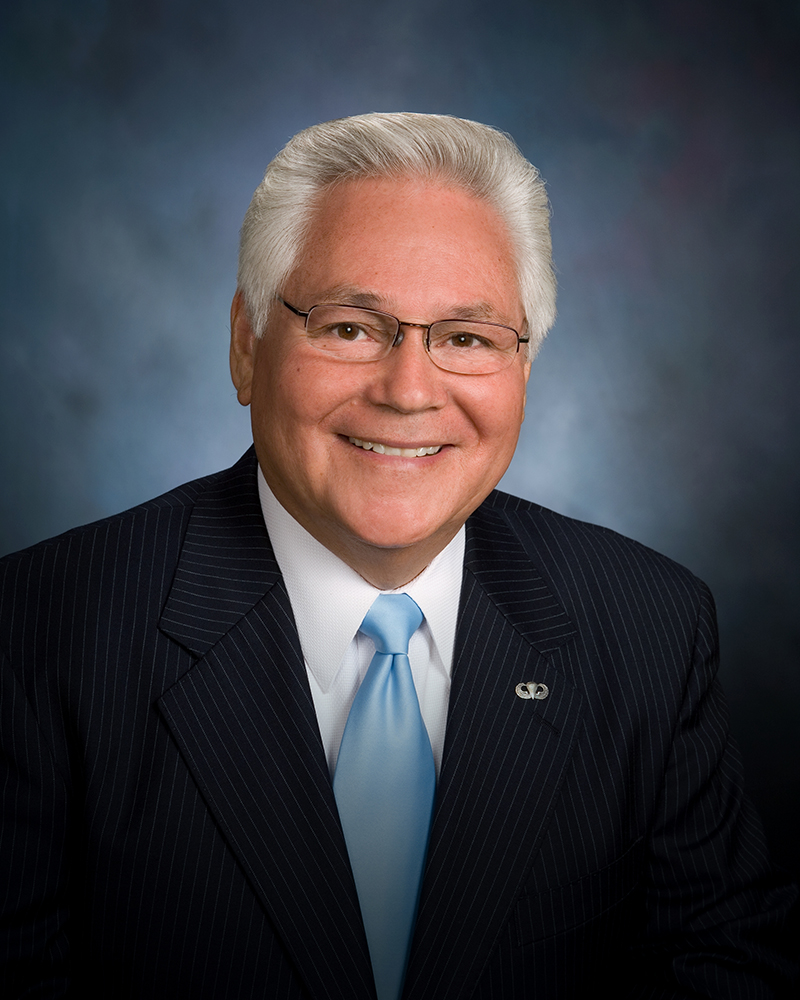
Sen. Bob Archuleta
Sponsored bills
Existing law requires that a participant in any civil or criminal proceeding, court-ordered or court-provided alternative dispute resolution, or administrative hearing of a public agency, who is hearing impaired, be provided with a functioning assistive listening system or a computer-aided transcription system, upon that individual's request. This bill would make nonsubstantive changes to those provisions.
This measure would designate the overcrossing on State Route 210 at Archibald Avenue in the City of Rancho Cucamonga as the Senator Bob Dutton Memorial Overcrossing. The measure would request that the Department of Transportation determine the cost of appropriate signs showing this special designation and, upon receiving donations from nonstate sources covering that cost, erect those signs.
Existing law makes it a crime to possess for sale or purchase for purpose of sale, transport, import, sell, furnish, administer, give away, manufacture, compound, convert, produce, derive, process, or prepare various controlled substances, including, among others, fentanyl, peyote, and various other opiates and narcotics. This bill, Alexandra's Law, would require the court to advise a person who is convicted of, or who pleads guilty or no contest to, the above crimes, as specified, of the danger of selling or administering illicit drugs and counterfeit pills and that, if a person dies as a result of that action, the defendant can be charged with homicide. The bill would require the court to read the advisory statement in a case in which the defendant exchanged a controlled substance containing fentanyl or its analogs for anything else of value, as specified. The bill would require the advisory statement to be included in a plea form, if used, and specified on the record. The bill would require that the fact the advisory was given be recorded in the abstract of conviction and would prohibit the advisement from being used as evidence in the prosecution of a minor in juvenile court.
Existing law requires a core recycler that accepts, ships, or sells used catalytic converters to maintain specified information regarding the purchase and sale of the catalytic converters. Existing law prohibits a core recycler from providing payment for a catalytic converter unless, among other requirements, the payment is made by check, as specified. This bill, in addition to payment by check, would allow for payment by credit card or any other form of traceable payment other than cash. Existing law licenses and regulates motor vehicle dealers and retailers. Existing law prohibits a motor vehicle dealer or retailer from selling any motor vehicle that is not in compliance with the requirements enumerated in the Vehicle Code. This bill would prohibit a dealer or retailer from selling a new or used motor vehicle equipped with a catalytic converter unless the catalytic converter has been permanently marked, as defined, with the vehicle identification number of the vehicle to which it is attached. The bill would, until January 1, 2025, exempt from this prohibition a vehicle purchased from a dealer licensed in this state who is also licensed in another state and does not have a warranty service facility in this state. A violation of this provision would be punishable as an infraction, as specified. By creating a new infraction, this bill would impose a state-mandated local program. The California Constitution requires the state to reimburse local agencies and school districts for certain costs mandated by the state. Statutory provisions establish procedures for making that reimbursement. This bill would provide that no reimbursement is required by this act for a specified reason.
(1) Existing law authorizes a public or private elementary or secondary school to determine whether or not to make emergency naloxone hydrochloride or another opioid antagonist and trained personnel available at its school, and to designate one or more volunteers to receive related training to address an opioid overdose, as specified. This bill would state the Legislature's encouragement of county offices of education to establish a County Working Group on Fentanyl Education in Schools, as provided, for the purposes of outreach, building awareness, and collaborating with local health agencies regarding fentanyl overdoses. The bill would require the State Department of Education to curate and maintain on its internet website, among other things, informational materials containing awareness and safety advice, for school staff, pupils, and parents or guardians of pupils, on how to prevent an opioid overdose. (2) Under existing law, each school district and county office of education is responsible for the overall development of a comprehensive school safety plan for each of its schools operating kindergarten or any of grades 1 to 12, inclusive, in cooperation with certain local entities. Existing law requires that the plan identify appropriate strategies and programs that will provide or maintain a high level of school safety and address the school's procedures for complying with existing laws related to school safety. Existing law requires a petition to establish a charter school to include, among other things, a reasonably comprehensive description of the procedures that the charter school will follow to ensure the health and safety of pupils and staff, including requiring the development and annual update of a school safety plan that includes certain safety topics and procedures. This bill would additionally require a comprehensive school safety plan, and the school safety plan of a charter school, for a school serving pupils in any of grades 7 to 12, inclusive, to include the development of a protocol in the event a pupil is suffering or is reasonably believed to be suffering from an opioid overdose. By creating new duties for local educational agencies, the bill would impose a state-mandated local program. (3) Existing law states the intent of the Legislature that alternatives to suspension or expulsion be imposed against a pupil who is truant, tardy, or otherwise absent from school activities. Existing law further states legislative intent that the Multi-Tiered System of Supports, which includes restorative justice practices, among other things, may be used to help pupils, as specified. This bill would state the intent of the Legislature that a school use alternatives to a referral of a pupil to a law enforcement agency in response to an incident involving the pupil's misuse of an opioid, to the extent not in conflict with any other law requiring that referral. The bill would state legislative intent that the above-described Multi-Tiered System of Supports may be used to achieve these alternatives. (4) This bill would incorporate additional changes to Section 32282 of the Education Code proposed by SB 323 and SB 671 to be operative only if this bill and either or both of those bills are enacted and this bill is enacted last. This bill would incorporate additional changes to Section 47605 of the Education Code proposed by AB 1604 and SB 671 to be operative only if this bill and either or both of those bills are enacted and this bill is enacted last. This bill would incorporate additional changes to Section 47605.6 of the Education Code proposed by AB 1604 and SB 671 to be operative only if this bill and either or both of those bills are enacted and this bill is enacted last. (5) The California Constitution requires the state to reimburse local agencies and school districts for certain costs mandated by the state. Statutory provisions establish procedures for making that reimbursement. This bill would provide that, if the Commission on State Mandates determines that the bill contains costs mandated by the state, reimbursement for those costs shall be made pursuant to the statutory provisions noted above.
Existing law requires any person, except the victim, who is entitled to attend a parole hearing and intends to do so, to provide at least 30 days' notice to the Board of Parole Hearings. Existing regulations of the Department of Corrections and Rehabilitation require victims, the victim's next of kin, members of the victim's family, victim representatives, counsel for any of these persons, and victim support persons to give notice of their intention to attend, to the department, as specified. This bill would limit the amount of notice that the department and board may require from any of these persons to no more than 15 days.
Existing law requires, commencing January 1, 2025, a manufacturer who sells or provides for compensation, and, commencing January 1, 2026, an owner of, a trash receptacle or storage container that is longer than 3 feet and taller than 4 feet and that is designed to be placed on a roadway or the curb of a roadway in order to be emptied or picked up to mark the receptacle or container with a reflector on each side, as specified. Existing law provides that a violation of these requirements would result in a criminal infraction punishable by a fine, as specified. This bill would replace the criterion for a trash receptacle or storage container to be designed to be placed on a roadway or curb to be emptied or picked up with it being placed on a roadway or curb to be emptied or picked up. The bill would reduce the size of the required reflectors, change the required placement of the reflectors, and expand the types of reflectors that meet the requirement, as specified. The bill would authorize the Attorney General, or the district attorney or city attorney in the location where the violation is observed, to enforce a violation of the above-described provisions. The bill would create the Accident Prevention and Road Safety Fund and would require the fines collected to be deposited into this fund.
The Unfair Competition Law (UCL) makes various unfair competition practices unlawful, including any unlawful, unfair, or fraudulent business act or practice. Existing law regulates consumer refunds specific to certain industries under specified circumstances. This bill would require a hotel, third-party booking service, hosting platform, or short-term rental, as defined, to allow a reservation for a hotel accommodation or a short-term rental located in California to be canceled without penalty for at least 24 hours after the reservation is confirmed if the reservation is made 72 hours or more before the time of check-in. This bill would require, if a consumer cancels a reservation pursuant to that provision, the hotel, third-party booking service, hosting platform, or short-term rental to issue a refund to a consumer for all amounts paid to the hosting platform, hotel, third-party booking service, or short-term rental to the original form of payment within 30 days of the cancellation of the reservation. This bill would authorize certain public attorneys, including the Attorney General, to bring an enforcement action, as provided. The bill would require a court to impose a civil penalty of not more than $10,000 for each violation pursuant to consideration of specified factors. The bill would exempt certain types of reservations from its provisions, including a reservation made for a negotiated rate that was not advertised, or otherwise made available, for booking by the general public.