Maddy summaryThis Senate Concurrent Resolution recognizes June 14, 2024, as Flag Day in California. The measure serves as a formal declaration to encourage citizens to celebrate the American flag and remember the sacrifices made for freedom. It does not create new laws or impose any requirements on individuals or organizations. The text includes historical background on the flag's design and the origins of Flag Day observances.
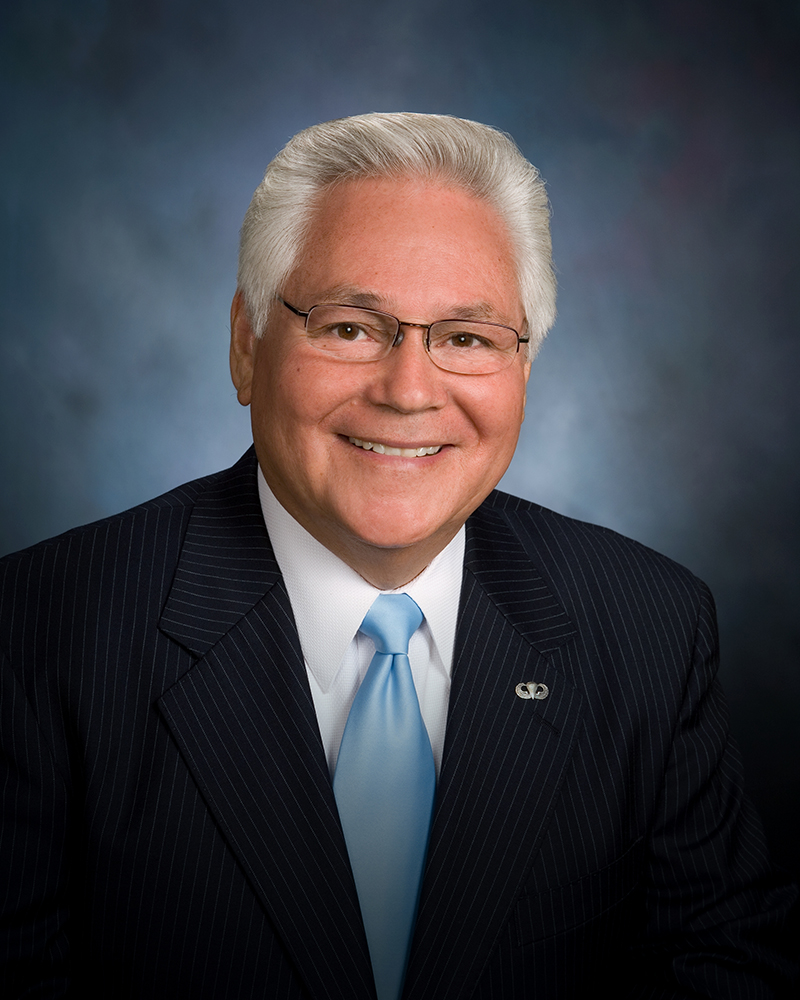
Sen. Bob Archuleta
Sponsored bills
Maddy summaryThis Senate Resolution formally recognizes July 4 as Independence Day and encourages Californians to celebrate the occasion with reverence and gratitude. The document highlights the historical significance of the date, noting its role in commemorating American independence and the principles of liberty and democracy. It serves as a symbolic gesture to honor the sacrifices of military service members and the contributions of citizens to the nation. The resolution does not create new laws or change existing policies but rather expresses the Senate's collective sentiment regarding the holiday.
The California Constitution declares that all property is taxable and establishes or authorizes various exemptions from tax for real property, including a homeowners' exemption in the amount of $7,000 of the full value of a dwelling that may be applied unless the dwelling receives another real property exemption. The California Constitution and existing property tax law establish a veterans' exemption in the amount of $4,000, as specified, for a veteran who meets certain military service requirements, and generally exempts from property taxation the same value of property of a deceased veteran's unmarried spouse and parents. The California Constitution and existing property tax law establish a disabled veterans' exemption in the amount of $100,000 or $150,000 for the principal place of residence of a veteran or a veteran's spouse, as specified. Existing property tax law establishing the homeowners' exemption specifies that the exemption may not be applied to a property on which the owner receives the veterans' exemption. This bill would provide that if Senate Constitutional Amendment 6 is approved by the voters at the statewide general election scheduled for November 5, 2024, then commencing January 1, 2025, notwithstanding that prohibition, the homeowners' exemption also applies to property on which an owner receives the veterans' exemption or the disabled veterans' exemption. By imposing additional duties on local tax officials, the bill would impose a state-mandated local program. The California Constitution requires the state to reimburse local agencies and school districts for certain costs mandated by the state. Statutory provisions establish procedures for making that reimbursement. This bill would provide that no reimbursement is required by this act for a specified reason. Existing law requires the state to reimburse local agencies annually for certain property tax revenues lost as a result of any exemption or classification of property for purposes of ad valorem property taxation. This bill would provide that, notwithstanding those provisions, no appropriation is made and the state shall not reimburse local agencies for property tax revenues lost by them pursuant to the bill. This bill would take effect immediately as a tax levy. Existing law contains provisions related to elections and voting, including a requirement that a constitutional amendment submitted to the people by the Legislature shall appear on the ballot of the first statewide election occurring at least 131 days after the adoption of the proposal by the Legislature and that the Secretary of State mail state voter information guides to voters. This bill would require the Secretary of State, notwithstanding specified provisions of existing law relating to elections and voting, to submit Senate Constitutional Amendment 6 of the 2023–24 Regular Session to the voters for their approval at the statewide general election scheduled for November 5, 2024.
Existing law establishes the practices and procedures for the issuance of an original or a renewal of a driver's license. The federal Military Selective Service Act requires specified persons to register with the United States Selective Service System. This bill would, commencing at the completion of the Digital eXperience Platform Project or on January 1, 2027, whichever is later, require a person who is required to be registered under the federal act and who submits an application for a driver's license, identification card, or renewal to be deemed to have consented to registration with the United States Selective Service System, as provided. The bill would require the Department of Motor Vehicles to include specified notices on an application for a driver's license, identification card, or renewal and would require the department to forward the necessary personal information required for registration to the United States Selective Service System in an electronic format. The bill would prohibit the department from making or distributing a list of individuals who did not consent to registration with the United States Selective Service System, as specified. This bill would require the department to solicit federal funds to implement these provisions and, if it receives that funding, to report to the Legislature and post specific information on its internet website, as specified.
Existing law, the Labor Code Private Attorneys General Act of 2004 (PAGA) , authorizes an aggrieved employee, as defined, to bring a civil action, on behalf of that employee and other current or former employees, to enforce a violation of any provision of the Labor Code that provides for a civil penalty to be assessed and collected by the Labor and Workforce Development Agency or any of its departments, divisions, commissions, boards, agencies, or employees pursuant to certain notice and cure provisions, as prescribed. This bill would, among other things, authorize, on or after October 1, 2024, an employer that employed fewer than 100 employees in total during the period covered by the required notice to, within 33 days of receipt of the notice submit to the agency a confidential proposal to cure one or more of the alleged violations and, upon completing the cure, provide a sworn notification to the employee and agency that the cure is completed, as prescribed. By expanding the scope of the crime of perjury, this bill would impose a state-mandated local program. The bill would require the agency to verify whether the cure is complete within 20 days of receiving the employer's notification, as specified. This bill would also authorize an employer who employed at least 100 employees in total during the period covered by the required notice to, upon being served with a summons and complaint asserting a claim under PAGA, file a request and participate in, as prescribed, an early evaluation conference in the proceedings of the claim and a request for a stay of court proceedings before, or simultaneous with, that defendant's responsive pleading or other initial appearance in the action that includes the claim. This bill would apply its provisions to a civil action brought on or after June 19, 2024, except as specified. Existing constitutional provisions require that a statute that limits the right of access to the meetings of public bodies or the writings of public officials and agencies be adopted with findings demonstrating the interest protected by the limitation and the need for protecting that interest. This bill would make legislative findings to that effect. The California Constitution requires the state to reimburse local agencies and school districts for certain costs mandated by the state. Statutory provisions establish procedures for making that reimbursement. This bill would provide that no reimbursement is required by this act for a specified reason. This bill would become operative only if AB 2288 of the 2023–24 Regular Session is enacted and takes effect on or before January 1, 2025. This bill would declare that it is to take effect immediately as an urgency statute.

Existing law, the Labor Code Private Attorneys General Act of 2004 (PAGA) , authorizes an aggrieved employee, as defined, to bring a civil action, on behalf of that employee and other current or former employees, to enforce a violation of any provision of the Labor Code that provides for a civil penalty to be assessed and collected by the Labor and Workforce Development Agency or any of its departments, divisions, commissions, boards, agencies, or employees pursuant to certain notice and cure provisions, as prescribed. This bill would, among other things, instead authorize an aggrieved employee to bring a civil action as described above on behalf of the employee and other current or former employees against whom a violation of the same provision was committed. With respect to a violation by a person of a provision that does not provide for a civil penalty, PAGA makes that person liable for a civil penalty of $500 if, at the time of the alleged violation, the person does not employ one or more employees. If, at the time of the alleged violation, the person employed one or more employees, PAGA makes that person liable for a civil penalty of $100 for each aggrieved employee per pay period for the initial violation and $200 for each aggrieved employee per pay period for each subsequent violation. PAGA requires 75% of civil penalties recovered by aggrieved employees to be distributed to the Labor and Workforce Development Agency for enforcement of labor laws, including the administration of PAGA, and for education of employers and employees about their rights and responsibilities under the Labor Code, as specified, and requires 25% of civil penalties recovered by aggrieved employees to be distributed to the aggrieved employees, except as prescribed. This bill would instead, if, at the time of the alleged violation, the person employed one or more employees, make that person liable for a civil penalty of $100 for each aggrieved employee per pay period, except if certain mitigating factors apply, including that the alleged violation resulted from an isolated, nonrecurring event that did not extend beyond the lesser of 30 consecutive days or 4 consecutive pay periods, in which case the bill would make the civil penalty $25 or $50, except as provided. The bill would, subject to an exception, also reduce the civil penalties prescribed by PAGA by 15% or 30%, as specified, if a person accused of a violation has taken all reasonable steps to comply with the provisions alleged to have been violated in the required notice provided by the aggrieved employee, as prescribed. This bill would apply its provisions to a civil action brought on or after June 19, 2024, except as specified. This bill would become operative only if SB 92 of the 2023–24 Regular Session is enacted and takes effect on or before January 1, 2025. This bill would declare that it is to take effect immediately as an urgency statute.

This measure would designate the interchange on State Route 60 at the 7th Avenue Undercrossing in the City of Hacienda Heights in the County of Los Angeles as the Los Angeles County Sheriff's Deputy Michael Richard Arruda Memorial Interchange. The measure would request that the Department of Transportation determine the cost of appropriate signs showing this special designation and, upon receiving donations from nonstate sources covering that cost, erect those signs.
Existing law makes it a crime to possess, cultivate, and administer specified controlled substances, including psilocybin and psilocyn. Existing law makes it a crime for a person to rent, lease, or make available for use any building or room for the purpose of storing or distributing any controlled substance. Existing law authorizes forfeiture of property used for specified crimes involving controlled substances. This bill, the Heal Our Heroes Act, would, until January 1, 2028, establish the Psychedelic-Assisted Facilitation Pilot Program. The bill, as part of the pilot program, would authorize the public health officers of the City and County of San Francisco, the County of San Diego, and the County of Santa Cruz to approve entities to establish and operate up to 5 psychedelic-assisted facilitation centers per jurisdiction to administer psilocybin or psilocyn to patients meeting specified criteria, including being a veteran or former first responder over 21 years of age who has passed a suitability screening, as defined. The bill would authorize the jurisdictions to issue up to 3 permits to cultivate, as specified. The bill would require the public health officers to consult with experts in psilocybin or psilocyn facilitation on program design, to issue facilitator permits only to licensed physicians and surgeons and to report certain data and an evaluation of the program to the Legislature no later than January 1, 2027. The bill would exempt a person from, among other things, civil liability, professional discipline, or existing criminal sanctions, solely for good faith actions, conduct, or omissions in compliance with the pilot program. The bill would make related findings and declarations.
The California Constitution provides that all property is taxable, and requires that it be assessed at the same percentage of fair market value, unless otherwise provided by the California Constitution or federal law. The California Constitution and existing property tax law provide various exemptions from taxation, including, among others, a disabled veterans' exemption and a veterans' organization exemption. This bill would exempt from taxation, on that part of the full value of the residence that does not exceed $863,790, as provided, property owned by, and that constitutes the principal place of residence of, a veteran, the veteran's spouse, or the veteran and the veteran's spouse jointly, if the veteran is 100% disabled. The bill would provide an unmarried surviving spouse a property exemption in the same amount that they would have been entitled to if the veteran was alive and if certain conditions are met. The bill would require certain documentation to be provided to the county assessor to receive the exemption and would prohibit any other real property tax exemption from being granted to the claimant if receiving the exemption provided by the provisions of this bill. The bill would make these exemptions applicable for property tax lien dates occurring on or after January 1, 2024, but occurring before January 1, 2034. By imposing additional duties on local tax officials, the bill would impose a state-mandated local program. Existing law requires any bill authorizing a new tax expenditure to contain, among other things, specific goals, purposes, and objectives that the tax expenditure will achieve, detailed performance indicators, and data collection requirements. This bill would state that it is the intent of the Legislature to apply those requirements to the bill and would set forth specified information relating to those requirements. The California Constitution requires the state to reimburse local agencies and school districts for certain costs mandated by the state. Statutory provisions establish procedures for making that reimbursement. This bill would provide that, if the Commission on State Mandates determines that the bill contains costs mandated by the state, reimbursement for those costs shall be made pursuant to the statutory provisions noted above. Existing law requires the state to reimburse local agencies annually for certain property tax revenues lost as a result of any exemption or classification of property for purposes of ad valorem property taxation. This bill would provide that, notwithstanding those provisions, no appropriation is made and the state shall not reimburse local agencies for property tax revenues lost by them pursuant to the bill. This bill would take effect immediately as a tax levy.
Maddy summaryThis Senate Concurrent Resolution officially designates May 2024 as National Mental Health Awareness Month within the state of California. The measure does not alter laws or allocate funding but serves to formally recognize the importance of mental well-being and highlight statistics regarding mental illness prevalence and its impact on various communities. By establishing this designation, the resolution aims to encourage public focus on mental health issues during the month of May.