

Existing law, the California Emergency Services Act, among other things, creates the Office of Emergency Services (Cal OES) , which is responsible for the state's emergency and disaster response services, as specified. Existing law requires Cal OES to establish the California Cybersecurity Integration Center (Cal-CSIC) with the primary mission of reducing the likelihood and severity of cyber incidents that could damage California's economy, its critical infrastructure, or public and private sector computer networks in the state. Existing law requires Cal OES to direct Cal-CSIC to prepare, and Cal OES to submit to the Legislature on or before January 1, 2024, a strategic, multiyear outreach plan to assist the food and agriculture sector and wastewater sector in their efforts to improve cybersecurity and an evaluation of options for providing grants or alternative forms of funding to, and potential voluntary actions that do not require funding and that assist, those sectors in their efforts to improve security preparedness. This bill would require Cal OES to direct Cal-CSIC to prepare, and Cal OES to submit to the Legislature on or before January 1, 2025, a strategic, multiyear outreach plan to assist critical infrastructure sectors, as defined, in their efforts to improve cybersecurity and an evaluation of options for providing grants or alternative forms of funding to, and potential voluntary actions that do not require funding and that assist, that sector in their efforts to improve cybersecurity preparedness. The bill would make related findings and declarations.
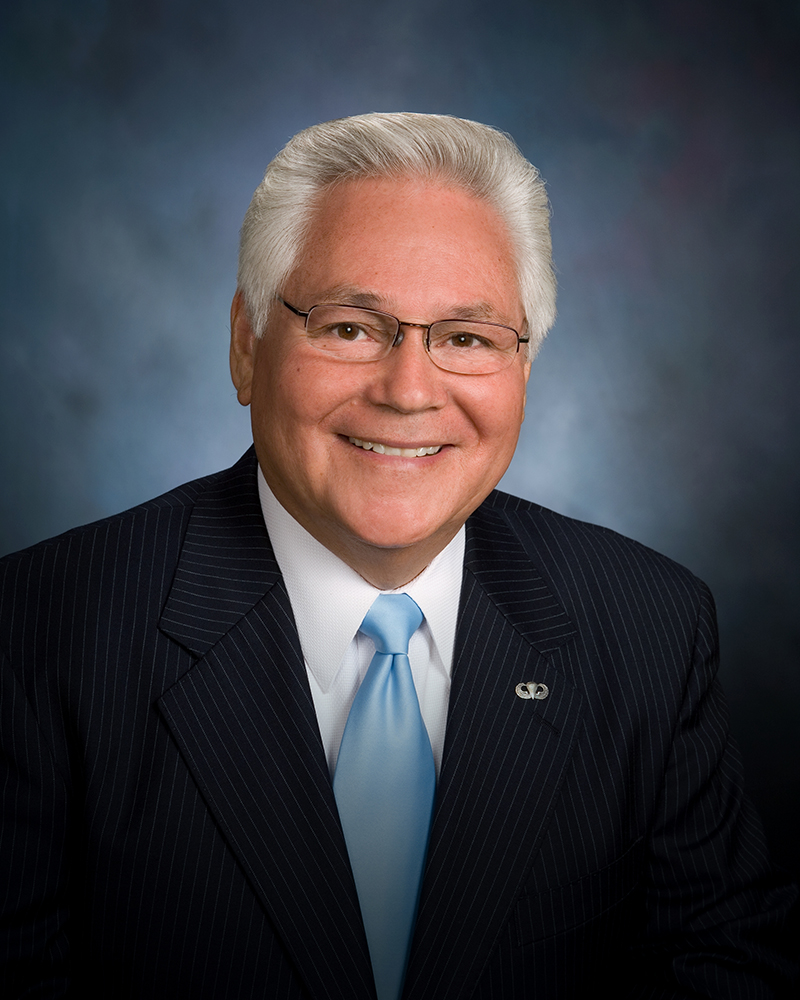
Sen. Bob Archuleta
Sponsored bills
Existing law requires the Transportation Agency to prepare a state freight plan every 5 years to govern the immediate and long-range planning activities and capital investments of the state with respect to the movement of freight. Existing law requires the state freight plan to include, among other things, a description of needed infrastructure, projects, and operations for the deployment of zero-emission medium- and heavy-duty vehicles and the development of freight corridors identified in a specified assessment. Existing law requires the State Energy Resources Conservation and Development Commission (Energy Commission) , working with specified state agencies, to prepare a statewide assessment of the electric vehicle charging infrastructure needed to support the levels of electric vehicle adoption required for the state to meet its goals of putting at least 5,000,000 zero-emission vehicles on California roads by 2030, and of reducing the emissions of greenhouse gases to 40% below 1990 levels by 2030. This bill would require the Transportation Agency and the Energy Commission to jointly convene the Zero-Emission Freight Central Delivery Team, composed of representatives from various state agencies, to lead the statewide coordination of zero-emission freight infrastructure planning and implementation, including carrying out specified actions. The bill would require the Zero-Emission Freight Central Delivery Team, in consultation with the Transportation Agency and the Energy Commission, to submit a report to the Legislature on or before March 1, 2026, and every 5 years thereafter, that includes, among other things, a description of the actions taken by the Zero-Emission Freight Central Delivery Team.
Existing law requires an urban retail water supplier to calculate its urban water use objective no later than January 1, 2024, and by January 1 every year thereafter, and to be composed of the sum of specified data, including aggregate residential water use. Existing law requires each urban retail water supplier's water use objective to be composed of the sum of specified aggregate estimates, including efficient outdoor irrigation of landscape areas with dedicated irrigation meters or equivalent technology in connection with water used by commercial water users, industrial water users, institutional water users, and large landscape water users (CII) . Existing law requires an urban retail water supplier to submit reports to the Department of Water Resources, as provided, by the same dates. This bill would require the department to, no later than January 1, 2035, conduct necessary studies and investigations regarding the efficiency performance of newly constructed residential landscapes and landscape areas with dedicated irrigation meters in connection with CII water use, as specified. The bill would require the department, if appropriate, to recommend to the State Water Resources Control Board for adoption a revised standard for existing residential landscapes and landscape areas with dedicated irrigation meters in connection with CII water use regarding an ongoing performance standard for those water uses. This bill would require the department to update methodologies and criteria for calculating residential and CII landscape areas and to determine landscape area measurements within each urban retail water supplier's service area by January 1, 2028, and once every 5 years thereafter, as specified, and post the data on its internet website. The bill would specify that an urban retail water supplier, in its calculations of its urban water use objectives, shall include aggregate indoor and outdoor residential water use. The bill would require, as part of the report to be submitted in 2026, each urban retail water supplier to provide a narrative that describes the water demand management measures that the supplier plans to implement to achieve its urban water use objective by January 1, 2030. Existing law authorizes the board, on or after January 1, 2024, to issue informational orders pertaining to water production, water use, and water conservation to an urban retail water supplier that does not meet its urban water use objective. Existing law authorizes the board, on and after January 1, 2025, to issue a written notice to an urban retail water supplier that does not meet its urban water use objective. Existing law authorizes the board, on and after January 1, 2026, to issue a conservation order to an urban retail water supplier that does not meet its urban water use objective. This bill would instead extend the time until the board is authorized to issue informational orders to on or after January 1, 2026, issue a written notice to on or after January 1, 2027, and issue a conservation order to on or after January 1, 2028. Existing law requires the department, in coordination with the board, to submit a report to the Legislature on the progress of urban retail water suppliers towards achieving their urban water use objective on or before January 1, 2028. The bill would instead require the report to be submitted to the Legislature on or before January 1, 2030. Existing law provides that it is the intent of the Legislature that the chairperson of the board and the director of the department appear before the appropriate policy committees of both houses of the Legislature on or around January 1, 2026, and report on the implementation of the water use efficiency standards and water use reporting. This bill would extend this date to not later than July 1, 2031. Existing law provides that an urban retail water supplier who violates certain regulations after November 1, 2027, may be liable for specified penalties, as provided. This bill would instead provide that urban retail water suppliers may be liable for specified penalties for violating those regulations after November 1, 2029. Existing law, the Administrative Procedure Act, sets forth the requirements for the adoption, publication, review, and implementation of regulations by state agencies. This bill would require the board to enact emergency regulation, as specified, in accordance with the provisions of the act.
Maddy summarySenate Resolution 108 officially designates August 8 as California Pickleball Day to honor the sport's history and growing popularity in the state. This resolution does not change laws or allocate funding but instead serves as a commemorative measure to recognize pickleball as a fun, social activity suitable for people of all ages. The text highlights the game's origins in 1965 and its rapid expansion across the United States, noting its inclusion in senior games and its status as one of the fastest-growing sports. By adopting this resolution, the Senate acknowledges the sport's cultural significance without imposing any new regulations or obligations on residents.
The Personal Income Tax Law imposes a tax on individual taxpayers measured by the taxpayer's taxable income for the taxable year, but excludes certain items of income from the computation of tax, including an exclusion for combat-related special compensation. This bill, for taxable years beginning on or after January 1, 2024, and before January 1, 2034, would exclude from gross income retirement pay received by a taxpayer from the federal government for service performed in the uniformed services, as defined, during the taxable year. The bill, for taxable years beginning on or after January 1, 2024, and before January 1, 2034, would also exclude from gross income annuity payments received by a qualified taxpayer, as defined, pursuant to a United States Department of Defense Survivor Benefit Plan during the taxable year. The bill would make related findings and declarations. Existing law requires any bill authorizing a new tax expenditure to contain, among other things, specific goals, purposes, and objectives that the tax expenditure will achieve, detailed performance indicators, and data collection requirements. This bill also would include additional information required for any bill authorizing a new tax expenditure. The bill would require the Franchise Tax Board and the Department of Veterans Affairs to provide any data requested by the Legislative Analyst to write the report, as provided, and would make taxpayer information received by the Legislative Analyst subject to limitation on the collection and use of that information. By expanding the scope of a crime, this bill would impose a state-mandated local program. The California Constitution requires the state to reimburse local agencies and school districts for certain costs mandated by the state. Statutory provisions establish procedures for making that reimbursement. This bill would provide that no reimbursement is required by this act for a specified reason. This bill would take effect immediately as a tax levy.
Existing law classifies certain substances, including cocaine, heroin, and fentanyl, as controlled substances and generally prohibits the possession, sale, transportation, and use of these substances. Existing law additionally prohibits the possession of certain of these controlled substances including cocaine, heroin, and methamphetamine while armed with a loaded and operable firearm. A violation of this prohibition is punishable as a felony punishable by incarceration in the state prison. This bill would additionally prohibit the possession of fentanyl, as specified, while armed with a loaded and operable firearm if the person has knowledge that the specific controlled substance is fentanyl. By expanding the application of an existing crime, this bill would impose a state-mandated local program. The California Constitution requires the state to reimburse local agencies and school districts for certain costs mandated by the state. Statutory provisions establish procedures for making that reimbursement. This bill would provide that no reimbursement is required by this act for a specified reason.
Maddy summaryThis Senate Resolution recognizes Dr. Claudia Sheinbaum as the first female president of Mexico, highlighting her historic election and background in science and public service. The measure celebrates her achievements, including her work on climate change and transportation, and notes her status as the first female president elected in North America. It expresses the California Senate's support for her leadership and looks forward to strengthening ties between California and Mexico. The resolution is a formal acknowledgment rather than a law that changes policy or imposes new requirements.
Maddy summarySenate Resolution 114 is a non-binding tribute from the California State Senate honoring President Joseph Biden for his extensive public service career. The resolution details his background, legislative achievements, and leadership roles as a senator, vice president, and president, specifically highlighting his work on infrastructure, climate action, and pandemic response. It concludes by formally thanking the President for stepping down to allow new leaders to take office and directs the Senate Secretary to distribute copies of the resolution.
Existing law establishes the Medi-Cal program, which is administered by the State Department of Health Care Services and under which qualified low-income individuals receive health care services, including certain dental services. The Medi-Cal program is, in part, governed and funded by federal Medicaid program provisions. Under existing law, early and periodic screening, diagnostic, and treatment (EPSDT) services are covered under Medi-Cal for an individual under 21 years of age in accordance with certain federal provisions. Under existing law, for persons 21 years of age or older, laboratory-processed crowns on posterior teeth are a covered benefit when medically necessary to restore a posterior tooth back to normal function based on the criteria specified in the Medi-Cal Dental Manual of Criteria. This bill, The Smile Act, for purposes of the above-described Medi-Cal coverage for laboratory-processed crowns, would remove the condition that the tooth be posterior and would apply the coverage to persons 13 years of age or older. The bill would also add, as a covered Medi-Cal benefit for persons of any age, subject to prior authorization, a dental implant if tooth extraction or removal is medically necessary or if the corresponding tooth is missing. The bill would condition this coverage on there being no other covered functional alternatives for prosthetic replacement to correct the person's dental condition, as specified, on the person being without medical conditions for which dental implant surgery would be contraindicated, on receipt of any necessary federal approvals, and on the availability of federal financial participation. Under the bill, the above-described provisions would not be construed to exclude Medi-Cal coverage for laboratory-processed crowns on teeth or dental implants if otherwise required under EPSDT services.
Maddy summaryThis bill designates Thursday, July 25, 2024, as Hire a Veteran Day in California to honor veterans and encourage their employment. The measure is a commemorative resolution that does not create new laws, regulations, or funding but serves as an official state recognition of the date. By acknowledging this day, the Legislature aims to highlight the skills veterans bring to the workforce and support efforts to reduce veteran unemployment. The resolution requires no action from businesses or individuals other than observing the designated date.