

Existing law establishes a system of public elementary and secondary schools in this state, and authorizes local educational agencies throughout the state to operate schools and provide instruction to pupils in kindergarten and grades 1 to 12, inclusive. Existing law establishes the State Department of Education, under the administration of the Superintendent of Public Instruction, and assigns to the department numerous duties relating to the financing, governance, and guidance of the public elementary and secondary schools in this state. This bill would require the department, on or before March 1, 2025, to provide a report to the Superintendent, the Governor, and the Legislature on the number and types of reports that school districts, county offices of education, and charter schools are required to annually submit. The bill would require the report to include, among other things, the purpose of each report and recommendations for which reports can be consolidated, eliminated, or truncated, as provided. The bill would encourage specified committees of the Legislature to, within 30 days of receiving the report from the department, hold a hearing to allow for the Superintendent to present the report. The bill would repeal these provisions on January 1, 2026.
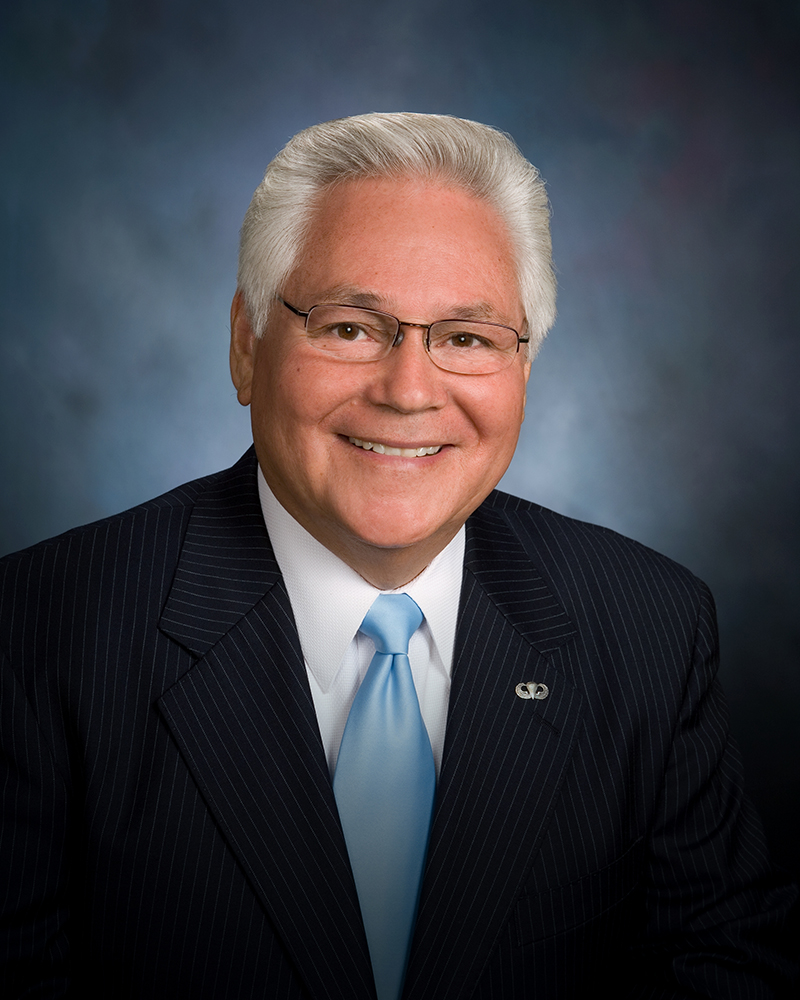
Sen. Bob Archuleta
Sponsored bills
Existing law vests the State Energy Resources Conservation and Development Commission with jurisdiction over various energy-related matters. This bill would require the commission, upon appropriation by the Legislature, to form the Alternative Fuels Infrastructure Taskforce to conduct a study on retail gasoline fueling stations and alternative fuels infrastructure, as provided. The bill would require the taskforce, on or before January 1, 2027, to submit to the Legislature a report on the study with information and recommendations. The bill would repeal its provisions on January 1, 2031.
Existing law establishes the Department of General Services, which is under the control of the Director of General Services, within the Government Operations Agency and requires it to perform various functions and duties with respect to property within the state, including entering into lease agreements. Existing law authorizes the director, with the consent of the state agency concerned, to, among other things, let for a period not to exceed 5 years, any real or personal property that belongs to the state, the letting of which is not expressly prohibited by law, as specified. Existing law establishes various exceptions to that provision, including that the director, with the consent of the State Department of State Hospitals, may lease to a nonprofit corporation, for the purpose of conducting an educational and work program for individuals with intellectual or developmental disabilities, and for a period not to exceed 50 years, real property not exceeding 10 acres located within the grounds of the Napa State Hospital. This bill would, as an exception to the above-described provision, also authorize the director, with the consent of the State Department of State Hospitals, to lease to a nonprofit corporation or local government, for a period not to exceed 65 years, 7 buildings located at Metropolitan State Hospital in the City of Norwalk. The bill would require the lease to be entered into for the purposes of providing care, resources, and housing to persons with, among other things, behavioral health needs, upon the terms and conditions deemed by the director to be in the best interest of the state.
(1) Existing law, the State Housing Law, establishes statewide construction and occupancy standards for buildings used for human habitation. Existing law requires, for those purposes, that any building, including any dwelling unit, be deemed to be a substandard building when a health officer determines that any one of specified listed conditions exists to the extent that it endangers the life, limb, health, property, safety, or welfare of the public or its occupants. This bill would instead specify that a building be deemed a substandard building when a health officer determines that any of those listed conditions exist to the extent that it endangers the life, limb, health, property, safety, or welfare of the occupants of the building, nearby residents, or the public. The bill would clarify that the term "substandard building" for purposes of the State Housing Law means a residential building or any other building or portion thereof that is deemed to be substandard pursuant to the provisions described above, and would clarify that standard applies regardless of the zoning designation or approved use of the building. The bill would make conforming changes to this effect. By imposing new inspection requirements on local entities, this bill would impose a state-mandated local program. (2) The State Housing Law provides for relocation assistance to a tenant displaced from a residential rental unit as a result of an order to vacate by a local enforcement agency under specified conditions. This bill would define the term "residential rental unit" for those purposes to mean any unit rented by a tenant for human habitation that is located in a building or portion thereof that is deemed or found to be a substandard building. (3) The State Housing Law requires the housing or building department or, if there is no building department, the health department, of every city or county or a specified environmental agency to enforce within its jurisdiction all of the State Housing Law, the building standards published in the California Building Standards Code, and other specified rules and regulations. If there is a violation of these provisions or any order or notice that gives a reasonable time to correct that violation, or if a nuisance exists, an enforcement agency is required, after 30 days' notice to abate the nuisance, to institute appropriate action or proceeding to prevent, restrain, correct, or abate the violation or nuisance. This bill would state that violations of municipal codes are included within these provisions. The bill would define the term "petition" for those purposes to include a complaint. If an enforcement agency determines that a building or portion thereof is substandard under these provisions based solely on the building or portion thereof being illegally occupied, then the bill would prohibit the enforcement agency from commencing proceedings to abate the violation by repair if specified conditions are met, including that the owner declares under penalty of perjury that the occupant is not a legal tenant. By expanding the crime of perjury, this bill would impose a state-mandated local program. (4) The State Housing Law authorizes the enforcement agency, a tenant, or tenant association or organization to seek, and the court to order, the appointment of a receiver for the substandard building if the owner of a property with substandard conditions fails to comply within a reasonable time period with the terms of a specified order or notice to repair or abate a violation that results in a substantial endangerment of the health and safety of residents or the public. Existing law authorizes the court to retain jurisdiction for up to 18 months after discharging the receiver. This bill would specify that the appointment of a receiver for the substandard building pursuant to another provision of law does not prevent an enforcement agency from seeking, or the court from appointing or replacing, a receiver pursuant to these provisions. The bill would authorize the court to extend the 18-month time period for retaining jurisdiction to ensure continuing compliance. The bill would provide that an appeal of a court order or judgment issued pursuant to this article shall not stay proceedings upon the order or judgment, absent an extraordinary writ being issued by the appropriate appeals court upon a properly filed petition, as defined. (5) Under the State Housing Law, a person who obtains an ownership interest in property after the recording of a notice of pendency of an action or proceeding brought pursuant to the State Housing Law with respect to the property or a notice of a violation of that law, and if there is no withdrawal or expungement of the notice, is subject to the order to correct a violation and any other recorded notice of a violation of the State Housing Law. This bill would specify that a person described above is subject to any costs and fees of any receiver appointed or enforcement agency, as applicable. (6) The California Constitution requires the state to reimburse local agencies and school districts for certain costs mandated by the state. Statutory provisions establish procedures for making that reimbursement. This bill would provide that no reimbursement is required by this act for specified reasons.
Existing federal law, the Indian Gaming Regulatory Act of 1988, provides for the negotiation and execution of tribal-state gaming compacts for the purpose of authorizing certain types of gaming on Indian lands within a state. The California Constitution authorizes the Governor to negotiate and conclude those compacts, subject to ratification by the Legislature. Existing law expressly ratifies a number of tribal-state gaming compacts, and amendments to tribal-state gaming compacts, between the State of California and specified Indian tribes. The California Environmental Quality Act (CEQA) requires a lead agency to prepare, or cause to be prepared, and certify the completion of, an environmental impact report on a project, as defined, that it proposes to carry out or approve that may have a significant effect on the environment, as defined, or to adopt a negative declaration if it finds that the project will not have that effect. This bill would ratify the tribal-state gaming compacts entered into between the State of California and the Campo Band of Diegueno Mission Indians of the Campo Indian Reservation, California, the La Posta Band of Diegueno Mission Indians of the La Posta Indian Reservation, California, the Timbisha Shoshone Tribe, and the Elem Indian Colony of Pomo Indians of the Sulphur Bank Rancheria, California, and amendments to the tribal-state gaming compacts entered into between the State of California and the Augustine Band of Cahuilla Indians, California, the Picayune Rancheria of Chukchansi Indians of California, and the Cher-Ae Heights Indian Community of the Trinidad Rancheria, California. The bill would provide that, in deference to tribal sovereignty, certain actions related to these compacts are not projects for the purposes of CEQA. This bill would declare that it is to take effect immediately as an urgency statute.
Existing law, the Licensed Physicians and Dentists from Mexico Pilot Program, allows up to 30 licensed physicians and up to 30 licensed dentists from Mexico to practice medicine or dentistry in California for a period not to exceed 3 years, in accordance with certain requirements. Existing law requires the Medical Board of California and the Dental Board of California to provide oversight pursuant to these provisions. Existing law requires appropriate funding to be secured from nonprofit philanthropic entities before implementation of the pilot program may proceed. Existing law requires physicians participating in the Licensed Physicians and Dentists from Mexico Pilot Program to be enrolled in English as a second language classes, to have satisfactorily completed a 6-month orientation program, and to have satisfactorily completed a 6-month externship at the applicant's place of employment, among various other requirements. This bill would repeal the provisions regarding the Licensed Physicians and Dentists from Mexico Pilot Program, and would instead establish two bifurcated programs, the Licensed Physicians from Mexico Program and the Licensed Dentists from Mexico Pilot Program. Within these 2 programs, the bill would generally revise and recast certain requirements pertaining to the Licensed Physicians and Dentists from Mexico Pilot Program, including deleting the above-described requirement that Mexican physicians participating in the program enroll in adult English as a second language classes. The bill would instead require those physicians to have satisfactorily completed the Test of English as a Foreign Language or the Occupational English Test, as specified. The bill would remove the requirement that the orientation program be 6 months, and would further require the orientation program to include electronic medical records systems utilized by federally qualified health centers and standards for medical chart notations. The bill would also delete the requirement that the physicians participate in a 6-month externship. The bill would further delete provisions requiring an evaluation of the pilot program to be undertaken with funds provided from philanthropic foundations, and would make various other related changes to the program. The bill would require the Dental Board of California to, notwithstanding existing requirements to provide specified federal taxpayer information, issue a 3-year nonrenewable permit to an applicant who has not provided an individual taxpayer identification number or social security number if the applicant meets specified conditions. Commencing January 1, 2025, the bill would authorize the Medical Board of California to issue a limited number of active licenses to eligible applicants to participate in the Licensed Physicians from Mexico Program, as specified. Under the bill, each additional physician selected for the program would not be eligible to renew their 3-year license. The bill would require the federally qualified health centers employing physicians pursuant to the program to continue specified peer review protocols and procedures and to work with an approved medical school or an approved residency program, as provided. The bill would also require specified entities to be the points of contact involved in securing required documents, recruiting and vetting candidates, assisting candidates to meet all program requirements, selecting appropriate federally qualified health centers throughout California, ensuring compliance with program provisions, developing policy and clinical workshops, monitoring productivity and increased access to medical care, and assessing the necessity of policy and programmatic improvements. The bill would impose fees in connection with both programs, as specified. This bill would make legislative findings and declarations as to the necessity of a special statute.
Existing law requires all law enforcement agencies to maintain a use of force policy, as specified, and requires the Commission on Peace Officer Standards and Training (POST) to implement courses of instruction for the training of law enforcement officers in the use of force. This bill would require the commission, on or before July 1, 2026, to study and issue recommendations to the Legislature on the use of canines by law enforcement, as specified. Existing law requires each law enforcement agency to monthly provide a report of, among other things, all instances of a peace officer involved in a use of force against a civilian that results in serious bodily injury or death to the Department of Justice, and requires the department to yearly post a summary of those reports on the department's OpenJustice Web portal. This bill would require each law enforcement agency with a canine unit to annually publish a report of the use of canines, as specified, on its internet website. Because the bill would impose additional duties on local law enforcement agencies, the bill would impose a state-mandated local program. The California Constitution requires the state to reimburse local agencies and school districts for certain costs mandated by the state. Statutory provisions establish procedures for making that reimbursement. This bill would provide that, if the Commission on State Mandates determines that the bill contains costs mandated by the state, reimbursement for those costs shall be made pursuant to the statutory provisions noted above. This bill would make the operation of its provisions contingent upon the enactment of AB 2042 of the 2023–24 Regular Session.
Existing law establishes the California Cadet Corps and requires the Adjutant General to fulfill specified responsibilities in overseeing the corps, including inspecting each corps unit every 2 years, adopting rules and regulations to determine the grade and rank to be held by specific individuals in the corps, and prescribing uniforms for the corps. Existing law specifies who may serve in corps leadership positions. Existing law requires each college, community college, and school meeting specified criteria to establish a unit and requires or authorizes those schools to fulfill certain responsibilities with regard to the corps. Existing law authorizes the Adjutant General to appoint officers in the corps, as specified, and to order members of the corps into temporary active state duty. Existing law requires marksmanship practice as part of corps instruction and authorizes the Adjutant General to purchase and supply rifles to each college, community college, and school for field target work and gallery practice. Existing law requires cadets, when practical, to utilize California National Guard rifle ranges, as specified. Existing law provides for the discipline of cadets for, among other things, deficiency in academic studies and misbehavior. Existing law requires the Adjutant General to inspect corps units once every 2 years, except as otherwise provided. This bill would revise and recast these provisions to, among other things, authorize the establishment of an independent unit outside of a school, college, or community college under the guidance and control of a sponsoring organization, as provided. The bill would authorize the Adjutant General to appoint staff officers in support of corps operations. The bill would decrease the frequency of inspections by requiring the Adjutant General to inspect corps units once every 3 years or as otherwise provided. The bill would also authorize the Governor to appoint officers for the corps, including 2 deputy commanders and a chief of staff. This bill would authorize the Adjutant General to adopt rules and regulations for the personnel actions of corps officers. The bill would specify the disciplinary authority for independent corps units and would authorize the Commander of the California Cadet Corps to demote or dismiss a cadet, as specified. This bill would authorize the Adjutant General to order officers of the State Guard, Naval Militia, or California National Guard to temporary state active duty to support the corps, including serving as a marksmanship or military training instructor. The bill would authorize marksmanship as part of corps instruction and would authorize the Adjutant General to purchase and supply rifles to units established outside of a school, college, or community college. The bill would authorize the Adjutant General to enter into a cooperative agreement with a nonprofit public benefit education corporation to, among other things, solicit grants and other funding on behalf of a corps unit.
Existing law requires the county agency supervising the release of a person on postrelease community supervision to petition a court to revoke, modify, or terminate postrelease community supervision if the agency determines, following application of its assessment processes, that intermediate sanctions are not appropriate. This bill would require the county agency supervising the release of a person on postrelease community supervision to also petition a court to revoke, modify, or terminate postrelease community supervision if the person has violated the terms of their release for a 3rd time and the person has committed a new felony or misdemeanor. By imposing additional duties on county agencies administering postrelease community supervision, this bill would impose a state-mandated local program. The California Constitution requires the state to reimburse local agencies and school districts for certain costs mandated by the state. Statutory provisions establish procedures for making that reimbursement. This bill would provide that no reimbursement is required by this act for a specified reason.
Existing law establishes various commissions within state government. This bill would, until January 1, 2028, establish the California Commission on the United States Semiquincentennial in state government to celebrate the 250th anniversary of the signing of the Declaration of Independence and the founding of the United States of America. The bill would require the commission to plan and coordinate commemorations and observances of the 250th anniversary of the Declaration of Independence and the American Revolution. The bill would require the commission to be solely supported by private or federal funds made available for the purpose of supporting the commission. The bill would require that these funds be deposited in the Semiquincentennial Fund, and would create that fund in the State Treasury. The bill would require funds in the Semiquincentennial Fund to be available, upon appropriation by the Legislature, as specified. The bill would require the records, files, and other memoranda of the commission, other than any private possessions, to be deposited and filed with the State Archives before January 1, 2028, and would require the State Archives to receive those materials. These provisions would become operative only if the Treasurer determines that sufficient private or federal funds have been made available.