

Existing law requires the Governor to appoint every officer whose mode of appointment is not prescribed by law. Existing law also prescribes the manner of the Governor's appointment of those officers. This bill would require the office of the Governor, commencing January 1, 2026, to maintain on its internet website a list of every state board and commission that includes, for each state board or commission, the membership list, stated purpose, duties, meeting frequency, internet website, and vacancies in the membership. The bill would require the office of the Governor, on or before January 1, 2027, and annually thereafter, to create and publish on its internet website a report containing aggregate demographic information of appointments made by the office during the prior calendar year, as specified.
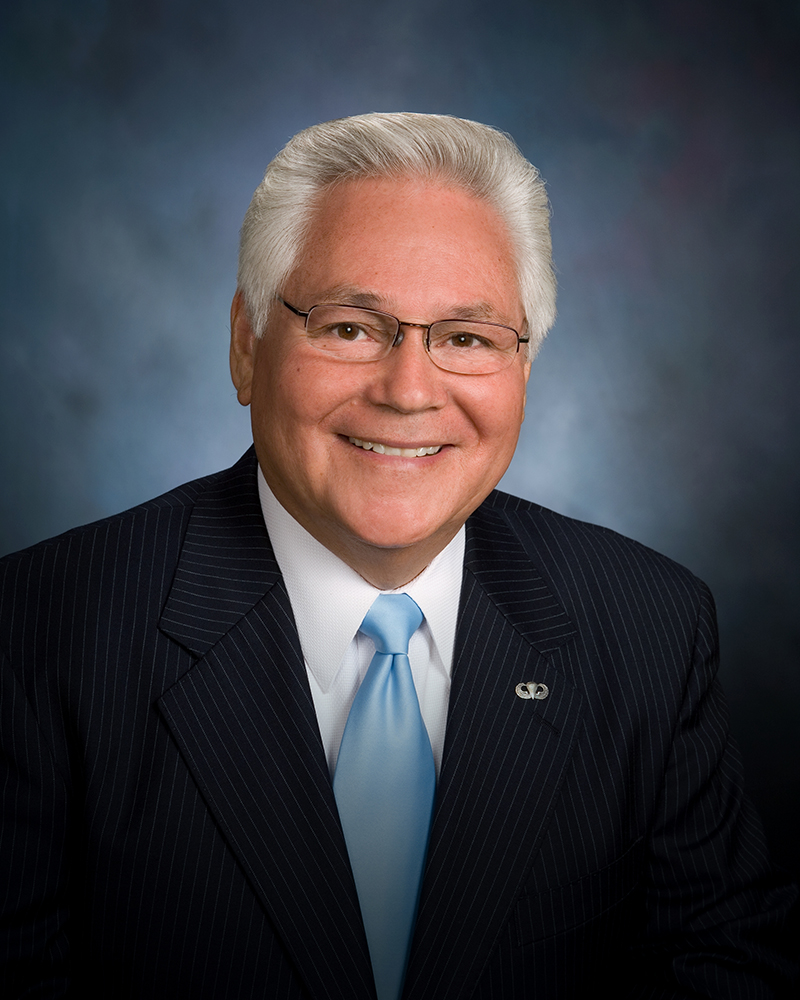
Sen. Bob Archuleta
Sponsored bills
Existing law, the Alfred E. Alquist Hospital Facilities Seismic Safety Act of 1983, establishes a program of seismic safety building standards for certain hospitals. Existing law requires, by January 1, 2030, owners of all acute care inpatient hospitals to either seismically retrofit all acute care inpatient hospitals, or demolish, replace, or change to nonacute care use all hospital buildings not in substantial compliance with regulations and standards developed by the department in accordance with the act, as specified. This bill would authorize the Children's Hospital Los Angeles to seek approval from the Department of Health Care Access and Information for an extension to the January 1, 2030, compliance deadline described above by up to 3 years. The bill would authorize the hospital to submit a seismic compliance plan, as specified, and, if necessary, a Nonstructural Performance Category-5 evaluation report in order to seek an extension. The bill would also require the hospital and department to identify least 2 major milestones relating to the seismic compliance plan that will be used as the basis for determining whether a hospital is making adequate progress towards meeting the hospital's seismic compliance deadline. The bill would subject the submitted seismic compliance plan to departmental review for reasonableness and require the hospital seeking the extension to submit any documentation requested by the department to assist its review. The bill would require the department to approve or deny a seismic compliance plan and any extension to the seismic compliance deadline within 120 days. The bill would also authorize the department to adjust the approved extension of time, the milestones agreed upon, or both, as necessary to deal with contractor, labor, or material delays, acts of God, governmental entitlements, or other circumstances beyond the hospital's control. The bill would impose a fine of $5,000 per calendar day for the hospital's failure to comply with a revised construction schedule or to meet any major milestone established by the department until the requirements or milestones, respectively, are met. The bill would also generally prohibit these hospitals from being issued a building permit for any building in the facility except those required for seismic compliance, maintenance, and emergency repairs until the milestone is met and the hospital is adequately progressing toward meeting the hospital's seismic compliance, as determined by the department. The bill would require the department to implement the above-described provisions by regulation, as specified. This bill would make legislative findings and declarations as to the necessity of a special statute for the County of Los Angeles.
Existing law provides for various memorials and monuments on the grounds of the State Capitol. Existing law requires the Department of General Services to maintain state buildings and grounds. Existing law, the Apology Act for the 1930s Mexican Repatriation Program, makes findings and declarations regarding the unconstitutional removal and coerced emigration of United States citizens and legal residents of Mexican descent, between the years 1929 and 1944, to Mexico from the United States during the 1930s "Mexican Repatriation" Program. Existing law expresses the apology of the State of California to those individuals who were illegally deported and coerced into emigrating to Mexico and requires that a plaque to commemorate those individuals be installed and maintained by the Department of Parks and Recreation in an appropriate public place in the City or County of Los Angeles. This bill would authorize a nonprofit organization representing Mexican Americans or Mexican immigrants to enter into negotiations to plan, construct, and maintain a memorial to Mexican Americans and Mexican immigrants who were forcibly deported from the United States during the Great Depression, as provided. The bill would require the memorial to be located at an appropriate public place in the City or County of Los Angeles. The bill would require the nonprofit organization to enter into negotiations with the Department of General Services and the state agency with jurisdiction over the state property where the memorial is proposed, where applicable, if the nonprofit organization proposes to locate the memorial on state property. The bill would require the nonprofit organization to submit a plan for the memorial to the department and the applicable state agency for review and approval. The bill would require these provisions to be funded exclusively through private sources. This bill would, if the nonprofit organization proposes a site owned by the City of Los Angeles or the County of Los Angeles for location of the memorial, require the nonprofit organization to follow any procedures that the City of Los Angeles or the County of Los Angeles require to consider approving the proposed memorial. This bill would make legislative findings and declarations as to the necessity of a special statute for the City of Los Angeles and the County of Los Angeles.
Existing law requires the adopted course of study for grades 1 to 6, inclusive, and the adopted course of study for grades 7 to 12, inclusive, to include certain areas of study, including, among others, English, mathematics, social sciences, science, and visual and performing arts, as specified. Existing law requires the Instructional Quality Commission, when the history-social science curriculum framework is next revised, on or after January 1, 2024, to consider providing for inclusion, in that curriculum framework, related evaluation criteria, and accompanying instructional materials, of instruction, among other things, the historical, social, economic, and political contributions of Asian Americans, Native Hawaiians, and Pacific Islanders in the United States. This bill, with respect to the adopted course of study for grades 1 to 6, inclusive, for social sciences, would additionally require instruction that provides a foundation for understanding the Spanish colonization of California and the Gold Rush Era, including the treatment and perspectives of Native Americans during those periods. The bill, with respect to the adopted course of study for grades 7 to 12, inclusive, for social sciences, would require, to the extent instruction is provided on the Spanish colonization of California or the Gold Rush Era, instruction that provides a foundation for understanding the treatment and perspectives of Native Americans during those periods. The bill would require the commission, when the State Board of Education next revises the history-social science curriculum framework or adopts new instructional materials, on or after January 1, 2025, to consider including content on the treatment and perspectives of Native Americans during those periods in that curriculum framework or evaluation criteria for instructional materials. To the extent that this bill would create new duties for local educational agencies or local officials, it would constitute a state-mandated local program. This bill would incorporate additional changes to Section 51210 of the Education Code proposed by AB 2073 to be operative only if this bill and AB 2073 are enacted and this bill is enacted last. This bill would incorporate additional changes to Section 51220 of the Education Code proposed by AB 1871 to be operative only if this bill and AB 1871 are enacted and this bill is enacted last. This bill would incorporate additional changes to Section 51226.3 of the Education Code proposed by AB 1805 to be operative only if this bill and AB 1805 are enacted and this bill is enacted last. The California Constitution requires the state to reimburse local agencies and school districts for certain costs mandated by the state. Statutory provisions establish procedures for making that reimbursement. This bill would provide that, if the Commission on State Mandates determines that the bill contains costs mandated by the state, reimbursement for those costs shall be made pursuant to the statutory provisions noted above.
Existing law prohibits a person from being tried or adjudged to punishment while that person is mentally incompetent. Existing law establishes a process by which a defendant's mental competency is evaluated and if the defendant is found incompetent to stand trial, the proceedings are suspended while the defendant receives treatment, with the goal of restoring the defendant to competency. Existing law, in the case of a misdemeanor charge in which the defendant is found incompetent, requires the court to either dismiss the case or hold a hearing to determine if the defendant is eligible for diversion. Under existing law, if the defendant is not eligible for diversion, the court may hold another hearing to decide if the defendant should be referred for outpatient treatment, conservatorship, or the CARE program, or if the defendant's treatment plan should be modified. Existing law requires that the charges be dismissed if a defendant is accepted into outpatient treatment or the CARE program. Existing law also requires the court, if the defendant is already on a grant of diversion for a misdemeanor case, to dismiss the current case and return the defendant to supervision. This bill would remove the option for the court to dismiss the case and would instead require the court to hold a hearing to determine if the defendant is eligible for diversion. If the defendant is not eligible for diversion, the bill would require the court to hold a hearing to determine whether the defendant will be referred to outpatient treatment, conservatorship, or the CARE program, or if the defendant's treatment plan will be modified. If the defendant is accepted into assisted outpatient treatment, has a petition for the establishment of a conservatorship filed, or is accepted into CARE, the bill would require the court to dismiss the charges at specified timeframes, except as specified. The bill would require the court to dismiss the case if a defendant does not qualify for the above-described services. This bill would also remove the requirement that the court dismiss the case if the defendant is already on a grant of diversion for a misdemeanor case. Existing law prohibits a court from suspending proceedings of a prosecution on a charge of driving under the influence of an alcoholic beverage for the purpose of allowing the defendant to participate in education, training, or treatment programs. This bill would allow for a mentally incompetent defendant who is charged with misdemeanor driving under the influence to be placed in a mental health diversion program, as specified. Existing law requires the State Department of Health Care Services, in consultation with the Judicial Council, to develop an annual reporting schedule for the submission of CARE Act data from the trial courts and requires the Judicial Council to aggregate the data and submit it to the department. Existing law requires the department, in consultation with various other entities, to develop an annual CARE Act report and requires county behavioral health agencies and other local governmental entities to provide the department with specified information for that report. Existing law requires the annual report to be posted on the department's internet website. This bill would expand the data to be compiled and reported to the Judicial Council to include the total number of CARE plans ordered and CARE agreements approved, among other information, and would expand the information compiled from county behavioral health departments to include information on all active and former participants for a period of time after the conclusion of CARE program services, to be determined by the State Department of Health Care Services, in consultation with county behavioral health agencies and courts. The bill would also expand the information collected by county behavioral health departments and courts to include outreach and engagement activities provided by county behavioral health agencies, the number of days between a petition and its disposition, and, in consultation with the department and county behavioral health departments, the number, rates, and trends of contacts made to a county behavioral health agency about individuals eligible or likely to be eligible for the CARE process, among others. The bill would require the measures and reporting requirements to be developed by the department, in consultation with county behavioral health agencies. By increasing the duties of a local agency, this bill would impose a state-mandated local program. The bill would, beginning in 2026, require the department to include in its annual CARE Act report quantitative deidentified information to include specified information aggregated by county, such as demographic information of each CARE Act participant and the number of CARE petitions filed with the superior court, among others. This bill would incorporate additional changes to Section 1001.36 of the Penal Code proposed by SB 1323 and additional changes to Section 5985 of the Welfare and Institutions Code proposed by SB 42, to be operative only if this bill and SB 1323 and SB 42 are enacted and this bill is enacted last. The California Constitution requires the state to reimburse local agencies and school districts for certain costs mandated by the state. Statutory provisions establish procedures for making that reimbursement. This bill would provide that with regard to certain mandates no reimbursement is required by this act for a specified reason. With regard to any other mandates, this bill would provide that, if the Commission on State Mandates determines that the bill contains costs so mandated by the state, reimbursement for those costs shall be made pursuant to the statutory provisions noted above.
Existing law authorizes the operation of an autonomous vehicle on public roads for testing purposes by a driver who possesses the proper class of license for the type of vehicle operated if specified requirements are satisfied. Existing law prohibits the operation of an autonomous vehicle on public roads until the manufacturer submits an application to the Department of Motor Vehicles, as specified, and that application is approved. This bill would require a manufacturer of an autonomous vehicle to report to the department a collision on a public road that involved one of its autonomous vehicles with a gross vehicle weight of 10,001 pounds or more that is operating under a testing or deployment permit that resulted in damage of property, bodily injury, or death within 10 days of the collision. The bill would require a manufacturer of an autonomous vehicle to annually submit to the department specified information regarding the deactivation of the autonomous mode for its autonomous vehicles with a gross vehicle weight of 10,001 pounds or more that were operating under a testing or deployment permit that authorized the vehicle to operate on public roads. The bill would prohibit the operation of an autonomous vehicle with a gross vehicle weight of 10,001 pounds or more on public roads for testing purposes, transporting goods, or transporting passengers without a human safety operator physically present in the autonomous vehicle at the time of operation. The bill would require the Department of Motor Vehicles, by January 1, 2030, or 5 years after commencement of testing, whichever occurs later, and upon appropriation by the Legislature, to submit a report to the appropriate policy and fiscal committees of the Legislature evaluating the performance of autonomous vehicle technology and its impact on public safety and employment in the transportation sector for autonomous vehicles with a gross vehicle weight of 10,001 pounds or more. The bill would require the Department of the California Highway Patrol, the Labor and Workforce Development Agency, the Department of Transportation, the State Air Resources Board, and other relevant state agencies to provide additional information needed to research the report.
Existing law vests the Public Utilities Commission with regulatory authority over public utilities, including electrical corporations. Existing law requires the commission to develop a standard contract or tariff, which may include net energy metering, for eligible customer-generators, as defined, with a renewable electrical generation facility, as defined, that is a customer of a large electrical corporation. Existing law requires, in developing the standard contract or tariff for large electrical corporations, the commission to take specified actions. This bill would require, no later than July 1, 2025, the commission to ensure that any contract or tariff established by the commission pursuant to the above-described provisions for renewable electrical generation facilities configured to serve multiple customers with meters at one or more apartment buildings on a single property, or configured to serve multiple meters of a single customer on a public school property, or a set of contiguous public school properties owned, leased, or rented by the public school customer, meets certain requirements, as specified. The bill would require the commission, no later than July 1, 2026, to ensure that any contract or tariff established by the commission pursuant to a specified commission decision meets specified requirements, as provided. The bill would make these provisions inoperative on July 1, 2033. Under existing law, a violation of any order, decision, rule, direction, demand, or requirement of the commission is a crime. Because a violation of a commission action implementing this bill's requirements would be a crime, the bill would impose a state-mandated local program. The California Constitution requires the state to reimburse local agencies and school districts for certain costs mandated by the state. Statutory provisions establish procedures for making that reimbursement. This bill would provide that no reimbursement is required by this act for a specified reason.
Existing law, the Planning and Zoning Law, requires every city, county, and city and county to administratively approve an application to install electric vehicle charging stations and hydrogen-fueling stations through the issuance of a building permit or similar nondiscretionary permit. Existing law, the Planning and Zoning Law, requires each city, county, and city and county to adopt an ordinance that creates an expedited, streamlined permitting process for electric vehicle charging stations. Existing law authorizes a city, county, or city and county developing an ordinance to refer to the recommendations contained in the most current version of the "Plug-In Electric Vehicle Infrastructure Permitting Checklist," as specified. Existing law requires a city, county, and city and county, in developing the expedited permitting process, to adopt a checklist of all requirements with which electric vehicle charging stations must comply to be eligible for expedited review. For these purposes, existing law defines "hydrogen-fueling station" to mean the equipment used to store and dispense hydrogen fuel to vehicles according to industry codes and standards that is open to the public. Existing law requires a hydrogen-fueling station to meet certain requirements, including any rules established by the State Air Resources Board, Energy Commission, or Department of Food and Agriculture regarding safety, reliability, weights, and measures. This bill would modify the definition of "hydrogen-fueling station" to mean the equipment and structural design components necessary to ensure the safety of the fueling station, including hydrogen-refueling canopies, that are used to store and dispense hydrogen fuel to vehicles according to industry codes and standards that are open to the public. This bill would modify the requirements a hydrogen-fueling station must meet to include all applicable state laws and regulations pertaining to hydrogen fueling, including any rules established by the State Air Resources Board, Energy Commission, or Department of Food and Agriculture regarding safety, reliability, weights, and measures. This bill would require every city, county, or city and county to adopt an ordinance that creates an expedited, streamlined permitting process for certain hydrogen-fueling stations, as specified. This bill would authorize a city, county, or city and county developing an ordinance to refer to the recommendations contained in the most current version of the "Electric Vehicle Charging Station Permitting Guidebook" or the "Hydrogen Station Permitting Guidebook," as specified. The bill would require a city, county, and city and county, in developing the expedited permitting process, to adopt a checklist of all requirements with which hydrogen-fueling stations must comply to be eligible for expedited review. The bill would require a city, county, or city and county with a population of 250,000 or more residents to comply with these provisions on or before September 30, 2025, and would require a city, county, or city and county with a population of fewer than 250,000 residents to comply with these provisions by September 30, 2028. By imposing additional duties on cities, counties, and cities and counties, the bill would impose a state-mandated local program. The bill would repeal these provisions, except with regard to a city, county, or city and county being authorized to refer to the recommendations contained in the most current version of the "Electric Vehicle Charging Station Permitting Guidebook," on January 1, 2030. The California Constitution requires the state to reimburse local agencies and school districts for certain costs mandated by the state. Statutory provisions establish procedures for making that reimbursement. This bill would provide that no reimbursement is required by this act for a specified reason.
(1) The California Environmental Quality Act (CEQA) requires preparation of specified documentation before a public agency approves or carries out certain projects. Existing law authorizes the Governor to certify energy infrastructure projects meeting specified requirements for streamlining benefits related to CEQA. Existing law defines "energy infrastructure project" for these purposes to include eligible renewable energy resources under the California Renewables Portfolio Standard Program, excluding resources that use biomass fuels. Existing law also expressly excludes from that definition of "energy infrastructure project" any project using hydrogen as a fuel. This bill would instead exclude eligible renewable energy resources under the California Renewables Portfolio Standard Program that combust, rather than use, biomass fuels from the definition of "energy infrastructure project" for purposes of the above-described CEQA benefits. The bill would include hydrogen production facilities and associated onsite storage and processing facilities that do not derive hydrogen from a fossil fuel feedstock and that receive funding from specified state and federal programs within the definition of "energy infrastructure project." Because the bill would authorize the Governor to certify additional projects, thereby increasing the duties on lead agencies in conducting the environmental review of energy infrastructure projects certified by the Governor, this bill would impose a state-mandated local program. (2) Existing law authorizes persons proposing specified electrical generation, electrical transmission, and energy storage projects to apply, on or before June 30, 2029, to the State Energy Resources Conservation and Development Commission (Energy Commission) to certify sites and related facilities as environmental leadership development projects, as specified. Existing law makes a site and related facility certified by the Energy Commission subject to streamlining benefits related to CEQA with no further action by the applicant or the Governor. Under existing law, the Energy Commission's certification is in lieu of any permit, certificate, or similar document required by any governmental agency and supersedes any applicable statute, ordinance, or regulation, except as specified. This bill would expand the types of facilities eligible to be certified as environmental leadership development projects by the Energy Commission to include hydrogen production facilities and associated onsite storage and processing facilities that do not derive hydrogen from a fossil fuel feedstock and that receive funding from specified state and federal programs. (3) The California Constitution requires the state to reimburse local agencies and school districts for certain costs mandated by the state. Statutory provisions establish procedures for making that reimbursement. This bill would provide that no reimbursement is required by this act for a specified reason.
Existing law establishes the Carl Moyer Memorial Air Quality Standards Attainment Program (Carl Moyer Program) , which is administered by the State Air Resources Board, to provide grants to offset the incremental cost of eligible projects that reduce emissions of air pollutants from sources in the state and for funding a fueling infrastructure demonstration program and technology development efforts. Existing law requires that funds be allocated under the program to local air districts for liquidation in accordance with grant criteria and guidelines adopted by the state board. Existing law provides that any funds reserved for a local air district by the state board are available for disbursement to the district for a period of not more than 2 years from the time of reservation. Existing law requires funds not liquidated by a district by June 30 of the 4th calendar year following the date of the reservation to be returned to the state board within 90 days for future allocation under the program. Beginning January 1, 2034, existing law reduces the deadline for that period of liquidation to June 30 of the 2nd calendar year following the date of reservation. This bill would extend the deadline for the period of liquidation to June 30 of the 6th calendar year following the date of disbursement and would make other conforming changes.