Maddy summarySCR 85 designates September 20, 2025, as Latino Veterans Day. This ceremonial resolution directly recognizes Latino veterans for their military service. The bill does not create new benefits or policies; it simply formally designates a date for commemoration. The measure is purely symbolic, aiming to honor this group's contributions through official recognition.
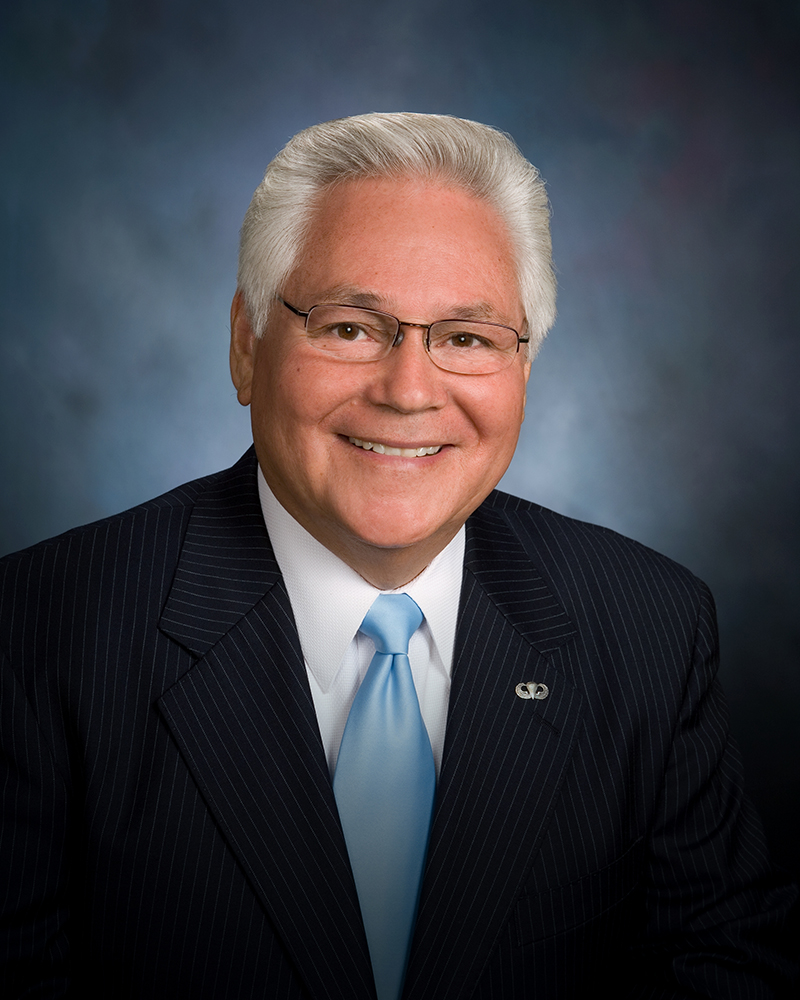
Sen. Bob Archuleta
Sponsored bills
This measure would declare October 28, 2025, as First Responders' Day and would urge all Californians to observe and promote the day with appropriate ceremonies and activities that promote awareness of the contributions of first responders in California.
This measure would proclaim the month of October 2025 as California Firefighter Appreciation Month and October 4, 2025, as California Firefighters Memorial Day.
This measure would proclaim the week of September 15, 2025, to September 21, 2025, inclusive, as Military and Veterans Suicide Prevention Awareness Week in California.
Maddy summarySCR 28 designates September 28, 2025, as Gold Star Mothers' and Families' Day in California. This ceremonial resolution honors families who have lost a member in military service. It does not create new laws or alter existing policies; it simply recognizes these families through a formal state designation. The measure directly affects California residents by providing a designated day for public acknowledgment of Gold Star families' sacrifices.
The California Constitution establishes certain conditions of employment for state officers and employees. Existing law, the Firefighters Procedural Bill of Rights Act, grants specified employment rights to firefighters, as defined, including temporary, seasonal firefighters employed by the Department of Forestry and Fire Protection (CAL FIRE) . This bill would require the Department of Human Resources, the State Personnel Board, and any other relevant state agency to take the necessary actions to transition the Firefighter I classification within CAL FIRE to a permanent firefighter employment classification.
Existing law requires the county agency supervising the release of a person on postrelease community supervision to petition a court to revoke, modify, or terminate postrelease community supervision if the agency determines, following application of its assessment processes, that intermediate sanctions are not appropriate. This bill would require the county agency supervising the release of a person on postrelease community supervision to also petition a court to revoke, modify, or terminate postrelease community supervision if the person has violated the terms of their release for a 3rd time and the person has committed a new felony or misdemeanor. By imposing additional duties on county agencies administering postrelease community supervision, this bill would impose a state-mandated local program. The California Constitution requires the state to reimburse local agencies and school districts for certain costs mandated by the state. Statutory provisions establish procedures for making that reimbursement. This bill would provide that no reimbursement is required by this act for a specified reason.
Existing law establishes a motor vehicle inspection and maintenance (smog check) program that is administered by the Department of Consumer Affairs. The smog check program requires inspection of motor vehicles upon initial registration, biennially upon renewal of registration, upon transfer of ownership, and in certain other circumstances. Existing law exempts specified vehicles from being inspected biennially upon renewal of registration, including, among others, all motor vehicles manufactured prior to the 1976 model year. Existing law also exempts from specified portions of the smog test, both biennially and at transfer, a collector motor vehicle that is insured as a collector motor vehicle, is at least 35 model years old, complies with the exhaust emissions standards for that motor vehicle's class and model year as prescribed by the department, and that passes a functional inspection of the fuel cap and a visual inspection for liquid fuel leaks. This bill would, commencing on January 1, 2027, additionally fully exempt from the smog check requirements, both biennially and at transfer, a motor vehicle that was manufactured prior to the 1981 model year, has been assigned a special identification plate indicating that it is a historical vehicle, and is insured as a collector motor vehicle, as specified. The bill, beginning January 1, 2028, would expand this exemption by one model year, every year, for 5 years. The bill would be known, and may be cited as, Leno's Law.
Existing law provides that it is the intent of the Legislature that all public schools, in kindergarten, and grades 1 to 12, inclusive, operated by school districts, in cooperation with specified entities and individuals, develop a comprehensive school safety plan, as provided. Existing law provides that school districts and county offices of education are responsible for the overall development of a comprehensive school safety plan for each of its schools, as provided. Existing law, the Charter Schools Act of 1992, provides for the establishment and operation of charter schools, including countywide charter schools, and requires a petition for the establishment of a charter school to contain comprehensive descriptions of various matters and procedures, including procedures that the charter school will follow to ensure the health and safety of pupils and staff. The act requires those procedures to also require the development of a school safety plan, as provided. Existing law encourages, on or before July 1, 2030, each public school, including charter schools, with an enrollment of 100 pupils or more to implement a web-based or app-based school safety program that includes certain program parameters. If a school implements a web-based or app-based school safety program, existing law requires the school to ensure that the program developers ensure that best practices are implemented to protect the security and data of all pupils and staff listed within the program, as provided. This bill, upon appropriation by the Legislature, would establish the School Mapping Data Grant Program under the administration of the Office of Emergency Services to provide one-time grants to participating school districts, county offices of education, and charter schools to enter into contracts with qualified vendors providing school mapping data, as provided, for purposes of assisting public safety agencies in efficiently responding to on-campus emergencies at schools. The bill would require a school mapping data program, to be eligible to receive funding under the grant program, to include the same program parameters as, and to have the program developers implement the same best practices to protect the security and data of all pupils and staff as, a web-based or app-based school safety program, as described above. Existing constitutional provisions require that a statute that limits the right of access to the meetings of public bodies or the writings of public officials and agencies be adopted with findings demonstrating the interest protected by the limitation and the need for protecting that interest. This bill would make legislative findings to that effect.

The California Global Warming Solutions Act of 2006 establishes the State Air Resources Board as the state agency responsible for monitoring and regulating sources emitting greenhouse gases. The act authorizes the state board to include the use of market-based compliance mechanisms in regulating those emissions. The implementing regulations adopted by the state board provide for the direct allocation of greenhouse gas allowances to electrical corporations pursuant to a market-based compliance mechanism. Existing law vests the Public Utilities Commission (PUC) with regulatory authority over public utilities, including electrical corporations. Existing law requires the PUC to continue a program of assistance to low-income electric and gas customers with annual household incomes that are no greater than 200% of the federal poverty guidelines, as specified, which is referred to as the California Alternate Rates for Energy (CARE) program. Existing law also requires the PUC to continue a program of assistance to residential customers of the state's 3 largest electrical corporations consisting of households of 3 or more persons with total household annual gross income levels between 200% and 250% of the federal poverty guideline level, which is referred to as the Family Electric Rate Assistance (FERA) program. Existing law, except as provided, requires revenues received by an electrical corporation as a result of the direct allocation of greenhouse gas allowances to be credited directly to residential, small business, and emissions-intensive trade-exposed retail customers of the electrical corporation, commonly known as the California Climate Credit. This bill would exclude residential customers from receiving the California Climate Credit if they are not enrolled in the CARE or FERA program and their total electricity bills for the previous year were less than $300. Under existing law, a violation of the Public Utilities Act, or of an order, decision, rule, direction, demand, or requirement of the commission, is a crime. Because the provisions of this bill would be part of the Public Utilities Act, and a violation of a commission action implementing its requirements would be a crime, the bill would impose a state-mandated local program. The California Constitution requires the state to reimburse local agencies and school districts for certain costs mandated by the state. Statutory provisions establish procedures for making that reimbursement. This bill would provide that no reimbursement is required by this act for a specified reason.