

The Outdoor Advertising Act regulates placement of advertising displays adjacent to and within specified distances of highways that are part of the national system of interstate and defense highways and federal-aid highways. The act prohibits a person, as defined, from placing an advertising display within the areas affected by the act without a permit. The act authorizes the Director of Transportation to adopt regulations for the enforcement of the act. Pursuant to that authority, existing regulations only require the Department of Transportation to process an application for placing a new advertising display along a new alignment of an interstate or primary highway if the application is accepted on or after the date that the department accepts the highway project for the new alignment as complete. This bill would prohibit the department from denying or delaying the acceptance of a permit application for a new advertising display along a portion of a new alignment of an interstate or primary highway on the basis that the highway project has not been accepted as complete if the section of highway is open to the use of the public for vehicular travel within 1,000 feet of the location specified in the permit application.
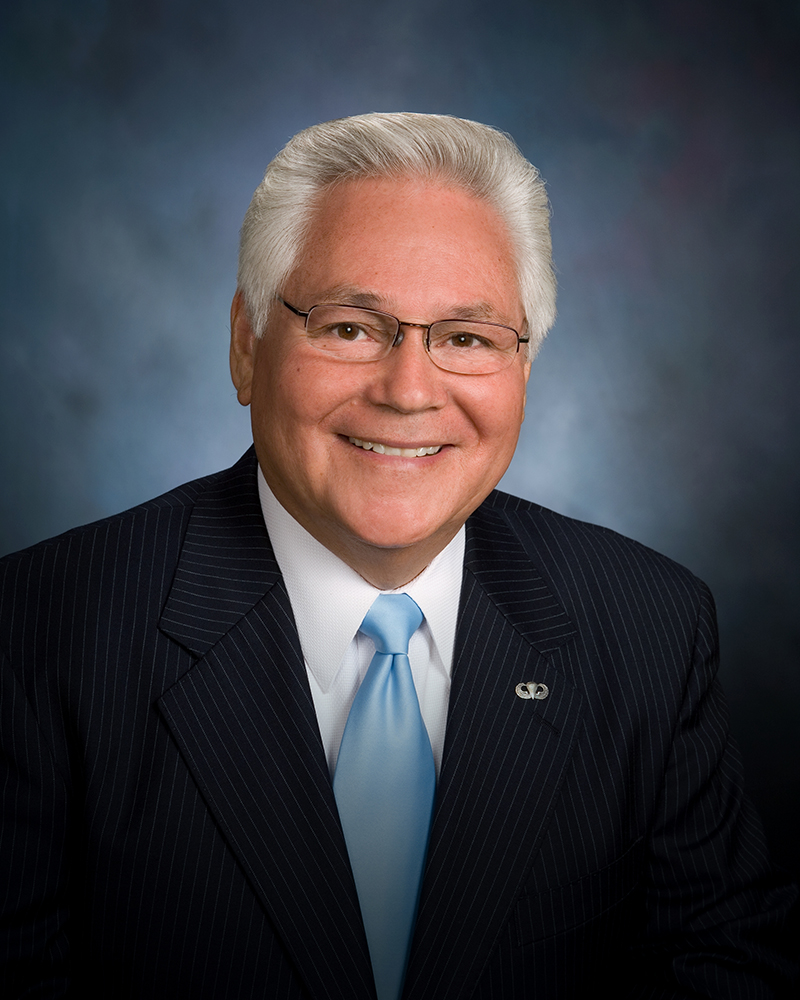
Sen. Bob Archuleta
Sponsored bills
Existing law requires the Department of Water Resources to update every 5 years the plan for the orderly and coordinated control, protection, conservation, development, and use of the water resources of the state, which is known as "The California Water Plan." Existing law requires the department to include a discussion of various strategies in the plan update, including, but not limited to, strategies relating to the development of new water storage facilities, water conservation, water recycling, desalination, conjunctive use, and water transfers, that may be pursued in order to meet the future needs of the state. Existing law requires the department to establish an advisory committee to assist the department in updating the plan. This bill would revise and recast certain provisions regarding The California Water Plan to, among other things, require the department to expand the membership of the advisory committee to include, among others, tribes, labor, and environmental justice interests. The bill would require the department, as part of the 2033 update to the plan, to update the interim planning target for 2050, as provided. The bill would require the target to consider the identified and future water needs for all beneficial uses, including, but not limited to, urban uses, agricultural uses, tribal uses, and the environment, and ensure safe drinking water for all Californians, among other things. The bill would require the plan to include specified components, including a discussion of the estimated costs, benefits, and impacts of any project type or action that is recommended by the department within the plan that could help achieve the water supply targets. The bill would require the department to report to the Legislature the amendments, supplements, and additions included in the updates of the plan, together with a summary of the department's conclusions and recommendations, in the session in which the updated plan is issued. The bill would also require the department to conduct public workshops to give interested parties an opportunity to comment on the plan.
The California Environmental Quality Act (CEQA) requires a lead agency, as defined, to prepare, or cause to be prepared, and certify the completion of an environmental impact report on a project that it proposes to carry out or approve that may have a significant effect on the environment or to adopt a negative declaration if it finds that the project will not have that effect. CEQA also requires a lead agency to prepare a mitigated negative declaration for a project that may have a significant effect on the environment if revisions in the project would avoid or mitigate that effect and there is no substantial evidence that the project, as revised, would have a significant effect on the environment. CEQA exempts from its requirements various projects, including, but not limited to, housing projects that meet certain requirements and activities and approvals related to certain prison facilities. This bill would exempt from the requirements of CEQA any activity or approval necessary for the completion of the Gypsum Canyon Veterans Cemetery in the County of Orange if specified conditions are met. To the extent that a local agency would be required to determine whether an activity or approval qualifies for this exemption, the bill would impose a state-mandated local program. The bill would repeal this provision on January 1, 2030. This bill would make legislative findings and declarations as to the necessity of a special statute for the Gypsum Canyon Veterans Cemetery in the County of Orange. The California Constitution requires the state to reimburse local agencies and school districts for certain costs mandated by the state. Statutory provisions establish procedures for making that reimbursement. This bill would provide that no reimbursement is required by this act for a specified reason. This bill would declare that it is to take effect immediately as an urgency statute.
Existing law requires a manufacturer who sells or provides for compensation, and, commencing January 1, 2026, an owner of, a trash receptacle or storage container that is longer than 3 feet and taller than 4 feet and that is designed to be placed on a roadway or the curb of a roadway in order to be emptied or picked up to mark the receptacle or container with a reflector on each side. Existing law additionally requires 8 strips of fluorescent yellow reflective tape made of certain high-performance retroreflective sheeting to be placed on specified locations on a trash receptacle or storage container, unless the trash receptacle or storage container's reflective tape is made of the high-performance retroreflective sheeting and was applied before July 1, 2023. This bill would apply this exemption from the additional, 8-strip requirement to a receptacle or container with reflectors applied prior to January 1, 2025, and would eliminate the exemption's requirement for the reflectors to be reflective tape made of certain high-performance retroreflective sheeting. The bill would require, when not exempted, the reflective tape for a storage container transported by truck and trailer to be fluorescent yellow, red, white, or alternating red and white, and be made of specified high-performance retroreflective sheeting.
Existing law requires the State Fire Marshal to specify standards for the design of cigarette lighters using an 80% acceptance criterion with respect to safety features that prevent operation of the lighters by children 5 years of age or younger. Existing law prohibits a person from selling, offering for sale, or distributing a cigarette lighter that does not comply with those standards. This bill would prohibit a person from selling, offering for sale, or distributing a lighter, as defined, or a lighting rod or gas match, that does not comply with specified ASTM International standards, except as specified. The bill would also prohibit a person from selling, offering for sale, or distributing a lighter that infringes on certain intellectual property rights, except as specified.
Existing law, the Contractors State License Law, provides for the licensure and regulation of contractors by the Contractors State License Board in the Department of Consumer Affairs. Under existing law, willful or deliberate disregard by a licensed contractor of various state building, labor, and safety laws constitutes a cause for disciplinary action by the board. Existing law provides for related disciplinary proceedings and requires the board to promulgate regulations covering the assessment of civil penalties under those disciplinary provisions, as prescribed. Existing law authorizes a civil penalty not less than $200 and not to exceed $15,000 for certain violations relating to unlicensed persons, as specified. Existing law authorizes a civil penalty not to exceed $8,000 or $30,000 for other violations of the Contractors State License Law, as provided. This bill, commencing July 1, 2026, would increase the minimum civil penalties for violations related to unlicensed persons to at least $1,500 and would impose minimum civil penalties of at least $500 or $1,500 for other specified violations, as provided. The bill would also authorize the Contractors State License Board to adjust the amounts of these minimum civil penalties for inflation every 5 years, as provided. Existing law authorizes the board to set specified fees according to a prescribed schedule. Existing law, notwithstanding this fee schedule, authorizes the board to set fees to maintain the amount of the reserve fund at a level not to exceed approximately 6 months of annual authorized board expenditures. This bill would increase the above-described limit on the reserve fund to a level not to exceed approximately 12 months of annual authorized board expenditures. This bill would incorporate additional changes to Section 7099.2 of the Business and Professions Code proposed by SB 291 to be operative only if this bill and SB 291 are enacted and this bill is enacted last.
Existing federal law, the Indian Gaming Regulatory Act of 1988, provides for the negotiation and execution of tribal-state gaming compacts for the purpose of authorizing certain types of gaming on Indian lands within a state. The California Constitution authorizes the Governor to negotiate and conclude those compacts, subject to ratification by the Legislature. Existing law expressly ratifies a number of tribal-state gaming compacts, and amendments to tribal-state gaming compacts, between the State of California and specified Indian tribes. The California Environmental Quality Act (CEQA) requires a lead agency to prepare, or cause to be prepared, and certify the completion of, an environmental impact report on a project, as defined, that it proposes to carry out or approve that may have a significant effect on the environment, as defined, or to adopt a negative declaration if it finds that the project will not have that effect. This bill would ratify the tribal-state gaming compact entered into between the State of California and the Cher-Ae Heights Indian Community of the Trinidad Rancheria, the first amendment to the compact between the State of California and the Pinoleville Pomo Nation, California, and the first amendment to the compact between the State of California and the Sycuan Band of the Kumeyaay Nation. The bill would provide that, in deference to tribal sovereignty, certain actions related to these compacts are not projects for the purposes of CEQA. This bill would declare that it is to take effect immediately as an urgency statute.
Existing law declares the public policy of the state regarding labor organization, including, among other things, that it is necessary for a worker to have full freedom of association, self-organization, and designation of representatives of their own choosing, to negotiate the terms and conditions of their employment, and to be free from the interference, restraint, or coercion of employers of labor, or their agents, in the designation of such representatives or in self-organization or in other concerted activities for the purpose of collective bargaining or other mutual aid or protection. Existing law establishes the Public Employment Relations Board (PERB) in state government as a means of resolving disputes and enforcing the statutory duties and rights of specified public employers and employees under various acts regulating collective bargaining. Under existing law, PERB has the power and duty to investigate an unfair practice charge and to determine whether the charge is justified and the appropriate remedy for the unfair practice. Existing law, the federal National Labor Relations Act (NLRA) , establishes a comprehensive statutory scheme regulating unfair labor practices on the part of employers and labor organizations in industries affecting interstate commerce, and vests in the National Labor Relations Board (NLRB) the power to conduct elections to determine employee representatives and to prevent unfair labor practices affecting commerce. Existing law, the California Public Records Act, requires that public records, as defined, be available to the public for inspection and made promptly available to any person. This bill would expand PERB's jurisdiction by authorizing a worker, to petition PERB to protect and enforce prescribed rights under specified circumstances, including if the worker is employed in a position subject to the NLRA but the NLRB has expressly or impliedly ceded jurisdiction. The bill would authorize PERB to, among other things, decide unfair labor practice cases pursuant to a specified timeline and order all appropriate relief for a violation, including civil penalties, as prescribed. In order to pursue relief from PERB, the bill would require a covered worker or their representative to file an unfair practice charge or petition that includes specified information, including, where applicable, the original charge or petition filed with the NLRB. The bill would require PERB to hold the supporting documentation and evidence confidential and maintain it as part of its investigatory file and would exempt this documentation and evidence from the California Public Records Act. If PERB determines, among other things, it has insufficient resources to process certain cases or doing so would prevent it from meeting specified statutory deadlines, the bill would require PERB to process and prioritize charges, as specified. The bill would also establish the Public Employment Relations Board Enforcement Fund (fund) in the State Treasury, would require the above-described civil penalties to be deposited into the fund, and would make moneys in the fund available upon appropriation by the Legislature to PERB for the purpose of administering the above-specified provisions. The bill would authorize PERB to rely on its own decisions and precedent under the NLRA and would authorize review of its decisions by a state appellate court, as specified. Existing law, the Alatorre-Zenovich-Dunlap-Berman Agricultural Labor Relations Act of 1975, grants agricultural employees the right to form and join labor organizations and engage in collective bargaining, as specified, and prohibits agricultural employers and labor organizations from engaging in unfair labor practices. Those provisions establish the Agricultural Labor Relations Board (ALRB) and empower the ALRB to prevent any person from engaging in those practices. Existing law establishes various definitions for these purposes. Existing law requires the ALRB to follow applicable precedents of the NLRA. This bill would specify that the ALRB has exclusive jurisdiction in all phases of the administration of the act, and to determine whether any person or entity meets one or more of those definitions. The bill would instead authorize the board to follow applicable precedents of the NLRA, but would not obligate the board to follow precedents where the ALRB deems it inappropriate to do so. This bill would make related findings and declarations and would make its provisions severable. Existing constitutional provisions require that a statute that limits the right of access to the meetings of public bodies or the writings of public officials and agencies be adopted with findings demonstrating the interest protected by the limitation and the need for protecting that interest. This bill would make legislative findings to that effect.
(1) The Confidentiality of Medical Information Act (CMIA) prohibits a provider of health care, a health care service plan, a contractor, or a corporation and its subsidiaries and affiliates from intentionally sharing, selling, using for marketing, or otherwise using any medical information, as defined, for any purpose not necessary to provide health care services to a patient, except as provided. The CMIA prohibits a provider of health care, health care service plan, or contractor from disclosing medical information regarding a patient of the provider of health care or an enrollee or subscriber of a health care service plan without first obtaining authorization from the patient, except if the disclosure is compelled by, among other things, a search warrant lawfully issued to a governmental law enforcement agency or a court order. Existing law makes a violation of these provisions that results in economic loss or personal injury to a patient punishable as a misdemeanor. This bill would revise the definition of "medical information" to include immigration status, including current and prior immigration status, and place of birth, if that information is known or collected, as specified, and would define "immigration enforcement" to mean any and all efforts to investigate, enforce, or assist in the investigation or enforcement of any federal civil immigration law, and also includes any and all efforts to investigate, enforce, or assist in the investigation or enforcement of any federal criminal immigration law that penalizes a person's presence in, entry or reentry to, or employment in, the United States. The bill would specify that a provider of health care, health care service plan, or contractor shall disclose medical information regarding a patient of the provider of health care or an enrollee or subscriber or a health care service plan pursuant to a valid search warrant issued by a judicial officer, including a magistrate, to a governmental law enforcement agency, or pursuant to a state or federal court order issued by a court of this state or a federal court. The bill would also prohibit, except to the extent expressly authorized by a patient, enrollee, or subscriber, or as otherwise permitted or required, a provider of health care, health care service plan, contractor, or corporation and its subsidiaries and affiliates from disclosing medical information for immigration enforcement. Because the bill would expand the scope of a crime, it would impose a state-mandated local program. (2) Under existing law, the State Department of Public Health is responsible for the licensing and regulation of various facilities and settings that provide health care services, as specified. Existing law makes a willful violation of these provisions a crime. This bill would require health care provider entities, as defined, to establish or amend procedures for monitoring, documenting, and receiving visitors to health care provider entities to the extent possible. The bill would require health care provider entity personnel to immediately notify health care provider entity management, administration, or legal counsel of any request for access to a health care provider entity site or patient for immigration enforcement, and to provide any requests for review of health care provider entity documents, as prescribed. The bill would prohibit, unless required by state or federal law, a health care provider entity and its personnel from allowing any person access to nonpublic areas of the provider's facilities for immigration enforcement purposes, except as specified. The bill would require health care provider entities to inform staff and relevant volunteers on how to respond to requests relating to immigration enforcement that grants access to health care provider entity sites or to patients. The bill would require that health care provider entities comply with these provisions within 45 days from their effective date. By expanding the scope of a crime and increasing duties on local health officials, the bill would impose a state-mandated local program. The California Constitution requires the state to reimburse local agencies and school districts for certain costs mandated by the state. Statutory provisions establish procedures for making that reimbursement. This bill would provide that with regard to certain mandates no reimbursement is required by this act for a specified reason. With regard to any other mandates, this bill would provide that, if the Commission on State Mandates determines that the bill contains costs so mandated by the state, reimbursement for those costs shall be made pursuant to the statutory provisions noted above. This bill would provide that no reimbursement is required by this act for a specified reason. This bill would declare that it is to take effect immediately as an urgency statute.
Maddy summarySCR 95 is a ceremonial resolution that would establish September 20, 2025, and every September 20 thereafter, as "Soju Day" in the state. It does not create new laws or regulations, nor does it affect any specific individuals or groups. The resolution solely designates an annual date for recognition and celebration. This is purely symbolic, with no concrete policy changes or practical impact beyond the ceremonial observance.