

The Vehicle License Fee Law, in lieu of any ad valorem property tax upon vehicles, imposes an annual license fee for any vehicle subject to registration in this state in the amount of 1% of the market value of that vehicle, as provided, for a specified amount of time. Existing law also, until June 30, 2011, imposes an additional tax equal to 0.15% of the market value of specified vehicles, as determined by the Department of Motor Vehicles, to the vehicle license fee, to be deposited in the General Fund and transferred to the Local Safety and Protection Account, a continuously appropriated fund. This bill would repeal the provision relating to the sunset date and repeal of the additional 0.15% tax, thereby depositing additional moneys into a continuously appropriated fund. This bill would constitute a change in state statute that would result in a taxpayer paying a higher tax within the meaning of Section 3 of Article XIIIA of the California Constitution, and thus would require for passage the approval of 23 of the membership of each house of the Legislature.
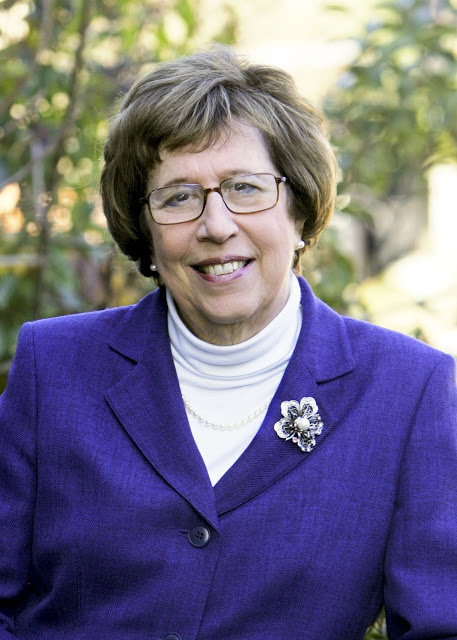
Sponsored bills
This measure would recognize the 10th anniversary of the September 11, 2001 attacks as a day of solemn commemoration.
Under existing law, the State Water Resources Control Board administers a water rights program pursuant to which the state board grants permits and licenses to appropriate water. Existing law requires the owner of a wastewater treatment plant to obtain the approval of the state board prior to making any changes in the point of discharge, place of use, or purpose of use of treated wastewater, and requires the state board to review the proposed changes in accordance with prescribed procedures. This bill would authorize the Sacramento Regional County Sanitation District to file an application for a permit to appropriate a specified amount of water that is based on the volume of treated wastewater that the district discharges into the Sacramento River, as specified. The bill would authorize the state board to grant a permit to appropriate that treated wastewater upon terms and conditions determined by the state board. The bill would require the board, prior to granting a permit pursuant to these provisions, to comply with permit, approval, and review requirements and other laws applicable to the appropriation of water. This bill would make legislative findings and declarations as to the necessity of a special statute for the Sacramento Regional County Sanitation District.
Existing law, the Cortese-Knox-Hertzberg Local Government Reorganization Act of 2000, sets forth the procedures for incorporations and changes of organizations of cities, including procedures for disincorporation. This bill would provide that every city with a population of less than 150 people as of January 1, 2010, would be disincorporated into that city's respective county as of 91 days after the effective date of the bill, unless a county board of supervisors determines, by majority vote within the 90-day period following enactment of these provisions, that continuing such a city within that county's boundaries would serve a public purpose if the board of supervisors determines that the city is in an isolated rural location that makes it impractical for the residents of the community to organize in another form of local governance. The bill would also require the local agency formation commission within the county to oversee the terms and conditions of the disincorporation of the city, as specified. The bill would become operative only if AB 781 of the 2011–12 Regular Session is enacted.
The California Constitution allows the Legislature, by statute, to authorize cities and counties to provide for bingo games for charitable purposes. Existing law authorizes cities and counties to permit eligible nonprofit organizations to conduct bingo games and remote caller bingo games, as defined, for charitable purposes pursuant to an ordinance that allows those games to be conducted in accordance with specified requirements. Existing law sets forth a model ordinance for a city, county, or city and county to authorize remote caller bingo, and prohibits an organization from conducting remote caller bingo more than 2 days per week. Existing law requires an organization authorized to conduct remote caller bingo games to provide at least 30 days' advance written notice of its intent to conduct a remote caller bingo game. This bill additionally would permit a city, county, or city and county to amend an existing local ordinance that allows bingo games to be conducted within that jurisdiction, by resolution, to permit the conduct of remote caller bingo games pursuant to that ordinance, as specified. The bill would include among those organizations eligible to conduct remote caller bingo a charitable organization affiliated with a community college district. The bill would prohibit an organization from conducting remote caller bingo more than 2 days per week, but would permit an organization to hold one additional game, at its election, in each calendar quarter. The bill would require an organization authorized to conduct remote caller bingo games to provide at least 10 days' advance written notice of intent to conduct a remote caller bingo game on a form prescribed by the city, county, or city and county, and to provide notice within 24 hours if the location of the remote caller bingo game changes. The bill also would repeal the model ordinance. Existing law requires the California Gambling Control Commission to regulate remote caller bingo, including licensure and operation. Among other things, any person who conducts a remote caller bingo game and any person who manufactures or otherwise provides equipment for use in the playing of a remote caller bingo game are required to be licensed. Existing law also requires the commission to approve all equipment used for remote caller bingo in advance, to monitor operation of the transmission and other equipment used for remote caller bingo, and to monitor the game. This bill would delete all state licensure requirements for the conduct of remote caller bingo, and would, instead, require an organization that is eligible to conduct remote caller bingo games to register annually with the Department of Justice, as specified. The bill would require the department to maintain a registry on its Internet Web site of all organizations registered to conduct remote caller bingo. The bill would authorize the department to charge an annual registration fee of $100, to be deposited into the California Bingo Fund, to cover the department's actual costs to administer and enforce these provisions, and would authorize the department to adopt regulations. The bill would also authorize the department to require an organization licensed to conduct remote caller bingo or a management company contracted by a licensed organization to conduct remote caller bingo on behalf of a nonprofit organization to register a copy of any local bingo license with the department. The bill would permit a fee to be charged to cover the cost of the registration requirement and would require that registration information be made available to the public upon request. The bill would make other technical and conforming changes relating to the duties of the Department of Justice and the commission, including setting forth procedures for a city, county, or city and county, as the local licensing entity, to obtain a background check from the department. The bill would delete the requirement that the commission approve all equipment used for remote caller bingo in advance, but would require the city, county, or city and county to monitor operation of the transmission and other equipment used for remote caller bingo and to monitor the game. The bill would authorize the department to audit the books and records of a licensed organization or a management company contracted by a licensed organization to conduct remote caller bingo at any time and to charge a fee for the audit. The bill would require the audit information to be made available to the public upon request. To ensure continuity of remote caller bingo games, this bill would, until June 1, 2012, authorize a city, county, or city and county to recognize a state license, work permit, or approval of equipment that was issued by the commission and effective on June 30, 2011, as specified. The bill would permit an authorized organization to contract with a management company to provide business services, but would require the organization to give notice of the contract to the city, county, or city and county and to meet other requirements, as specified. The bill would require the live, physical calling and broadcast of a remote caller bingo game to be conducted from a jurisdiction that authorizes by local ordinance the conduct of remote caller bingo games. This bill would make additional changes relating to the requirements for cosponsoring remote caller bingo games, and would simplify other procedures and requirements applicable to the conduct of remote caller bingo games. Under existing law, any violation of the remote caller bingo provisions described above is a misdemeanor, punishable as specified. This bill would expand the scope of an existing crime by imposing different requirements for the conduct of remote caller bingo, thereby creating a state-mandated local program. Existing law requires the California Gambling Control Commission to submit a report to the Legislature, on or before January 1, 2012, on the fundraising effectiveness and regulation of remote caller bingo. A loan from the Gambling Control Fund to the California Bingo Fund for the startup costs relating to remote caller bingo is required to be repaid within 5 years after the date of the loan. This bill would delete that reporting requirement, and would delete the requirement that the startup loan be repaid within 5 years. Existing law permits players who are physically present at a bingo game to use hand-held, portable card-minding devices, as specified, that are approved prior to use by the California Gambling Control Commission. Additionally, the commission is required to license persons or entities that manufacture, supply, or service card-minding devices and related equipment, and may inspect and prohibit the use of any card-minding devices that are noncompliant. Existing law requires the commission to adopt regulations concerning remote caller bingo and card-minding devices. This bill would repeal these provisions relating to card-minding devices and the duties of the commission. The California Constitution requires the state to reimburse local agencies and school districts for certain costs mandated by the state. Statutory provisions establish procedures for making that reimbursement. This bill would provide that no reimbursement is required by this act for a specified reason. This bill would declare that it is to take effect immediately as an urgency statute.
This measure would resolve that the month of April be designated as Sexual Assault Awareness Month, would recognize April 27, 2011, as Denim Day California, and would encourage everyone to wear jeans on that day to help communicate the message that there is no excuse for, and never an invitation to, rape or sexual assault.
(1) The Surface Mining and Reclamation Act of 1975 prohibits a person, with exceptions, from conducting surface mining operations unless a permit is obtained from, a reclamation plan is submitted to and approved by, and financial assurances for reclamation have been approved by, the lead agency for the operation. Existing law prohibits a lead agency from approving a reclamation plan for a surface mining operation for gold, silver, copper, or other metallic minerals or financial assurances for the operation if the operation is located on, or within one mile of, a Native American sacred site and is located in an area of special concern, unless certain criteria are met. This bill would also prohibit a lead agency from approving a reclamation plan for an aggregate products operation if the operation is located on or within 2,000 yards of the external boundaries of an Indian reservation and is on or within 5,000 yards of a Native American sacred site, and is on or within 4,000 yards of the Santa Margarita River or an aquifer that is hydrologically connected to the river, unless the tribe whose reservation is nearest the operation consents to the operation. This bill would declare that it is to take effect immediately as an urgency statute.
Existing law provides for statewide election of a slate of electors to vote in the electoral college for President and Vice President of the United States. Under existing law, each political party selects its slate of presidential electors in accordance with statutory procedures that differ by party. This bill would ratify a specified interstate compact that requires the chief election official of each signatory state to appoint the slate of presidential electors that was nominated in association with the presidential ticket that received the largest national popular vote total. This compact would only become effective if states cumulatively possessing a majority of the total electoral votes have ratified the compact.
(1) The Surface Mining and Reclamation Act of 1975, governs surface mining operations and reclamation of mined lands, and provides, among other things, for the submission of reclamation plans to, and issuance of permits by, lead agencies to persons engaging in surface mining operations. Until December 31, 2012, a site specific plan in conjunction and consistent with the Cache Creek Resource Management Plan is to be considered a functional equivalent of a reclamation plan for purposes of the act. The board of supervisors of the county in which the Cache Creek Resource Management Plan is to be implemented is required, until December 31, 2012, to prepare and forward to the Director of Conservation annually a report containing specified information relating to mining operations. Existing law provides that these provisions shall not become operative until the date the State Mining and Geology Board notifies the Secretary of State that the board has approved an ordinance adopted by the Board of Supervisors for the County of Yolo that governs in-channel noncommercial extraction activities carried out pursuant to the plan. This bill would delete the requirement regarding the operative date. The bill would extend these provisions until December 31, 2017. By extending the duties of the board of supervisors of the county in which the Cache Creek Resource Management Plan is to be implemented, the bill would impose a state-mandated local program. The bill would require the annual report on the Cache Creek Area Plan that is prepared by the County of Yolo staff and submitted to the board of supervisors of the county in which the Cache Creek Resource Management Plan is implemented to also be submitted to the Assembly Natural Resources Committee and the Senate Natural Resources and Water Committee. (2) The California Constitution requires the state to reimburse local agencies and school districts for certain costs mandated by the state. Statutory provisions establish procedures for making that reimbursement. This bill would provide that no reimbursement is required by this act for a specified reason.
Existing law requires the collection of fees for issuing marriage licenses and for providing certified copies of vital records, including marriage certificates, birth certificates, fetal death records, and death records. Existing law provides for the establishment of county domestic violence program special funds for the purpose of funding local domestic violence programs. Certain fees payable at the time a marriage license or a certified copy of any of the above vital records is issued may be collected by the county clerks for deposit into these funds. Existing law, until January 1, 2011, additionally authorizes the Solano County Board of Supervisors, upon making certain findings and declarations, to authorize an increase in fees for marriage licenses and confidential marriage licenses and for certified copies of certain vital records, up to $2. Existing law authorizes the Solano County Board of Supervisors to make further increases in fees each year, as specified. Existing law requires the fees to be allocated for purposes relating to domestic violence prevention, intervention, and prosecution. Existing law required the Solano County Board of Supervisors, by July 1, 2009, to submit a report on funds received and expended in connection with the fee increases, and the outcome of activities associated with the act, to the Assembly Judiciary Committee and the Senate Judiciary Committee. This bill would extend the repeal date of the above-described provisions to January 1, 2012. This bill would extend the operation of the above-described provisions indefinitely. This bill would require the Solano County Board of Supervisors, by July 1, 2014, to submit a followup report on funds received and expended in connection with the fee increases, and the outcome of activities associated with the act, to the Assembly Judiciary Committee and the Senate Judiciary Committee.