

Existing law, known as the Seymour-Campbell Student Success Act of 2012, provides that the act's purpose is to increase California community college student access and success by providing effective core matriculation services, including orientation, assessment and placement, counseling, and other education planning services, and academic interventions. This bill would require, as part of the act, community colleges to provide, commencing with the 2026–27 academic year, students with specified information related to completing and submitting the Free Application for Federal Student Aid and the California Dream Act application, and to confirm, commencing with the 2027–28 academic year, that students who have not opted out have completed and submitted the Free Application for Federal Student Aid or the California Dream Act application, as specified. The bill would require community college districts to ensure that students are directed to services to assist students in complying with the bill's requirements, and that the information shared by students is handled in compliance with state and federal privacy laws. The bill would require the Student Aid Commission to adopt regulations that include model opt-out forms and acceptable use policies, as specified. By imposing new duties on community college districts, the bill would impose a state-mandated local program. The California Constitution requires the state to reimburse local agencies and school districts for certain costs mandated by the state. Statutory provisions establish procedures for making that reimbursement. This bill would provide that, if the Commission on State Mandates determines that the bill contains costs mandated by the state, reimbursement for those costs shall be made pursuant to the statutory provisions noted above.
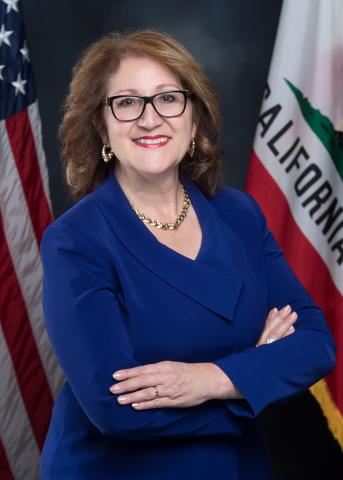
Sponsored bills
Existing law, the Parent's Accountability and Child Protection Act, requires a person or business that seeks to sell a specified product or service that is illegal under state law to sell to a minor to take reasonable steps to ensure that the purchaser is of legal age at the time of purchase or delivery, as prescribed. The act, in an action brought by a public prosecutor, subjects a business or person that violates the act to at least a $7,500 civil penalty for each violation. Existing law requires that the amount in controversy not exceed $35,000 for a limited civil case. This bill, in addition to any other remedy available under law, in an action brought by a public prosecutor or a parent or legal guardian of a minor who has acquired the product or service, would subject an online business, as defined, that violates the above-described provisions to a civil penalty of the maximum amount in controversy for a limited civil case, or 10 or 20 times that amount, as specified, for each violation and each minor user of the product or service.
Existing law vests the Public Utilities Commission with regulatory authority over public utilities, including electrical corporations, while local publicly owned electric utilities are under the direction of their governing boards. Existing law requires each electrical corporation to annually prepare a wildfire mitigation plan and to submit its plan to the commission for review and approval, as specified. Existing law requires that the wildfire mitigation plan include, among other things, protocols for deenergizing portions of the electrical distribution system that consider the associated impacts on public safety. This bill would require each electrical corporation to file a postdeenergization event report with the commission following a deenergization event that includes the duration of the deenergization event, the circuits affected, the number of customers impacted, and any other information required by the commission. The bill would also require each electrical corporation to include the cost to a customer of the interruption of electrical service, per affected customer, and the aggregated cost for all affected customers in the report, and would require the commission, in a new or existing proceeding, to develop a standardized methodology for calculating that cost, as specified. The bill would authorize the commission to assess a fine or penalty on an electrical corporation following its review of a deenergization event if the commission determines the electrical corporation violated deenergization protocols, commission rules, laws, or other requirements. If the commission assesses a fine or penalty on an electrical corporation, the bill would require the commission to consider the impact of the deenergization event on the electrical corporation's customers and to direct any revenues from the fine or penalty to automatic credits to those customers affected by the deenergization event, as specified. Existing law requires each local publicly owned electric utility to prepare a wildfire mitigation plan and to verify that the wildfire mitigation plan complies with all applicable rules, regulations, and standards, as appropriate. Existing law requires that the wildfire mitigation plan includes, among other things, protocols for deenergizing portions of the electrical distribution system that consider the associated impacts on public safety. This bill would require the wildfire mitigation plan to additionally include appropriate and feasible procedures for compensating a customer who may be impacted by the deenergizing of electrical lines. Under existing law, a violation of any order, decision, rule, direction, demand, or requirement of the commission is a crime. Because a violation of a commission action implementing this bill's requirements would be a crime, the bill would impose a state-mandated local program. Additionally, by imposing new duties on local publicly owned electric utilities, the bill would impose a state-mandated local program. The California Constitution requires the state to reimburse local agencies and school districts for certain costs mandated by the state. Statutory provisions establish procedures for making that reimbursement. This bill would provide that no reimbursement is required by this act for specified reasons.
Existing law establishes the California Health and Human Services Agency, which includes departments charged with the administration of health, social, and other human services. Under existing law, the Legislature finds that state government has an affirmative role in alleviating problems related to the inappropriate use of alcoholic beverages and other drug use and that its major objective is protection of the public health and safety, particularly where problems related to inappropriate alcohol use and other drug use are likely to cause harm to individuals, families, and the community. The agency convened the Behavioral Health Task Force to inform its work on behavioral health issues across the state. This bill, the California Overdose Death and Addiction Reduction Act of 2025, would require the California Health and Human Services Agency, on or before January 1, 2028, to direct the task force, or a successor group, to create a set of recommendations to support an implementation plan for reducing alcohol- and drug-related addiction deaths by 50% on or before 5 years from the date the task force provides the recommendations to the agency, but no later than January 1, 2033. The bill would authorize the task force to include additional members as deemed appropriate by the agency, including representatives from specified entities, experts, and providers, among others. The bill would require the agency to adopt the recommendations provided by the task force and require the agency to consider specified information, including quality and performance measures to establish minimum standards for effective delivery of services. The bill would require the agency, on or before July 1, 2033, to provide the Governor and the Legislature a report of the findings and recommendations related to the extent that the 2033 goal was met and how effective the recommendations of the task force were, and recommendations for beyond 2033 that will continue to reduce overdose deaths and addiction. The bill would also make related findings and declarations.
Existing law establishes the California Community Colleges, under the administration of the Board of Governors of the California Community Colleges. Existing law establishes community college districts throughout the state, under the administration of community college district governing boards, and authorizes these districts to provide instruction at the community college campuses they operate. Existing law establishes a statewide baccalaureate degree program that authorizes up to a total of 30 baccalaureate degree programs at community college districts to be approved per academic year, as provided. This bill would require the office of the Chancellor of the California Community Colleges to develop a Baccalaureate Degree in Nursing Pilot Program that authorizes select community college districts to offer a Bachelor of Science in Nursing degree. The bill would limit the pilot program to 10 community college districts statewide and would require the chancellor's office to identify and select eligible community college districts based on specified criteria. The bill would require the chancellor's office to develop a process designed to assist community college districts with nursing programs that are applying for national accreditation for the purpose of qualifying for the pilot program, as provided. The bill would require each participating community college district to give priority registration for enrollment in the pilot program to students with an associate degree in nursing from that community college district. The bill would require the Legislative Analyst's Office to conduct an evaluation of the pilot program to determine the effectiveness of the program and the need to continue or expand the program, as specified, to be submitted to the Legislature on or before July 1, 2033. The bill would repeal these provisions as of January 1, 2035.
Existing law establishes a workers' compensation system, administered by the Administrative Director of the Division of Workers' Compensation, to compensate an employee for injuries sustained in the course of employment. Under existing law, an employer is required to provide for the payment of workers' compensation and if the employer has not secured the payment of compensation or is illegally uninsured, a lien may be filed against the employer's property or the property of any person found to be parents or substantial shareholders of the employer. This bill would authorize the director to determine whether a conveyance of real property by an uninsured employer or a substantial shareholder after a date of injury in a claim and prior to the recording of a certificate of lien was intended to retain a beneficial interest in that real property for the uninsured employer or substantial shareholder, resulting in a trust for the benefit of the uninsured employer. The bill would authorize the director to make a prima facie finding that the transaction resulted in a beneficial trust for the uninsured employer when specified circumstances are present, such as the deed indicates that the transfer was made as a gift or that no transfer tax to the county was paid, among others. The bill would require that when the director determines that such a trust exists, a certificate of lien shall be attached to the resulting trust and would require the director to mail written notices of that determination to the transferor and transferee, as prescribed.
Existing law allows a defendant who successfully participated in the California Conservation Camp program as an incarcerated individual hand crew member, successfully participated as a member of a county incarcerated individual hand crew, or participated in an institutional firehouse program, except as specified, to petition the court to have the pleading dismissed, as described, thus releasing the person of any penalties and disabilities of conviction, except as otherwise provided. Existing law requires the court to provide a copy of the petition to the Department of Corrections and Rehabilitation or the appropriate county authority. Under existing regulations of the Emergency Medical Services Authority, specified public safety personnel, including peace officers and firefighters, are required to have specified emergency medical services training, which may be satisfied by certification as an emergency medical technician. This bill would require the Department of Corrections and Rehabilitation or a county authority, upon the release of a defendant, to certify to the court in the county where the defendant was sentenced that the individual successfully participated in one of the above-described programs and to provide a copy of that certification to the defendant. The bill would delete the requirement that a court provide a copy of a defendant's petition to the department or a county authority. The bill would prohibit an individual who has had their criminal pleading dismissed under these provisions from being denied a certification as an emergency medical technician or any other license or certification required to work as a firefighter based solely on their arrest or conviction history, as described. By requiring additional reporting from county authorities, the bill would impose a state-mandated local program. The California Constitution requires the state to reimburse local agencies and school districts for certain costs mandated by the state. Statutory provisions establish procedures for making that reimbursement. This bill would provide that, if the Commission on State Mandates determines that the bill contains costs mandated by the state, reimbursement for those costs shall be made pursuant to the statutory provisions noted above.
Under existing law, a prisoner can reduce their term of imprisonment by earning credit for, among other things, continuous incarceration, good behavior, and participation in approved rehabilitative programming. Existing law makes an inmate of a county jail or state prison who has completed training for assignment to a conservation camp, state or county facility, or a correctional institution as an inmate firefighter, or who is assigned to a state or county facility or a correctional institution as an inmate firefighter, and who is eligible to earn one day of credit for every one day of incarceration, instead eligible to earn 2 days of credit for every one day served in that assignment or after completing that training. Existing law authorizes a juvenile court to order placement of a ward at the Pine Grove Youth Conservation Camp if specified criteria are met, including if the county has entered into a contract with the Department of Corrections and Rehabilitation and the department has found the ward amenable. Existing law authorizes the department to enter into contracts with counties to operate the Pine Grove Youth Conservation Camp through a state-local partnership, or other management arrangement, to train justice-involved youth, as specified, in wildland firefighting skills. This bill would require an incarcerated individual hand crew member, in addition to receiving credits, and a ward or youth hand crew member placed at the Pine Grove Youth Conservation Camp to be paid an hourly wage equal to $7.25 while assigned to an active fire incident. The bill would require that wage rate to be reviewed annually. The bill would require the Department of Corrections and Rehabilitation and counties to maintain regulations regarding an administrative adjudication and remedy process for any disputes over sums owned pursuant to these provisions. This bill would declare that it is to take effect immediately as an urgency statute.
Existing law establishes the Division of Labor Standards Enforcement, headed by the Labor Commissioner, within the Department of Industrial Relations, for the purpose of enforcing labor laws. Existing law prescribes the duties and rights of employers and employees relating to specified labor laws, including, among other things, workers' compensation and notice requirements related to inspections conducted by an immigration agency. This bill would establish the Workplace Know Your Rights Act. The bill would require an employer, on or before February 1, 2026, and annually thereafter, to provide a stand-alone written notice to each current employee of specified workers' rights, including, among other things, the categories described above, as well as constitutional rights of an employee when interacting with law enforcement at the workplace, as specified. The bill would also require the employer to provide the written notice to each new employee upon hire and to provide the written notice annually to an employee's authorized representative, if any. This bill would require the Labor Commissioner to develop a template notice that an employer may use to comply with the notice requirement described above. The bill would require the Labor Commissioner to post the template notice on its internet website on or before January 1, 2026, and to post an updated template notice annually thereafter. The bill would also require the Labor Commissioner, on or before July 1, 2026, to develop a video for employees advising them of their rights under the areas described above and to develop a video for employers advising them of their rights and requirements under those areas, as provided. The bill would require the Agricultural Labor Relations Board, the Public Employment Relations Board, and the Attorney General's office to provide specified input for the template notice and the videos. This bill would require an employer, if an employee has designated an emergency contact for this purpose, to notify the designated emergency contact if the employee is arrested or detained on their worksite. If the arrest or detention occurs during work hours, or during the performance of the employee's job duties, but not on the worksite, the bill would require the employer to notify the employee's designated emergency contact only if the employer has actual knowledge of the arrest or detention of the employee. The bill would require an employer to provide an employee the opportunity to name an emergency contact on or before March 30, 2026, for an existing employee, and at the time of hiring for a new employee hired after March 30, 2026. This bill would prohibit an employer from discharging, threatening to discharge, demoting, suspending, or in any manner discriminating or retaliating against an employee for exercising or attempting to exercise their rights under the bill, as provided. This bill would require the Labor Commissioner to enforce the bill, as specified, and would also alternatively authorize enforcement by a public prosecutor. The bill would provide that an employer who violates the bill may be subject to a penalty of up to $500 per employee for each violation, except that the penalty for a violation of the provisions relating to emergency contacts would be an amount up to $500 per employee for each day the violation occurs, up to a maximum of $10,000 per employee.
Existing law establishes the University of California, the California State University, and the California Community Colleges, as the 3 segments of public postsecondary education in this state. Existing law requires each community college campus and each California State University campus, and requests each University of California campus, to establish the position of the Basic Needs Coordinator to assist students, among other responsibilities, with basic needs services and resources, including childcare, and to establish a Basic Needs Center where basic needs services, resources, and staff are made available to students, as provided. Existing law requires each Basic Needs Center to, among other things, connect students to the financial aid department or financial aid office, as appropriate, to ensure that students are receiving all available financial aid. This bill would expand the definition of basic needs services and resources to include childcare services and resources, as defined, and would authorize that childcare services and support to include direct financial and service support. The bill would explicitly state that all available financial aid includes supplemental awards such as the Cal Grant award for students with dependent children. If a campus has an existing center or office that supports parenting students, the bill would authorize a Basic Needs Center to direct that student to the student parent center or office if the student would be better served by that center or office. Existing law requires each campus of the California State University and the California Community Colleges, and requests each campus of the University of California, to host on its internet website a student parent internet web page that contains information that clearly lists all on- and off-campus student parent services and resources, as specified. This bill would require the financial aid office of each campus of the California Community Colleges and the California State University, and request the financial aid office of each campus of the University of California, to provide students with dependent children information on the campus' childcare development center and childcare offerings, if applicable, a referral to the campus Basic Needs Center, and information on supplemental awards such as the Cal Grant award for students with dependent children, as provided. Existing law authorizes public postsecondary institutions to establish and maintain child development programs on or near their campuses. This bill would require child development programs or preschools established by the California Community Colleges and the California State University, and request child development programs or preschools established by the University of California, to provide students with dependent children seeking childcare with a referral to the campus Basic Needs Center and the campus' financial aid office, as specified. By imposing additional duties on community college districts, this bill would impose a state-mandated local program. This bill would incorporate additional changes to Section 66023.5 of the Education Code proposed by SB 148 and AB 148 to be operative only if this bill and either SB 148 or AB 148 are enacted and this bill is enacted last. The California Constitution requires the state to reimburse local agencies and school districts for certain costs mandated by the state. Statutory provisions establish procedures for making that reimbursement. This bill would provide that, if the Commission on State Mandates determines that the bill contains costs mandated by the state, reimbursement for those costs shall be made pursuant to the statutory provisions noted above.