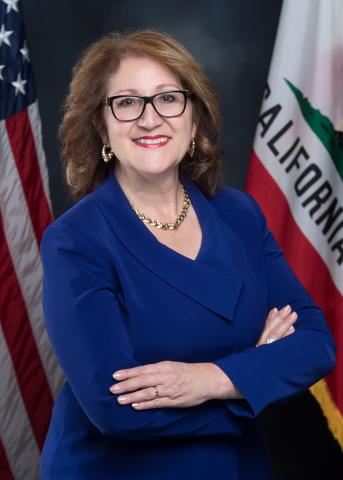
Photo of Eloise Reyes
D California Senate · District 29

Sen. Eloise Reyes

Compare
Total votes
40,179
all sessions
Attendance
93%
2,263 missed
Lower than 100% of chamber peers
With party
99%
of cast votes
Higher than 80% of chamber peers
Bipartisan score
0%
crosses aisle rarely
Lower than 88% of chamber peers
Sponsored
2,637
bills & resolutions
Lower than 93% of chamber peers
Committees
10
assignments
2,637 bills and resolutions

Sponsored bills

Total
2,637
Primary
384
Co-sponsor
2,253
This page
2,637
matching current filters
Co-sponsor SR 80
In committee · California Senate · Co-sponsor
Relative to César Chávez Day.

Maddy summarySenate Resolution 80 establishes February 26 as César Chávez Day to honor the life and legacy of the farmworker leader. The resolution recognizes his contributions to civil rights, including his role in organizing the United Farm Workers and advocating for improved labor conditions through peaceful means. It highlights key events in his life, such as his early struggles, his service in the Navy, and his leadership in historic strikes and marches that led to California's Agricultural Labor Relations Act. This legislative measure serves as a formal acknowledgment of his impact on farmworkers and Latino communities without altering any existing laws or policies.

In committee Mar 19, 2026 1 co-sponsor
Co-sponsor SR 76
Passed · California Senate · Co-sponsor
Relative to Women's History Month.

Maddy summaryThis Senate Resolution formally declares March 2026 as Women's History Month in California to honor the historical and ongoing contributions of women across all fields of society. The measure recognizes women's roles in building the nation and state while acknowledging that many of their achievements have been overlooked or undocumented. By joining the United States Congress and state organizations in this observance, the resolution aims to raise awareness of women's accomplishments and encourage continued efforts to address gender inequity. The text is a commemorative proclamation rather than a law that changes specific regulations or mandates new programs.

Passed Mar 16, 2026 1 co-sponsor
Co-sponsor SCR 115
Signed into law · California Senate · Co-sponsor
Relative to Wear Red Day.

Maddy summaryThis resolution designates February 6, 2026, as "Wear Red Day" in California to raise public awareness about heart health, aligning with the national Heart Disease Awareness initiative. It does not create new laws or requirements but formally recognizes the day for voluntary public observance by California residents. The measure is ceremonial and procedural, solely intended to highlight heart health awareness through state-level acknowledgment.

Signed into law Mar 4, 2026 1 co-sponsor
Co-sponsor SB 629
Vetoed · California Senate · Co-sponsor
Wildfires: fire hazard severity zones: post-wildfire safety areas.

Existing law requires the State Fire Marshal to identify areas of the state as moderate, high, and very high fire hazard severity zones based on specified criteria. Existing law requires the State Fire Marshal to periodically review the areas in the state identified as very high fire hazard severity zones, as specified. Existing law requires a local agency, within 30 days after receiving a transmittal from the State Fire Marshal that identifies those fire hazard severity zones, to make the information available for public review and comment, and to present the information in a format that is understandable and accessible to the general public, including, but not limited to, maps. Existing law requires a person who owns, leases, controls, operates, or maintains an occupied dwelling or structure in a very high fire hazard severity zone to take certain fire risk management measures, including maintaining defensible space of 100 feet from each side of the structure, except as provided. Existing law requires the Office of the State Fire Marshal to develop a model defensible space program, as provided, that includes, but is not limited to, specified components, including enforcement mechanisms for compliance with and maintenance of defensible space requirements. Existing law includes among these enforcement mechanisms, among other things, site inspections. This bill would require the factors on which the fire severity zones are based to include areas within the perimeter of a wildfire that burned 1,000 or more acres, destroyed more than 10 structures, or resulted in a fatality, and to include areas at risk for an urban conflagration that accounts for the potential for structures to serve as a fuel source that extends the ember cast outside of wildland areas and areas where agricultural land affects fire hazard. The bill would require the State Fire Marshal to publish the model and methodology used to develop the fire hazard severity zones on its internet website at least 60 days before finalizing those designations and to publish the model and methodology for specified factors whenever the State Fire Marshal reviews the fire severity zones. This bill would require the State Fire Marshal to designate any area that is within the perimeter of a wildfire described above occurring on or after January 1, 2025, as a post-wildfire safety area, as defined, and to transmit a map of the post-wildfire safety area to any local agency with jurisdiction over territory in the designated area within a specified timeframe. Within a certain timeframe following the transmission of the map by the State Fire Marshal, this bill would require the designation of a post-wildfire safety area to trigger the application of state fire protection standards, as defined, in the area. The bill would exempt any designation of a post-wildfire safety area by the State Fire Marshal from the rulemaking provisions of the Administrative Procedure Act. The bill would require a local agency to, within 10 business days of receiving the map, post a notice at the office of the county recorder, county assessor, and city or county planning agency identifying the location of the post-wildfire safety area, and to post the map on its internet website. By requiring local agencies to take specified actions regarding post-wildfire safety areas, this bill would impose a state-mandated local program. The Planning and Zoning Law requires the legislative body of a city or county to adopt a comprehensive, long-term general plan that includes various elements, including, among others, a safety element for the protection of the community from specified risks. Existing law requires, upon the next revision of the housing element on or after January 1, 2014, the safety element to be reviewed and updated as necessary to address the risk of fire for land classified as state responsibility areas and land classified as very high fire hazard severity zones, as defined. This bill would additionally require the safety element to be reviewed and updated as necessary to address the risk of fire for land classified as a post-wildfire safety area. By requiring local entities to take specified actions regarding the safety elements of their general plans, this bill would impose a state-mandated local program. The California Constitution requires the state to reimburse local agencies and school districts for certain costs mandated by the state. Statutory provisions establish procedures for making that reimbursement. This bill would provide that, if the Commission on State Mandates determines that the bill contains costs mandated by the state, reimbursement for those costs shall be made pursuant to the statutory provisions noted above.

Vetoed Mar 2, 2026 1 co-sponsor
Co-sponsor SB 616
Vetoed · California Senate · Co-sponsor
Community Hardening Commission: wildfire mitigation program.

(1) Existing law requires the Office of Emergency Services to enter into a joint powers agreement, as specified, with the Department of Forestry and Fire Protection to develop and administer a comprehensive wildfire mitigation program, known as the California wildfire mitigation financial assistance program, that, among other things, encourages cost-effective structure hardening and retrofitting that creates fire-resistant homes, businesses, and public buildings. This bill would require the joint powers authority to consider revising the wildfire mitigation program in accordance with prescribed community hardening standards and guidelines developed pursuant to the bill's provisions, as specified below. (2) Existing law establishes the Department of Insurance, headed by the Insurance Commissioner, which regulates insurers and insurance practices. Existing law generally regulates classes of insurance, including fire insurance. This bill would establish the Community Hardening Commission as an independent unit within the Department of Insurance, to be composed of specified members, including, among others, the Insurance Commissioner and the State Fire Marshal or their designee. The bill would require the Insurance Commissioner to be the chair of the commission. The bill would also require the commission to be advised by an advisory council consisting of specified members, including, among others, a local representative on behalf of a city or county, or association representing cities and counties, and a representative of the California Fire Chiefs Association. By imposing additional duties on local representatives of a city or county, this bill would impose a state-mandated local program. This bill would also require the Insurance Commissioner, beginning January 1, 2026, and at least quarterly thereafter, to convene the commission to perform specified duties, including developing new wildfire community hardening standards to reduce fire risk and improve access to fire insurance. The bill would require the commission to make certain recommendations to the Insurance Commissioner, the Office of Emergency Services, and the Department of Forestry and Fire Protection in accordance with specified standards. The bill would require the commission to consult with specified stakeholders, including those from public safety districts and the insurance industry, in performing the duties described above. The bill would require the commission, on or before July 1, 2027, to complete the new standards described above and submit a report to the Legislature on additional actions needed to support cities, counties, and members of those communities in home hardening and wildfire mitigation. The bill would also require the commission to periodically review and update those standards, as specified. The bill would further authorize the commission to take various other related actions, including entering into confidential data sharing agreements and coordinating with the relevant legislative committees to secure documentation or specified information. This bill would also require the Department of Insurance, on or before July 1, 2027, in consultation with the Department of Forestry and Fire Protection, the Office of Emergency Services, and the commission, to develop guidelines for state and local agencies to aggregate and make available data related to wildfire risk for purposes of a data sharing platform. (3) Existing constitutional provisions require that a statute that limits the right of access to the meetings of public bodies or the writings of public officials and agencies be adopted with findings demonstrating the interest protected by the limitation and the need for protecting that interest. This bill would make legislative findings to that effect. (4) The California Constitution requires the state to reimburse local agencies and school districts for certain costs mandated by the state. Statutory provisions establish procedures for making that reimbursement. This bill would provide that, if the Commission on State Mandates determines that the bill contains costs mandated by the state, reimbursement for those costs shall be made pursuant to the statutory provisions noted above.

Vetoed Mar 2, 2026 1 co-sponsor
Primary SB 485
Vetoed · California Senate · Lead sponsor
County public defender: appointment.

Existing law authorizes the board of supervisors of a county to establish the office of public defender for the county. Existing law requires that a public defender of the county serve at the board of supervisors' will if the public defender is to be appointed. This bill would instead only allow the board of supervisors to remove an appointed public defender from office by a 35 vote for neglect of duty, malfeasance or misconduct in office, or other good cause. The California Constitution requires the state to reimburse local agencies and school districts for certain costs mandated by the state. Statutory provisions establish procedures for making that reimbursement. This bill would provide that, if the Commission on State Mandates determines that the bill contains costs mandated by the state, reimbursement for those costs shall be made pursuant to the statutory provisions noted above.

Vetoed Mar 2, 2026 0 co-sponsors
Co-sponsor SB 36
Vetoed · California Senate · Co-sponsor
Price gouging: state of emergency.

(1) Existing law, the Unfair Competition Law, makes various practices unlawful and provides that a person who engages, has engaged, or proposes to engage in unfair competition is liable for a civil penalty, as specified. This bill would additionally make a person who violates those provisions, if the act or acts of unfair competition are perpetrated against one or more persons displaced due to a state of emergency or local emergency, as defined, at the time the violation occurred, liable for a civil penalty not to exceed $2,500 for each violation, as specified. (2) Existing law, the Consumers Legal Remedies Act, makes unlawful certain unfair methods of competition and certain unfair or deceptive acts or practices undertaken by a person in a transaction intended to result or that results in the sale or lease of goods or services to a consumer. These include, among others, making false or misleading statements of fact concerning reasons for, existence of, or amounts of, price reductions. This bill would additionally make it unlawful under those provisions to, among other things, price gouge during a state of emergency or local emergency. (3) Existing law requires the trier of fact, in a civil action to redress unfair or deceptive acts or practices or unfair competition brought by, on behalf of, or for the benefit of senior citizens, disabled persons, or veterans, to consider specified factors in determining the amount of a discretionary fine, penalty, or remedy to be imposed. Existing law authorizes the trier of fact, upon a finding of one of those factors, to impose a fine, penalty, or other remedy in an amount up to 3 times greater than the amount authorized by statute or the amount the trier of fact would impose in the absence of the affirmative finding. This bill would make those provisions applicable to persons displaced due to a state of emergency or a local emergency, as defined, at the time the violation occurred. (4) Under existing law, upon the proclamation of a state of emergency by the President of the United States or the Governor, or upon the declaration of a local emergency by the executive officer of any county, city, or city and county, and for 30 days or 180 days, as specified, following the proclamation or declaration of emergency, it is a misdemeanor for a person, contractor, business, or other entity to sell or offer to sell certain goods or services for a price of more than 10% greater than the price charged by that person immediately prior to the proclamation or declaration of emergency. Existing law authorizes the extension of these prohibitions by, among others, the Governor, if deemed necessary to protect the lives, property, or welfare of the citizens. Existing law defines "housing" as any rental housing with an initial lease term of no longer than one year. This bill would specify that an extension authorized by the Governor may be terminated by a concurrent resolution of the Legislature declaring it at an end. The bill would require a housing listing platform, during the period of 30 days following a proclamation of a state emergency or a declaration of a local emergency, as specified, to, among other things, remove a listing when notified by local, regional, or state law enforcement agencies that the price for a listing made available on the platform violates the price gouging provisions and establish and maintain a policy informing housing providers that listings are prohibited from violating the above-described provisions, as specified. This bill would define "housing listing platform" for these purposes as an internet website, application, or other similar centralized platform that acts as an intermediary between a consumer and another person which allows another person to list the availability of housing, lodging, or units for sale or for rent to a consumer. The bill would remove the one-year lease term limit from the definition of "housing."


Vetoed Mar 2, 2026 1 co-sponsor
Co-sponsor SCR 105
Passed · California Senate · Co-sponsor
Relative to human rights in Gaza.

This measure would, among other things, reaffirm California's commitment to universal human rights and call for the end to the humanitarian catastrophe in Gaza and the immediate release of all hostages.

Passed Feb 9, 2026 1 co-sponsor
Co-sponsor SR 71
Passed · California Senate · Co-sponsor
Relative to affordable homeownership.

Maddy summaryThis Senate Resolution recognizes the importance of affordable homeownership for economic stability and racial equity in California, particularly for lower-income families and communities of color. It highlights how nonprofit-led programs like Habitat for Humanity provide long-term affordability through mechanisms such as deed restrictions and shared equity while engaging local volunteers and strengthening neighborhoods. The resolution calls attention to California's low homeownership rate and housing shortage, urging state officials to prioritize affordable home supply in their policies and budget decisions.

Passed Feb 5, 2026 1 co-sponsor
Co-sponsor AB 868
Failed · California House · Co-sponsor
Primary elections: county officers: top two candidates.

Existing law provides that a candidate for a nonpartisan office who at a primary election receives votes on a majority of all the ballots cast for candidates for that office is elected to that office. This bill would exempt from that provision candidates for county nonpartisan offices, including a county office in a charter county, but not including a charter city and county, and would require the candidates who received the highest and second highest number of votes cast for nomination to that office to be placed on the ballot at the ensuing general election, except as specified. By imposing new duties on counties, including county elections officials, the bill would impose a state-mandated local program. The California Constitution requires the state to reimburse local agencies and school districts for certain costs mandated by the state. Statutory provisions establish procedures for making that reimbursement. This bill would provide that, if the Commission on State Mandates determines that the bill contains costs mandated by the state, reimbursement for those costs shall be made pursuant to the statutory provisions noted above.

Failed Feb 2, 2026 1 co-sponsor
Showing 71 to 80 of 2,637 bills
Previous 1 7 8 9 264 Next