

The California Constitution provides that people have the right of access to information concerning the conduct of the people's business. Various provisions of existing law, including the California Public Records Act, the Legislative Open Records Act, the Bagley-Keene Open Meeting Act, and the Ralph M. Brown Act, provide, with some exceptions, for public access to government records and meetings of government bodies. Among those acts, the California Public Records Act defines "person" to include any natural person, corporation, partnership, limited liability company, firm, or association. Existing law, the Administrative Procedure Act, governs, among other things, the procedures for the adoption, amendment, or repeal of regulations by state agencies and for the review of those regulatory actions by the Office of Administrative Law. Existing law, the California Environmental Quality Act (CEQA) , requires a lead agency, as defined, to prepare, or cause to be prepared, and certify the completion of an environmental impact report on a project that it proposes to carry out or approve that may have a significant effect on the environment or to adopt a negative declaration if it finds that the project will not have that effect. CEQA defines "person" to include any person, firm, association, organization, partnership, business, trust, corporation, limited liability company, company, district, county, city and county, city, town, and, among other things, the state. Existing law, the California Coastal Act of 1976, establishes the California Coastal Commission and prescribes procedures for the preparation, approval, and certification of local coastal programs that regulate development in the coastal zone, as defined, in jurisdictions that have a certified local coastal program. This bill would specify that, for purposes of the California Public Records Act, the Bagley-Keene Open Meeting Act, the Ralph M. Brown Act, the Legislative Open Records Act, the Administrative Procedure Act, the California Coastal Act of 1976, and CEQA, "person," "interested person," "participant," "member of the public," as applicable, and any other similar terms under each act referring to those who may engage with governmental agencies, do not include artificial intelligence, as defined, systems, autonomous agents, or robots, whether physical or digital. The bill would authorize governmental agencies to use a disclosure verification tool to determine if artificial intelligence is present. The bill would make findings and declarations related to these provisions. The bill would prohibit a person from knowingly using artificial intelligence to falsely represent that a natural person appeared before, submitted information to, or otherwise engaged with a governmental agency. The California Constitution requires local agencies, for the purpose of ensuring public access to the meetings of public bodies and the writings of public officials and agencies, to comply with a statutory enactment that amends or enacts laws relating to public records or open meetings and contains findings demonstrating that the enactment furthers the constitutional requirements relating to this purpose. This bill would make legislative findings to that effect.
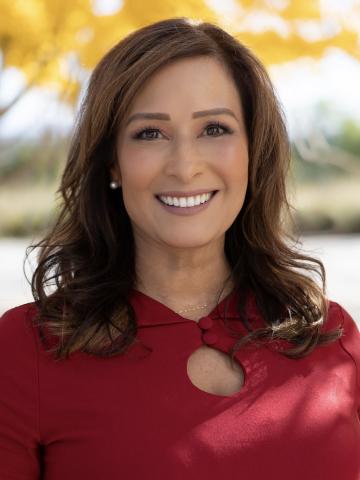
Sen. Rosilicie Ochoa Bogh
Sponsored bills
Existing law prohibits a school district from permitting access to pupil records to a person without written parental consent or under judicial order except as authorized by law. Existing law requires access to those particular records relevant to the legitimate educational interests of the pupil to, among other individuals, a pupil 14 years of age or older who is both a homeless child or youth, as defined, and an unaccompanied youth, as defined. This bill would additionally require access to those particular records relevant to the legitimate educational interests of the pupil to a pupil 14 years of age or older who is a foster youth, as defined. To the extent the bill would impose additional duties on school districts related to pupil record requests, the bill would impose a state-mandated local program. The California Constitution requires the state to reimburse local agencies and school districts for certain costs mandated by the state. Statutory provisions establish procedures for making that reimbursement. This bill would provide that, if the Commission on State Mandates determines that the bill contains costs mandated by the state, reimbursement for those costs shall be made pursuant to the statutory provisions noted above. This bill would incorporate additional changes to Section 49076 of the Education Code proposed by AB 2478 to be operative only if this bill and AB 2478 are enacted and this bill is enacted last.
Existing federal law, the Indian Gaming Regulatory Act of 1988, provides for the negotiation and execution of tribal-state gaming compacts for the purpose of authorizing certain types of gaming on Indian lands within a state. The California Constitution authorizes the Governor to negotiate and conclude those compacts, subject to ratification by the Legislature. Existing law expressly ratifies a number of tribal-state gaming compacts, and amendments to tribal-state gaming compacts, between the State of California and specified Indian tribes. The California Environmental Quality Act (CEQA) requires a lead agency to prepare, or cause to be prepared, and certify the completion of, an environmental impact report on a project, as defined, that it proposes to carry out or approve that may have a significant effect on the environment, as defined, or to adopt a negative declaration if it finds that the project will not have that effect. This bill would ratify the 5th amendment to the tribal-state gaming compact entered into between the State of California and the Picayune Rancheria of Chukchansi Indians of California, the tribal-state gaming compact between the State of California and the Fort Mojave Indian Tribe, and the first amendment to the tribal-state gaming compact entered into between the State of California and the Pechanga Band of Indians. The bill would provide that, in deference to tribal sovereignty, certain actions related to this amended compact are not projects for the purposes of CEQA. This bill would declare that it is to take effect immediately as an urgency statute.
Existing law vests the Public Utilities Commission with regulatory authority over public utilities, including electrical corporations and gas corporations. Existing law finds and declares that the California Council on Science and Technology (CCST) was organized as a nonprofit corporation at the request of the Legislature for the specific purpose of offering expert advice to the state government on public policy issues significantly related to science and technology. Existing law requests the CCST, every 3 years, to assess the infrastructure project types, scale, and pace necessary to achieve the state's energy, climate change, and air quality goals, as specified. This bill would require the CCST to establish, on or before March 1, 2027, upon appropriation by the Legislature, a program to, upon request of the Legislature, analyze legislation that would establish a mandated requirement or program, as defined, or otherwise affect electrical corporation or gas corporation ratepayers, as specified. The bill would require the analysis to include, among other things, whether the legislation will increase electricity or natural gas utility rates, and if so, would require an assessment of specified financial impacts. The bill would require the CCST to develop and implement conflict-of-interest provisions to prohibit a person from participating in an analysis for which the person knows or has reasons to know that the person has a material financial interest. The bill would repeal these provisions on January 1, 2032.
The California Environmental Quality Act (CEQA) requires a lead agency, as defined, to prepare, or cause to be prepared, and certify the completion of an environmental impact report on a project that it proposes to carry out or approve that may have a significant effect on the environment or to adopt a negative declaration if it finds that the project will not have that effect. CEQA also requires a lead agency to prepare a mitigated negative declaration for a project that may have a significant effect on the environment if revisions in the project would avoid or mitigate that effect and there is no substantial evidence that the project, as revised, would have a significant effect on the environment. CEQA exempts certain projects from its requirements and authorizes a lead agency, if it determines a certain project is exempt from CEQA, to file a notice of exemption, as provided. This bill would exempt from CEQA the closure of a railroad grade crossing by order of the Public Utilities Commission if the commission finds the crossing to present a threat to public safety. The bill would provide that the exemption is inapplicable to any crossing for high-speed rail or any crossing for a project carried out by the High-Speed Rail Authority. The bill would require the lead agency to file the notice of exemption with specified public entities, as provided. Because the bill would impose additional duties on a lead agency with regard to the filing of the notice of exemption, the bill would impose a state-mandated local program. The California Constitution requires the state to reimburse local agencies and school districts for certain costs mandated by the state. Statutory provisions establish procedures for making that reimbursement. This bill would provide that no reimbursement is required by this act for a specified reason. This bill would declare that it is to take effect immediately as an urgency statute.
Existing law establishes various programs and services for older adults, as defined, including, among other things, the Adult Education Program under the administration of the Chancellor of the California Community Colleges and the Superintendent of Public Instruction, and health promotion and preventative health services for older adults under the administration of the State Department of Public Health. This bill would authorize a local health department, area agency on aging, community college, public or private college, public or private university, or other appropriate county department, as determined by a county, to establish a Healthy Aging Community Partnership Program for older individuals designed to promote healthy aging, social engagement, and independent living in collaboration with relevant local entities, including school districts, libraries, faith institutions, and community organizations. The bill would authorize program activities to include, among other things, technology assistance, physical activity, and other community-based enrichment activities that support healthy aging and social connection. The bill would make implementation of these provisions subject to the availability of local resources and partnerships. The bill would specify that these provisions do not duplicate or supplant specified current adult education courses, classes, and services provided by the California Community Colleges, including through the Adult Education Program, as provided.
Existing law establishes the Board of Behavioral Sciences and sets forth its powers and duties, including, but not limited to, the licensing, registration, and regulation of marriage and family therapists, educational psychologists, clinical social workers, and professional clinical counselors. Existing law requires these licensees and registrants to provide a client with a written notice stating that the board receives and responds to complaints regarding services provided by the licensee or registrant and containing specified information about the licensee or registrant and their license. This bill would authorize the licensee or registrant, in specified practice settings, to exercise discretion whether to disclose any or all of the information about the licensee or registrant and their license in the notice based on individual safety concerns if certain requirements are met.
The Western Joshua Tree Conservation Act prohibits any person or public agency from importing into the state, exporting out of the state, or taking, possessing, purchasing, or selling within the state, a western Joshua tree or any part or product of the tree, except as specified. The act authorizes the Department of Fish and Wildlife to permit the taking of a western Joshua tree if specified conditions are met, including, but not limited to, that the permittee mitigates all impacts to, and taking of, the western Joshua tree through measures that are roughly proportional in extent to the impact of the authorized taking of the western Joshua tree. The act authorizes, in lieu of completing the mitigation measures, a permittee to elect to satisfy the mitigation obligation by paying fees pursuant to a specified fee schedule, as provided. Existing law requires the department to annually adjust the fees, as specified. This bill would require the department to consider making the fees proportionate to the impact of a project and the use of tiered fees by project type, size, or other criteria. This bill would incorporate additional changes to Section 1927.8 of the Fish and Game Code proposed by AB 1808 to be operative only if this bill and AB 1808 are enacted and this bill is enacted last.
Existing law requires the State Board of Education, on or before January 31, 2024, to appoint an independent panel of experts for the purpose of creating an approved list of evidence-based, culturally, linguistically, and developmentally appropriate screening instruments for pupils in kindergarten and grades 1 and 2 to assess pupils for risk of reading difficulties, including possible neurological disorders such as dyslexia, as specified. Existing law requires the governing board or body of a school district, county office of education, or charter school serving pupils in kindergarten or grades 1 or 2 to adopt, on or before June 30, 2025, one or more screening instruments from the approved list to assess pupils for risk of reading difficulties, as specified, and commencing no later than the 2025–26 school year, requires those local educational agencies to assess each pupil in kindergarten and grades 1 and 2 for risk of reading difficulties using the screening instrument or instruments adopted by the governing board or body of the local educational agency, as specified. This bill would, on or before July 31, 2027, require the state board to approve and the State Department of Education to post on its internet website criteria and guidance for selecting evidence-based, culturally, linguistically, and developmentally appropriate mathematics diagnostic assessments for pupils in kindergarten and grades 1 and 2 to assess pupils' mathematics knowledge and learning needs and identify pupils in need of additional support. The bill would require the department, on or before January 31, 2028, to (1) publish on its internet website a list of approved diagnostic assessments that meet the criteria, and (2) post on its internet website additional guidance to assist local educational agencies in selecting diagnostic assessments from the approved list, as provided. The bill would require the list to include diagnostic assessments that are developed for both English learners and non-English learners, as provided. The bill would require the state board and the department to solicit stakeholder input when developing the criteria, guidance, and list of diagnostic assessments pursuant to these provisions and to allow for public comment. The bill would authorize the department to periodically update the list of approved assessments. The bill would require the governing board or body of a school district, county office of education, or charter school serving pupils in kindergarten or grades 1 or 2 to adopt, on or before June 30, 2028, one or more diagnostic assessments from the published list of approved diagnostic assessments to assess pupils' mathematics knowledge and learning needs. The bill would authorize a local educational agency to satisfy this requirement by using a diagnostic assessment that is not on the published list if the governing board or body self-certifies that the assessment tool meets the above-described criteria. The bill, commencing no later than the 2028–29 school year, would require those local educational agencies to assess each pupil in kindergarten and grades 1 and 2 for mathematics knowledge using the diagnostic assessment or assessments adopted by the governing board or body of the local educational agency. The bill would require a local educational agency to provide parents or guardians of pupils eligible for assessment with information about the assessment and to make pupil results available to parents or guardians, as required by the state board, as provided. By imposing additional duties on local educational agencies, the bill would impose a state-mandated local program. The bill would require the department, by April 30, 2028, to curate and maintain on its internet website guidance and resources on evidence-based support, intervention, and instructional strategies aligned with the Mathematics Framework for California Public Schools: Kindergarten Through Grade Twelve. The California Constitution requires the state to reimburse local agencies and school districts for certain costs mandated by the state. Statutory provisions establish procedures for making that reimbursement. This bill would provide that, if the Commission on State Mandates determines that the bill contains costs mandated by the state, reimbursement for those costs shall be made pursuant to the statutory provisions noted above.
Existing law authorizes a chief administrative officer of a postsecondary educational institution, as defined, or an officer or employee designated by the chief administrative officer to maintain order on the school campus or facility, that has a student who has suffered unlawful violence or a credible threat of violence from any individual which can reasonably be construed to be carried out or to have been carried out at the school campus or facility, to seek a temporary restraining order and an injunction on behalf of the student and, at the discretion of the court, any number of other students at the campus or facility, as specified. This bill would also authorize a chief administrative officer of the postsecondary educational institution or an officer or employee designated by the chief administrative officer to maintain order on the school campus or facility to seek a temporary restraining order and an injunction on behalf of the postsecondary educational institution, upon becoming aware of unlawful violence or a credible threat of violence directed towards the postsecondary educational institution. The bill would require the Judicial Council, on or before January 1, 2028, to adopt or modify forms, as specified. The bill would also expand the course of conduct, as defined, for which a temporary restraining order can be sought to include making telephone calls or sending correspondence, including, but not limited to, email correspondence, to the postsecondary educational institution or its employees or students, or sending correspondence to the chief administrative officer. These provisions would become operative on July 1, 2029. This bill would incorporate additional changes to Section 527.85 of the Code of Civil Procedure proposed by AB 1753 to be operative only if this bill and AB 1753 are enacted and this bill is enacted last.