

Existing law provides that 8 hours of labor constitute a day's work unless it is otherwise expressly stipulated in a collective bargaining agreement, and requires that any work in excess of specified hours in one workday or one workweek be compensated at a rate higher than the regular rate of pay for the employee, as specified. Existing law authorizes, upon the proposal of an employer, employees of an employer to adopt a regularly scheduled alternative workweek that authorizes work by the affected employees for no longer than 10 hours per day within a 40-hour workweek without the payment to the affected employees of an overtime rate of compensation, as specified. Existing law prohibits an employer from employing an employee for a work period of more than 5 hours per day without providing the employee with a meal period, as specified, but, notwithstanding these provisions, existing law authorizes the Industrial Welfare Commission to adopt a working condition order permitting a meal period to commence after 6 hours of work if specified conditions are met. Under existing law, the Industrial Welfare Commission issues wage orders that regulates wages, hours, and working conditions in various occupations, including Wage Order No. 10-2001, which regulates the amusement and recreation industry. This bill would provide that these provisions do not apply to a person who is covered by a contract to play baseball at the minor league level with a labor organization that has at least 10 years of experience representing baseball players and who is compensated pursuant to the terms of a valid collective bargaining agreement that expressly provides for the wages, hours of work, working conditions of employees, payment for time worked during the off-season and spring training, and final and binding arbitration of disputes. The bill would require the Department of Industrial Relations to amend and republish Wage Order No. 10-2001 to provide that specified provisions of the wage order do not apply to a person subject to these provisions, as specified. Existing law requires an employer, semimonthly or at the time of payment of wages, to furnish an employee an accurate, itemized, written statement containing specified information regarding the amounts earned, hours worked, and the employee's identity, among other things, subject to certain variations. Existing law provides that an itemized wage statement furnished by an employer pursuant to these provisions is not required to show total hours worked by the employee if, among other things, the employee is exempt from the payment of minimum wage and overtime under specified law. This bill would provide that an itemized wage statement furnished by an employer pursuant to these provisions is not required to show total hours worked by an employee if the employee is exempt from the payment of minimum wage and overtime under the bill's provisions described above. Existing law, the Administrative Procedure Act, governs, among other things, the procedures for the adoption, amendment, or repeal of regulations by state agencies. Existing law also describes procedures for the promulgation of regulations by the Industrial Welfare Commission. This bill would exempt these provisions from the rulemaking procedures described above. Existing constitutional provisions require that a statute that limits the right of access to the meetings of public bodies or the writings of public officials and agencies be adopted with findings demonstrating the interest protected by the limitation and the need for protecting that interest. This bill would make legislative findings to that effect. This bill would declare that it is to take effect immediately as an urgency statute.
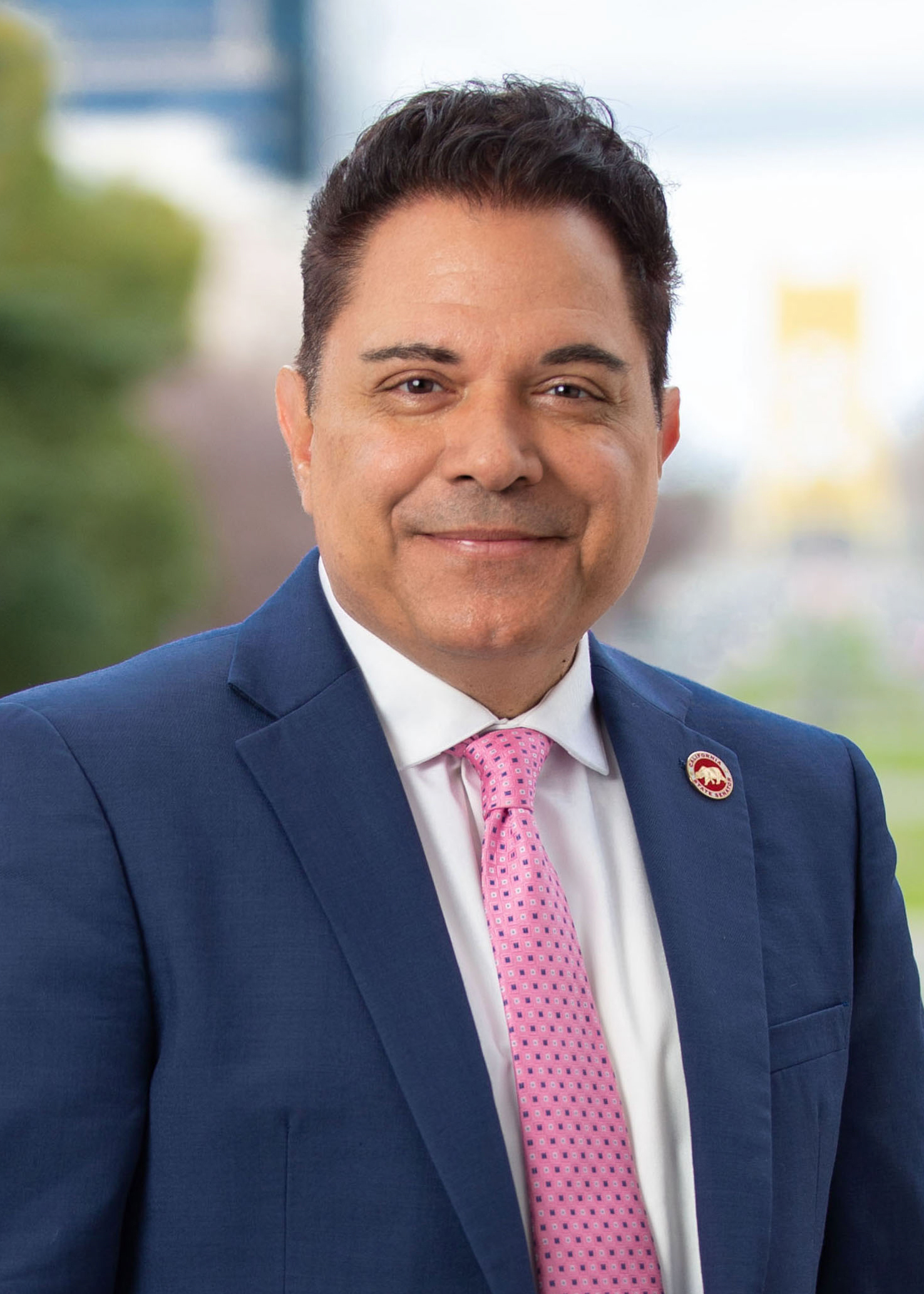
Sen. Steve Padilla
Sponsored bills
(1) Existing law establishes the California Community Colleges, under the administration of the Board of Governors of the California Community Colleges, as one of the segments of public postsecondary education in this state. Existing law establishes community college districts throughout the state and authorizes them to operate campuses and provide instruction to students. Existing law authorizes community college districts to admit nonresident students, and requires that nonresident students be charged a nonresident tuition fee unless an exemption applies. Existing law includes among these exemptions any nonresident who is both a citizen and resident of a foreign country if the nonresident has demonstrated a financial need, as specified. Existing law authorizes the attendance of certain exempted, nonresident students to be reported as resident full-time equivalent students (FTES) for state apportionment purposes. This bill would additionally exempt from the nonresident tuition fee a nonresident, low-income student who: (1) is a resident of Mexico, (2) registers for lower division courses at Cuyamaca College, Grossmont College, Imperial Valley College, MiraCosta College, Palomar College, San Diego City College, San Diego Mesa College, San Diego Miramar College, or Southwestern College, and (3) has residence within 45 miles of the California-Mexico border, as provided. The bill would, in any academic year, prohibit more than 150 FTES at each of these community colleges from being exempted from payment of the nonresident tuition fee. The bill would require the governing boards of the community colleges that choose to use this exemption to adopt one uniform policy to determine a student's residence classification, establish procedures for an appeal and review of the residence classification, and determine whether a student is low income. The bill also would require the governing boards of the community colleges that choose to use this exemption, as a condition of its students receiving the exemption described above, to collaborate with each other to ensure the adoption of the uniform policy. The bill would additionally authorize the attendance of nonresident students who receive this exemption to be reported as resident FTES for state apportionment purposes, as specified. The bill would provide that a nonresident student exempted under the above-mentioned exemption is not exempted pursuant to the existing provision involving any nonresident who is both a citizen and resident of a foreign country. The bill would require the governing boards of the community colleges that choose to use this exemption, on or before January 1, 2028, to jointly submit a report to the Legislature that includes, but is not limited to, the demographics, attendance rate, and class completion rate of nonresident students who receive the exemption described above. The bill's provisions would become inoperative on July 1, 2028, and would be repealed on January 1, 2029, as specified. The bill would also make related findings and declarations. (2) This bill would make legislative findings and declarations as to the necessity of a special statute for Cuyamaca College, Grossmont College, Imperial Valley College, MiraCosta College, Palomar College, San Diego City College, San Diego Mesa College, San Diego Miramar College, and Southwestern College. (3) This bill would not become operative unless the Board of Governors of the California Community Colleges enters into an attendance agreement that provides reciprocal rights to California residents attending a university in the State of Baja California that reasonably conforms to the benefits conferred upon residents of Mexico pursuant to certain provisions of the bill, as provided.
Existing law, commonly referred to as the Density Bonus Law, requires a city or county to provide a developer that proposes a housing development within the city or county with a density bonus, waivers or reductions of development standards, parking ratios, and other incentives or concessions, as specified, if the developer agrees to construct certain types of housing. Existing law prohibits a city, county, or city and county from applying any development standard that will have the effect of physically precluding the construction of a development meeting specified criteria at the densities or with the concessions or incentives permitted by the Density Bonus Law. Existing law defines "development standard" as including a site or construction condition, including, but not limited to, a height limitation, a setback requirement, a floor area ratio, an onsite open-space requirement, a minimum lot area per unit requirement, or a parking ratio that applies to a residential development pursuant to any ordinance, general plan element, specific plan, charter, or other local condition, law, policy, resolution, or regulation. This bill would specify that "development standard" for these purposes includes these standards adopted by the local government or enacted by the local government's electorate exercising its local initiative or referendum power, whether that power is derived from the California Constitution, statute, or the charter or ordinances of the local government. The bill would include findings that changes proposed by this bill address a matter of statewide concern rather than a municipal affair and, therefore, apply to all cities, including charter cities. This bill would incorporate additional changes to Section 65915 of the Government Code proposed by AB 323 and AB 1287 to be operative only if this bill and either or both of those bills are enacted and this bill is enacted last.
Existing law, the Lithium Extraction Tax Law, imposes a lithium extraction excise tax upon each metric ton of lithium carbonate equivalent extracted from geothermal fluid, spodumene ore, rock, minerals, clay, or any other naturally occurring substance in this state, as specified. Existing law requires the California Department of Tax and Fee Administration to administer and collect the tax and requires all collected revenues, less refunds and reimbursement to the department for administrative expenses, to be deposited into the Lithium Extraction Excise Tax Fund and disbursed in the manner prescribed. This bill would establish the Lithium Extraction Tax Citizens Oversight Committee within the department for the purposes of ensuring that certain revenues from the lithium extraction excise tax are appropriately distributed or allocated, as specified, and making recommendations on how to improve community engagement and maximize community benefits from the revenues. The bill would prescribe the composition of the committee, the appointment of committee members, meeting provisions, and specified department duties related to the committee. The bill would also require the committee to report its findings and recommendations on April 1, 2027, and annually thereafter, to the Legislature, as specified. The bill would also make related legislative findings and declarations.
Existing law authorizes the Department of General Services to lease real property under the jurisdiction of a state agency, department, or district agricultural association if the Director of General Services determines that the real property is of no immediate need to the state but may have a potential future use. Existing law prohibits the director from leasing specified real property, including lands under the jurisdiction of the State Coastal Conservancy or another state conservancy, the Department of Transportation, the California State University system, the Department of Parks and Recreation, or the Department of Fish and Wildlife. Existing law requires the lease to be set at the amount of the lease's fair market value, as determined by the Director of General Services. Existing law authorizes the director to determine the length of term or a use of the lease, and specify any other terms and conditions that are determined to be in the best interest of the state. This bill, as an exception to the prohibition on leasing certain properties described above and the requirement to set the lease at fair market value, would authorize the Department of General Services to enter into a lease for real property under the jurisdiction of a state agency, department, or district agricultural association, with the consent of that state agency, department, or district agricultural association at an amount less than fair market value in support of broadband infrastructure deployment to connect unserved or underserved locations in the state, if specified conditions are met, including that the lease terms enable the state to recover all direct costs for the term of the lease. Existing law requires the Department of General Services, for every new lease entered into under these provisions that exceeds 5 years, to annually transmit a report containing specified information to each house of the Legislature. This bill would require the report to also list every new lease that is below fair market value. The bill would require the report to include, for any lease to support broadband infrastructure deployment, a description of the related broadband infrastructure project, as specified.
Existing law, the Local Health Care District Law, authorizes the organization and incorporation of local health care districts and specifies the powers of those districts, including, among other things, the power to establish, maintain, and operate, or provide assistance in the operation of, one or more health facilities or health services, including, but not limited to, outpatient programs, services, and facilities; retirement programs, services, and facilities; chemical dependency programs, services, and facilities; or other health care programs, services, and facilities and activities at any location within or without the district for the benefit of the district and the people served by the district. This bill would form a local health care district in the County of Imperial, designated as the Imperial Valley Healthcare District, that includes all of the County of Imperial. The bill would require the initial board of directors of the Imperial Valley Healthcare District to be appointed from and by specified bodies, including among others, the Imperial County Board of Supervisors, the Pioneers Memorial Healthcare District Board of Directors, and the Heffernan Memorial Healthcare District Board of Directors. The bill would require the initial board of directors to recommend a permanent funding source mechanism to be presented to and approved by voters via ballot measure. The bill would require the initial board of directors to enter negotiations with El Centro Regional Medical Center to decide the terms of the acquisition of the hospital. The bill would require the initial board of directors to finalize the terms of the acquisition by November 5, 2024. The bill would require the City of El Centro to negotiate in good faith with the Imperial Valley Healthcare District. The bill would require the board of directors to hold a minimum of 3 public meetings between the effective date of the bill and January 1, 2025, as specified. The bill would require the board of directors to recommend to the Imperial County Local Agency Formation Commission (LAFCO) dates for the dissolutions of the Pioneers Memorial Healthcare District and Heffernan Memorial Healthcare District and would authorize the board to recommend separate dates for each district's dissolution. The bill would require, by January 1, 2025, the Imperial County LAFCO to dissolve the Heffernan Memorial Healthcare District and the Pioneers Memorial Healthcare District and would transfer the assets, rights, and responsibilities of the dissolved districts to the Imperial Valley Healthcare District. The bill would require, until the dissolution of both of those districts, the Heffernan Memorial Healthcare District to hold a temporary clerical role for the Board of Directors of the Imperial Valley Healthcare District, as specified. The bill would extend the terms of the board members of the districts being dissolved until their respective dissolution date or January 1, 2025, whichever occurs first. Following the appointment of the board of directors, the bill would require the board of directors to adopt a resolution to divide the Imperial Valley Healthcare District into voting districts for the purpose of electing members of the board of directors from and by the electors of those voting districts beginning with the next district election occurring after January 1, 2024. The bill would require the Imperial Valley Healthcare District to annually report to the Imperial County LAFCO regarding health care service provision in the district in 2024 and 2025, as specified. The bill would require the Imperial County LAFCO to conduct a municipal service review regarding health care service provision in the district by December 31, 2026, and by December 31 every 5 years thereafter. By imposing new duties on the City of El Centro and the County of Imperial, the bill would impose a state-mandated local program. This bill would state the intent of the Legislature that the Imperial Valley Healthcare District maximize the use of its assets to provide direct health care services to individuals within the district, as specified. This bill would make legislative findings and declarations as to the purpose of the bill and the necessity of a special statute for the County of Imperial. The California Constitution requires the state to reimburse local agencies and school districts for certain costs mandated by the state. Statutory provisions establish procedures for making that reimbursement. This bill would provide that, if the Commission on State Mandates determines that the bill contains costs mandated by the state, reimbursement for those costs shall be made pursuant to the statutory provisions noted above. This bill would declare that it is to take effect immediately as an urgency statute.
Existing law classifies controlled substances into 5 schedules and places the greatest restrictions and penalties on the use of those substances placed in Schedule I. Existing law classifies the drug fentanyl in Schedule II. Existing law prohibits a person from possessing for sale or purchasing for purposes of sale specified controlled substances, including fentanyl, and provides for imprisonment in a county jail for 2, 3, or 4 years for a violation of this provision. Existing law also imposes an additional term, and authorizes a trial court to impose a specified fine, upon a person who is convicted of a violation of, or of a conspiracy to violate, specified provisions of law with respect to a substance containing heroin, cocaine base, and cocaine, if the substance exceeds a specified weight. This bill would add fentanyl to the substances for which additional terms or fines can be imposed and would require a defendant who violates those laws with respect to a substance containing heroin, fentanyl, or cocaine, as specified, to know of the substance's nature or character as a controlled substance to be subjected to an additional term and authorized fine. By increasing the penalty for, and by changing the definition of, a crime, the bill would impose a state-mandated local program. The California Constitution requires the state to reimburse local agencies and school districts for certain costs mandated by the state. Statutory provisions establish procedures for making that reimbursement. This bill would provide that no reimbursement is required by this act for a specified reason.
Existing law requires every schoolbus, while being used for the transportation of school pupils at or below the 12th-grade level, to bear upon the front and rear of the bus a plainly visible sign containing the word "schoolbus" in letters not less than 8 inches in height. Existing law authorizes state funds, upon appropriation by the Legislature, to be distributed to the Superintendent of Public Instruction for distribution to certain local educational agencies for the purchase of low- or zero-emission schoolbuses that replace, or increase the number of, schoolbuses in the existing schoolbus fleet or for retrofitting existing schoolbuses to achieve reductions in emissions, as specified. This bill would authorize a school district, county office of education, or charter school using a zero-emission schoolbus to transport pupils at or below the 12th-grade level to place signage on the rear of the zero-emission schoolbus that identifies the schoolbus as a clean air zero-emission bus. The bill would also authorize the Department of the California Highway Patrol to issue guidelines governing the size and placement of that signage.
The False Advertising Law makes it a crime for a person or a firm, corporation, or association, or any employee thereof, to engage in specified false or misleading advertising practices. The Unfair Competition Law makes various unfair competition practices unlawful, including any unlawful, unfair, or fraudulent business act or practice and unfair, deceptive, untrue, or misleading advertising. The Consumers Legal Remedies Act makes unlawful certain unfair methods of competition and certain unfair or deceptive acts or practices undertaken by a person in a transaction intended to result or that results in the sale or lease of goods or services to a consumer, including advertising goods or services with intent not to sell them as advertised. Existing law authorizes a consumer who suffers damage as a result of the use or employment by a person of a method, act, or practice declared to be unlawful by that provision to bring an action against that person to recover or obtain certain relief, including actual damages of at least $1,000. This bill would, beginning on July 1, 2024, with specified exceptions, additionally make unlawful advertising, displaying, or offering a price for a good or service that does not include all mandatory fees or charges other than taxes or fees imposed by a government on the transaction, as specified. The bill would provide that assessments made pursuant to the California Tourism Marketing Act and the Parking and Business Improvement Area Law of 1989, and business assessments made pursuant to the Property and Business Improvement District Law of 1994, are fees imposed by a government on the transaction for purposes of these provisions. Existing law authorizes vehicle rental companies, when providing a quote or imposing charges for a rental, to separately state specified rates and charges that a renter must pay to hire or lease the vehicle for the period of time to which the rental rate applies. Existing law prohibits a rental company from imposing charges or fees in addition to the rental rate unless specified conditions are met. Existing law requires the rate advertisements of vehicle rental companies to include a disclaimer providing that additional mandatory charges may be imposed, as specified. This bill would provide that a rental company is not in violation of unlawful advertising, displaying, or offering a price for a good or service for excluding from the advertised, displayed, or offered price of a rental vehicle charges that are disclosed to the consumer in compliance with the above-described provisions. Existing law requires any solicitation to enter into a lease contract that includes the amount of any payment, as specified, to also state, among other things, "Plus tax and license" or a substantially similar statement, if amounts due for use tax, license fees, and registration fees are not included in the payments. This bill would specify that a lessor is not in violation of this prohibition against unlawfully advertising, displaying, or offering a price for a good or service because it excludes from the advertised, displayed, or offered lease payment a fee or charge in accordance with the provision described above. Existing law imposes specified requirements on dealers of motor vehicles and motorcycles sold or leased in this state. Existing law prohibits a holder of a dealer's license from doing specified acts, including advertising the total price of a vehicle without including all costs to the purchaser at time of sale, except taxes, vehicle registration fees, the California tire fee, emission testing charges not exceeding $50, actual fees charged for certificates, finance charges, and any dealer document processing charge or charge to electronically register or transfer the vehicle. This bill would specify that a holder of a dealer's license is not in violation of unlawful advertising, displaying, or offering a price for a good or service for excluding from the advertised, displayed, or offered price of a vehicle a tax, a vehicle registration fee, the California tire fee, an emission testing charge not exceeding $50, an actual fee charged for a certificate, a finance charge, or a dealer document processing charge or charge to electronically register or transfer the vehicle. Existing law imposes specified requirements on manufacturers of motor vehicles and motorcycles and prohibits a person from acting as a motor vehicle manufacturer without having first been issued a license by the Department of Motor Vehicles, as specified. This bill would specify that a motor vehicle manufacturer, or any other person, that advertises a motor vehicle manufacturer's suggested retail price (MSRP) set by an automobile manufacturer, or lease payments based upon an MSRP, does not, by doing so, violate the prohibition described above relating to unlawful advertising, displaying, or offering a price for a good or service.
Existing law requires the State Energy Resources Conservation and Development Commission (Energy Commission) to undertake various actions in furtherance of meeting the state's clean energy and pollution reduction objectives, including actions related to energy infrastructure. This bill would require the Energy Commission, as part of a specified 2024 energy policy review, in consultation with other appropriate state agencies to evaluate the feasibility, costs, and benefits of using wave energy and tidal energy, as specified. The bill would require the commission, in coordination and consultation with the California Coastal Commission, the Department of Fish and Wildlife, the Ocean Protection Council, and the State Lands Commission, to work with other state and local agencies and stakeholders to identify suitable sea space for offshore wave energy and tidal energy projects in state and federal waters. The bill would require the Energy Commission to submit a written report to the Governor and the Legislature on or before January 1, 2025, that includes a summary of findings from the evaluation and considerations that may inform legislative and executive actions, as specified.