

(1) Existing law establishes an accidental release prevention program for the state. Under that law, stationary sources subject to the accidental release prevention program may be required to prepare and submit a risk management plan (RMP) to prevent accidental releases of certain substances. Existing law imposes criminal penalties upon a stationary source that knowingly violates the requirements of the accidental release prevention program. Existing law requires an owner or operator of a stationary source that is engaged in certain petroleum-related activities, and with one or more covered processes that require the preparation and submission of an RMP, when contracting for the performance of construction, alteration, demolition, installation, repair, or maintenance work at the stationary source, to require that its contractors and any subcontractors use a skilled and trained workforce to perform all onsite work within an apprenticeable occupation in the building and construction trades. Existing law defines "skilled and trained workforce" to include, among other criteria, skilled journeypersons who are paid at least a rate equivalent to the applicable prevailing hourly wage rate. This bill would extend that workforce requirement to contracts awarded, extended, or renewed on or after January 1, 2024, by an owner or operator of a stationary source that is engaged in manufacturing hydrogen, biofuels, or certain specified chemicals, or in capturing, sequestering, or using carbon dioxide in specified conditions. By expanding the scope of a crime, and by extending the laws enforced by uniform program agencies to additional stationary source owners or operators and thereby imposing additional duties, the bill would impose a state-mandated local program. (2) Existing law provides for the establishment of apprenticeship programs in various trades, to be approved by the Chief of the Division of Apprenticeship Standards within the Department of Industrial Relations in any trade in the state or in a city or trade area whenever the apprentice training needs justify the establishment. Existing law requires apprentice training needs in the building and construction trades to be deemed to justify a new apprentice program only if one or more specified conditions are met, including, but not limited to, there being sufficient capacity for apprentices in a geographic area. This bill would require an above-described stationary source to be considered when determining whether an existing apprenticeship program has sufficient capacity for apprentices in a geographic area. (3) The California Constitution requires the state to reimburse local agencies and school districts for certain costs mandated by the state. Statutory provisions establish procedures for making that reimbursement. This bill would provide that no reimbursement is required by this act for specified reasons.
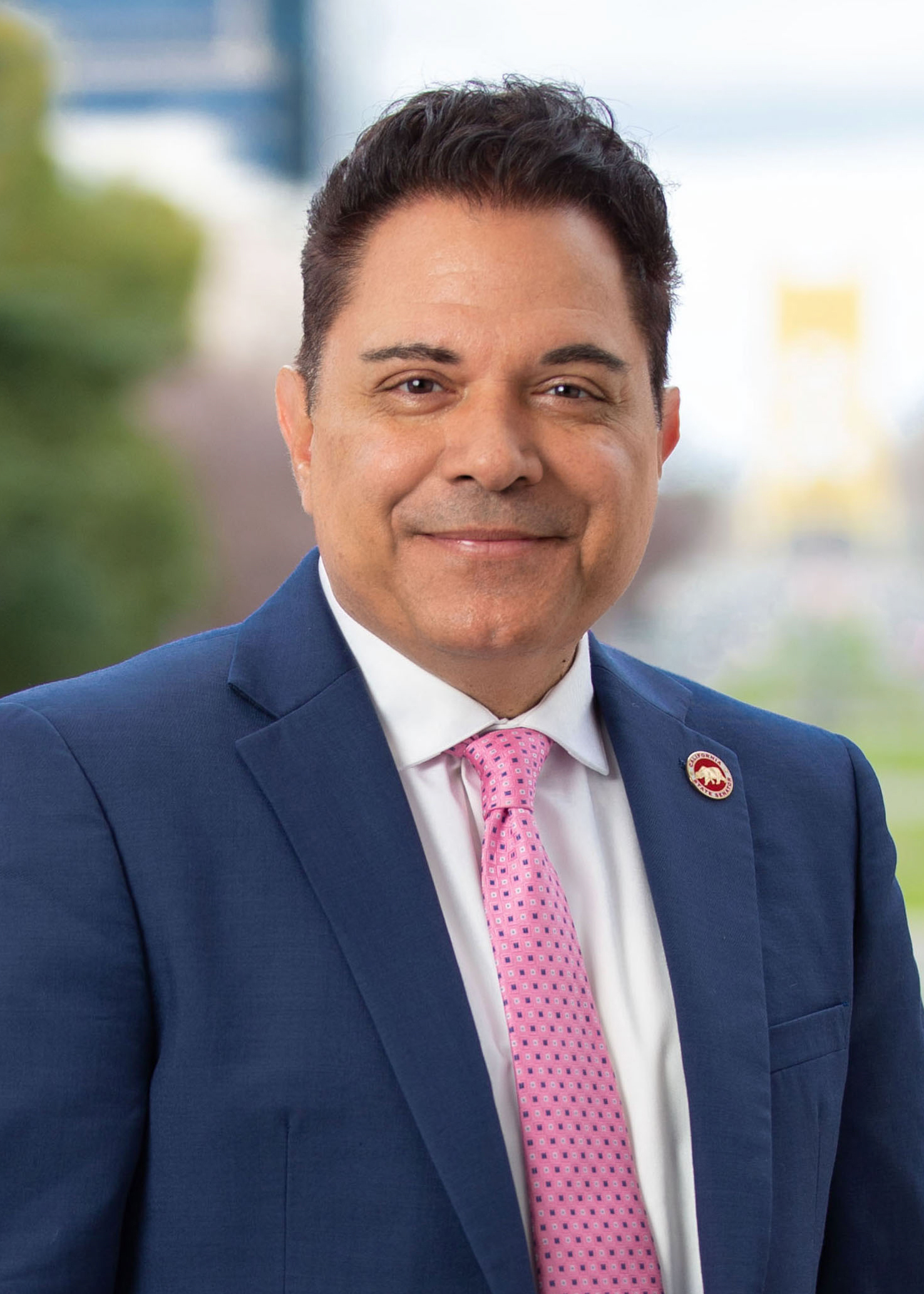
Sen. Steve Padilla
Sponsored bills
(1) Existing law provides for the licensure and regulation of various categories of medical professionals by boards within the Department of Consumer Affairs, including, among others, the Medical Board of California and the Dental Board of California. Existing law makes specified actions by licensed health care providers unprofessional conduct and, in certain cases, a criminal offense. This bill would prohibit a healing arts board, as defined, from denying an application for a license or imposing discipline upon a licensee or health care practitioner on the basis of a civil judgment, criminal conviction, or disciplinary action in another state if that judgment, conviction, or disciplinary action is based solely on the application of another state's law that interferes with a person's right to receive sensitive services, as defined, that would be lawful if provided in this state, regardless of the patient's location. The bill would further provide that the performance, recommendation, or provision of a legally protected health care activity by a licensee or health care practitioner acting within their scope of practice for a patient who resides in a state in which the performance, recommendation, or provision of that legally protected health care activity is illegal, does not, by itself, constitute professional misconduct, upon which discipline or other penalty may be taken. In this connection, the bill would define a "legally protected health care activity" to mean specified acts, including, among others, the exercise and enjoyment, or attempted exercise and enjoyment, by a person of rights related to reproductive health care services or gender-affirming health care services secured by the Constitution or laws of this state or the provision of by a health care service plan contract or a policy, or a certificate of health insurance, that provides for those services. (2) Existing law, the Confidentiality of Medical Information Act, generally prohibits a health care provider, health care service plan, contractor, or corporation from sharing, selling, using for marketing, or otherwise using medical information for a purpose not necessary to provide health care services to the patient. This bill would prohibit a person or business from collecting, using, disclosing, or retaining the personal information of a person who is physically located at, or within a precise geolocation of, a family planning center, as defined, except as necessary to perform the services or provide the goods requested. The bill would prohibit the sale or sharing of this information. The bill would authorize an aggrieved person or entity to institute and prosecute a civil action for a violation of these provisions and specify damages and costs authorized to be recovered. The bill would specify these provisions do not apply to a provider of health care, a health care service plan, or a contractor, as defined. (3) Existing law, the Reproductive Privacy Act, declares as contrary to the public policy of this state a law of another state that authorizes a person to bring a civil action against a person or entity that engages in certain activities relating to obtaining or performing an abortion. Existing law prohibits the state from applying an out-of-state law described above to a case or controversy in state court or enforcing or satisfying a civil judgment under the out-of-state law. This bill would state that California law governs in any action against a person who provides or receives by any means, including telehealth, reproductive health care services or gender-affirming health care services, as specified, if the care was legal in the state in which it was provided at the time of the challenged conduct. The bill would state that interference with the right to reproductive health care services, gender-affirming health care services, or gender-affirming mental health care services, as those terms are defined, is against the public policy of California. The bill would declare as a violation of public policy a public act or record of a foreign jurisdiction that, among other things, authorizes a person to bring a civil action against a person, provider, or other entity in California for, among other acts, seeking or providing reproductive health care services, gender-affirming health care services, or gender-affirmative mental health care services. The bill would declare the intent of the Legislature that nothing in the bill be interpreted to undermine or decrease any existing protections under California law. The bill would authorize a person to institute a civil action against a person who engages in abusive litigation, as defined, that infringes on or interferes with a legally protected health care activity, among other things. The bill would specify damages and costs authorized to be recovered and would specify circumstances under which a court may exercise jurisdiction over a person in such a civil action. The bill would authorize an aggrieved person, provider, or other entity, as defined, to move to modify or quash a subpoena issued in connection with abusive litigation. The bill would specify the laws of California govern in a case or controversy heard in California related to reproductive health care services, gender-affirming health care services, or gender-affirming mental health care services, except as required by federal law. (4) Existing law permits a judgment creditor to apply for the entry of a judgment based on a sister state judgment by filing an application with a superior court and requires the court clerk to enter a judgment based on the application. Existing law also requires courts to grant a stay enforcement of such a judgment under specified circumstances. This bill would additionally require a court to grant a stay of enforcement of a sister state judgment if a money judgment or lien on real property was obtained for the exercise of a right guaranteed by the United States Constitution, a right guaranteed by the California Constitution, or against a person or entity for aiding and abetting the exercise of those rights, as specified. (5) Existing law prohibits an abortion from being performed upon an unemancipated minor unless she first has given her written consent to the abortion and also has obtained the written consent of one of her parents or legal guardian. Existing law provides specified judicial procedures to be followed if one or both of the unemancipated pregnant minor's or her guardian refuse to consent or if the minor elects not to seek their consent. This bill would repeal these provisions. (6) Existing law defines murder as the unlawful killing of a human being, or a fetus, with malice aforethought. Existing law creates an exemption for a person who commits an act that results in the death of a fetus under specific circumstances, including if the act is solicited, aided, abetted, or consented to by the person pregnant with the fetus. This bill would expand that exemption to include a person pregnant with a fetus who committed the act that resulted in the death of the fetus. (7) Existing law prohibits a state or local law enforcement agency or officer from knowingly arresting or knowingly participating in the arrest of any person for performing, supporting, or aiding in the performance of an abortion or for obtaining an abortion, if the abortion is lawful in this state. Existing law prohibits a state or local public agency from cooperating with or providing information to an individual or agency from another state or a federal law enforcement agency, as specified, regarding a lawful abortion. This bill would additionally prohibit a state or local government employee or a person acting on behalf of the local or state government, among others, from providing information or expending resources in furtherance of an investigation that seeks to impose civil or criminal liability or professional sanctions on an individual for a legally protected health care activity that occurred in this state or that would be legal if it occurred in this state. The bill would require any out-of-state subpoena, warrant, wiretap order, pen register trap and trace order, or other legal process to include an affidavit or declaration under penalty of perjury that the discovery request is not in connection with an out-of-state proceeding relating to a legally protected health care activity, except as specified. By requiring an individual seeking to discovery under these provisions to declare certain conditions are present under penalty of perjury, this bill would expand the crime of perjury and impose a state-mandated local program. (8) Existing law authorizes a magistrate to issue a warrant, upon application by a bail bondsman, as described, for an individual fleeing bail in another state and found in this state upon a finding of probable cause for believing that the person is a fugitive. Existing law makes it a misdemeanor to take a person who is a fugitive admitted to bail in another state into custody, except pursuant to a magistrate's order. This bill would prohibit a magistrate from issuing a warrant for the arrest of an individual whose alleged offense or conviction is for the violation of the laws of another state that authorize a criminal penalty to an individual performing, receiving, supporting, or aiding in the performance or receipt of sexual or reproductive health care, including, but not limited to, an abortion, contraception, or gender-affirming care if the sexual or reproductive health care is lawful under the laws of this state, regardless of the recipient's location. The bill would make a bail bondsman who takes such an individual into custody without a warrant guilty of an infraction punishable by a fine of $5,000 and ineligible for and subject to forfeiture of specified licenses. The bill would create a civil cause of action for an individual taken into custody in violation of this provision. By creating a new crime, this bill would create a state-mandated local program. (9) Existing law, the Bail Fugitive Recovery Persons Act, prohibits a person, other than a certified law enforcement officer, from apprehending, detaining, or arresting a bail fugitive unless the person is a licensed bail fugitive recovery agent, or both a bail licensee and private investigator who are also bail fugitive recovery agents. Existing law makes a violation of the Bail Fugitive Recovery Persons Act a misdemeanor. This bill would prohibit a person authorized under the act from apprehending, detaining, or arresting a bail fugitive who has been admitted to bail in another state and whose alleged offense or conviction is for the violation of a law of another state that authorizes a criminal penalty to an individual performing, receiving, supporting, or aiding in the performance or receipt of sexual or reproductive health care, including, but not limited to, abortion, contraception, or gender-affirming care, if the sexual or reproductive health care is lawful under the laws of this state, regardless of the recipient's location. The bill would make a violation of this provision an infraction punishable by a fine of $5,000 and make the authorized individual ineligible for and subject to forfeiture of specified licenses. The bill would create a civil cause of action for an individual taken into custody in violation of this provision. By expanding the application of a crime, this bill would create a state-mandated local program. (10) Existing law establishes a process by which a material witness in this state may be ordered to attend and testify in a pending prosecution or grand jury in another state. This bill would prohibit a judge from ordering a witness to appear pursuant to these provisions if the criminal prosecution is based on the laws of another state that authorizes a criminal penalty to an individual performing, receiving, supporting, or aiding in the performance or receipt of sexual or reproductive health care, including, but not limited to, an abortion, contraception, or gender-affirming care if the sexual or reproductive health care is lawful under the laws of this state. (11) Existing law provides for the California Work Opportunity and Responsibility to Kids (CalWORKs) program, under which each county provides cash assistance and other benefits to qualified low-income families and individuals. Existing federal law establishes the federal Supplemental Nutrition Assistance Program (SNAP) , known in California as CalFresh, under which supplemental nutrition assistance benefits allocated to the state by the federal government are distributed to eligible individuals by each county. Existing federal regulations disqualify a fleeing felon, as defined, from receiving benefits under the CalFresh program. This bill would require a determination that a person is fleeing to avoid prosecution for purposes of eligibility in the CalWORKs program if a federal, state, or local law enforcement officer in their official capacity presents an outstanding felony arrest warrant containing specified National Crime Information Center Uniform Offense Classification Codes. (12) Existing law refers to "unborn children" and "unborn persons" in various contexts, including, among others, defining low-risk pregnancy conditions for determining the scope of authorization of a certificate to practice nurse-midwifery, defining active labor for health facility licensing provisions, and defining spouse for California State Teachers' Retirement System benefits. This bill would replace "unborn child" and "unborn person" with "fetus" in those provisions. (13) Existing law also refers to "unborn persons" in various contexts, including naming unknown defendants in real property actions, allowing a court to appoint a guardian ad litem to advocate for inadequately represented interests in probate proceedings, allowing a guardian ad litem to give consent on behalf of a beneficiary who lacks legal capacity, and providing an exception for requiring a personal representative to file an account of the distributions of a decedent's estate. This bill would replace "unborn person" with "unborn beneficiary" in those provisions. (14) The California Constitution requires the state to reimburse local agencies and school districts for certain costs mandated by the state. Statutory provisions establish procedures for making that reimbursement. This bill would provide that no reimbursement is required by this act for a specified reason. (15) This bill would incorporate additional changes to Section 2746.5 of the Business and Professions Code proposed by SB 667 to be operative only if this bill and SB 667 are enacted and this bill is enacted last.
Existing law regulates licensed firearms dealers and provides that a license is subject to forfeiture for a breach of specified prohibitions in existing law. Existing law authorizes the temporary transfer of a firearm without a firearms dealer's participation to a person who is 18 years of age or older for safekeeping to prevent it from being used to attempt suicide, as specified. This bill would require a licensed firearms dealer, as specified, to accept for storage a firearm transferred by an individual to prevent it from being accessed or used during periods of crisis or heightened risk to the owner of the firearm or members of their household. The bill would also authorize a licensed firearms dealer to accept for storage a firearm for a lawful purpose not otherwise stated in the law. The bill would make these provisions subject to certain conditions and would establish a procedure for the return of a firearm to the original transferor, including situations when a dealer cannot legally return a firearm. A violation of various provisions involving the transfer of firearms is a crime. By changing the scope of these offenses, this bill would impose a state-mandated local program. The bill would authorize a firearms dealer to charge a reasonable fee, as specified, for the storage of a firearm pursuant to these provisions. The bill would also state that it has no affect on the liability under existing law, if any, of a firearms dealer who returns a stored firearm to its owner, as specified. The California Constitution generally provides that the Legislature has no power to authorize lotteries and shall prohibit the sale of lottery tickets in the state, except for private, nonprofit, eligible organizations to conduct raffles as a funding mechanism to provide support for their own or another private, nonprofit, eligible organization's beneficial and charitable works, subject to certain conditions. This bill would prohibit a licensed firearms dealer from offering an opportunity to win an item of inventory in a game dominated by chance and would except from this prohibition nonprofit organizations under certain circumstances. Existing law, subject to exceptions, provides that any person who has been convicted of certain misdemeanors may not, within 10 years of the conviction, own, purchase, receive, possess, or have under their custody or control, any firearm and makes a violation of that prohibition a crime. Existing law authorizes a court in certain circumstances to reduce, eliminate, or condition that prohibition. This bill would, subject to exceptions, provide that any person convicted of a misdemeanor violation of the above-described prohibition on or after January 1, 2024, and who within 10 years of that conviction owns, purchases, receives, possesses, or has under their custody or control, any firearm guilty of a misdemeanor or a felony. Because a violation of these provisions would be a crime, and because this bill would expand the application of the crime to a larger class of potential offenders, this bill would impose a state-mandated local program. The California Constitution requires the state to reimburse local agencies and school districts for certain costs mandated by the state. Statutory provisions establish procedures for making that reimbursement. This bill would provide that no reimbursement is required by this act for a specified reason. This bill would incorporate additional changes to Section 11106 of the Penal Code proposed by AB 732 to be operative only if this bill and AB 732 are enacted and this bill is enacted last. This bill would also incorporate additional changes to Section 29805 of the Penal Code proposed by SB 2 to be operative only if this bill and SB 2 are enacted and this bill is enacted last.
Existing law establishes the California Violence Intervention and Prevention (CalVIP) Grant Program, administered by the Board of State and Community Corrections, to award competitive grants for the purpose of violence intervention and prevention. Existing law imposes various taxes, including taxes on the privilege of engaging in certain activities. The Fee Collection Procedures Law, the violation of which is a crime, provides procedures for the collection of certain fees and surcharges. This bill, the Gun Violence Prevention and School Safety Act, would, commencing July 1, 2024, impose an excise tax in the amount of 11% of the gross receipts from the retail sale in this state of a firearm, firearm precursor part, and ammunition, as specified. The tax would be collected by the state pursuant to the Fee Collection Procedures Law. The bill would require that the revenues collected be deposited in the Gun Violence Prevention and School Safety Fund, which the bill would establish in the State Treasury. The bill would require the moneys received in the fund to be used to fund various gun violence prevention, education, research, response, and investigation programs, as specified. The bill would require the Director of Finance to transfer, as a loan, $2,400,000 from the General Fund to the California Department of Tax and Fee Administration to implement these provisions, as specified. The bill would require each licensed firearms dealer, firearms manufacturer, and ammunition vendor to register with the department for a certificate, as specified. The bill would also provide procedures for the issuance, revocation, and reinstatement of a permit. This bill would include a change in state statute that would result in a taxpayer paying a higher tax within the meaning of Section 3 of Article XIIIA of the California Constitution, and thus would require for passage the approval of 23 of the membership of each house of the Legislature. Because this bill would expand the scope of the Fee Collection Procedures Law, the violation of which is a crime, this bill would impose a state-mandated local program. The California Constitution requires the state to reimburse local agencies and school districts for certain costs mandated by the state. Statutory provisions establish procedures for making that reimbursement. This bill would provide that no reimbursement is required by this act for a specified reason.
Existing law requires the State Department of Education to develop resources or, as appropriate, update existing resources for in-service training on schoolsite and community resources for the support of lesbian, gay, bisexual, transgender, queer, and questioning (LGBTQ) pupils, and strategies to increase support for LGBTQ pupils and thereby improve overall school climate. Existing law requires those resources to be designed for use in schools operated by a school district or county office of education and charter schools serving pupils in grades 7 to 12, inclusive. This bill would require the Superintendent of Public Instruction, on or before July 1, 2024, to convene an advisory task force to identify the needs of lesbian, gay, bisexual, transgender, queer, questioning, and plus (LGBTQ+) pupils and to make recommendations to assist in implementing supportive policies and initiatives to address LGBTQ+ pupil education and well-being, as provided. The bill would require advisory task force members to be selected by the Superintendent, as provided. The bill would require the advisory task force to, on or before January 1, 2026, report their findings and recommendations to the Legislature, the Superintendent, and the Governor.
Existing law requires every restroom of every public and private school maintaining any combination of classes from kindergarten to grade 12, inclusive, to be maintained and cleaned regularly, fully operational, and stocked at all times with toilet paper, soap, and paper towels or functional hand dryers, and kept open during school hours when pupils are not in classes. Existing law requires that a sufficient number of restrooms be kept open during school hours when pupils are in classes. Existing law authorizes a school to temporarily close a restroom as necessary for pupil safety or as necessary to repair the facility. This bill would revise the conditions under which a restroom is authorized to be temporarily closed to instead be as necessary (1) for a documented pupil safety concern, (2) for an immediate threat to pupil safety, or (3) to repair the facility. The bill would require, on or before July 1, 2026, each school district, county office of education, and charter school, including charter schools operating in a school district facility, maintaining any combination of classes from grades 1 to 12, inclusive, to provide and maintain at least one all-gender restroom for voluntary pupil use at each of its schoolsites that meet specified criteria. The bill would require the all-gender restroom to meet certain requirements, including, among other things, that it has signage identifying the bathroom facility as being open to all genders and is unlocked, unobstructed, and easily accessible by any pupil. The bill would require the local educational agency to designate a staff member to serve as a point of contact for these purposes and to post a notice regarding these requirements in a prominent and conspicuous location outside at least one all-gender restroom. The bill would require these requirements to be subject to compliance review, as specified. By imposing additional requirements on local educational agencies, the bill would impose a state-mandated local program. The bill would authorize a local educational agency to use an existing restroom to satisfy these requirements, as provided. The bill would require the State Department of Education to post on its internet website guidance for implementation of these provisions. Existing law, the Leroy F. Greene School Facilities Act of 1998 (the Greene Act) , requires the State Allocation Board to allocate to applicant school districts prescribed per-unhoused-pupil state funding for the construction and modernization of school facilities, including hardship funding, and supplemental funding for site development and acquisition. This bill would require the governing board of a school district, a county board of education, or the governing body of a charter school that applies for state funding pursuant to the Greene Act for a school modernization project to include, as part of the modernization project, an all-gender restroom designed exclusively for pupil use for specified schoolsites, as provided. The bill would provide that these provisions apply only to those projects that are submitted for approval on or after July 1, 2026. The California Constitution requires the state to reimburse local agencies and school districts for certain costs mandated by the state. Statutory provisions establish procedures for making that reimbursement. This bill would provide that, if the Commission on State Mandates determines that the bill contains costs mandated by the state, reimbursement for those costs shall be made pursuant to the statutory provisions noted above.
Existing law authorizes a person to file a petition with the superior court seeking a judgment recognizing their change of gender to female, male, or nonbinary, including a person who is under 18 years of age. Existing law authorizes a person to file a single petition to simultaneously change the petitioner's name and recognize the change to the petitioner's gender and sex identifier, as specified. This bill would require any petition for a change of gender and sex identifier or a petition for change of gender, sex identifier, and name filed by a person under 18 years of age, and any papers associated with the proceeding, to be kept confidential by the court. The bill would require the court to limit access to these records to specified individuals, including, among others, the minor, the minor's parents, and their attorneys. Existing constitutional provisions require that a statute that limits the right of access to the meetings of public bodies or the writings of public officials and agencies be adopted with findings demonstrating the interest protected by the limitation and the need for protecting that interest. This bill would make legislative findings to that effect.
Existing law establishes the system of public elementary and secondary schools in this state and provides for the establishment of local educational agencies to operate these schools and provide instruction to pupils. Existing law states the policy of the State of California to afford all persons in public schools, regardless of their disability, gender, gender identity, gender expression, nationality, race or ethnicity, religion, sexual orientation, or any other specified characteristic, equal rights and opportunities in the educational institutions of the state. Existing law requires, no later than July 1, 2021, the State Department of Education to develop resources or, as appropriate, update existing resources for in-service training on schoolsite and community resources for the support of lesbian, gay, bisexual, transgender, queer, and questioning (LGBTQ) pupils, and strategies to increase support for LGBTQ pupils, as specified. Existing law encourages schools operated by a school district or county office of education and charter schools to use those resources to provide training at least once every 2 years to teachers and other certificated employees of those schools that serve pupils in grades 7 to 12, inclusive. This bill would require the State Department of Education, on or before July 1, 2025, to finalize the development of an online training delivery platform and an online training curriculum to support LGBTQ cultural competency training for teachers and other certificated employees, as specified. The bill would delete the above-described encouragement and instead would require, commencing with the 2025–26 school year and ending with the completion of the 2029–30 school year, each local educational agency, as defined, serving pupils in grades 7 to 12, inclusive, to use the online training delivery platform and curriculum, or an in-service alternative, to provide at least one hour of required training annually to teachers and other certificated employees at those schools, as provided. The bill would require each local educational agency to maintain records documenting the training, as provided. The bill would require the department to monitor compliance with the training requirement as part of the department's annual compliance monitoring of state and federal programs. The bill would require the department, within 9 months of the completion of the 5-year training period, to report data from that compliance monitoring to the Legislature, and post the report on the department's internet website, as provided. By imposing additional duties on local educational agencies, the bill would impose a state-mandated local program. The bill would require these provisions to be known as the Safe and Supportive Schools Act. This bill would make these requirements inoperative on July 1, 2031, and would repeal them as of January 1, 2032. The California Constitution requires the state to reimburse local agencies and school districts for certain costs mandated by the state. Statutory provisions establish procedures for making that reimbursement. This bill would provide that, if the Commission on State Mandates determines that the bill contains costs mandated by the state, reimbursement for those costs shall be made pursuant to the statutory provisions noted above.
The measure would apply to the United States Congress to call a constitutional convention under Article V of the Constitution of the United States for the purpose of proposing a constitutional amendment relating to firearms, as specified.
Existing law establishes the California Workforce Development Board as the body responsible for assisting the Governor in the development, oversight, and continuous improvement of California's workforce investment system and the alignment of the education and workforce investment systems to the needs of the 21st century economy and workforce. Existing law establishes the Office of Planning and Research within the Governor's office to provide long-range planning and research and to serve as the comprehensive state planning agency. This bill would establish the Equitable Access to Job Opportunity Pilot Program, to be operative from January 1, 2025, to January 1, 2026, inclusive, to provide individuals without postsecondary education degrees from rural or low-income communities with financial aid for workforce development training and education to gain employment in key industries. The bill would require the board and the office to administer the pilot program, including identifying key industries and developing partnerships, pathways, and opportunities to ensure local development of those industries, as specified. The bill would require the board and the office to work with local stakeholders, including local workforce development boards, in securing job opportunities and building pathways and partnerships, as specified. The bill would require the board and the office, on or before January 1, 2027, to report to the Legislature on the effectiveness of the program, as specified. The bill would make the bill's provisions operative only upon appropriation by the Legislature. The bill would repeal the bill's provisions on January 1, 2028.