

The Personal Income Tax Law and the Corporation Tax Law allow various credits against the taxes imposed by those laws. This bill would allow a credit against those taxes to a qualified taxpayer for each taxable year beginning on or after January 1, 2023, and before January 1, 2028, except as provided, in an amount equal to the qualified wages paid to a qualified full-time employee, as defined, hired prior to January 1, 2028. The bill would define "qualified taxpayer" for this purpose to mean a person or entity that is located in a designated census tract, as defined, and is primarily engaged in the business of lithium extraction or electric battery manufacturing. The bill would define "qualified wages" as those wages paid or incurred for work performed by a qualified full-time employee within the 36-month period beginning on the first day the employee commences employment with the qualified taxpayer that exceed 150% of minimum wage but do not exceed 350% of minimum wage. The bill would require that, if a credit is allowed to a qualified taxpayer, and the employment of the qualified employee is terminated within the first 36 months of employment, the tax imposed in the year of termination is increased by the amount of the credit received, except as provided. Existing law requires a bill authorizing a new tax expenditure to contain, among other things, specific goals, purposes, and objectives the tax expenditure will achieve, detailed performance indicators, and data collection requirements. This bill would include additional information required for any bill authorizing a new tax expenditure. This bill would take effect immediately as a tax levy.
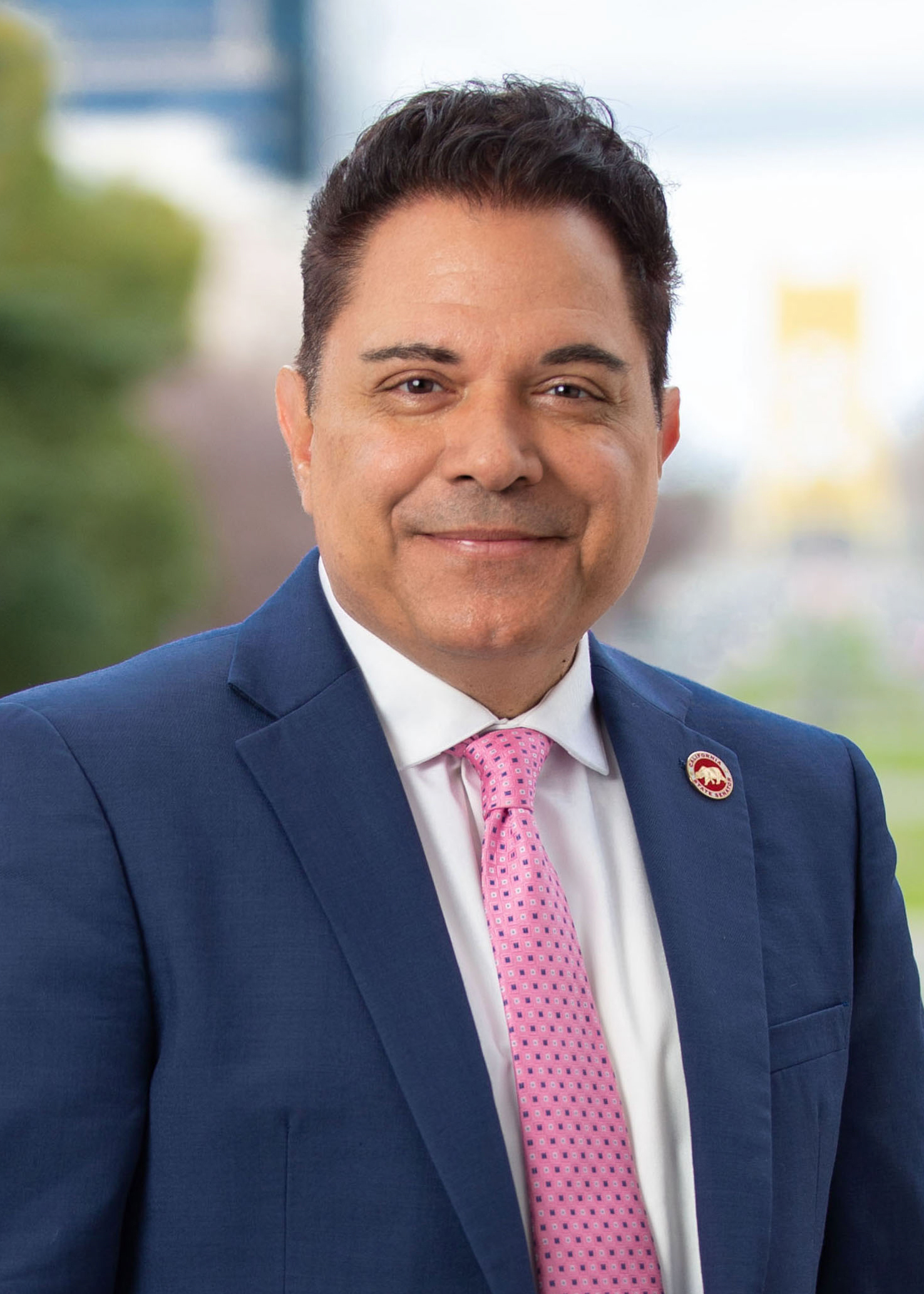
Sen. Steve Padilla
Sponsored bills
Existing law authorizes the Governor's Office of Business and Economic Development (office) to develop content on its internet website or through other mediums to be used for public dissemination, through outreach activities, in order to provide information and resources to inform the general public about place-based and other geographically targeted economic development programs, including California Promise Zones and California Opportunity Zones. Existing law requires the office to convene, at least annually, representatives from various programs and agencies across the state and from various federal programs and agencies for the purpose of discussing how California can leverage Promise Zones and Opportunity Zones to meet state and local community and economic development needs. This bill would require the office, subject to available funding, to provide technical assistance to local and regional entities and collaboration on how to establish and maintain regional economic hubs through the designation of place-based economic development zones. The bill would require the director of the office, by January 15, 2024, to designate an economic development liaison to assist entities in the Eastern Coachella Valley and the Imperial Valley to establish a Southeast California Desert Valleys Economic Zone. The bill would also make clarifying changes.
Existing law establishes several programs pertaining to vehicles and reducing pollution, such as the Clean Transportation Program, and various zero-emission vehicle programs administered by the State Air Resources Board, including the Medium- and Heavy-Duty Zero-Emission Vehicle Fleet Purchasing Assistance Program. With regard to zero-emission vehicles or plug-in hybrid electric vehicles, existing law requires the Department of General Services to develop prescribed criteria to evaluate bidders when awarding contracts for commercial rental car services. By January 1, 2025, this bill would require the Department of General Services to report to the Legislature on a specified study regarding the supply chain for lithium batteries in electric vehicles, and recommendations for any legislation or policy related to this supply chain to advance state environmental and economic development goals.
(1) Existing law requires all California state-owned or state-run institutions, except segments of public postsecondary education or local educational agencies, as defined, that purchases agricultural food products to implement necessary practices to achieve a goal of ensuring that at least 60% of the agricultural food products that it purchases in a calendar year are grown or produced in the state by December 31, 2025. Existing law establishes within the Department of Food and Agriculture a public and private collaboration known as the "Buy California Program" to encourage consumer nutritional and food awareness and to foster purchases of high-quality California agricultural products. This bill would require a grower or producer that sells bell peppers, blueberries, dates, honeydew melons, lemons, olives, or table grapes to a distributor, as defined, to attest to the distributor under penalty of perjury, using a self-attestation form developed by the department, whether the agricultural product was produced in compliance with specified California health and environmental protection laws and specified California labor laws, as defined. By expanding the crime of perjury, this bill would create a state-mandated local program. The bill would require a distributor that sells one of those agricultural products to a retailer with more than one retail location to provide to the retailer the self-attestation form received from a grower or producer. The bill would prohibit a distributor from selling the agricultural products to these retailers if the self-attestation form provided to the distributor is incomplete or indicates that the agricultural products were not produced in compliance with the above-described laws. The bill would provide that a violation of these provisions is subject to a $500 civil penalty for each violation. The bill would require the department to adopt regulations to administer and enforce these requirements, as specified. The bill would prohibit the department from imposing additional fees on growers or producers to meet the requirements of this bill. (2) The California Constitution requires the state to reimburse local agencies and school districts for certain costs mandated by the state. Statutory provisions establish procedures for making that reimbursement. This bill would provide that no reimbursement is required by this act for a specified reason.
Existing law establishes the Medi-Cal program, which is administered by the State Department of Health Care Services and under which qualified low-income individuals receive health care services. The Medi-Cal program is, in part, governed and funded by federal Medicaid program provisions. Under existing law, one of the methods by which Medi-Cal services are provided is pursuant to contracts with various types of managed care plans. Existing law, inoperative on January 1, 2023, and to be repealed on January 1, 2024, imposed a managed care organization (MCO) provider tax, administered and assessed by the department, on licensed health care service plans and managed care plans contracted with the department to provide full-scope Medi-Cal services. Those provisions set forth taxing tiers and corresponding per enrollee tax amounts for the 2019–20, 2020–21, and 2021–22, fiscal years, and the first 6 months of the 2022–23 fiscal year. Under those provisions, all revenues, less refunds, derived from the tax were deposited into the State Treasury to the credit of the Health Care Services Special Fund, and continuously appropriated to the department for purposes of funding the nonfederal share of Medi-Cal managed care rates, as specified. Those inoperative provisions authorized the department, subject to certain conditions, to modify or make adjustments to any methodology, tax amount, taxing tier, or other provision relating to the MCO provider tax to the extent the department deemed necessary to meet federal requirements, to obtain or maintain federal approval, or to ensure federal financial participation was available or was not otherwise jeopardized. Those provisions required the department to request approval from the federal Centers for Medicare and Medicaid Services (CMS) as was necessary to implement those provisions. In April 2020, CMS approved a modified tax structure that the department had submitted as part of a waiver request, involving taxing tiers that were based on cumulative Medi-Cal or other member months for certain fiscal years. This bill would extend the above-described MCO provider tax to an unspecified date and would make conforming changes to the timeline of related provisions by incorporating other unspecified dates. The bill would reorganize the taxing tiers of the MCO provider tax, in a manner consistent with the above-described modified tax structure under the previous waiver, but with unspecified tax rate amounts. By extending the authority to fund the nonfederal share of Medi-Cal managed care rates from the continuously appropriated fund, the bill would make an appropriation. This bill would make these provisions inoperative on an unspecified date, and would repeal the provisions as of an unspecified date. This bill would include a change in state statute that would result in a taxpayer paying a higher tax within the meaning of Section 3 of Article XIIIA of the California Constitution, and thus would require for passage the approval of 23 of the membership of each house of the Legislature.
(1) The California Environmental Quality Act (CEQA) requires preparation of specified documentation before a public agency approves or carries out certain projects. Existing law makes an environmental leadership development project, as defined, that meets specified requirements and is certified by the Governor eligible for streamlined procedures under CEQA. In particular, existing law requires the adoption of rules of court that expedite certain CEQA actions and proceedings related to an environmental leadership development project to resolve those actions and proceedings, to the extent feasible, within 270 days. Existing law authorizes persons proposing eligible facilities, including electrical transmission lines carrying electricity from certain other facilities that are located in the state to a point of junction with any interconnected electrical transmission system, to file applications, on or before June 30, 2029, with the State Energy Resources Conservation and Development Commission (Energy Commission) to certify sites and related facilities as environmental leadership development projects, as specified. Existing law makes a site and related facility certified by the Energy Commission as an environmental leadership development project subject to streamlined procedures under CEQA with no further action by the applicant or the Governor. Under existing law, the Energy Commission's certification of sites and related facilities is in lieu of any permit, certificate, or similar document required by any state, local, or regional agency, or federal agency to the extent permitted by federal law, for the use of the sites and related facilities, and supersedes any applicable statute, ordinance, or regulation of any state, local, or regional agency, or federal agency to the extent permitted by federal law, except as specified. This bill would expand the facilities eligible to be certified as environmental leadership development projects by the Energy Commission to include electrical transmission projects. The bill would require an applicant applying for certification of an electrical transmission project to take certain actions, including, among other actions, to avoid or minimize significant environmental impacts in any disadvantaged community. (2) Existing law vests the Public Utilities Commission (PUC) with regulatory authority over public utilities, including electrical corporations. Existing law prohibits an electrical corporation from beginning the construction of a line, plant, or system, or any extension of a line, plant, or system, without having first obtained from the PUC a certificate that the present or future public convenience and necessity require its construction. Under existing law, a violation of the Public Utilities Act or any order, decision, rule, direction, demand, or requirement of the PUC is a crime. The bill would authorize an electrical corporation that files an application with the PUC to authorize the new construction of any electrical transmission facility to simultaneously submit to the Energy Commission an application for certification of the facility as an environmental leadership development project, as specified. The bill would authorize the Energy Commission to recover the reasonable administrative costs incurred from evaluating an application, as specified. The bill would provide that the Energy Commission's certification of a facility proposed by an electrical corporation satisfies and replaces the PUC's obligations under CEQA with respect to that facility. The bill would prohibit the PUC from approving an application until after the Energy Commission has issued a decision on certification of the proposed facility. Because these provisions would be part of the Public Utilities Act and a violation of these requirements or a PUC action implementing these requirements would therefore be a crime, the bill would impose a state-mandated local program. The California Constitution requires the state to reimburse local agencies and school districts for certain costs mandated by the state. Statutory provisions establish procedures for making that reimbursement. This bill would provide that no reimbursement is required by this act for a specified reason.
Existing law contains various provisions relating to franchise agreements between a local jurisdiction and a service provider for the provision of services such as utilities, waste hauling, and cable television. This bill would prohibit any franchise contracts, licenses, or permits for solid waste handling services, as defined, entered into or substantially amended, as defined, by a local agency on or after January 1, 2024, from containing a force majeure provision that excuses the service provider from complying with the franchise contracts, licenses, or permits in the event of a work stoppage associated with a labor dispute, as defined. The bill would require specified provisions to be included in any exclusive franchise contract, license, or permit for solid waste handling services entered into or substantially amended by a local agency on or after January 1, 2024, and would require these provisions to apply in the event of service being disrupted by a work stoppage associated with a labor dispute. By imposing new duties on local governments with respect to the franchise contracts, licenses, or permits for solid waste handling services, the bill would impose a state-mandated local program. The bill would include findings that changes proposed by this bill address a matter of statewide concern rather than a municipal affair and, therefore, apply to all cities, including charter cities. The California Constitution requires the state to reimburse local agencies and school districts for certain costs mandated by the state. Statutory provisions establish procedures for making that reimbursement. This bill would provide that, if the Commission on State Mandates determines that the bill contains costs mandated by the state, reimbursement for those costs shall be made pursuant to the statutory provisions noted above.
Existing law establishes the California Workforce Development Board as the body responsible for assisting the Governor in the development, oversight, and continuous improvement of California's workforce investment system and the alignment of the education and workforce investment systems to the needs of the 21st century economy and workforce. Existing law requires the board to assist the Governor with specified tasks, including developing and continuously improving the statewide workforce investment system. This bill would establish the Equitable Access Program to be administered by the board to prioritize employment opportunities in construction, manufacturing, technical, maintenance, operations, or reclamation activities for local residents in the Salton Sea geothermal resources area. The bill would, among other things, require the board, in administering the program, to provide technical assistance to, and establish a framework for, preapprenticeship, registered apprenticeship, and other training programs using the high road construction careers model or high road training partnerships model, and to monitor and track the rate residents of the Salton Sea geothermal resources area are hired on construction projects in the Salton Sea geothermal resources area that involve battery manufacturing and lithium-based technology. This bill would make legislative findings and declarations as to the necessity of a special statute for local residents in the Salton Sea.
Existing law establishes homeless youth emergency service pilot projects in the City of Los Angeles and the City and County of San Francisco providing services to homeless minors, including food and access to an overnight shelter and counseling to address immediate emotional crises or problems. Existing law also requires similar programs to be established in the Counties of San Diego and Santa Clara, and all of these programs to be operated by an agency in accordance with a grant award agreement with the Office of Emergency Services. Existing law requires the Governor to create the California Interagency Council on Homelessness and specifies the duties of the council. Existing law requires agencies and departments administering state programs to collaborate with the council to adopt guidelines and regulations to incorporate core components of Housing First, which include, among other things, a tenant screening process that accepts applicants regardless of sobriety, not rejecting applicants based on poor credit or financial history, and prohibiting participation in services or program compliance from being a requirement for permanent housing. This bill, until January 1, 2027, and upon appropriation by the Legislature for these purposes, would require the Department of Housing and Community Development to establish the Unicorn Homes Transitional Housing for Homeless LGBTQ+ Youth Program, to be administered by local community-based organizations that provide a majority of its services to the LGBTQ+ community. The bill would require the department to fund community-based organizations in the participating Counties of San Diego and Sacramento that provide transitional housing for LGBTQ+ youth, 18 to 24 years of age, inclusive, experiencing homelessness due to family rejection, with the ultimate goal of reunification with the youth's original family. The bill would require the community-based organization to place eligible youth with volunteer host families who meet specified criteria, pursuant to the results of a background check, and who are able to provide crisis intervention with a trauma-informed approach, as defined, to their care. The bill would also require the program to comply with the existing core components of Housing First. The bill would require each community-based organization to prepare and submit an annual report to the department, with the first report due on or before December 1, 2024, and a final report due on or before June 30, 2026, which would be required to include specified information, including the number of times the organization was contacted by youths, how many of those contacts became participants in the program, and how many of those initial contacts became repeat contacts. The bill would also require the department to compile the annual reports into a final report, to be submitted to the Legislature on or before December 31, 2026.
Existing law requires the Governor to appoint every office whose mode of appointment is not prescribed by law. Existing law also prescribes the manner of the Governor's appointment of those officers. This bill would require the office of the Governor, commencing January 1, 2025, to maintain on its internet website a list of every state board and commission that includes, for each state board or commission, the membership list, stated purpose, duties, meeting frequency, internet website, and vacancies in the membership. The bill would require the office of the Governor, on or before January 1, 2026, and annually thereafter, to create and publish on its internet website a report containing aggregate demographic information of appointments made by the office during the prior calendar year, as specified.