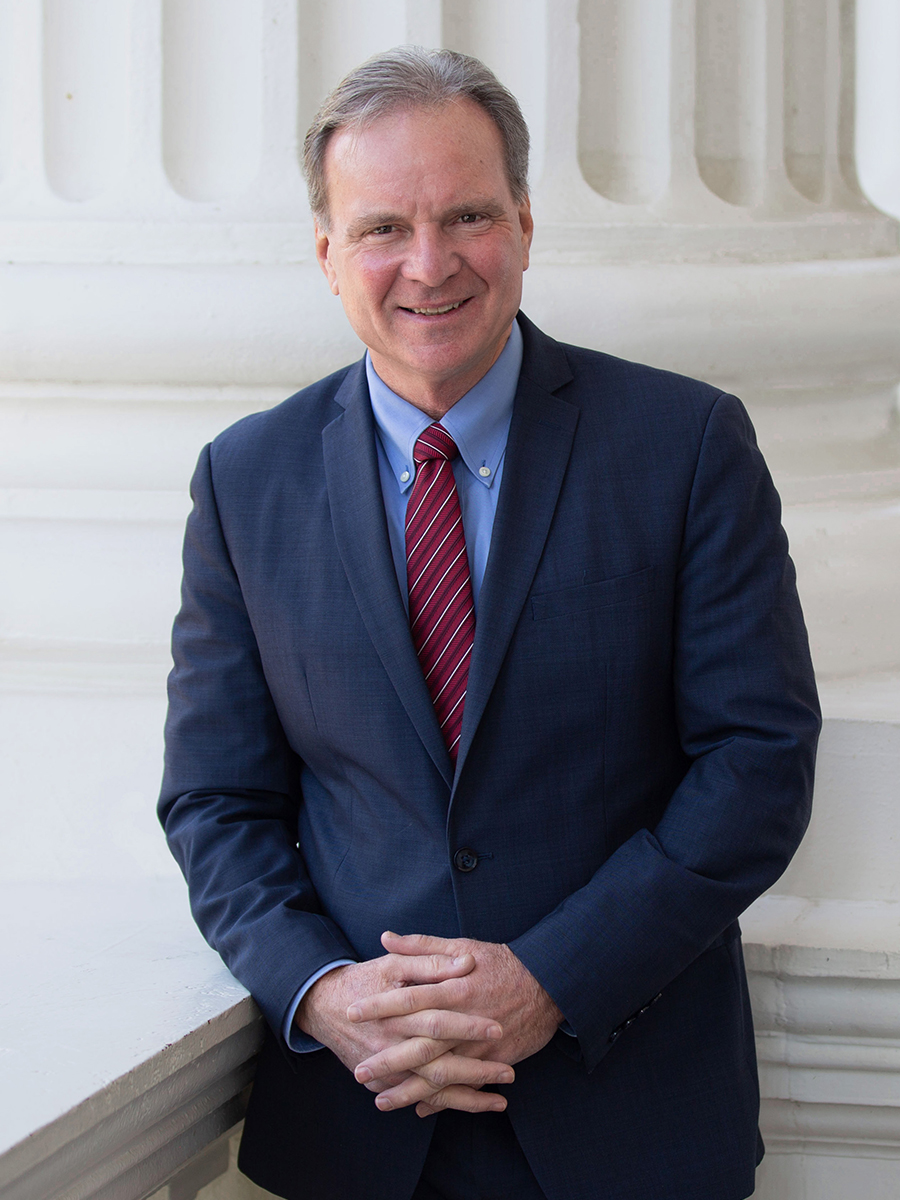
Photo of Dave Cox
R California Senate · District 1

Sen. Dave Cox

Compare
Total votes
26,381
all sessions
Attendance
91%
1,964 missed
Near the chamber average
With party
96%
of cast votes
Lower than 78% of chamber peers
Bipartisan score
3%
crosses aisle rarely
Near the chamber average
Sponsored
1,133
bills & resolutions
Higher than 80% of chamber peers
Committees
0
assignments
1,133 bills and resolutions

Sponsored bills

Total
1,133
Primary
167
Co-sponsor
966
This page
1,133
matching current filters
Co-sponsor SJR 11
died · California Senate · Co-sponsor
Guantanamo Bay: detention facility.

This bill would urge the President of the United States and the Congress to employ necessary measures to ensure that no terrorist or suspected terrorist detained at Guantanamo Bay, Cuba is permitted to enter California in custody or otherwise.

died Nov 30, 2010 1 co-sponsor
Co-sponsor AB 648
Failed · California House · Co-sponsor
Rural hospitals: physician services.

Existing law generally provides for the licensure of health facilities, including rural general acute care hospitals, by the State Department of Public Health. Existing law requires the department to provide expert technical assistance to strategically located, high-risk rural hospitals, as defined, to assist the hospitals in carrying out an assessment of potential business and diversification of service opportunities. Existing law also requires the department to continue to provide regulatory relief when appropriate through program flexibility for such items as staffing, space, and physical plant requirements. This bill would, until January 1, 2020, establish a demonstration project authorizing a rural hospital, as defined, that meets specified conditions, to employ up to 10 physicians and surgeons at one time, except as provided, to provide medical services at the rural hospital or other health facility that the rural hospital owns or operates, and to retain all or part of the income generated by the physicians and surgeons for medical services billed and collected by the rural hospital if the physician and surgeon in whose name the charges are made approves the charges. The bill would require a rural hospital that employs a physician and surgeon pursuant to those provisions to develop and implement a policy regarding the independent medical judgment of the physician and surgeon. The bill would require these physicians and surgeons to biennially sign a specified statement. The bill would impose various duties on the department and the Medical Board of California including, not later than January 1, 2019, a requirement that the board deliver a report to the Legislature regarding the demonstration project.

Failed Nov 30, 2010 1 co-sponsor
Primary SB 879
Signed into law · California Senate · Lead sponsor
Counties: cities: construction projects: alternative bidding procedures: design-build.

Existing law authorizes counties to use alternative procedures, known as design-build, for bidding on construction projects in the county in excess of $2,500,000, in accordance with specified procedures. These procedures include a requirement for contracts awarded, as specified, that a county board of supervisors pay a fee into the State Public Works Enforcement Fund, which funds are continuously appropriated for the Department of Industrial Relations' enforcement of prevailing wage requirements on public works projects. Each county that elects to use the design-build method on a public works project is required to submit a report to the Legislative Analyst's Office before December 1, 2009, containing a description of each public works project procured through the design-build process and completed after November 1, 2004, and before November 1, 2009. Existing law also requires the Legislative Analyst, on or before January 1, 2010, to report to the Legislature on the use of the design-build method by counties. This bill would make various changes in the procedures required for the use of design-build by those counties, as specified. The bill would also revise and expand those reporting provisions to require each county electing to use the design-build method on a public works project to submit to the Legislative Analyst's Office before September 1, 2013, a report containing a description, as specified, of each public works project procured through the design-build process and completed after November 1, 2009, and before August 1, 2013. This bill would require the Legislative Analyst, on or before January 1, 2014, to submit a report to the Legislature, as specified. Existing law authorizing design-build contracts for county construction projects repeals these provisions on January 1, 2011. This bill would extend the repeal date until July 1, 2014. By extending the repeal date, the bill would make an appropriation. Existing law also authorizes cities, until January 1, 2016, to use alternative procedures, known as design-build, for bidding on construction projects in the city in excess of $1,000,000. These procedures also require a city council to pay a fee into the State Public Works Fund, a continuously appropriated fund for the Department of Industrial Relation's enforcement of prevailing wage requirements on public works projects. This bill would make various changes in the procedures required for the use of design-build by those cities, as specified.

Signed into law Sep 30, 2010 0 co-sponsors
Co-sponsor SB 677
Signed into law · California Senate · Co-sponsor
Human trafficking: property: seizure.

Existing law defines human trafficking as the deprivation or violation of the personal liberty of another person with the intent to commit certain specified sex offenses with the person or to obtain forced labor or services, as specified. This bill would authorize real property used to facilitate the commission of that offense to be declared and treated as a nuisance, as specified.

Signed into law Sep 30, 2010 1 co-sponsor
Primary SB 1417
Signed into law · California Senate · Lead sponsor
Corporations for prevention of cruelty to animals.

Existing law authorizes corporations for the prevention of cruelty to children or animals, or both, to be formed under the Nonprofit Public Benefit Corporation Law and requires the articles of incorporation for those corporations to be endorsed, as evidence of necessity, by the Department of Justice or by a judge of the superior court of the county in which the society's principal office is located, as specified. This bill would eliminate the authority to form these corporations for the prevention of cruelty to children and eliminate the requirement of endorsement of the articles of incorporation. Existing law requires a city or county, or city and county, to pay up to $500 per month to a society actively engaged in enforcing state laws for the prevention of cruelty to animals or children. This bill would instead authorize local governments to enter into contracts with societies for the prevention of cruelty to animals for the enforcement of these laws and would also permit these societies to enforce these laws without a contract. Existing law requires a humane society or society for the prevention of cruelty to animals that proposes to appoint a humane officer to submit an application for appointment to a judge of the superior court for the county in which the society is located, including a copy of the resolution appointing the person, and documentation that the person has satisfactorily completed required training, as specified. Upon receipt of a report from the Department of Justice of the record, if any, of the proposed appointee, existing law requires the judge to review the appointee's qualifications and fitness to act as a humane officer, and either confirm or deny the appointment. This bill would require a society, prior to filing a Petition for Order Confirming Appointment of a Humane Officer, to submit to the Department of Justice fingerprint images and information regarding applicants in order to obtain state criminal record information, as specified, and to request subsequent arrest notification and would allow the Department of Justice to charge a reasonable fee to cover related costs. The bill would also require a society to include with its Petition for Order Confirming Appointment of a Humane Officer, a copy of the resolution making the appointment, a copy of criminal record offender information, proof of the society's proper incorporation and required liability insurance, as specified, and, if the society has not previously appointed a humane officer, an affidavit that demonstrates the society's competence to appoint a humane officer by providing specified information. The bill would require a society seeking confirmation of an appointment of a humane officer to serve a copy of the petition on the Department of the California Highway Patrol, the Department of Justice, the State Humane Association of California, and the police department and sheriff's department having jurisdiction where the society's principal office is located. The bill would also authorize those parties to file opposition to the petition and for the filer to reply, as specified. The bill would also require the court, in determining whether to confirm the appointment, to consider any documentation submitted in support of, or opposition to, the proposed appointment. The bill would require the court to deny certification of the appointment if the society was incorporated on or after January 1, 2011, and certain criteria are not met. The bill would authorize the Department of Justice to charge a reasonable fee to cover the costs of maintaining records of orders confirming appointment. Existing law provides that all appointments of humane officers expire 3 years from the date the court order is submitted to the county clerk. This bill would eliminate that provision. Under existing law, a local law enforcement agency or the State Humane Association of California may petition for a revocation hearing regarding a humane officer's appointment. This bill would also require a party petitioning for a revocation to serve copies of specified documents on each of the parties required to receive copies of a Petition for Order Confirming Appointment of a Humane Officer, as specified. Existing law prescribes the powers and qualifications of level 1 and level 2 humane officers. Level 1 humane officers are authorized to carry firearms, subject to specified requirements. Existing law requires humane officers to complete specified continuing education every 3 years. This bill would impose additional specified training requirements for level 1 and level 2 humane officers. The bill would require a humane officer to certify to the Department of Justice compliance with the continuing education and training requirements and would provide that failure to comply shall result in revocation of the appointment. The bill would also specify additional requirements for the initial and continued use of firearms. The bill would also require a society to possess liability insurance of at least $1,000,000. The bill would authorize the Department of Justice to charge a reasonable fee to maintain records of certificates of compliance. Existing law requires the Department of Justice to maintain state summary criminal history information, as defined, and to provide that information to persons holding specified occupations including, without limitation, probation officers and parole officers. Existing law requires local criminal justice agencies to maintain similar information and provide that information to specified agencies and persons holding specified occupations. This bill would add humane officers to the specified persons to whom the Department of Justice and local criminal justice agencies are required to provide the criminal history information. The bill would authorize a local agency to impose a fee to cover the reasonable costs of providing that information. By expanding the duties of local criminal justice agencies, this bill would impose a state-mandated local program. The California Constitution requires the state to reimburse local agencies and school districts for certain costs mandated by the state. Statutory provisions establish procedures for making that reimbursement. This bill would provide that no reimbursement is required by this act for a specified reason.


Signed into law Sep 30, 2010 0 co-sponsors
Co-sponsor AB 1506
Vetoed · California House · Co-sponsor
State funds: registered warrants.

Existing law prescribes procedures for the issuance of registered warrants and provides that a registered warrant is acceptable and may be used as security for the performance of any public or private trust or obligation. This bill would, if the Controller makes a specified determination, require a state agency to accept, from a person or entity, a registered warrant issued by the Controller and endorsed by that payee, at full face value, for the payment of any obligations owed by that payee to that state agency. The bill would specify that its requirements do not apply to certain obligations and would require the Controller, on or before the September 1 following the conclusion of a fiscal year in which a state agency is required to accept registered warrants pursuant to these provisions, to submit a report to the Joint Legislative Budget Committee. The bill would make its provisions inoperative on July 1, 2012, and would repeal them on January 1, 2013. This bill would declare that it is to take effect immediately as an urgency statute.

Vetoed Sep 30, 2010 1 co-sponsor
Co-sponsor SB 1440
Signed into law · California Senate · Co-sponsor
California Community Colleges: student transfer.

Existing law establishes the 3 segments of public postsecondary education in this state. These segments include the California State University, the campuses of which are administered by the Trustees of the California State University, the University of California, which is administered by the Regents of the University of California, and the California Community Colleges, which are administered by the Board of Governors of the California Community Colleges. Existing law establishes community college districts throughout the state, and authorizes them to provide instruction to students at community college campuses. Existing law, known as the Donahoe Higher Education Act, authorizes the community colleges to grant associate in arts and associate in science degrees. The act also requires the regents, the trustees, and the board of governors to have as a fundamental policy the maintenance of a healthy and expanded program to increase the number of transfer students from community colleges. This bill would enact the Student Transfer Achievement Reform Act, which, commencing with the 2011–12 academic year, would require a student that receives an associate degree for transfer to be deemed eligible for transfer into a California State University baccalaureate program when the student meets prescribed requirements. The bill would condition a community college district's receipt of state apportionment funds on its development and granting of associate degrees for transfer, unless each of the state's community college districts waives reimbursement for specified state-mandated costs of implementing the bill in accordance with a prescribed procedure. This bill would prohibit a community college district from imposing any requirements, in addition to these requirements, for a student to be eligible for the associate degree for transfer, and would prohibit remedial noncollegiate level coursework from being counted towards the units required for the associate degree for transfer. This bill would require the California State University to guarantee admission with junior status to any community college student who meets the requirements for the associate degree for transfer. This bill would not guarantee a student admission for specified majors or campuses, but would require the California State University to grant a student priority admission to his or her local California State University campus and to a program or major that is similar to his or her community college major or area of emphasis, as determined by the California State University campus to which the student is admitted. This bill would authorize the California State University to require a transferring student to take additional coursework at the California State University in specified circumstances, and would prohibit the California State University from requiring a transferring student to repeat courses that are similar to those taken at the community college that counted towards the units required for the associate degree for transfer. This bill would also require the Legislative Analyst's Office to review and report to specified legislative committees and subcommittees, within a prescribed time period, on specified outcomes and recommendations related to this act. By requiring a community college district to grant the associate degree for transfer in exchange for receipt of state apportionment funds, this bill would impose a state-mandated local program. The California Constitution requires the state to reimburse local agencies and school districts for certain costs mandated by the state. Statutory provisions establish procedures for making that reimbursement. This bill would provide that, if the Commission on State Mandates determines that the bill contains costs mandated by the state, reimbursement for those costs shall be made pursuant to these statutory provisions.

Signed into law Sep 29, 2010 1 co-sponsor
Co-sponsor SB 1004
Signed into law · California Senate · Co-sponsor
Vehicles: licensed dealers and salespersons: credit scores.

(1) Existing law imposes licensing and regulatory requirements on vehicle dealers and vehicle salespersons. Existing law requires a dealer's place of business to have posted the license issued by the Department of Motor Vehicles to the dealer and to each salesperson employed by the dealer. This bill would instead authorize the dealer to post a true and exact copy of the license issued by the Department of Motor Vehicles to the dealer and to each salesperson employed by the dealer and would make other conforming changes. (2) Existing law requires the applicant of a dealer's or remanufacturer's license, before the license is issued or renewed by the department, to procure and file with the department a bond, as provided. Existing law authorizes the director of the department, if a deposit is given instead of the bond, to order the deposit returned at the expiration of specified dates. This bill would also authorize the director to order the deposit to be returned at the expiration of 5 years from the date the licensee secured and maintained a dealer bond, after posting a deposit, if the director is satisfied that there are no outstanding claims against the deposit. (3) Existing law requires a dealer that obtains a consumer credit score from a consumer credit reporting agency, for use in connection with an application for credit initiated by a consumer for the purchase or lease of a motor vehicle for specified uses, to provide, prior to the sale, certain information in at least 10-point boldface type on a document separate from the sale or lease contract, that includes, among other things, the credit score obtained and used by the dealer and the name of the credit reporting agency providing the credit score to the dealer. This bill would delete these requirements and instead require a dealer to provide a document, in at least 10-point type, that contains certain information pertaining to credit scores, including each credit score obtained and used by the dealer and a statement that a consumer report or credit report is a record of the consumer's credit history and includes information about whether the consumer pays his or her obligations on time and how much the consumer owes to creditors, among other things. The bill would provide that use of a specified model form, that meets federal requirements for form and content, would be deemed to comply with the above requirements. The bill would also provide that it does not limit or restrict any rights or remedies otherwise available under existing law. (4) Existing law authorizes the department to refuse to issue, to suspend, or to revoke a vehicle salesperson's license when it determines, among other things, that the applicant or licensee has acted as a vehicle salesperson or engaged in that activity for, or on behalf of, more than one licensed dealer whose business does not have identical ownership and structure. Existing law provides that the law does not preclude a vehicle salesperson from working at more than one location of one licensed dealer if the business of that dealer has identical ownership and structure. This bill would authorize the department to refuse to issue, to suspend, or to revoke a vehicle salesperson's license when it determines, among other things, that the applicant or licensee has concurrently acted as a vehicle salesperson and engaged in that activity for, or on behalf of, more than one licensed dealer unless all of the licensed dealers, for whom that salesperson works, have common controlling ownership. The bill would also provide that the law does not preclude a vehicle salesperson from working for more than one dealer provided that all of the licensed dealers for whom that salesperson works have common controlling ownership, as defined. (5) Existing law requires the salesperson's license to be displayed continuously during employment and requires that the license be returned to the salesperson once employment is terminated. A violation of these requirements is a crime. This bill would require the dealer to display the license or a true and exact copy of the license continuously at each location where the salesperson is actually engaged in the selling of vehicles. Once the employment is terminated, this bill would require all copies used by the dealer for posting or display to be destroyed by the dealer. By expanding the scope of an existing crime, this bill would impose a state-mandated local program. (6) The California Constitution requires the state to reimburse local agencies and school districts for certain costs mandated by the state. Statutory provisions establish procedures for making that reimbursement. This bill would provide that no reimbursement is required by this act for a specified reason.
Signed into law Sep 29, 2010 1 co-sponsor
Co-sponsor SB 1057
Signed into law · California Senate · Co-sponsor
State holidays: Veterans Day: state office closure.

Existing law recognizes various holidays, including November 11, known as Veterans Day. Existing law requires that public offices of the state and state institutions, except for the University of California, be closed on Veterans Day. This bill would require that public offices of the state and state institutions, including, but not limited to, all state agencies and the Legislature, be closed on November 11 for Veterans Day, except as specified. The bill would also state the Legislature's intent that the University of California also be closed on November 11, Veterans Day.

Signed into law Sep 29, 2010 1 co-sponsor
Co-sponsor SB 1247
Signed into law · California Senate · Co-sponsor
Renewable energy resources: hydroelectric generation facilities.

The existing California Renewables Portfolio Standard Program (RPS program) requires the Public Utilities Commission to implement annual procurement targets for the procurement of eligible renewable energy resources for all retail sellers, as defined, to achieve the targets and goals of the program. The existing definition of an eligible renewable energy resource includes certain small hydroelectric generation facilities, conduit hydroelectric facilities, and the incremental increase in electrical generation resulting from efficiency improvements (repowering) of existing larger hydroelectric facilities, subject to the condition that a new small or conduit hydroelectric facility or repowered facility not result in an adverse impact on instream beneficial uses or cause a change in the volume or timing of streamflow. This bill would provide that the new small or conduit hydroelectric facility or repowered facility that is an eligible renewable energy resource as of January 1, 2010, shall not lose eligibility if it causes a change in the volume or timing of streamflow, if those changes are required by license conditions approved, pursuant to the Federal Power Act, on or after January 1, 2010. An additional requirement for eligibility for the incremental increase in electrical generation resulting from repowering of an existing larger hydroelectric facility is that the facility has been certified within the immediately preceding 15 years by the State Water Resources Control Board pursuant to the federal Clean Water Act or by a California regional water quality control board to which the state board has delegated authority. This bill would adopt an alternative to that requirement for the Rock Creek Powerhouse hydroelectric generation facility. The bill would declare that it is to take effect immediately as an urgency statute.

Signed into law Sep 29, 2010 1 co-sponsor
Showing 31 to 40 of 1,133 bills
Previous 1 3 4 5 114 Next