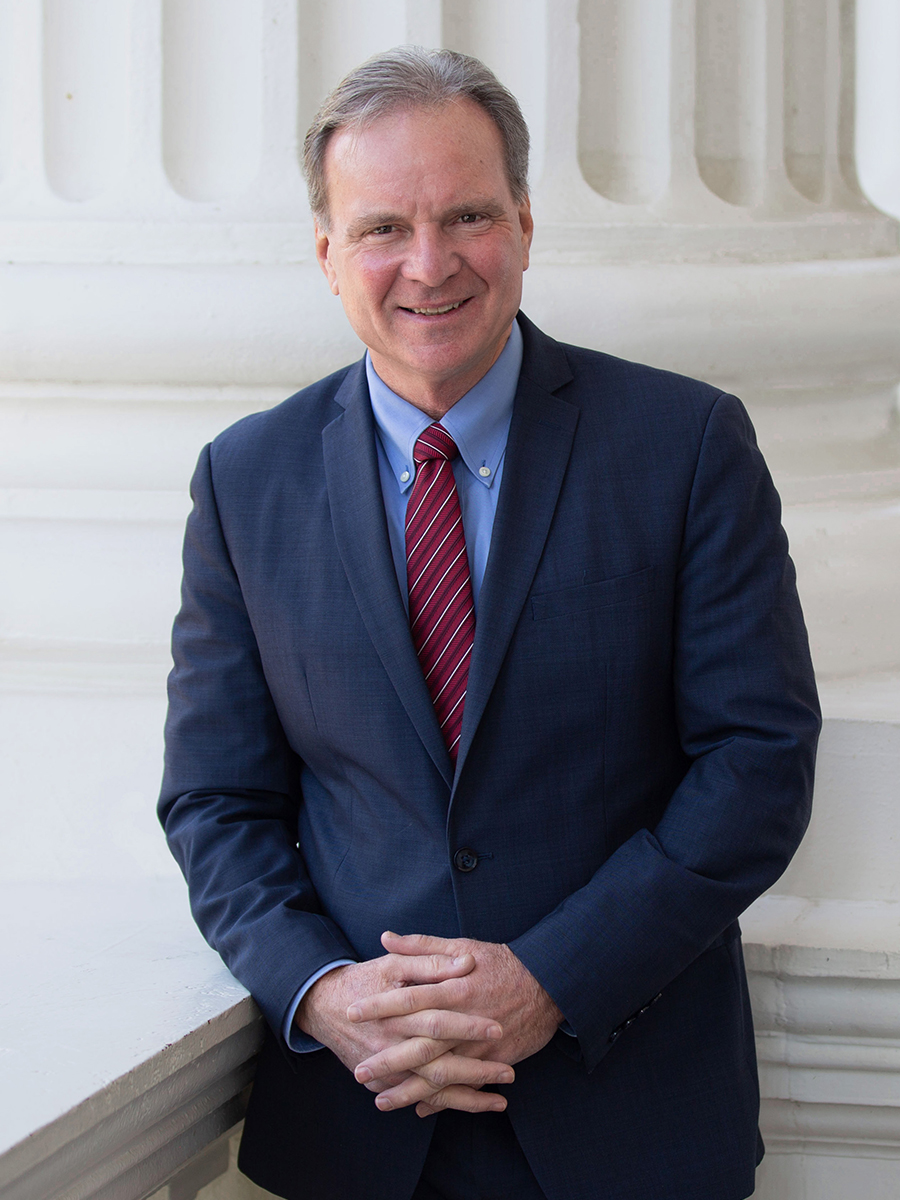
Photo of Dave Cox
R California Senate · District 1

Sen. Dave Cox

Compare
Total votes
26,381
all sessions
Attendance
91%
1,964 missed
Near the chamber average
With party
96%
of cast votes
Lower than 78% of chamber peers
Bipartisan score
3%
crosses aisle rarely
Near the chamber average
Sponsored
1,133
bills & resolutions
Higher than 80% of chamber peers
Committees
0
assignments
1,133 bills and resolutions

Sponsored bills

Total
1,133
Primary
167
Co-sponsor
966
This page
1,133
matching current filters
Primary SB 897
Failed · California Senate · Lead sponsor
Subdivision maps.

The Subdivision Map Act establishes a statewide regulatory framework for controlling the subdividing of land. It generally requires a subdivider to submit and file a tentative or vesting tentative map, which is made for the purpose of showing the design and improvement of a proposed subdivision and the existing conditions in and around it. This bill would make technical, nonsubstantive changes to the vesting tentative map requirement.

Failed Nov 30, 2010 0 co-sponsors
Co-sponsor AB 1455
Failed · California House · Co-sponsor
Ephedrine: retail sale.

(1) Existing law classifies controlled substances into 5 schedules, with the most restrictive limitations placed on controlled substances classified in Schedule I, and the least restrictive limitations placed on controlled substances classified in Schedule V. A controlled substance in any of the schedules may be possessed or dispensed only upon a lawful prescription, as specified. Existing law does not classify ephedrine, pseudoephedrine, norpseudoephedrine, or phenylpropanolamine within any of these 5 schedules, but provides that it is a crime, punishable as specified, for a person in this state who engages in specified transactions involving those drugs to fail to submit a report to the Department of Justice of all of those transactions, or to fail to submit an application to, and obtain a permit for the conduct of that business from, the Department of Justice, as specified. Existing law prohibits the sale of more than 3 packages or 9 grams of a nonprescription product containing ephedrine or the other drugs, as specified. This bill would instead provide that it is a misdemeanor, punishable as specified, for any retail distributor, except pursuant to a valid prescription from a licensed practitioner with prescriptive authority, to sell or distribute to a person specified amounts of nonprescription products containing ephedrine, pseudoephedrine, norpseudoephedrine, or phenylpropanolamine within specified time limits, to sell or distribute any of those substances to a person whose information has generated an alert, or, except under specified conditions, to sell or distribute to any purchaser a nonprescription product containing any amount of those substances. The bill would contain provisions requiring the secure storage of products containing any amount of ephedrine, pseudoephedrine, norpseudoephedrine, or phenylpropanolamine and providing for the creation of an electronic authorization and monitoring system for the collection of, access to, and sharing of information regarding these transactions, as specified. The bill would provide that the information in the system may not be used for any purpose other than to meet the requirements of, or comply with, this act or a certain federal act, as specified. The bill would specify legislative findings, declarations, and intent. The bill's provisions would remain in effect only until January 1, 2017. By creating a new crime, this bill would impose a state-mandated local program. (2) The California Constitution requires the state to reimburse local agencies and school districts for certain costs mandated by the state. Statutory provisions establish procedures for making that reimbursement. This bill would provide that no reimbursement is required by this act for a specified reason.


Failed Nov 30, 2010 1 co-sponsor
Co-sponsor SB 980
Failed · California Senate · Co-sponsor
Business licensing: Business Master License Center.

Under existing law, businesses are required to obtain various licenses from regulatory agencies. Existing law also requires state agencies to take specified actions, including, but not limited to, designating a small business liaison to assist small businesses to comply with statutory and regulatory requirements. This bill would create the Business Master License Center, which would have prescribed duties, including, but not limited to, developing and administering a computerized one-stop master license system capable of storing, retrieving, and exchanging license information, as well as issuing and renewing master licenses, as specified. The bill would permit the Governor to appoint a 3rd-party facilitator from the business community, to provide oversight over the creation of the center and the development of its master license system. This bill would charge license applicants, in addition to any other fees or deposits required to obtain a particular license, a master license administrative fee in specified amounts, to be deposited into the Business Master License Fund, which this bill would create. This bill would require that the moneys in the fund, upon appropriation by the Legislature, be used only to administer the Business Master License Center.

Failed Nov 30, 2010 1 co-sponsor
Primary SB 1109
Failed · California Senate · Lead sponsor
California Children and Families Program: funding.

(1) The California Children and Families Act of 1998, an initiative measure, requires that the California Children and Families Program, established by the act, be funded by certain taxes imposed on the sale and distribution of cigarettes and tobacco products and be deposited into the California Children and Families Trust Fund, and that the fund be used for the implementation of comprehensive early childhood development and smoking prevention programs. Existing law specifies that specified percentages of moneys allocated and appropriated from the trust shall be deposited in various accounts for expenditures by the California Children and Families Commission, also known as First 5 California, for various subjects relating to, and furthering the goals and purposes of, the act. Existing law prohibits amendment of this initiative measure by the Legislature unless the amendment is approved by the voters, or the amendment is accomplished by a vote of 23 of the membership of both houses of the Legislature and the amendment furthers the act and is consistent with its purposes. This bill, subject to voter approval, would eliminate those percentages for allocations to various accounts and would, instead, provide that those funds, with specified exceptions, shall be transferred to the General Fund for appropriation by the Legislature for purposes of the Healthy Families Program and the Medi-Cal program. The bill would provide for the distribution, as prescribed, of funds held by county children and families commissions and by the California Children and Families Commission that remain unencumbered on the date that the bill's provisions are approved by the voters. This bill would abolish the California Children and Families Commission and the county children and families commissions, effective 90 days after the bill is approved by the voters, and would repeal related obsolete provisions. This bill would require that its provisions be submitted to the voters for approval at the next statewide election. (2) This bill would declare that it is to take effect immediately as an urgency statute.

Failed Nov 30, 2010 0 co-sponsors
Co-sponsor AB 1140
died · California House · Co-sponsor
California Private Postsecondary Education Act of 2009.

(1) Existing law establishes the California Private Postsecondary Education Act of 2009, which, among other things, provides for student protections and regulatory oversight of private postsecondary schools in the state. Existing law establishes the Bureau for Private Postsecondary Education to regulate private postsecondary institutions through the powers granted, and the duties imposed, by the act. This bill would prohibit the bureau, for the period July 1, 2010, to July 1, 2011, inclusive, from enforcing the act against institutions that offer flight instruction or institutions that offer Federal Aviation Administration certified educational programs in aircraft maintenance. The bill would also require those institutions to notify the bureau if they operate during that period. (2) The act prohibits institutions, as defined, from performing various actions. This bill would prohibit an institution from offering an unaccredited doctoral degree program without disclosing to prospective students that the degree program is unaccredited, and any known limitation of the unaccredited degree, including, but not limited to, whether the degree is recognized for licensure or certification in other states. (3) The act prohibits an ability-to-benefit student, defined as a student who does not have a certificate of graduation from a school providing secondary education, or a recognized equivalent of that certificate, from enrolling in an institution unless the student achieves a specified score on an independently administered examination from a specified list of examinations prescribed by the United States Department of Education that demonstrates that the student may benefit from the education and training being offered. This bill would authorize the Bureau for Private Postsecondary Education to publish its own list of acceptable examinations if the United States Department of Education does not have a list of relevant examinations that pertain to the intended occupational training. (4) The act requires specified private postsecondary institutions to refund 100% of the amount paid for institutional charges, less specified expenses, if notice of cancellation is made through attendance at the first class session, or the 7th class day after enrollment, whichever is later. This bill would change the 2nd deadline for notice of cancellation from the 7th class day after enrollment to the 7th day after enrollment. (5) Existing law defines "graduates employed in the field," for purposes of the act, as graduates who are gainfully employed within 6 months of graduation in a position for which the skills obtained through the education and training provided by the institution are required or provided a significant advantage to the graduate in obtaining the position. This bill would revise this definition to remove skills obtained that have provided a significant advantage to the graduate in obtaining the position, and include skills that are utilized to perform the purpose or objective of the position or the major responsibilities of the position. (6) Existing law appropriates $580,000 from the Private Postsecondary and Vocational Education Administration Fund to the Bureau for Private Postsecondary Education, for the purpose of funding 5 private postsecondary education specialist and senior specialist positions. This bill would require those positions to be permanent, full-time positions to perform work in conformity with the classification specifications as directed by the bureau chief. (7) This bill would declare that it is to take effect immediately as an urgency statute.

died Nov 30, 2010 1 co-sponsor
Co-sponsor AB 378
Failed · California House · Co-sponsor
Nursing: continuing education.

Existing law, the Nursing Practice Act, provides for the licensure and regulation of registered nurses by the Board of Registered Nursing and makes a violation of the act a crime. Existing law requires a licensee renewing his or her license to submit proof to the board that during a specified time the licensee has been informed of developments in the registered nursing field either by pursuing a continuing education course offered by a provider approved by the board or by other means deemed equivalent by the board. Existing law requires the board to establish, by regulation, standards for continuing education. Existing law requires these standards to make a variety of alternative forms of continuing education available to licensees. Existing law requires the content of all courses of continuing education to be relevant to the practice of nursing. This bill would provide that continuing education courses, as specified, that advance or promote labor organizing on behalf of a union, or that advance or promote statutory or regulatory changes, political candidates, political advocacy, or political strategy shall not be considered content relevant to the practice of nursing and shall not be acceptable for meeting requirements for licensure renewal. The bill would also prohibit an approved provider from representing that such a continuing education course is acceptable for meeting requirements for licensure renewal and would require the board, subject to specified procedural requirements, to withdraw its approval of a provider that violates that requirement for no less than 5 years, as specified. Because a violation of these requirements by a provider would constitute a crime, the bill would impose a state-mandated local program. The California Constitution requires the state to reimburse local agencies and school districts for certain costs mandated by the state. Statutory provisions establish procedures for making that reimbursement. This bill would provide that no reimbursement is required by this act for a specified reason. This bill would declare that it is to take effect immediately as an urgency statute.
Failed Nov 30, 2010 1 co-sponsor
Co-sponsor ACR 14
Failed · California House · Co-sponsor
Relative to the California Global Warming Solutions Act of 2006.

This measure would call upon the State Air Resources Board, prior to any regulatory action being taken consistent with the scoping plan for the implementation of the California Global Warming Solutions Act of 2006, to perform an economic analysis that will give the State of California a more complete and accurate picture of the costs and benefits of the act's implementation. The measure would also call upon the Governor to use the authority granted by the act to adjust any applicable deadlines for regulations.

Failed Nov 30, 2010 1 co-sponsor
Primary SB 1136
Failed · California Senate · Lead sponsor
Education finance: revenue limit apportionments.

(1) Existing law requires the Controller to draw warrants on the State Treasury in favor of the county treasurer of each county in each month of each year in prescribed amounts and in a prescribed manner. Commencing with the 2008–09 fiscal year, existing law requires the warrants for the principal apportionments for the month of February in the amount of $2,000,000,000 to be drawn in July of the same calendar year, and requires those warrants to be applied toward the minimum funding requirements for school districts and community college districts imposed by Section 8 of Article XVI of the California Constitution for the year in which they are drawn. This bill would prohibit a school district's apportionment deferral from exceeding, at any time during a fiscal year, $225 multiplied by the 2009–10 second principal apportionment average daily attendance if the district's average daily attendance, excluding charter school average daily attendance, for the 2009–10 2nd principal apportionment is equal to or less than 500. The bill would provide that these provisions apply only to apportionment deferrals within a single fiscal year. The bill would make these provisions inoperative on September 1, 2011, and would repeal them on January 1, 2012. (2) This bill would declare that it is to take effect immediately as an urgency statute.

Failed Nov 30, 2010 0 co-sponsors
Co-sponsor SCR 112
Failed · California Senate · Co-sponsor
Relative to Father's Day.

This measure would observe June 20, 2010, as Father's Day and recognize the contribution of fathers. This measure would also urge men to embrace the responsibilities of fathering a child and encourage parents to strengthen their relationship by attending and participating in marriage and relationship education classes. The measure would state the intent of the Legislature to explore ways to increase access to and participation in marriage and relationship education programs.

Failed Nov 30, 2010 1 co-sponsor
Co-sponsor AB 1802
Failed · California House · Co-sponsor
Pupil health: diabetes: insulin injections.

Existing law provides that each pupil who is required to take, during the regular schoolday, medication prescribed for him or her by a physician, may be assisted by the school nurse or other designated school personnel if the school district receives a written statement from the physician detailing the method, amount, and time schedules by which the medication is to be taken and a written statement from the parent or guardian of the pupil indicating the desire that the school district assist the pupil in the matters set forth in the physician's statement. Existing law, in the absence of a credentialed school nurse or other licensed nurse, authorizes a school district to provide voluntary emergency medical training to school personnel, as defined, to administer emergency medical assistance to pupils with diabetes suffering from severe hypoglycemia, subject to specified conditions. This bill would authorize a parent or guardian of a pupil with diabetes to designate one or more school employees as parent-designated school employees for the purpose of administering insulin to the pupil as necessary during the regular schoolday when a credentialed school nurse or other health care professional is not immediately available onsite at the school. The bill would authorize a parent-designated school employee to administer insulin. In order to designate an employee for these purposes, the bill would require that the parent or guardian submit a written statement, valid for a maximum of one year, as specified. The bill would require the school district to keep a copy of that statement, to obtain other specified statements from the physician of the pupil and the parent or guardian, and, upon receiving a written request from the parent or guardian of a pupil with diabetes, to notify school staff regarding the intent of the parent or guardian to designate school employees to administer insulin to the pupil. The bill would authorize a licensed health care professional, as described, to provide training to parent-designated school employees in the administration of insulin and to supervise those employees in performing that task. The bill would provide a parent-designated school employee who administers insulin pursuant to the bill's provisions with immunity from criminal and civil liability, as specified. By requiring school districts to perform additional duties, the bill would impose a state-mandated local program. The California Constitution requires the state to reimburse local agencies and school districts for certain costs mandated by the state. Statutory provisions establish procedures for making that reimbursement. This bill would provide that, if the Commission on State Mandates determines that the bill contains costs mandated by the state, reimbursement for those costs shall be made pursuant to these statutory provisions.

Failed Nov 30, 2010 1 co-sponsor
Showing 21 to 30 of 1,133 bills
Previous 1 2 3 4 114 Next