

Existing law establishes the University of California, under the administration of the Regents of the University of California, the California State University, under the administration of the Trustees of the California State University, and the California Community Colleges, under the administration of the Board of Governors of the California Community Colleges, as the 3 segments of public postsecondary education in the state. This bill, commencing no later than the 2025–26 academic year, would require each campus of the California State University and the California Community Colleges, and would request each campus of the University of California, to include within first-year student and transfer student orientations the location and contact information of the campus point of contact for students who are veterans of the Armed Forces of the United States and members of the California State Guard and the California National Guard, and their dependents, make available in hard copy form at the location of the campus point of contact a document that includes information on polices, resources, and services for these students and their dependents, as specified, and post the document, along with other information available to these students and their dependents, on the campus's internet website. By imposing new duties on community college districts, this bill would impose a state-mandated local program. The California Constitution requires the state to reimburse local agencies and school districts for certain costs mandated by the state. Statutory provisions establish procedures for making that reimbursement. This bill would provide that, if the Commission on State Mandates determines that the bill contains costs mandated by the state, reimbursement for those costs shall be made pursuant to the statutory provisions noted above.
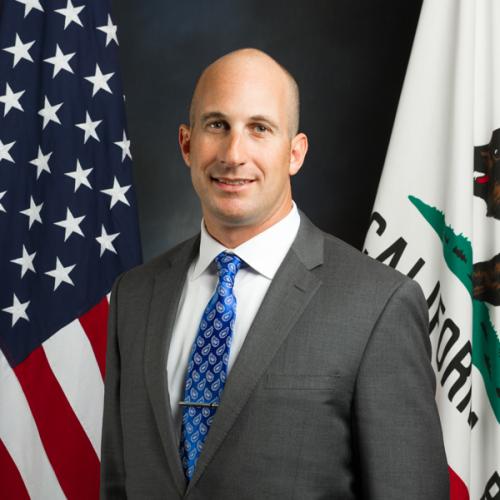
Asm. Heath Flora
Sponsored bills
Existing law authorizes victims of domestic violence, sexual assault, stalking, human trafficking, and elder or dependent adult abuse, and members of their households, to complete an application to be approved by the Secretary of State for the purpose of enabling state and local agencies to respond to requests for public records without disclosing a program participant's changed name or location, subject to specified conditions. Existing law makes it a misdemeanor for any person to make a false statement in an application. This bill, beginning on July 1, 2024, would make victims of child abduction, as defined, and members of their households eligible for the protections of this address confidentiality program. By expanding the scope of the program to include victims of child abduction and their household members, this bill would impose new duties on local public officials and expand the scope of an existing crime, thereby imposing a state-mandated local program. The California Constitution requires the state to reimburse local agencies and school districts for certain costs mandated by the state. Statutory provisions establish procedures for making that reimbursement. This bill would provide that with regard to certain mandates no reimbursement is required by this act for a specified reason. With regard to any other mandates, this bill would provide that, if the Commission on State Mandates determines that the bill contains costs so mandated by the state, reimbursement for those costs shall be made pursuant to the statutory provisions noted above.
Existing law authorizes a person who is a firefighter, retired firefighter, or a surviving family member of a firefighter or retired firefighter to apply for special license plates for their vehicle. The special license plates, which contain the words "California Firefighter" and run in a regular numerical series, are issued upon application to the Department of Motor Vehicles, presentation of proof of certain facts, and payment of certain fees, including $35 for a renewal of registration that includes the continued display of the special license plate. This bill would increase the fee to $40 for a renewal of registration that includes the continued display of the special license plate.
Existing law defines an "automobile dismantler" as a person who is engaged in the business of buying, selling, or dealing in vehicles that are required to be registered under the Vehicle Code, for the purpose of dismantling the vehicles, who buys or sells the integral parts and component materials of those vehicles, or deals in used motor vehicle parts, as specified. The definition of "automobile dismantler" also includes a person who keeps or maintains on property owned by the person, or under their possession or control, 2 or more unregistered motor vehicles no longer intended for, or in condition for, legal use on the highways, as specified. Existing law makes it a crime for a person to act as an automobile dismantler without having an established place of business, meeting specified requirements, and having a current, valid license or temporary permit issued by the Department of Motor Vehicles. This bill would revise the definition of an automobile dismantler to include a person who keeps or maintains on property owned by the person, or under their possession or control, for any of the above-described purposes 9 or more used catalytic converters that have been cut from a motor vehicle using a sharp implement. The bill would make a first violation of acting as an automobile dismantler due to possessing 9 or more catalytic converters as described above punishable as an infraction, and subsequent violations punishable as a misdemeanor, as specified. By expanding the definition of an automobile dismantler, the bill would expand the scope of an existing crime, thereby imposing a state-mandated local program. The bill would exclude from the revised definition of an automobile dismantler a junk dealer, recycler, commercial enterprise, or core recycler, as specified, that has 9 or more of these used catalytic converters. Existing law excludes from the definition of an "automobile dismantler" the owner or operator of any premises on which 2 or more unregistered and inoperable vehicles are held or stored, if the vehicles are used for restoration or replacement parts or otherwise, in conjunction with specified businesses, including the operation and maintenance of any fleet of motor vehicles used for the transportation of persons or property. This bill would also exclude from the definition of an "automobile dismantler" a person who possesses 9 or more catalytic converters that are used in the same manner as the unregistered and inoperable vehicles. The California Constitution requires the state to reimburse local agencies and school districts for certain costs mandated by the state. Statutory provisions establish procedures for making that reimbursement. This bill would provide that no reimbursement is required by this act for a specified reason.
Existing law, in a civil action brought by, on behalf of, or for the benefit of a minor, or nonminor dependent, against a person who engaged in an act of commercial sexual exploitation, as defined, of a minor or nonminor dependent, authorizes the trier of fact to either impose a fine, civil penalty, or other penalty, or other remedy in an amount up to 3 times greater than authorized by the statute or to award a civil penalty not exceeding $50,000 and not less than $10,000 for each act of commercial sexual exploitation committed by the defendant if the tier of fact makes an affirmative finding regarding certain factors, including whether the defendant's conduct was directed to more than one minor or nonminor dependent, as prescribed. This bill would, beginning January 1, 2025, prohibit a social media platform, as defined, from knowingly facilitating, aiding, or abetting commercial sexual exploitation, as specified. The bill would require a court to award statutory damages not exceeding $4,000,000 and not less than $1,000,000 for each act of commercial sexual exploitation facilitated, aided, or abetted by the social media platform. The bill would define "facilitate, aid, or abet" to mean to deploy a system, design, feature, or affordance that is a substantial factor in causing minor users to be victims of commercial sexual exploitation. The bill would prohibit a social media platform from being deemed to be in violation of this provision if it demonstrates certain mitigating facts, including that the social media platform instituted and maintained a program of at least biannual audits of its designs, algorithms, practices, affordances, and features to detect designs, algorithms, practices, affordances, or features that have the potential to cause or contribute to violations of that provision, as prescribed. Existing law, the California Consumer Privacy Act of 2018, grants to a consumer various rights with respect to personal information, as defined, that is collected by a business, as defined, including the right to request that a business delete personal information about the consumer that the business has collected from the consumer. This bill would, beginning January 1, 2025, require a social media platform to, among other things, provide, in a mechanism that is reasonably accessible to users, a means for a user who is a California resident to report material to the social media platform that the user reasonably believes meets certain criteria, including that the reported material is child sexual abuse material, as defined, in which the reporting user is an identifiable minor depicted in the reported material. This bill would, beginning January 1, 2025, require the social media platform to permanently block the instance of reported material and make reasonable efforts to remove and block other instances of the same reported material from being viewable on the social media platform, as prescribed, if there is a reasonable basis to believe that the reported material is child sexual abuse material that is displayed, stored, or hosted on the social media platform, and the report contains basic identifying information, as specified, sufficient to permit the social media platform to locate the reported material. The bill would make a violator of those provisions liable to the reporting user, including for statutory damages of no more than $250,000 per violation, $125,000 per violation, or $75,000 per violation, as specified.
Existing law, the Ralph C. Dills Act (Dills Act) , governs collective bargaining between the state and recognized state public employee organizations. Existing law excludes certain employees from coverage under the Dills Act, including, among others, managerial employees, supervisory employees, and confidential employees, as defined. Existing law creates the Public Employment Relations Board and authorizes it, among other things, to determine appropriate state employee bargaining units, as specified. This bill would enact the Legislature Employer-Employee Relations Act, to provide employees of the Legislature, except certain specified categories of excluded employees, the right to form, join, and participate in the activities of employee organizations of their own choosing for the purpose of representation on all matters of employer-employee relations. The bill would prescribe rights, duties, and prohibitions in this context that parallel those in the Dills Act. For the purposes of bargaining or meeting and conferring in good faith, the bill would define "employer" to mean the Assembly Committee on Rules or the Senate Committee on Rules. The bill would require the employer to meet and confer with representatives of recognized employee organizations regarding matters within the scope of representation. The bill would exclude certain matters from the scope of representation, as specified. The bill would grant exclusive jurisdiction to the Public Employment Relations Board to make an initial determination as to whether charges of unfair practices are justified, and, if so, the necessary remedy, as specified. However, the bill would prohibit the board from issuing a decision or order that intrudes upon or interferes with the Legislature's core function of efficient and effective lawmaking or the essential operation of the Legislature. The bill would require the board to determine appropriate bargaining units, and would prohibit the board from including employees in a bargaining unit that includes employees other than those of the employer. The bill would prohibit the board from including within a bargaining unit employees from both the Assembly and Senate. This bill would make it a misdemeanor for any person to willfully resist, prevent, impede, or interfere with any member of the board, or any of its agents, in the performance of duties pursuant to its provisions. By expanding the definition of a crime, this bill would impose a state-mandated local program. The bill would provide that the provisions of the Legislature Employer-Employee Relations Act are severable. The bill would become operative on July 1, 2026. The California Constitution requires the state to reimburse local agencies and school districts for certain costs mandated by the state. Statutory provisions establish procedures for making that reimbursement. This bill would provide that no reimbursement is required by this act for a specified reason. This bill would additionally exempt from public inspection records related to activities governed by the Legislature Employer-Employee Relations Act that reveal the employer's deliberative processes, impressions, evaluations, opinions, recommendations, meeting minutes, research, work product, theories, or strategy, or that provide instruction, advice, or training to employees who do not have full collective bargaining and representation rights under the Legislature Employer-Employee Relations Act. Existing constitutional provisions require that a statute that limits the right of access to the meetings of public bodies or the writings of public officials and agencies be adopted with findings demonstrating the interest protected by the limitation and the need for protecting that interest. This bill would make legislative findings to that effect.
Existing law provides for various memorials and monuments within the State Capitol Building and on the State Capitol grounds. Existing law prescribes various duties of the Department of General Services in connection with the development and maintenance of the State Capitol Building and grounds. This bill would authorize a nonprofit organization that represents blind veterans, in consultation with the Department of General Services, to plan, construct, and maintain a braille American flag to serve as a monument to the blind veterans of California and the United States in the State Capitol Building. The bill would specify duties for the Department of General Services in connection with the planning, construction, and maintenance of the monument. The bill would prohibit the construction of the monument until the Joint Rules Committee of the California Legislature approves and adopts a plan for the monument and the committee and the Department of Finance determine that sufficient private funding is available to construct and maintain the monument.
Existing law defines the term "serious felony" for various purposes, including, among others, enhancing the punishment for felonies pursuant to existing sentencing provisions commonly known as the Three Strikes Law. This bill would include human trafficking of a minor within the definition of a serious felony for all purposes, including for purposes of the Three Strikes Law, except as specified. By expanding the scope of an enhancement, this bill would impose a state-mandated local program. The California Constitution requires the state to reimburse local agencies and school districts for certain costs mandated by the state. Statutory provisions establish procedures for making that reimbursement. This bill would provide that no reimbursement is required by this act for a specified reason.
Existing law, the Cemetery and Funeral Act (act) , establishes the Cemetery and Funeral Bureau (bureau) for the licensure and regulation of crematories. The act requires every licensee operating a crematory pursuant to a license issued in compliance with the act to pay specified regulatory charges, and requires those fees to be deposited in the Cemetery and Funeral Fund (fund) , which is continuously appropriated for the purpose of implementing the act. The act requires that any change in ownership of a crematory be reported to the bureau. Under the act, when a change of ownership occurs, the existing crematory license lapses and the new owner must obtain a new license from the bureau. This bill would authorize a crematory license to be assigned when a change of ownership occurs if specified conditions are satisfied, including payment of a fee of $750 to the bureau. The bill would require the fee to be deposited in the fund. By establishing a new source of revenue for a continuously appropriated fund, the bill would make an appropriation. The bill would require a new owner to submit to the bureau a copy of the final sales agreement within 10 days after a sale of a crematory is final, would require the new owner to submit to the bureau proof that any required permit to operate the crematory issued by a local air pollution control district has been assigned to the new owner within 60 days after a sale of a crematory is final, and would make a failure to comply with these provisions a ground for disciplinary action.
This measure would proclaim the month of September 2023 as Suicide Prevention Awareness Month.