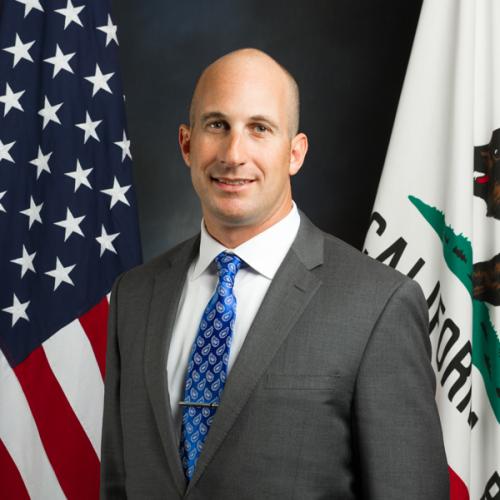
Photo of Heath Flora
R California Assembly · District 9 On the 2026 ballot

Asm. Heath Flora

Compare
Total votes
23,533
all sessions
Attendance
83%
3,189 missed
Lower than 98% of chamber peers
With party
98%
of cast votes
Lower than 77% of chamber peers
Bipartisan score
1%
crosses aisle rarely
Higher than 75% of chamber peers
Sponsored
1,713
bills & resolutions
Lower than 96% of chamber peers
Committees
1
assignment
1,713 bills and resolutions

Sponsored bills

Total
1,713
Primary
192
Co-sponsor
1,521
This page
1,713
matching current filters
Primary ACR 127
Signed into law · California Assembly · Lead sponsor
Relative to Officer Robert W. Winget Memorial Overcrossing.

This measure would designate a specified overcrossing on State Route 99 in the City of Ripon as the Officer Robert W. Winget Memorial Overcrossing. The measure would request the Department of Transportation to determine the cost of appropriate signs showing this special designation and, upon receiving donations from nonstate sources covering that cost, to erect those signs.

Signed into law Sep 14, 2020 0 co-sponsors
Co-sponsor SCR 89
Signed into law · California Senate · Co-sponsor
Relative to the Deputy Sheriff Brian "Ish" Ishmael Memorial Highway.

This measure would designate a specified portion of State Route 50 in the County of El Dorado as the Deputy Sheriff Brian "Ish" Ishmael Memorial Highway. The measure would request that the Department of Transportation determine the cost of appropriate signs showing this special designation and, upon receiving donations from nonstate sources covering that cost, erect those signs.

Signed into law Sep 11, 2020 1 co-sponsor
Co-sponsor SB 38
Signed into law · California Senate · Co-sponsor
Sales and use taxes: consumer designation: all volunteer fire department.

Existing sales and use tax laws, among other things, impose a tax on retailers measured by the gross receipts from their sales of tangible personal property sold at retail in this state. The Sales and Use Tax Law designates that certain sellers of tangible personal property are consumers, and not retailers, of the tangible personal property they sell, including, until January 1, 2021, that an all volunteer fire department, as defined, is a consumer, and not a retailer, of all tangible personal property sold by it, if the profits are used solely and exclusively in furtherance of the purposes of the all volunteer fire department, subject to specified limitations, so that the retail sale subject to tax is the sale of tangible personal property to the all volunteer fire department. This bill would extend the operation of that consumer designation for all volunteer fire departments until January 1, 2026. Existing law requires any bill authorizing a new tax expenditure to contain, among other things, specific goals, purposes, and objectives that the tax expenditure will achieve, detailed performance indicators, and data collection requirements. The bill also would include additional information required for any bill authorizing a new tax expenditure. The Bradley-Burns Uniform Local Sales and Use Tax Law authorizes counties and cities to impose local sales and use taxes in conformity with the Sales and Use Tax Law, and existing laws authorize districts, as specified, to impose transactions and use taxes in accordance with the Transactions and Use Tax Law, which generally conforms to the Sales and Use Tax Law. Amendments to the Sales and Use Tax Law are automatically incorporated into the local tax laws. Existing law requires the state to reimburse counties and cities for revenue losses caused by the enactment of sales and use tax exemptions. This bill would provide that, notwithstanding Section 2230 of the Revenue and Taxation Code, no appropriation is made and the state shall not reimburse any local agencies for sales and use tax revenues lost by them pursuant to this bill. This bill would take effect immediately as a tax levy.

Signed into law Sep 11, 2020 1 co-sponsor
Co-sponsor ACA 14
Failed · California Assembly · Co-sponsor
A resolution to propose to the people of the State of California an amendment to the Constitution of the State, by adding Section 9.5 to Article IX thereof, relating to the University of California.

Existing provisions of the California Constitution establish the University of California as a public trust under the administration of the Regents of the University of California. The California Constitution grants to the regents all the powers necessary or convenient for the effective administration of this public trust. Pursuant to the California Constitution, there are 7 ex officio members of the regents and 18 appointive members appointed by the Governor and approved by the Senate, a majority of the membership concurring. This measure would enact the University of California Equal Employment Opportunity Standards Act, which would, effective January 1, 2021, except as specified, require the regents to ensure that all contract workers, as defined, who are paid to perform support services for students, faculty, patients, or the general public at any campus, dining hall, medical center, clinic, research facility, laboratory, or other university location, are at all times subject to and afforded the same equal employment opportunity standards, as defined, as university employees performing similar services. The measure would authorize the regents, or any campus or other entity of the University of California, to contract for, or otherwise arrange to use, contract labor, as defined, to perform support services only under specified conditions, only if authorized to do so by statute, and only to the extent necessary to address one or more of prescribed needs. The measure would authorize the Legislature to enact statutes to further the purposes of, and to aid the enforcement of, this measure.

Failed Sep 1, 2020 1 co-sponsor
Co-sponsor AB 664
Passed · California Assembly · Co-sponsor
Workers' compensation: injury: COVID-19.

Existing law establishes a workers' compensation system, administered by the Administrative Director of the Division of Workers' Compensation, to compensate an employee for injuries sustained in the course of employment. Existing law creates a disputable presumption that specified injuries sustained in the course of employment of a specified member of law enforcement or a specified first responder arose out of and in the course of employment. Existing law allows for a claim to be presumed compensable if it has not been rejected within 90 days of filing, as specified. Existing law imposes a duty on an employer to provide certain safety materials and adopt safety practices as necessary. A failure to meet this duty, under specified circumstances, is a misdemeanor. This bill would, until July 1, 2024, define "injury," for certain state and local firefighting personnel, peace officers, certain correctional and law enforcement personnel, as described, certain health care employees who provide direct patient care at an acute care hospital, and certain fire and rescue services coordinators who work for the Office of Emergency Services to include illness or death resulting from COVID-19, that is diagnosed on or after January 1, 2020, if certain circumstances apply. The bill would create a disputable presumption, as specified, that the injury arose out of and in the course of the employment. The bill would require a claim to be presumed compensable, if not rejected within 30 days, as specified. This bill would explicitly add emergency equipment or personal protective equipment, as described, to those materials required to be provided by an employer. A failure to comply with this additional requirement would not constitute a misdemeanor. This bill would declare that it is to take effect immediately as an urgency statute.

Passed Sep 1, 2020 1 co-sponsor
Co-sponsor AB 195
Failed · California Assembly · Co-sponsor
Vehicle accidents: fleeing the scene of an accident.

Existing law requires the driver of a vehicle involved in an accident resulting in injury to a person, other than that driver, or in the death of a person to immediately stop the vehicle at the scene of the accident and provide specified personal information to the injured person or the occupants of the other vehicle and to any traffic or police officer at the scene of the accident. Under existing law, if a vehicle accident results in permanent, serious injury or death, a person who violates the requirement to stop is subject to punishment by imprisonment in the state prison for 2, 3, or 4 years, or in a county jail for not less than 90 days nor more than one year, or by a specified fine, or both the imprisonment and fine. Existing law authorizes the court, in the interests of justice and for other reasons stated in the record, to reduce or eliminate the minimum imprisonment or fine requirements. This bill would instead make a person who fails to immediately stop, as required, at the scene of an accident that resulted in a permanent, serious injury subject to punishment by imprisonment in the state prison for 2, 3, or 4 years, or in a county jail for not less than 90 days nor more than one year, and a specified fine, and if the accident resulted in death, the violation of those requirements would be punishable by imprisonment in the state prison for 3, 4, or 6 years, or in a county jail for not less than 90 days nor more than one year, and a specified fine.

Failed Aug 17, 2020 1 co-sponsor
Co-sponsor AB 1958
Passed · California Assembly · Co-sponsor
State Plan of Flood Control: facilities.

Existing law establishes the Central Valley Flood Protection Board and authorizes the board to engage in various flood control activities along the Sacramento River, the San Joaquin River, their tributaries, and related areas. Existing law requires every plan of reclamation, flood control, drainage, improvement, dredging, or work, that includes or contemplates the construction, enlargement, revetment, or alteration of any levee, embankment, canal, or other excavation in the bed of or along or near the banks of the Sacramento or San Joaquin Rivers or any of their tributaries or connected therewith, upon any land adjacent thereto, within any of the overflow basins thereof, or upon any land susceptible to overflow therefrom, to be approved by the board before construction is commenced. Existing law prohibits a levee along a river or bypass at any of those specified places, or any levee forming part of any adopted flood control plan, from being cut or altered without permission of the board. Existing law makes a violation of the latter provisions a misdemeanor. This bill would instead prohibit a person from concealing, defacing, destroying, modifying, cutting, altering, or physically or visually obstructing any levee along a river or bypass at any of those specified places, any levee forming part of any flood control plan, or any other facility of the State Plan of Flood Control, including, but not limited to, any and all associated rights of way, without permission of the board. By expanding the behavior that would be punishable as a misdemeanor, the bill would impose a state-mandated local program. The bill would authorize the board or its designee, or a local agency that maintains the levee or facility, to inspect and move any physical or visual obstructions placed or alterations made on any of the above-specified levees or facilities, including, but not limited to, any and all associated rights of way. This bill would declare, among other things, that facilities of the State Plan of Flood Control are critical public infrastructure necessary for the protection of life, property, and the economy. The California Constitution requires the state to reimburse local agencies and school districts for certain costs mandated by the state. Statutory provisions establish procedures for making that reimbursement. This bill would provide that no reimbursement is required by this act for a specified reason. This bill would declare that it is to take effect immediately as an urgency statute.

Passed Aug 5, 2020 1 co-sponsor
Co-sponsor AB 1639
Passed · California Assembly · Co-sponsor
Tobacco and cannabis products.

(1) Existing law, the Stop Tobacco Access to Kids Enforcement (STAKE) Act, prohibits a person from selling or otherwise furnishing tobacco products, as defined, to a person under 21 years of age. The STAKE Act requires a person engaged in the retail sale of tobacco products to check the identification of a tobacco purchaser to establish the purchaser's age if the purchaser reasonably appears to be under 21 years of age. This bill would, among other things, require a person engaged in the retail sale of tobacco products to use age verification software or an age verification device to establish the age of a tobacco purchaser. The act requires the State Department of Public Health to, among other things, establish and develop a program to reduce the availability of tobacco products to persons under 21 years of age through enforcement activities, and conduct random, onsite sting inspections at retail sites. The act authorizes the department to also conduct onsite sting inspections in response to public complaints or at retail sites where violations have previously occurred. This bill would, among other things, instead require the department to conduct random, onsite sting inspections at retail sites of at least 20% of the total number of licensed tobacco retailers, and in the event of a violation at a retail site, would require the department to conduct a 2nd sting inspection at that retail site within 6 months of the first violation, and a 3rd sting inspection within 12 months of the first violation. The act imposes specified civil penalties for the furnishing of tobacco products to a person under 21 years of age. Existing law imposes additional civil penalties in the amount of $250 for a 3rd, 4th, and 5th violation, requires a 45-day suspension of the license to sell tobacco or cigarettes for a 3rd violation at the same location within a 5-year period, a similar 90-day suspension of the license for a 4th violation, and a revocation of the license for a 5th violation. This bill would decrease the 5-year period for calculating the civil penalties and license suspensions and revocations for violations to a 36-month period and increase the penalty amount for a first, 2nd, and 3rd or subsequent violation imposed by an enforcement agency, as specified. The bill would instead impose the additional $250 civil penalty and the license suspensions and revocation for the first, 2nd, and 3rd violations in a 36-month period, and would require a 60-day suspension of the license for the first violation, except as specified, a 90-day suspension for the 2nd violation, and a revocation of the license for a 3rd violation. The bill would also prohibit anyone under 21 years of age from entering a tobacco store, as defined, except for active duty military personnel who are 18 years of age or older, as specified. (2) Existing law, the California Cigarette and Tobacco Products Licensing Act of 2003, provides for the licensure by the California Department of Tax and Fee Administration of manufacturers, distributors, wholesalers, importers, and retailers of cigarette or tobacco products that are engaged in business in California. The act prohibits retailers, manufacturers, distributors, and wholesalers from distributing or selling those cigarette and tobacco products unless they are licensed. The act authorizes the board to suspend or revoke the license of any manufacturer, distributor, wholesaler, importer, or retailer of tobacco products that is in violation of the act's provisions. Existing law makes a violation of the act a misdemeanor. This bill, commencing 90 days after the effective date of the bill, would prohibit a licensed retailer from selling a non-tobacco-flavored vapor product, as specified, or a single-use electronic cigarette, as defined. The bill would authorize the State Department of Public Health to assess specified civil penalties for each violation. (3) Existing law makes every person, firm, or corporation that knowingly or under circumstances in which it has knowledge, or should otherwise have grounds for knowledge, sells, gives, or in any way furnishes to another person who is under 21 years of age any tobacco, cigarette, cigarette papers, or blunt wraps, or any other preparation of tobacco, or any other instrument or paraphernalia that is designed for the smoking or ingestion of tobacco, tobacco products, or any controlled substance, subject to either a criminal action for a misdemeanor or a civil action, punishable by a fine, as specified. This bill would instead subject a person described above to that criminal or civil fine, specified community service, or the criminal or civil fine and community service. (4) Existing law requires that cartridges for electronic cigarettes and solutions for filling or refilling an electronic cigarette be in child-resistant packaging, as defined. This bill would create various advertising, promoting, packaging, and selling prohibitions on electronic cigarettes, including, among others, prohibiting an electronic cigarette manufacturer from advertising, promoting, or packaging the electronic cigarette in a manner that is attractive to persons under 21 years of age, as specified, or is intended to encourage persons under 21 years of age to use the device, prohibiting a person from displaying on an electronic cigarette, or on its packaging, an indication or illustration that could cause a person to believe that the product is flavored if there is reasonable belief that the indication or illustration could be appealing to persons under 21 years of age. The bill would authorize the State Department of Public Health to assess specified civil penalties for each violation. (5) Existing law, the Control, Regulate and Tax Adult Use of Marijuana Act (AUMA) , approved by the voters as Proposition 64 at the November 8, 2016, statewide general election, regulates the cultivation, distribution, transport, storage, manufacturing, testing, processing, sale, and use of cannabis for nonmedical purposes by people 21 years of age and older. The Medicinal and Adult-Use Cannabis Regulation and Safety Act (MAUCRSA) , among other things, consolidates the licensure and regulation of commercial medicinal and adult-use cannabis activities. This bill would amend AUMA by, among other things, commencing 90 days after the effective date of the bill, prohibiting a licensed retailer from selling an artificially-flavored vapor product, as defined. The bill would also prohibit the use of flavors not derived from the cannabis plant or other natural botanical sources or flavors derived or synthesized from tobacco in the production of cannabis products that can be used to deliver cannabis to a person in aerosolized or vaporized form. The bill would authorize the licensing authority to issue a citation for each violation. AUMA authorizes the Legislature to amend the act to further the purposes and intent of the act with a 23 vote of the membership of each house of the Legislature. This bill would declare that its provisions further specified purposes and the intent of AUMA. (6) The Cigarette and Tobacco Products Tax Law, the violation of which is a crime, imposes a tax on distributors of cigarettes at the rate of $2.87 per package of 20 cigarettes and a tax on distributors of tobacco products, based on wholesale cost, at a rate determined annually that is equivalent to the combined rate of all taxes imposed on cigarettes plus an additional rate equivalent to $0.50 per package of 20 cigarettes. These taxes are inclusive of the taxes imposed under the Tobacco Tax and Health Protection Act of 1988, the California Families and Children Act of 1998, and the California Healthcare, Research and Prevention Tobacco Tax Act of 2016. The California Healthcare, Research and Prevention Tobacco Tax Act of 2016 (Proposition 56) , an initiative measure approved at the November 8, 2016, statewide general election, revised the definition of tobacco products to include electronic cigarettes, thereby extending the taxes on distributors of tobacco products to distributors of electronic cigarettes, which is based on the wholesale cost of these products. Proposition 56 requires the California Department of Tax and Fee Administration to adopt regulations providing for the implementation of the equivalent tax on electronic cigarettes and the methods for collection of the tax. This bill would impose, commencing January 1, 2021, an additional tax on electronic cigarettes at a rate of $2.40 per every 40 milligrams of base product nicotine contained in the electronic cigarette, as specified. The bill, commencing January 1, 2021, would require a manufacturer of any electronic cigarette offered for sale in this state to include, on its sales invoice, the amount of base product nicotine contained in the product that is clearly identified by the milligrams. The bill would require, commencing January 1, 2021, on or before the 25th day of each month, every wholesaler of electronic cigarettes to file a report in the form, as prescribed by the department, which may include, but not be limited to, electronic media respecting the wholesaler's inventory, purchases, and sales of electronic cigarettes during the preceding month. The bill would require the revenues, interest, and penalties derived from the tax imposed above to be deposited into a newly created fund, the California Healthy Families Health Care Access Fund, which would be continuously appropriated for specified health-related purposes. By creating a continuously appropriated fund, the bill would make an appropriation. By imposing new requirements in the Cigarette and Tobacco Products Tax Law, the violation of which is a crime, the bill would also impose a state-mandated local program. (7) The California Constitution requires the state to reimburse local agencies and school districts for certain costs mandated by the state. Statutory provisions establish procedures for making that reimbursement. This bill would provide that no reimbursement is required by this act for a specified reason. (8) This bill would declare that it is to take effect immediately as an urgency statute.


Passed Jul 27, 2020 1 co-sponsor
Primary AB 2376
Passed · California Assembly · Lead sponsor
Vital records: certified copies: electronic requests.

Under existing law, a certified copy of a birth, death, marriage, or military service record may be supplied by the State Registrar, local registrar, or county recorder to an authorized person, as defined, who submits a written, faxed, or digitized image request accompanied by a notarized statement sworn under penalty of perjury that the applicant is an authorized person. Existing law, until January 1, 2021, also authorizes the official to accept an electronic acknowledgment verifying the identity of the applicant using a multilayered remote identity proofing process if the request for a certified copy of a birth, death, or marriage record is made electronically. If the applicant's identity cannot be established electronically, existing law requires the applicant to include with the request a statement of identity notarized pursuant to existing law. The bill would delete the January 1, 2021, sunset date for authorizing the department to accept an electronic verification of identity accompanied by an electronic statement sworn under penalty of perjury for the above purposes, thereby applying those provisions indefinitely. By expanding the crime of perjury, the bill would impose a state-mandated local program. The California Constitution requires the state to reimburse local agencies and school districts for certain costs mandated by the state. Statutory provisions establish procedures for making that reimbursement. This bill would provide that no reimbursement is required by this act for a specified reason.

Passed Jul 1, 2020 0 co-sponsors
Showing 1,171 to 1,180 of 1,713 bills