

Passed Feb 4, 2021
1 co-sponsor
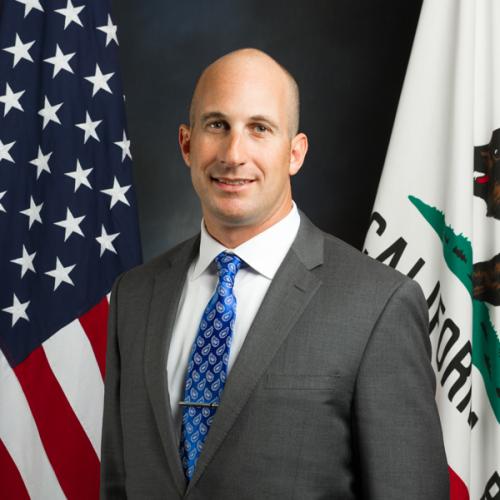
Asm. Heath Flora
Total votes
23,533
all sessions
Attendance
83%
3,189 missed
Lower than 98% of chamber peers
With party
98%
of cast votes
Lower than 77% of chamber peers
Bipartisan score
1%
crosses aisle rarely
Higher than 75% of chamber peers
Sponsored
1,713
bills & resolutions
Lower than 96% of chamber peers
Committees
1
assignment
1,713 bills and resolutions
Sponsored bills
Total
1,713
Primary
192
Co-sponsor
1,521
This page
1,713
matching current filters
Passed Feb 4, 2021
1 co-sponsor
Relative to Reverend Dr. Martin Luther King, Jr.
This measure would, among other things, honor the late civil rights pioneer and icon Reverend Dr. Martin Luther King, Jr. and commemorate Dr. Martin Luther King, Jr. Day.
Passed Jan 19, 2021
1 co-sponsor
Passed Jan 15, 2021
1 co-sponsor
Newspapers: state agency advertising: worker status: independent contractors.
(1) Existing law sets out the various responsibilities of the Department of General Services and state agencies in overseeing and implementing state contracting procedures and policies. Existing law also provides that whenever any official advertising, notice, resolution, order, or other matter of any nature whatsoever is required by law to be published in a newspaper, the publication is required to be made only in a newspaper of general circulation, as specified. This bill would require the department to publish, on the department's internet website, an annual report by July 1 of each year containing specified information relating to payments for placement of marketing or outreach advertising material by each state agency. The bill would provide that these provisions are not intended to amend any of the above-described provisions relating to required publications of official advertising, notices, resolutions, orders, or other matters. The bill would make these provisions inoperative on July 1, 2023. (2) Existing law, as established in the case of Dynamex Operations W. v. Superior Court (2018) 4 Cal.5th 903 (Dynamex) , creates a presumption that a worker who performs services for a hirer is an employee for purposes of claims for wages and benefits arising under wage orders issued by the Industrial Welfare Commission. Existing law requires a 3-part test, commonly known as the "ABC" test, to determine if workers are employees or independent contractors for those purposes. Existing law establishes that, for purposes of the Labor Code, the Unemployment Insurance Code, and the wage orders of the Industrial Welfare Commission, a person providing labor or services for remuneration is considered an employee rather than an independent contractor unless the hiring entity demonstrates that the person is free from the control and direction of the hiring entity in connection with the performance of the work, the person performs work that is outside the usual course of the hiring entity's business, and the person is customarily engaged in an independently established trade, occupation, or business. This test is commonly known as the "ABC" test, as described above. Existing law charges the Labor Commissioner with the enforcement of labor laws, including worker classification. Existing law exempts specified occupations and business relationships from the application of Dynamex and the provisions described above. These exemptions include a temporary exemption for newspaper distributors working under contract with a newspaper publisher, and newspaper carriers working under contract either with a newspaper publisher or newspaper distributor, as those terms are defined, until January 1, 2021. This bill would expand the exemption applicable to newspaper carriers by deleting the condition that a newspaper carrier work under contract either with a newspaper publisher or newspaper distributor. The bill would extend the exemption period to January 1, 2022. (3) This bill would incorporate the changes to Section 2750.3 of the Labor Code proposed by this bill to Section 2783 of the Labor Code, as proposed to be added by AB 2257, to be operative only if this bill and AB 2257 are enacted and this bill is enacted last.
Signed into law Sep 30, 2020
1 co-sponsor
Right to safe, decent, and affordable housing.
Existing law establishes the Department of Housing and Community Development in the Business, Consumer Services, and Housing Agency, and requires the department to administer various housing programs throughout the state, including programs that address the needs of homeless individuals and families, and to review local ordinances for the design, development, and operation of homeless shelters in cities and counties that have declared a shelter crisis. Existing law also requires a state agency or department that funds, implements, or administers a state program that provides housing or housing-related services to people experiencing homelessness or at risk of homelessness to revise or adopt guidelines and regulations to incorporate the core components of Housing First, an evidence-based model that uses housing as a tool, rather than a reward, for recovery. This bill would declare that it is the policy of the state that every individual has the right to safe, decent, and affordable housing, and would require the policy to consider homelessness prevention, emergency accommodations, and permanent housing, as specified. The bill would, among other things, require all relevant state agencies and departments, including, but not limited to, the Department of Housing and Community Development, the State Department of Social Services, and the Office of Emergency Services to consider that state policy when revising, adopting, or establishing policies, regulations, and grant criteria when those policies, regulations, and criteria are pertinent to advancing the guidelines listed as core components of Housing First. The bill would make these provisions operative on January 1, 2026, and would make implementation of these provisions subject to an appropriation of funds in the annual Budget Act for these purposes.
Vetoed Sep 28, 2020
1 co-sponsor
Telehealth.
Existing law provides for the Medi-Cal program, which is administered by the department, under which qualified low-income individuals receive health care services, including federally qualified health center (FQHC) services and rural health clinic (RHC) services. The Medi-Cal program is, in part, governed and funded by federal Medicaid program provisions. FQHC and RHC services are reimbursed, to the extent that federal financial participation is obtained, to providers on a per-visit basis, and a "visit" is defined as a face-to-face encounter between a patient of an FQHC or RHC and specified health care professionals, including dental providers. Existing law prohibits a requirement of in-person contact between a health care provider and a Medi-Cal patient when the service may be provided by telehealth, and, for purposes of telehealth, prohibits the department from limiting the type of setting where Medi-Cal services are provided. Existing law authorizes, to the extent that federal financial participation is available, the use of health care services by store and forward under the Medi-Cal program, subject to billing and reimbursement policies developed by the department, and prohibits a requirement of in-person contact between a health care provider and a Medi-Cal patient when these services are provided by store and forward. This bill would provide that an FQHC or RHC "visit" includes an encounter between an FQHC or RHC patient and a health care provider using telehealth by synchronous interaction or asynchronous store and forward. The bill would specify that an FQHC or RHC is not precluded from establishing a patient who is located within the FQHC's or RHC's federal designated service area through synchronous interaction or asynchronous store and forward as of the date of service if specified requirements are met. The bill would require the department to adopt regulations, as specified, and to provide a status report to the Legislature on a semiannual basis until those regulations have been adopted. The bill would make these provisions inoperative 180 days after the state of emergency for the COVID-19 pandemic has been terminated, as specified.
Vetoed Sep 26, 2020
1 co-sponsor
Suicide prevention.
Existing law establishes the State Department of Public Health within the California Health and Human Services Agency. This bill would authorize the State Department of Public Health to establish the Office of Suicide Prevention within the department, would require the office to perform specified duties, including providing information and technical assistance to statewide and regional partners regarding best practices on suicide prevention policies and programs and reporting on progress to reduce rates of suicide, and authorize the office to apply for and use federal, state, and foundation grants. The bill would require the office to consult with the Mental Health Services Oversight and Accountability Commission to implement suicide prevention efforts. The bill would require that the duties and responsibilities of the office be accomplished with existing staff and resources. The bill would make these provisions operative subject to an appropriation for these purposes in the annual Budget Act or another statute.
Signed into law Sep 25, 2020
1 co-sponsor
Relative to Officer Justin Kepler Memorial Highway.
This measure would designate a specified portion of State Route 120 in the County of San Joaquin as the Officer Justin Kepler Memorial Highway. The measure would also request the Department of Transportation to determine the cost of appropriate signs showing this special designation and, upon receiving donations from nonstate sources covering that cost, to erect those signs.
Signed into law Sep 14, 2020
0 co-sponsors
Relative to the Corporal Ronil Singh Memorial Highway.
This measure would designate a specified portion of State Highway Route 33 in the Counties of Merced and Stanislaus as the Corporal Ronil Singh Memorial Highway. The measure would request the Department of Transportation to determine the cost of appropriate signs showing this special designation and the badge of the Newman Police Department and, upon receiving donations from nonstate sources covering that cost, to erect those signs.
Signed into law Sep 14, 2020
1 co-sponsor
Ask Maddy
·
AI policy assistant
Ask Maddy about Heath Flora
Scope: CA
Hi! I can help you understand Heath Flora's legislative record. What would you like to know?
Try one of these
i
Maddy answers using official bill text and legislative records. Always verify before sharing.
Sources cited inline