

Existing law establishes a system of public elementary and secondary schools in this state, and provides for their governance. Existing law establishes county boards of education and school districts throughout the state to administer the public elementary and secondary schools within their respective jurisdictions. Existing law requires county boards of education and the governing board of each school district to prescribe and enforce rules not inconsistent with state law for their own government. Existing law requires a petition to establish a charter school to include, among other things, a reasonably comprehensive description of the governance structure of the charter school. Existing law requires county boards of education, school district governing boards, and, commencing July 1, 2023, the governing body of a charter school or of an entity managing multiple charter schools to appoint at least one high school pupil as a pupil member of the board or body, as applicable, in response to a petition from high school pupils requesting the appointment of one or more pupil members. Existing law authorizes the members of city or county boards of education or the governing boards of school districts to receive compensation, as provided. Existing law, on an annual basis, authorizes the county board of education or school district governing board to increase the compensation of individual board members beyond these limits in an amount not to exceed 5% based on the present monthly rate of compensation. Existing law authorizes any member who does not attend all meetings held in any month to receive, as compensation for their services, an amount not greater than the maximum amount allowed by law divided by the number of meetings held, and multiplied by the number of meetings actually attended. Existing law also authorizes an absent member to be paid for any meeting if the county board of education or school district governing board, by resolution, makes specified findings. Existing law does not entitle a pupil member of a county board of education, school district governing board, or governing body of a charter school or of an entity managing multiple charter schools to compensation pursuant to these provisions, except that the county board of education, the school district governing board, or the governing body of a charter school or of an entity managing multiple charter schools may award a pupil member elective course credit, as provided. This bill would revise and recast provisions related to the compensation of regular members and pupil members, as defined, of county boards of education, school district governing boards, and governing bodies of charter schools and of entities managing multiple charter schools. The bill would authorize the county board of education, the governing board of a school district, and the governing body of a charter school or of an entity managing multiple charter schools to award a pupil member elective course credit or monthly financial compensation, or both, as provided. For county boards of education and school district governing boards, the bill would authorize a pupil member to also receive partial monthly compensation, as described above, and would authorize an absent pupil member or an absent regular member to be paid for any meeting if the county board of education or school district governing board, by resolution, makes specified findings. This bill would incorporate additional changes to Section 1000 of the Education Code proposed by AB 417 to be operative only if this bill and AB 417 are enacted and this bill is enacted last.
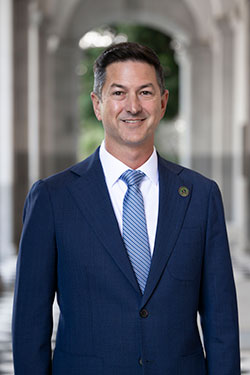
Asm. Chris Ward
Sponsored bills
Existing law, the Ralph C. Dills Act (Dills Act) , governs collective bargaining between the state and recognized state public employee organizations. Existing law excludes certain employees from coverage under the Dills Act, including, among others, managerial employees, supervisory employees, and confidential employees, as defined. Existing law creates the Public Employment Relations Board and authorizes it, among other things, to determine appropriate state employee bargaining units, as specified. This bill would enact the Legislature Employer-Employee Relations Act, to provide employees of the Legislature, except certain specified categories of excluded employees, the right to form, join, and participate in the activities of employee organizations of their own choosing for the purpose of representation on all matters of employer-employee relations. The bill would prescribe rights, duties, and prohibitions in this context that parallel those in the Dills Act. For the purposes of bargaining or meeting and conferring in good faith, the bill would define "employer" to mean the Assembly Committee on Rules or the Senate Committee on Rules. The bill would require the employer to meet and confer with representatives of recognized employee organizations regarding matters within the scope of representation. The bill would exclude certain matters from the scope of representation, as specified. The bill would grant exclusive jurisdiction to the Public Employment Relations Board to make an initial determination as to whether charges of unfair practices are justified, and, if so, the necessary remedy, as specified. However, the bill would prohibit the board from issuing a decision or order that intrudes upon or interferes with the Legislature's core function of efficient and effective lawmaking or the essential operation of the Legislature. The bill would require the board to determine appropriate bargaining units, and would prohibit the board from including employees in a bargaining unit that includes employees other than those of the employer. The bill would prohibit the board from including within a bargaining unit employees from both the Assembly and Senate. This bill would make it a misdemeanor for any person to willfully resist, prevent, impede, or interfere with any member of the board, or any of its agents, in the performance of duties pursuant to its provisions. By expanding the definition of a crime, this bill would impose a state-mandated local program. The bill would provide that the provisions of the Legislature Employer-Employee Relations Act are severable. The bill would become operative on July 1, 2026. The California Constitution requires the state to reimburse local agencies and school districts for certain costs mandated by the state. Statutory provisions establish procedures for making that reimbursement. This bill would provide that no reimbursement is required by this act for a specified reason. This bill would additionally exempt from public inspection records related to activities governed by the Legislature Employer-Employee Relations Act that reveal the employer's deliberative processes, impressions, evaluations, opinions, recommendations, meeting minutes, research, work product, theories, or strategy, or that provide instruction, advice, or training to employees who do not have full collective bargaining and representation rights under the Legislature Employer-Employee Relations Act. Existing constitutional provisions require that a statute that limits the right of access to the meetings of public bodies or the writings of public officials and agencies be adopted with findings demonstrating the interest protected by the limitation and the need for protecting that interest. This bill would make legislative findings to that effect.
Existing law provides for various memorials and monuments within the State Capitol Building and on the State Capitol grounds. Existing law prescribes various duties of the Department of General Services in connection with the development and maintenance of the State Capitol Building and grounds. This bill would authorize a nonprofit organization that represents blind veterans, in consultation with the Department of General Services, to plan, construct, and maintain a braille American flag to serve as a monument to the blind veterans of California and the United States in the State Capitol Building. The bill would specify duties for the Department of General Services in connection with the planning, construction, and maintenance of the monument. The bill would prohibit the construction of the monument until the Joint Rules Committee of the California Legislature approves and adopts a plan for the monument and the committee and the Department of Finance determine that sufficient private funding is available to construct and maintain the monument.
Existing law establishes and regulates the state prison for the confinement of persons convicted of certain felony offenses. Existing law also regulates county jails used for the confinement of persons awaiting trial and persons convicted of misdemeanors and certain felony offenses. Existing law establishes the Board of State and Community Corrections to provide statewide leadership, coordination, and technical assistance to promote effective state and local efforts and partnerships in California's adult and juvenile criminal justice system. The duties of the board, among others, include establishing standards for local correctional facilities and correctional officers. Under existing law, the board is composed of 13 members, as specified. This bill would, commencing July 1, 2024, add 2 additional members to the board, a licensed health care provider and a licensed mental or behavioral health care provider, appointed by the Governor and subject to confirmation by the Senate. The bill would also, commencing July 1, 2024, require the board to develop and adopt regulations pertaining to standards of care for incarcerated persons with mental health issues by local correctional facilities, including requirements for training of correctional staff, requirements for mental health screening, and requirements for safety checks of incarcerated persons.
Existing law authorizes an individual to contribute amounts in excess of personal income tax liability for the support of specified funds, including, for specified taxable years beginning on or after January 1, 2008, and before January 1, 2013, an ALS/Lou Gehrig's Disease Research Fund to provide research grants to develop and advance the understanding, techniques, and modalities effective in the prevention, treatment, and cure of ALS. Existing law specifies general administrative provisions applicable to these voluntary contributions, which, among other things, provide for the disbursement of contributions following the repeal of the fund provisions and require undesignated funds to be transferred to the General Fund. Existing law requires any new or extended voluntary contribution to include the words "voluntary tax contribution" in the name of the fund, to require the administering agency to include specified information about the fund on its internet website, to continuously appropriate from the fund the contributions made to the administering agency, and to set a minimum contribution amount for the continuation of any voluntary tax contribution fund provisions on the tax return form and a generally applicable repeal date for voluntary tax contribution provisions. This bill would allow an individual to designate on their tax return that a specified amount in excess of the taxpayer's personal income tax liability be transferred to the California ALS Research Network Voluntary Tax Contribution Fund. The bill would continuously appropriate the fund to the Franchise Tax Board, the Controller, and the State Department of Public Health for administrative costs and to the State Department of Public Health for disbursement to the Amyotrophic Lateral Sclerosis Association Golden West Chapter to support the work of their California ALS Research Network in an effort to develop and advance the understanding, techniques, and modalities effective in the prevention, treatment, and cure of ALS. The bill would repeal these provisions on December 1, 2031, or on December 1 of the year that the minimum contribution amount of $250,000 is not met, as specified. By continuously appropriating these funds, the bill would make an appropriation.
Existing law prohibits a person from carrying a concealed firearm or carrying a loaded firearm in public. Existing law authorizes a licensing authority, as specified, if good cause exists for the issuance, and subject to certain other criteria including, among other things, the applicant is of good moral character and has completed a specified course of training, to issue a license to carry a concealed handgun or to carry a loaded and exposed handgun, as specified. Under existing law, the required course of training for an applicant is no more than 16 hours and covers firearm safety and laws regarding the permissible use of a firearm. This bill would require the licensing authority to issue or renew a license if the applicant is not a disqualified person for the license and the applicant is at least 21 years of age. The bill would remove the good character and good cause requirements from the issuance criteria. Under the bill, the applicant would be a disqualified person if they, among other things, are reasonably likely to be a danger to self, others, or the community at large, as specified. This bill would add the requirement that the applicant be the recorded owner, with the Department of Justice, of the pistol, revolver, or other firearm capable of being concealed upon the person. This bill would change the training requirement to be no less than 16 hours in length and would add additional subjects to the course including, among other things, the safe storage and legal transportation of firearms. The bill would require an issuing authority, prior to that issuance, renewal, or amendment to a license, if it has direct access to the designated department system to determine if the applicant is the recorded owner of the pistol, revolver, or other firearm. The bill would require an issuing authority without access to that system to confirm the ownership with the sheriff of the county in which the agency is located. By requiring local agencies to issue licenses for concealed firearms, this bill would create a state-mandated local program. The bill would require a licensing authority to provide the applicant notice if a new license or license renewal is denied or revoked. If an application is denied or a license is revoked based on a determination that the applicant is a disqualified person, the bill would permit the applicant to request a hearing to challenge the license denial or revocation, and require the licensing authority to inform the applicant of the ability to seek a hearing. If a new license or license renewal is denied or revoked for any other reason, the bill would authorize the applicant to seek a writ of mandate from a superior court within 30 days of receipt of notice of denial or revocation, and require the licensing authority to inform the applicant of the ability to seek a writ of mandate. By imposing new duties on local licensing authorities, this bill would create a state-mandated local program. Existing law requires an agency issuing a license described above to set forth specified information on the license, including, among other things, the licensee's name, occupation, and reason for desiring a license to carry the weapon. This bill would revise that information to include, among other things, the licensee's driver's license or identification number, fingerprints, and information relating to the date of expiration of the license, and would remove the requirement that the license detail the reason for desiring a license to carry the weapon. Existing law requires an applicant for a license described above to provide fingerprints, as specified. Existing law exempts an applicant from this requirement if they have previously applied to the same licensing authority and the applicant's fingerprints have previously been forwarded to the department, as specified, and instead requires that authority to note data that would provide positive identification in the files of the department, on the copy of any subsequent license submitted to the department. This bill would require the licensing authority to submit fingerprint images and related information to the department for each applicant applying for a new or renewal license. The bill would require the department to notify the licensing authority if the department is unable to ascertain, among other things, the final disposition of an arrest or criminal charge under state or federal law that would prohibit the person from possessing, receiving, owning, or purchasing a firearm. This bill would prohibit a license from being issued or renewed unless the department reports to a licensing authority that the applicant is eligible to possess, receive, own, or purchase a firearm. Existing law requires a licensing authority to charge an additional fee in an amount equal to reasonable processing costs for a new license. Existing law also prohibits a licensing authority from imposing, among other things, a requirement or condition that an applicant pay additional funds or obtain liability insurance. This bill would authorize a licensing authority to charge the additional processing cost fee for a license renewal and would permit the licensing authority to collect the first 50% of the fee upon filing of the application. The bill also removes the prohibition on licensing authority requirements for additional fees or liability insurance. Existing law requires that licenses and applications for licenses be uniform throughout the state, and to be submitted upon forms prescribed by the Attorney General. When revising the standard application form for licenses, existing law requires the Attorney General to convene a committee to review and revise the existing application form. Existing law requires the Attorney General to develop a uniform license that may be used as indicia of proof of licensure throughout the state. Existing law also requires the committee to convene to review and revise the design standard for a uniform license. This bill would authorize the Attorney General to revise the standard form for licenses and the design standard if the committee does not revise the form or issue a design standard within a specified time period. Under existing law, it is a crime to bring a firearm into a state or local building, and makes it a crime to bring a loaded firearm into, or upon the grounds of, any residence of the Governor, any other constitutional officer, or Member of the Legislature. Existing law exempts a licensee from that prohibition if, among other things, the licensee has a valid license to carry the firearm. This bill would remove those exemptions, except as specified. The bill would make it a crime to bring an unloaded firearm into, or upon the grounds of, any residence of the Governor, any other constitutional officer, or Member of the Legislature. The bill would also prohibit a licensee from carrying a firearm to specified locations, including, among other places, a building designated for a court proceeding and a place of worship, as defined, with specific exceptions. By expanding the scope of an existing crime, the bill would impose a state-mandated local program. Existing law prohibits a person from knowingly possessing a firearm in a sterile area of an airport, passenger vessel terminal, or public transit facility, as defined. This bill would additionally prohibit a person from knowingly possessing a firearm in any building, real property, or parking area under the control of an airport or passenger vessel terminal, as specified. By expanding the scope of an existing crime, the bill would impose a state-mandated local program. Existing law, the Gun-Free School Zone Act of 1995, makes it a crime to possess a firearm in a place that the person knows, or reasonably should know, is a school zone. Existing law defines a school zone as an area in, or on the grounds of, a public or private school providing instruction in kindergarten or grades 1 to 12, inclusive, or within a distance of 1,000 feet from the grounds of the public or private school. Existing law provides exceptions to that crime, including if a person with a valid concealed carry license who is carrying the firearm described in the license in an area that is not in, or on the grounds of, a public or private school and when a firearm is an unloaded pistol, revolver, or other firearm capable of being concealed on the person and is in a locked container or within the locked trunk of a motor vehicle. This bill would revise the exception for a person who has a valid concealed carry license to permit them to carry a specified firearm in an area that is not within any building, real property, or parking area under the control of a public or private school, or on a street or sidewalk immediately adjacent to a building, real property, or parking area under the control of that public or private school, as specified. Existing law requires a licensing authority to revoke a license to carry a firearm if the licensing authority is notified by the department or the licensing authority determines that a licensee is prohibited from possessing, receiving, owning, or purchasing a firearm under state or federal law. This bill would also require a licensing authority to revoke a license if, among other things, a licensee has provided inaccurate or incomplete information on their application for a new license or license renewal. Existing law authorizes a licensing authority to impose reasonable restrictions on the time, place, manner, and circumstances when a licensee may carry a firearm capable of being concealed. While carrying a firearm, this bill would prohibit a licensee from, among other things, consuming an alcoholic beverage or controlled substance and from falsely representing that the licensee is a peace officer. The bill would authorize the department to adopt emergency regulations to implement the concealed firearm licensing system, as specified. This bill would make conforming changes. The bill would additionally make various findings and declarations of the Legislature. The bill would state that its provisions are severable. This bill would incorporate additional changes to Section 29805 of the Penal Code proposed by SB 368 to be operative only if this bill and SB 368 are enacted and this bill is enacted last. This bill would also incorporate additional changes to Section 30370 of the Penal Code proposed by AB 135 and SB 135 to be operative only if this bill and either of those bills are enacted and this bill is enacted last. The California Constitution requires the state to reimburse local agencies and school districts for certain costs mandated by the state. Statutory provisions establish procedures for making that reimbursement. This bill would provide that with regard to certain mandates no reimbursement is required by this act for a specified reason. With regard to any other mandates, this bill would provide that, if the Commission on State Mandates determines that the bill contains costs so mandated by the state, reimbursement for those costs shall be made pursuant to the statutory provisions noted above.
Existing law requires the State Department of Education to develop resources or, as appropriate, update existing resources for in-service training on schoolsite and community resources for the support of lesbian, gay, bisexual, transgender, queer, and questioning (LGBTQ) pupils, and strategies to increase support for LGBTQ pupils and thereby improve overall school climate. Existing law requires those resources to be designed for use in schools operated by a school district or county office of education and charter schools serving pupils in grades 7 to 12, inclusive. This bill would require the Superintendent of Public Instruction, on or before July 1, 2024, to convene an advisory task force to identify the needs of lesbian, gay, bisexual, transgender, queer, questioning, and plus (LGBTQ+) pupils and to make recommendations to assist in implementing supportive policies and initiatives to address LGBTQ+ pupil education and well-being, as provided. The bill would require advisory task force members to be selected by the Superintendent, as provided. The bill would require the advisory task force to, on or before January 1, 2026, report their findings and recommendations to the Legislature, the Superintendent, and the Governor.
Existing law authorizes a person to file a petition with the superior court seeking a judgment recognizing their change of gender to female, male, or nonbinary, including a person who is under 18 years of age. Existing law authorizes a person to file a single petition to simultaneously change the petitioner's name and recognize the change to the petitioner's gender and sex identifier, as specified. This bill would require any petition for a change of gender and sex identifier or a petition for change of gender, sex identifier, and name filed by a person under 18 years of age, and any papers associated with the proceeding, to be kept confidential by the court. The bill would require the court to limit access to these records to specified individuals, including, among others, the minor, the minor's parents, and their attorneys. Existing constitutional provisions require that a statute that limits the right of access to the meetings of public bodies or the writings of public officials and agencies be adopted with findings demonstrating the interest protected by the limitation and the need for protecting that interest. This bill would make legislative findings to that effect.
Existing law establishes the system of public elementary and secondary schools in this state and provides for the establishment of local educational agencies to operate these schools and provide instruction to pupils. Existing law states the policy of the State of California to afford all persons in public schools, regardless of their disability, gender, gender identity, gender expression, nationality, race or ethnicity, religion, sexual orientation, or any other specified characteristic, equal rights and opportunities in the educational institutions of the state. Existing law requires, no later than July 1, 2021, the State Department of Education to develop resources or, as appropriate, update existing resources for in-service training on schoolsite and community resources for the support of lesbian, gay, bisexual, transgender, queer, and questioning (LGBTQ) pupils, and strategies to increase support for LGBTQ pupils, as specified. Existing law encourages schools operated by a school district or county office of education and charter schools to use those resources to provide training at least once every 2 years to teachers and other certificated employees of those schools that serve pupils in grades 7 to 12, inclusive. This bill would require the State Department of Education, on or before July 1, 2025, to finalize the development of an online training delivery platform and an online training curriculum to support LGBTQ cultural competency training for teachers and other certificated employees, as specified. The bill would delete the above-described encouragement and instead would require, commencing with the 2025–26 school year and ending with the completion of the 2029–30 school year, each local educational agency, as defined, serving pupils in grades 7 to 12, inclusive, to use the online training delivery platform and curriculum, or an in-service alternative, to provide at least one hour of required training annually to teachers and other certificated employees at those schools, as provided. The bill would require each local educational agency to maintain records documenting the training, as provided. The bill would require the department to monitor compliance with the training requirement as part of the department's annual compliance monitoring of state and federal programs. The bill would require the department, within 9 months of the completion of the 5-year training period, to report data from that compliance monitoring to the Legislature, and post the report on the department's internet website, as provided. By imposing additional duties on local educational agencies, the bill would impose a state-mandated local program. The bill would require these provisions to be known as the Safe and Supportive Schools Act. This bill would make these requirements inoperative on July 1, 2031, and would repeal them as of January 1, 2032. The California Constitution requires the state to reimburse local agencies and school districts for certain costs mandated by the state. Statutory provisions establish procedures for making that reimbursement. This bill would provide that, if the Commission on State Mandates determines that the bill contains costs mandated by the state, reimbursement for those costs shall be made pursuant to the statutory provisions noted above.
Existing law requires law enforcement agencies, departments, or entities to consider specified best practices regarding the downloading and storage of body-worn camera data, including prohibiting agency personnel from uploading recorded data onto public and social media internet websites, when establishing policies and procedures for the implementation and operation of a body-worn camera system. Existing law prohibits a police department or sheriff's office from sharing, on social media, booking photos of an individual arrested on suspicion of committing a nonviolent crime, as defined, unless specified circumstances exist. Existing law requires a police department or sheriff's office that shares, on social media, a booking photo of an individual arrested for the suspected commission of a nonviolent crime to remove the information from its social media page, upon request, unless the same specified circumstances exist. Existing law also requires a police department or sheriff's office to remove the booking photo of a person who has committed any other crime from social media if the individual's record has been sealed, the individual's conviction has been dismissed, expunged, pardoned, or eradicated, the individual has been issued a certificate of rehabilitation, the individual is found not guilty of committing the crime for which they were arrested, or the individual was ultimately not charged with the crime or the charges were dismissed. With respect to an individual who has been arrested for any crime, this bill would require a police department or sheriff's office, upon posting a booking photo on social media, to use the name and pronouns given by the individual arrested. The bill would authorize a police department or sheriff's office to use other legal names or known aliases of an individual in limited specified circumstances. This bill would also require that a police department or sheriff's office remove any booking photo shared on social media after 14 days unless specified circumstances exist. Because the bill would impose higher duties on local law enforcement, it would impose a state-mandated local program. The California Constitution requires the state to reimburse local agencies and school districts for certain costs mandated by the state. Statutory provisions establish procedures for making that reimbursement. This bill would provide that, if the Commission on State Mandates determines that the bill contains costs mandated by the state, reimbursement for those costs shall be made pursuant to the statutory provisions noted above.