

Existing unemployment compensation disability law requires workers to pay contribution rates based on, among other things, wages received in employment and benefit disbursement, for payment into the Unemployment Compensation Disability Fund, a special fund in the State Treasury. That fund is continuously appropriated for the purpose of providing disability benefits and making payment of expenses in administering those provisions. Existing law establishes, within the above state disability insurance program, a family temporary disability insurance program, also known as the paid family leave program, for the provision of wage replacement benefits for up to 8 weeks to workers who take time off work for prescribed purposes, including to care for a seriously ill family member. Existing law defines terms for its purposes, including family care leave and family member. This bill would, commencing July 1, 2028, expand eligibility for benefits under the paid family leave program to include individuals who take time off work to care for a seriously ill designated person. The bill would define designated person to mean any care recipient related by blood or whose association with the individual is the equivalent of a family relationship, and would make conforming changes to the definitions of the terms family care leave and family member. This bill would require an individual that requests for the first time family temporary disability insurance benefits to care for a designated person to identify the designated person and, under penalty of perjury, attest to how the individual is related by blood to the designated person, or how the individual's association with the designated person is the equivalent of a family relationship. By expanding the scope of the crime of perjury, the bill would impose a state-mandated local program. By authorizing expenditures from the continuously appropriated fund for these expanded purposes, this bill would make an appropriation. The California Constitution requires the state to reimburse local agencies and school districts for certain costs mandated by the state. Statutory provisions establish procedures for making that reimbursement. This bill would provide that no reimbursement is required by this act for a specified reason.
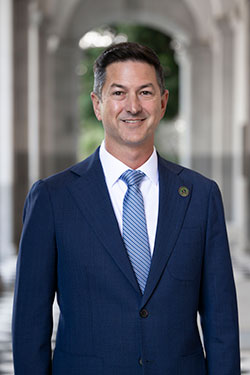
Asm. Chris Ward
Sponsored bills
(1) The United States Constitution generally requires a state to give full faith and credit to the public acts, records, and judicial proceedings of every other state. Existing law generally authorizes a California court or attorney to issue a subpoena if a foreign subpoena has been sought in this state but prohibits the issuance of a subpoena based on another state's law that interferes with a person's right to allow a child to receive gender-affirming health care or gender-affirming mental health care. Existing law generally prohibits a provider of health care, a health care service plan, or a contractor from disclosing medical information regarding a patient, enrollee, or subscriber without first obtaining an authorization unless an exception applies, including that the disclosure is in response to a subpoena. Existing law prohibits a provider of health care, a health care service plan, or a contractor from releasing medical information related to a person or entity allowing a child to receive gender-affirming health care or gender-affirming mental health care in response to a civil action, including a foreign subpoena, based on another state's law that authorizes a person to bring a civil action against a person or entity that allows a child to receive gender-affirming health care or gender-affirming mental health care. This bill would additionally prohibit a provider of health care, a health care service plan, or a contractor from releasing medical information related to a person seeking or obtaining gender-affirming health care or gender-affirming mental health care in response to a criminal or civil action, including a foreign subpoena, based on another state's law that interferes with an individual's right to seek or obtain gender-affirming health care or gender-affirming mental health care. The bill would also prohibit a provider of health care, health care service plan, contractor, or employer from cooperating with or providing medical information to an individual, agency, or department from another state or, to the extent permitted by federal law, to a federal law enforcement agency that would identify an individual and that is related to an individual seeking or obtaining gender-affirming health care, as specified. The bill would prohibit these entities from releasing medical information related to sensitive services, as defined, in response to a foreign subpoena that is based on a violation of another state's laws authorizing a criminal action against a person or entity for provision or receipt of legally protected health care activity, as defined. The bill would also generally prohibit the issuance of a subpoena based on a violation of another state's law that interferes with a person's right to seek or obtain gender-affirming health care or gender-affirming mental health care, as specified. (2) Existing law requires the Department of Justice to maintain the Controlled Substance Utilization Review and Evaluation System (CURES) for the electronic monitoring of the prescribing and dispensing of certain controlled substances by a health care practitioner authorized to prescribe, order, administer, furnish, or dispense those controlled substances. Existing law authorizes the department to enter into an agreement with an entity operating an interstate data sharing hub, or an agency operating a prescription drug monitoring program in another state, for purposes of interstate data sharing of prescription drug monitoring program information. Existing law limits the entities to which data may be provided from CURES, as well as the type of data that may be released and the uses to which it may be put. This bill would prohibit a state or local agency or employee, appointee, officer, contractor, or official or any other person acting on behalf of a public agency from knowingly providing any CURES data or knowingly expending any resources in furtherance of any interstate investigation or proceeding seeking to impose civil, criminal, or disciplinary liability based upon another state's law for the provision or receipt of legally protected health care activity, as defined. The bill would prohibit the department from sharing data with an out-of-state law enforcement agency without a warrant, subpoena, or court order and would prohibit an out-of-state user from providing any data in furtherance of an investigation or proceeding to impose liability based on another state's law for the provision or receipt of legally protected health care activity. This bill would make it a misdemeanor for a person to access the CURES database when not authorized by law and would make it a misdemeanor for a person who is authorized to access the database to knowingly furnish information from the CURES database to a person who is not authorized by law to receive that information. By creating new crimes, the bill would impose a state-mandated local program. (3) This bill would provide that its provisions are severable. (4) This bill would incorporate additional changes to Section 11165 of the Health and Safety Code proposed by AB 82 to be operative only if this bill and AB 82 are enacted and this bill is enacted last. (5) The California Constitution requires the state to reimburse local agencies and school districts for certain costs mandated by the state. Statutory provisions establish procedures for making that reimbursement. This bill would provide that no reimbursement is required by this act for a specified reason. (6) This bill would declare that it is to take effect immediately as an urgency statute.
(1) Existing law authorizes reproductive health care service providers, employees, volunteers, and patients, and individuals who face threats of violence or violence or harassment from the public because of their affiliation with a reproductive health care services facility, to complete an application to be approved by the Secretary of State for the purposes of enabling state and local agencies to respond to requests for public records without disclosing a program participant's residence address contained in any public record and otherwise provide for confidentiality of identity for that person, subject to specified conditions. Under existing law, any person who makes a false statement in an application is guilty of a misdemeanor. This bill would expand the address confidentiality program to a gender-affirming health care provider, employee, or volunteer, as defined, who faces threats of violence or harassment from the public because of their affiliation with a gender-affirming health care services facility. The bill would also make conforming changes. By imposing new duties on local agencies and expanding the scope of a crime, this bill would create a state-mandated local program. (2) Existing law prohibits a person, business, or association from knowingly publicly posting or publicly displaying, disclosing, or distributing on internet websites or on social media, the personal information or image of any reproductive health care services patient, provider, or assistant, or other individuals residing at the same home address, with the intent to incite a 3rd person to cause imminent great bodily harm to the person identified in the posting or display, or to a coresident of that person, as specified, or to threaten the person identified in the posting or display, or a coresident of that person, as specified. Existing law additionally prohibits a person, business, or association from soliciting, selling, or trading on the internet or social media the personal information or image of a reproductive health care services patient, provider, or assistant with the intent described above. Existing law establishes a cause of action for injunctive or declarative relief for a violation of these prohibitions. Existing law prohibits a person from posting on the internet or social media, with the intent that another person imminently use that information to commit a crime involving violence or a threat of violence against a reproductive health care services patient, provider, or assistant, or other individuals residing at the same home address, the personal information or image of a reproductive health care services patient, provider, or assistant, or other individuals residing at the same home address. Existing law makes a violation of this prohibition punishable by a fine of up to $10,000 per violation, imprisonment, as specified, or by both that fine and imprisonment. This bill would additionally prohibit a person, business, or association from soliciting, selling, or trading on the internet or social media the personal information or image of a gender-affirming health care services provider, employee, volunteer, or patient with the intent described above. The bill would also prohibit a person from posting on the internet or social media, as described above, the personal information or image of a gender-affirming health care services provider, employee, volunteer, or patient, or other individuals residing at the same home address. The bill would define various terms for these purposes. By expanding the scope of a crime, this bill would create a state-mandated local program. (3) Existing law, the California Uniform Controlled Substances Act (the act) , classifies controlled substances into 5 designated schedules, with the most restrictive limitations generally placed on controlled substances classified in Schedule I, and the least restrictive limitations generally placed on controlled substances classified in Schedule V. The act requires the Department of Justice to maintain the Controlled Substances Utilization Review and Evaluation System (CURES) for the electronic monitoring of the prescribing and dispensing of certain controlled substances by a health care practitioner authorized to prescribe, order, administer, furnish, or dispense those controlled substances. Existing law limits the entities to which data may be provided from CURES, as well as the type of data that may be released and the uses to which it may be put. Existing law makes a violation of the act a crime. Existing law defines the term "legally protected health care activity" to include the exercise of, or an act undertaken to aid a person to exercise, the provision of reproductive health care services, gender-affirming health care services, or gender-affirming mental health care services. This bill would prohibit a prescription for or the dispensing of testosterone or mifepristone from being reported to the department, CURES, or a contractor, as specified. The bill would require the department, on or before January 1, 2027, to remove certain existing records that were created or maintained prior to January 1, 2026, and make other conforming changes. By creating a new crime, the bill would establish a state-mandated local program. (4) Existing law authorizes a court to issue various orders relating to criminal investigations, including the interception of wire or electronic communications, the installation and use of a pen register or trap and trace device, or a search warrant upon specified grounds. Existing law prohibits the issuance of any orders or warrants for the purpose of investigating or recovering evidence of a prohibited violation. Existing law defines "prohibited violation" for this purpose as a violation of a law that creates liability for, or arising out of, either providing, facilitating, or obtaining an abortion or intending or attempting to provide, facilitate, or obtain an abortion that is lawful under the laws of this state. This bill would instead define a prohibited violation as a violation of a law that creates liability for, or arising out of, either providing, facilitating, or obtaining a legally protected health care activity or intending or attempting to provide, facilitate, or obtain a legally protected health care activity, as defined. (5) Existing law requires superior court judges in each county to prepare, adopt, and annually revise a uniform countywide schedule of bail for all bailable offenses, as specified. Existing law requires a uniform countywide schedule of bail to set $0 bail for an individual who has been arrested in connection with a proceeding in another state regarding an individual performing, supporting, or aiding in the performance of an abortion in this state, or an individual obtaining an abortion in this state, if the abortion is lawful under California law. This bill would instead require a uniform countywide schedule of bail to set $0 bail for an individual who has been arrested in connection with a proceeding in another state regarding an individual performing, supporting, or aiding in the performance of a legally protected health care activity in this state, or an individual obtaining a legally protected health care activity in this state, as specified. (6) Existing law prohibits a state or local law enforcement agency or officer from knowingly arresting or knowingly participating in the arrest of any person for performing, supporting, or aiding in the performance of an abortion or for obtaining an abortion, if the abortion is lawful in this state. Existing law prohibits a state or local public agency from cooperating with or providing information to an individual or agency from another state or a federal law enforcement agency, as specified, regarding a lawful abortion. Existing law prohibits specified persons, including a judicial officer, a court employee, or an authorized attorney, among others, from issuing a subpoena in connection with a proceeding in another state regarding an individual performing, supporting, or aiding in the performance of an abortion in this state, or an individual obtaining an abortion in this state, if the abortion is lawful in this state. Existing law does not prohibit the investigation of criminal activity that may involve an abortion, provided that no information relating to any medical procedure performed on a specific individual is shared with an agency or individual from another state for the purpose of enforcing another state's abortion law. This bill would instead expand those above-described provisions to apply to legally protected health care activity, as defined. (7) Existing law prohibits a state or local government employee or a person acting on behalf of the local or state government, among others, from providing information or expending resources in furtherance of an investigation that seeks to impose civil or criminal liability or professional sanctions on an individual for a legally protected health care activity, as defined, that occurred in this state or that would be legal if it occurred in this state. Existing law requires any out-of-state subpoena, warrant, wiretap order, pen register trap and trace order, or other legal process to include an affidavit or declaration under penalty of perjury that the discovery request is not in connection with an out-of-state proceeding relating to a legally protected health care activity, except as specified. This bill would authorize the Attorney General to bring a civil action against a person or entity that submitted a false affidavit under these provisions and would make submission of a false affidavit punishable by a civil penalty of $15,000, in addition to any other penalties or remedies provided by law. (8) Existing constitutional provisions require that a statute that limits the right of access to the meetings of public bodies or the writings of public officials and agencies be adopted with findings demonstrating the interest protected by the limitation and the need for protecting that interest. This bill would make legislative findings to that effect. (9) This bill would incorporate additional changes to Section 11165 of the Health and Safety Code proposed by SB 497 to be operative only if this bill and SB 497 are enacted and this bill is enacted last. (10) The California Constitution requires the state to reimburse local agencies and school districts for certain costs mandated by the state. Statutory provisions establish procedures for making that reimbursement. This bill would provide that with regard to certain mandates no reimbursement is required by this act for a specified reason. With regard to any other mandates, this bill would provide that, if the Commission on State Mandates determines that the bill contains costs so mandated by the state, reimbursement for those costs shall be made pursuant to the statutory provisions noted above.
Existing law, the California Uniform Controlled Substances Act, classifies controlled substances into 5 designated schedules, with the most restrictive limitations generally placed on controlled substances classified in Schedule I, and the least restrictive limitations generally placed on controlled substances classified in Schedule V. Existing law creates a Research Advisory Panel, as specified, to conduct hearings on, and in other ways study, research projects concerning controlled substances. Existing law authorizes the panel to approve research projects that have been registered with the Attorney General concerning the nature and effects of cannabis or hallucinogenic drugs and the treatment of abuse of controlled substances. Existing law authorizes a person who, under federal law, is entitled to use controlled substances for the purpose of research, instruction, or analysis, to lawfully obtain and use those controlled substances upon approval by the panel, as specified. This bill would revise and recast these provisions to require the panel to review research projects to be conducted in this state that require the administration of Schedule I or Schedule II controlled substances. The bill would authorize the panel, until January 1, 2028, to expedite the review of projects that satisfy certain criteria, including, among others things, that have sought or received certain federal approvals and have proof of independent peer review of the study, as described. The bill would authorize the chairperson of the panel to deputize 2 or more panel members to review the research project and to approve it, without a vote by the entire panel. The bill would authorize the panel to withdraw its approval for reasonable cause and would require the panel to provide notice and time for the concern to be cured by the project before withdrawing its approval. Existing law, the Bagley-Keene Open Meeting Act, requires, with specified exceptions, that all meetings of a state body be open and public and all persons be permitted to attend. Existing law, until January 1, 2027, authorizes the Research Advisory Panel to hold closed sessions for the purpose of discussing, reviewing, and approving research projects that contain sensitive and confidential information, including trade secrets, intellectual property, or proprietary information in its possession, the public disclosure of which is prohibited by law. This bill would extend the authorization to hold closed sessions to January 1, 2028, and would additionally exempt the above-described panel members assigned to review and approve a research project from the Bagley-Keene Open Meeting Act until January 1, 2028. Existing constitutional provisions require that a statute that limits the right of access to the meetings of public bodies or the writings of public officials and agencies be adopted with findings demonstrating the interest protected by the limitation and the need for protecting that interest. This bill would make legislative findings to that effect.
Existing law, commonly referred to as the Density Bonus Law, requires a city or county to provide a developer that proposes a housing development, as defined, within the city or county with a density bonus, other incentives or concessions, and waivers or reductions of development standards, as specified, if the developer agrees to construct specified units and meets other requirements. This bill would specify that a concession and incentive shall not result in a proposed project, as prescribed, with a specified commercial floor area ratio. The bill would also specify that certain provisions of the Density Bonus Law do not require a city, county, or city and county to approve, grant a concession or incentive requiring approval of, or waive or reduce development standards otherwise applicable to, transient lodging as part of a housing development, except as specified.
Existing law, the Zenovich-Moscone-Chacon Housing and Home Finance Act, among other things, establishes the Department of Housing and Community Development and requires it to administer various programs intended to promote the development of housing and to provide housing assistance and home loans. Existing law sets forth various general powers of the department in implementing these programs, including authorizing the department to enter into long-term contracts or agreements of up to 30 years for the purpose of servicing loans or grants or enforcing regulatory agreements or other security documents. Existing law requires the department, subject to certain conditions, to allow property owners subject to a regulatory agreement with the department to take out additional debt on the development in order to finance, with the department's approval, the rehabilitation of the property or investment in new affordable housing. Under existing law, one of those conditions is that any extracted equity is required to meet at least one of several conditions, as specified. Existing law defines "extracted equity" for these purposes to mean debt added to a department-regulated property that is not used in prescribed ways. This bill would, additionally, require the department to allow property owners to take out additional debt, as described above, if any extracted equity is utilized for reimbursement of borrower advances for predevelopment costs, unreimbursed capital improvements, and unreimbursed operating deficits. The bill would revise the definition of "extracted equity" to mean debt distributed funds that are financed with debt that is secured by a department-regulated property and is not used in prescribed ways.
Existing law, the State Housing Law, establishes statewide construction and occupancy standards for buildings used for human habitation. Existing law authorizes a county's or city's governing body to prescribe fees for permits, certificates, or other forms or documents required or authorized under the State Housing Law. This bill, the California Residential Private Permitting Review Act, would require a county or city to prepare a residential building permit fee schedule and post the schedule on the county's or city's internet website, if the county or city prescribes residential building permit fees. Existing law requires a county's or city's building department to enforce the State Housing Law and the California Building Standards Code, and other rules and regulations promulgated pursuant to the State Housing Law pertaining to standards for buildings used for human habitation. Existing law requires a county or city, upon the applicant's request, to contract with or employ temporarily a private entity or person to check the plans and specifications submitted with an application for a residential building permit to comply with the State Housing Law or local ordinances adopted pursuant to the State Housing Law, when the building department takes more than 30 days, as specified, to complete the plan check. This bill would remove the above-described requirement for a county or city to contract with or employ temporarily a private entity or person to check the plans when the building department takes more than 30 days to complete the plan check. Until January 1, 2036, the bill would instead, upon an application for a residential building permit being deemed complete, as provided, require the city or county to provide the applicant with an estimated timeframe in which the city or county will determine if the completed application is compliant with permit standards. The bill would authorize an applicant to retain a private professional provider, as defined, to perform the plan check, if the estimated timeframe exceeds 30 business days or the city or county has not determined the completed application is compliant within 30 days of the application being deemed complete. The bill would require an applicant who retains a private professional provider to notify the city or county of their intent to retain the private professional provider within a prescribed timeframe. If a private professional provider performs the plan-checking function, the bill would impose additional requirements, including, among other things, requiring the private professional provider to prepare a specified affidavit, under penalty of perjury, and the applicant to submit to the city or county a specified report of the plan check. The bill would require the city or county, within 10 business days of receiving the report, to consider the report and, based on the report, either issue the residential building permit or notify the applicant that the plans and specifications do not comply, as specified. If the city or county notifies the applicant that the plans and specifications do not comply, the bill would authorize the applicant to resubmit corrected plans and specifications to the city or county, as specified. By expanding the crime of perjury and imposing new duties on local agencies, the bill would impose a state-mandated local program. Existing law requires a local agency to determine whether an application for a postentitlement phase permit, as defined, is complete and provide written notice of this determination to the applicant not later than 15 business days after the local agency received the application. If a local agency finds that a complete application is noncompliant, existing law requires the local agency to provide the applicant with a list of items that are noncompliant and a description of how the application can be remedied by the applicant within specified time periods. Existing law requires the local agency to provide a process for an applicant to appeal a finding that the application for a postentitlement phase permit is incomplete or noncompliant, as provided. This bill, until January 1, 2036, if a private professional provider performs the plan-checking function, as described above, would deem the local agency to be in compliance with the above-described requirements governing applications for postentitlement phase permits as those requirements pertain to the residential building permit. Existing law, the Government Claims Act, establishes the liability and immunity of a public entity for its acts or omissions that cause harm to persons. Where a public entity is under a mandatory duty imposed by an enactment that is designed to protect against the risk of a particular kind of injury, the act makes the public entity liable for an injury of that kind proximately caused by its failure to discharge the duty unless the public entity establishes that it exercised reasonable diligence to discharge the duty. This bill, until January 1, 2036, if a private professional provider performs the plan-checking function, as described above, would require the applicant to indemnify the local agency from any property damage or personal injury arising from construction in accordance with the plans checked by a private professional provider under the bill's provisions. Notwithstanding the above-described liability of a public entity for failure to discharge certain mandatory duties, the bill would provide that a public entity or public employee is not liable for an injury caused by their discretionary or ministerial acts or omissions relating to the issuance or denial of any residential building permit pursuant to the bill's provisions. Existing law, the Planning and Zoning Law, requires each county and each city to adopt a comprehensive, long-term general plan for the physical development of the county or city, and specified land outside its boundaries, that includes, among other specified mandatory elements, a housing element. Existing law requires the planning agency of the county or city, after the legislative body has adopted a general plan, to submit an annual report to the legislative body, the Office of Land Use and Climate Innovation, and the Department of Housing and Community Development by April 1 of each year that includes, among other things, the number of units of housing demolished and new units of housing that have been issued a completed entitlement, a building permit, or a certificate of occupancy thus far in the housing element cycle, and the income category, by area median income category, that each unit of housing satisfies. This bill, beginning April, 1, 2027, and until January 1, 2036, would require a city or county to include in the above-described annual report the number of residential building permits reviewed by the city or county, the number reviewed by a private professional provider under the bill's provisions, as described above, and the number of full-time equivalent staff members directly involved in the processing of residential building permits, as provided. The bill would include findings that changes proposed by this bill address a matter of statewide concern rather than a municipal affair and, therefore, apply to all cities, including charter cities. The California Constitution requires the state to reimburse local agencies and school districts for certain costs mandated by the state. Statutory provisions establish procedures for making that reimbursement. This bill would provide that no reimbursement is required by this act for specified reasons. This bill would declare that it is to take effect immediately as an urgency statute.
Existing law, the Permit Streamlining Act, requires a public agency that is the lead agency for a development project to approve or disapprove a development project within specified time periods. The act requires a public agency that is a responsible agency for specified development projects to approve or disapprove the project within 90 days of the date on which the lead agency has approved the project or within 90 days of the date on which the completed application has been received and accepted as complete by the lead agency, whichever is longer. This bill would reduce the time period that a responsible agency is required to approve or disapprove a project, as described above, from 90 days to 45 days, except as provided. By increasing the duties of local officials, this bill would impose a state-mandated local program. The bill would include findings that changes proposed by this bill address a matter of statewide concern rather than a municipal affair and, therefore, apply to all cities, including charter cities. The California Constitution requires the state to reimburse local agencies and school districts for certain costs mandated by the state. Statutory provisions establish procedures for making that reimbursement. This bill would provide that no reimbursement is required by this act for a specified reason.
Existing law, commencing July 1, 2025, requires a public or private school that serves pupils in any of grades 7 to 12, inclusive, and that issues pupil identification cards to have printed on the identification cards the number for the 988 Suicide and Crisis Lifeline. Existing law requires a public or private institution of higher education that issues student identification cards to have printed on either side of the student identification cards the telephone number for the National Suicide Prevention Lifeline. This bill, commencing July 1, 2026, would require public schools that serve pupils in any of grades 7 to 12, inclusive, and public institutions of higher education that issue pupil identification cards to additionally have printed on the identification cards the telephone number and text line for a specified LGBTQ+ suicide hotline, as provided.
Existing law, the California Building Standards Law, establishes the California Building Standards Commission within the Department of General Services. Existing law requires the commission to approve and adopt building standards and to codify those standards in the California Building Standards Code. Existing law authorizes local governments to enact ordinances or regulations that make building standards amendments to the California Building Standards Code, as specified. This bill would establish a streamlined approval process for a local permit for a tenant improvement, as defined, relating to a restaurant. In this regard, the bill would require a local building department, upon the request and at the expense of the permit applicant, to allow a qualified professional certifier, defined as a licensed architect or engineer who meets certain requirements, to certify that the plans and specifications of the tenant improvement comply with all applicable building, health, and safety codes, as specified. The bill would require a qualified professional certifier, or the applicant, as applicable, to prepare certain affidavits related to the tenant improvement under penalty of perjury. The bill would require the local building department to approve or deny the permit application within 20 business days of receiving a complete application and would deem the plan approved for permitting purposes if the local building department does not approve or deny the application within that timeframe. The bill would also authorize the applicant to resubmit corrected plans addressing the deficiencies identified in the initial denial, would limit the local building department's review of each subsequent resubmission to the deficiencies identified in the initial denial, and would require the local building department to approve or deny each subsequent resubmission within 10 business days of receipt. The bill would require each local building department to conduct audits of tenant improvements submitted for certification, as specified. The bill would authorize a city or county to adopt additional qualifications or requirements for qualified professional certifiers, including penalties or reasonable administrative fines for certain actions. The bill would make qualified professional certifiers liable for any damages arising from negligent plan review. The bill would also require the applicant to indemnify the local agency from any property damage or personal injury arising from construction permitted under the above-described provisions. Existing law establishes the California Architects Board and the Board for Professional Engineers, Land Surveyors, and Geologists to administer the licensure and regulation of architects and engineers, respectively. Existing law specifies grounds for disciplinary action by the boards. This bill would deem making a false statement in a certification described above to be grounds for disciplinary action against a licensee who serves as a qualified professional certifier. Existing law, the Government Claims Act, establishes the liability and immunity of a public entity for its acts or omissions that cause harm to persons. Where a public entity is under a mandatory duty imposed by an enactment that is designed to protect against the risk of a particular kind of injury, the act makes the public entity liable for an injury of that kind proximately caused by its failure to discharge the duty unless the public entity establishes that it exercised reasonable diligence to discharge the duty. This bill, notwithstanding the above-described liability of a public entity for failure to discharge certain mandatory duties, would provide that a public entity or public employee is not liable for an injury caused by their discretionary or ministerial acts or omissions relating to the issuance or denial of a permit pursuant to the bill's provisions. Existing law, the California Retail Food Code, establishes uniform health and sanitation standards for retail food facilities for regulation by the State Department of Public Health, and requires local enforcement agencies to enforce those provisions. The California Retail Food Code requires a person proposing to build or remodel a food facility to submit complete, easily readable plans drawn to scale, and specifications to the enforcement agency for review, and to receive plan approval before starting any new construction or remodeling of a facility for use as a retail food facility. The California Retail Food Code requires the plans to be approved or rejected within 20 working days after receipt by the enforcement agency and, unless the plans are approved or rejected within 20 working days, deems those plans approved. A violation of the California Retail Food Code is generally a misdemeanor. This bill would require that a tenant improvement plan for a restaurant be deemed approved for permitting purposes if the enforcement agency does not approve or deny the application within 20 business days of receiving a complete plan. The bill would also authorize the applicant to resubmit a corrected plan addressing the deficiencies identified in the initial denial, would limit the enforcement agency's review of each subsequent resubmission to the deficiencies identified in the initial denial, and would require the enforcement agency to approve or deny each subsequent resubmission within 10 business days. Existing law, the California Environmental Quality Act (CEQA) , requires a lead agency, as defined, to prepare, or cause to be prepared, and certify the completion of, an environmental impact report on a project that it proposes to carry out or approve that may have a significant effect on the environment or to adopt a negative declaration if it finds that the project will not have that effect. CEQA does not apply to the approval of ministerial projects. To the extent that the streamlined, ministerial review processes established by the bill would apply to final, discretionary approval of a tenant improvement, the bill would exempt those projects from CEQA. This bill would also make related findings and declarations. The bill would include findings that changes proposed by this bill address a matter of statewide concern rather than a municipal affair and, therefore, apply to all cities, including charter cities. By adding to the duties of local officials with respect to the review and approval of tenant improvements for restaurants, and by expanding the scope of various crimes related to these provisions, this bill would impose a state-mandated local program. The California Constitution requires the state to reimburse local agencies and school districts for certain costs mandated by the state. Statutory provisions establish procedures for making that reimbursement. This bill would provide that no reimbursement is required by this act for specified reasons.