

The California Environmental Quality Act (CEQA) requires a lead agency, as defined, to prepare, or cause to be prepared, and certify the completion of an environmental impact report (EIR) on a project that it proposes to carry out or approve that may have a significant effect on the environment or to adopt a negative declaration if it finds that the project will not have that effect. CEQA also requires a lead agency to prepare a mitigated negative declaration for a project that may have a significant effect on the environment if revisions in the project would avoid or mitigate that effect and there is no substantial evidence that the project, as revised, would have a significant effect on the environment. Existing law exempts from CEQA a rezoning that implements the schedule of actions contained in an approved housing element, as specified, except, among other things, a rezoning that would allow for the construction of a distribution center or for oil and gas infrastructure. This bill would instead exempt a rezoning to the extent that it is necessary to implement a schedule of actions contained in an approved housing element, except, among other things, a rezoning that would allow for the construction of a distribution center, for a tourism facility, as defined, or for oil and gas infrastructure. Existing law, for a proposed housing development project, as defined, that would otherwise be exempt from CEQA pursuant to a statutory exemption or specified categorical exemptions, but for a single condition, limits the application of CEQA to the effects upon the environment that are caused by that single condition, except as provided. This bill, for purposes of those provisions, would modify the definition of housing development project to exclude a project that has any portion of the project designated for use as a tourism facility, as defined. To the extent that this would create new duties for a lead agency, this bill would impose a state-mandated local program. Existing law exempts specified projects from CEQA, including a project that consists exclusively of a facility for advanced manufacturing, as defined, if the project is located on a site zoned exclusively for industrial uses. Existing law excludes projects located on natural and protected lands, as defined, from these exemptions, as provided. Existing law includes in the definition of natural and protected lands, lands protected as preserve areas or reserve lands pursuant to an adopted natural community conservation plan or habitat conservation plan, as specified. This bill would instead include, for that portion of the definition of natural and protected lands, lands identified for conservation in an adopted natural community conservation plan, habitat conservation plan, or other adopted natural resource protection plan, as specified. The bill would also expand the definition of natural and protected lands to include habitat for protected species, as specified, fully protected species, or species protected by the federal Endangered Species Act of 1973, the California Endangered Species Act, or the Native Plant Protection Act. The bill would eliminate the exemption from CEQA for advanced manufacturing projects. The bill would instead exempt from CEQA, until January 1, 2030, a project that consists exclusively of a facility for semiconductor manufacturing if the project is located on a site that was zoned exclusively for heavy industrial use on or before August 1, 2025, and meets specified criteria, including, among other things, that the project does not involve the storage, use, or discharge of extremely hazardous gases or chemicals above California's accidental release program reporting thresholds, the project applicant demonstrates high road employment standards and certifies to the lead agency that it will maintain those standards in the development, construction, and operation of the facility, and the project applicant has provided a legally binding commitment to comply with specified labor-related requirements with respect to the initial construction of the facility and subsequent maintenance that is contracted out to a contractor in the construction industry, as specified. Because a lead agency would be required to determine the applicability of this exemption, the bill would impose a state-mandated local program. The bill would require the State Energy Resources Conservation and Development Commission to develop and make available to lead agencies guidelines for evaluating whether a project applicant demonstrates high road employment standards. The bill would require the Office of Land Use and Climate Innovation, on or before January 1, 2029, to report to the Legislature on projects that were exempted from CEQA pursuant to the above exemption, as provided, and require the report to include a list of the projects for semiconductor manufacturing facilities that have been approved for development in the state, as specified. CEQA requires in an action or proceeding to attack, review, set aside, void, or annul certain acts or decisions of a public agency to be commenced according to a specified process and requires the record of proceedings to contain specified information, including all internal agency communications, except as specified. Existing law provides that for those projects that do not include a distribution center or oil and gas infrastructure, internal agency communication does not include staff notes and electronic internal agency communications, including emails, that were not presented to the final decisionmaking body, other than those communications and documents consulted, or reviewed by the lead agency executive or a local agency executive, as provided, thereby limiting what the record of proceeding is required to contain for these projects. This bill would eliminate the above-described limitation on internal agency communication required to be included in the record of proceedings for those projects that do not include a distribution center or oil and gas infrastructure, thereby requiring additional information to be included in the record of proceeding. By imposing new duties on a lead agency in order to comply with this provision, the bill would create a state-mandated local program. The California Constitution requires the state to reimburse local agencies and school districts for certain costs mandated by the state. Statutory provisions establish procedures for making that reimbursement. This bill would provide that no reimbursement is required by this act for a specified reason.
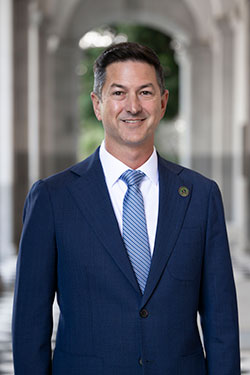
Asm. Chris Ward
Sponsored bills
The Personal Income Tax Law allows various credits against the taxes imposed by that law, including a young child tax credit to a qualified taxpayer in a specified amount multiplied by the earned income tax credit adjustment factor, as provided. That law also allows a payment from the continuously appropriated Tax Relief and Refund Account for an amount in excess of tax liability. Existing law defines "qualified taxpayer" for this purpose to include an eligible individual, as defined, who has a qualifying child, defined to be a child younger than 6 years of age as of the last day of the taxable year, and who meets other specified criteria. This bill, for taxable years beginning on or after January 1, 2025, would instead define a "qualifying child" to mean a child younger than a specified age as of the last day of the taxable year, as described. By increasing the payments from the Tax Relief and Refund Account, a continuously appropriated fund, the bill would make an appropriation. Existing law requires any bill authorizing a new tax expenditure to contain, among other things, specific goals that the tax expenditure will achieve, detailed performance indicators, and data collection requirements. This bill would include additional information required for any bill authorizing a new tax expenditure.
(1) Existing law, the California Fair Employment and Housing Act, prohibits housing discrimination based on specified characteristics. Existing law defines discrimination to include refusal to sell, rent, or lease housing accommodations. Under existing law, discrimination does not include refusal to rent or lease a portion of an owner-occupied single-family house to a person as a roomer or boarder living within the household if no more than one roomer or boarder is to live within the household, as specified. Under this bill, discrimination would additionally not include refusal to rent or lease a portion of an owner-occupied single-family house to a person as a roomer, boarder, or tenant living within the household if, among other things, the owner is renting the portion of their home as a landlord in a nonprofit home-sharing program, as defined. (2) Existing law establishes various public social services programs that are administered by counties to provide eligible recipients with certain benefits, including, but not limited to, cash assistance under the Supplemental Security Income/State Supplementary Program for the Aged, Blind, and Disabled (SSI/SSP) and the California Work Opportunity and Responsibility to Kids (CalWORKs) program, nutrition assistance under the CalFresh program, and health care services under the Medi-Cal program. This bill would exempt income received through renting bedrooms or units as a landlord in a nonprofit home-sharing program, as defined, from consideration as income or assets for purposes of determining eligibility and benefit amounts for public social services, to the extent permitted by federal law. The bill would require the State Department of Social Services to seek all available federal waivers and approvals necessary for the exemption under CalFresh and SSI/SSP. The bill would, for purposes of Medi-Cal eligibility, require the State Department of Health Care Services to implement the exemption no sooner than January 1, 2027, and only to the extent consistent with federal law, upon any necessary federal approvals, and if federal financial participation under the Medi-Cal program is available and not otherwise jeopardized. By expanding the scope of eligibility for public social services, thereby increasing duties on counties, the bill would impose a state-mandated local program. (3) The California Constitution requires the state to reimburse local agencies and school districts for certain costs mandated by the state. Statutory provisions establish procedures for making that reimbursement. This bill would provide that, if the Commission on State Mandates determines that the bill contains costs mandated by the state, reimbursement for those costs shall be made pursuant to the statutory provisions noted above.
Existing law, the Knox-Keene Health Care Service Plan Act of 1975, provides for the licensure and regulation of health care service plans by the Department of Managed Health Care and makes a willful violation of the act a crime. Existing law provides for the regulation of health insurers by the Department of Insurance. Existing law generally prohibits a health care service plan, excluding a Medi-Cal managed care plan, or health insurer from subjecting antiretroviral drugs that are medically necessary for the prevention of HIV/AIDS, including preexposure prophylaxis or postexposure prophylaxis, to prior authorization or step therapy. Under existing law, a health care service plan or health insurer is not required to cover all the therapeutically equivalent versions of those drugs without prior authorization or step therapy if at least one is covered without prior authorization or step therapy. This bill, the Protecting Rights, Expanding Prevention, and Advancing Reimbursement for Equity (PrEPARE) Act of 2025, would instead prohibit a health care service plan, excluding a Medi-Cal managed care plan, or health insurer from subjecting antiretroviral drugs, drug devices, or drug products that are medically necessary for the prevention of HIV/AIDS, to prior authorization or step therapy, but would authorize prior authorization or step therapy if at least one therapeutically equivalent version is covered without prior authorization or step therapy. The bill would specify that, for therapeutically equivalent coverage purposes, a long-acting drug, drug device, or drug product is not therapeutically equivalent to a long-acting drug, drug device, or drug product with a different duration. The bill would require a plan or insurer that covers non-self-administered antiretroviral drugs, drug devices, or drug products that are approved by the United States Food and Drug Administration (FDA) for the prevention of HIV/AIDS as a medical benefit to also include those non-self-administered antiretroviral drugs, drug devices, or drug products as an outpatient prescription drug benefit. This bill would require a nongrandfathered health care service plan contract or health insurance policy to provide coverage for antiretroviral drugs, drug devices, or drug products that are approved by the FDA for HIV preexposure prophylaxis, and would prohibit a nongrandfathered health care service plan contract or health insurance policy from imposing any cost sharing for those drugs, drug devices, or drug products. The bill would prohibit a plan or insurer from imposing cost sharing on a nonformulary antiretroviral drug, drug device, or drug product that is approved by the FDA for HIV preexposure prophylaxis and is covered pursuant to an exception request if the nonformulary antiretroviral drug, drug device, or drug product is therapeutically equivalent to a formulary antiretroviral drug, drug device, or drug product that is approved by the FDA for HIV preexposure prophylaxis and is covered by the plan or insurer without cost sharing. The bill would exempt Medi-Cal managed care plans from these provisions. Because a willful violation of these provisions by a health care service plan would be a crime, this bill would impose a state-mandated local program. The California Constitution requires the state to reimburse local agencies and school districts for certain costs mandated by the state. Statutory provisions establish procedures for making that reimbursement. This bill would provide that no reimbursement is required by this act for a specified reason.
Maddy summaryThis bill establishes January as National Human Trafficking Awareness Month in California to raise public awareness about human trafficking. The resolution recognizes the severity of human trafficking as a felony crime and highlights statistics showing its prevalence across the country and specific challenges with identifying male victims and labor trafficking cases. It aims to educate the public and encourage reporting and support for victims during this designated month.
Existing law authorizes a person to file a petition with the superior court seeking a judgment recognizing their change of gender to female, male, or nonbinary, including a person who is under 18 years of age. Existing law authorizes a person to file a single petition to simultaneously change the petitioner's name and recognize the change to the petitioner's gender and sex identifier, as specified. Existing law requires that either of those petitions, if filed by a person under 18 years of age, and any papers associated with the proceeding, be kept confidential by the court. Existing law requires the court to limit access to these records to specified individuals, including, among others, the minor, the minor's parents, and their attorney. This bill would expand the above-described confidentiality protections to other petitioners regardless of age. The bill would also expand these protections to court records associated with a proceeding under separate provisions of existing law for a change of name to conform a petitioner's name to their gender identity. The bill would require the court to limit access to the court records in these proceedings to certain individuals, as specified. The bill would apply these confidentiality provisions in the case of (1) a petition filed on or after July 1, 2026; (2) a petition filed before July 1, 2026, if the petitioner files a request to keep the records confidential, as specified; or (3) records that were previously made confidential by statute or otherwise. The bill would prohibit a person or private entity, other than the petitioner, from publicly posting one of the above-described confidential records on the internet or otherwise. The bill would make a violation of these confidentiality requirements an injury and, commencing 6 months after the effective date of this bill, would authorize a person or entity to institute proceedings for injunctive relief, declaratory relief, or a writ of mandate to enforce them. The bill would require a court to award reasonable attorney's fees and costs to a plaintiff who prevails on a cause of action against a private party pursuant to this authority. The bill would also authorize a petitioner who has been harmed by a disclosure or continuing disclosure of records, as specified, to, commencing 6 months after the effective date of this bill, bring a civil action against a person or private entity that caused the harm. The bill would require a person or private entity found liable to pay actual damages or statutory damages, punitive damages, and reasonable attorney's fees and costs, as specified. The bill would, on or before July 1, 2026, require the Judicial Council, as necessary, to develop forms and rules to implement the bill's provisions. Under the bill, nothing in these provisions would preclude a court from granting a motion to seal all court records of a person's change of name or gender and sex identifier, or both, pursuant to a specified California Rule of Court. The bill would state that whether a transgender person's gender identity conforms with their assigned sex at birth is intimate personal information entitled to protection under the right to privacy, and that a transgender person has a privacy interest in concealing their transgender identity. The bill would make legislative findings and declarations in support of its provisions. The bill would declare that its provisions are severable. Existing constitutional provisions require that a statute that limits the right of access to the meetings of public bodies or the writings of public officials and agencies be adopted with findings demonstrating the interest protected by the limitation and the need for protecting that interest. This bill would make legislative findings to that effect. This bill would declare that it is to take effect immediately as an urgency statute.
Existing law establishes procedures for an adult petitioner to obtain a court order for a change of name to conform to the petitioner's gender identity. Existing law requires the court to make an order to show cause with regard to the petition and a process for persons interested to make known any objection to the change of name by filing a written objection within 6 weeks of the making of the order. Existing law requires, in the case of a conforming name change petition for a minor that does not include the signatures of both living parents, the petition and the order to show cause to be served as prescribed on the nonsigning parent within 30 days of the order. This bill, commencing July 1, 2026, would eliminate the mechanism to file an objection to an adult petitioner's change of name to conform to the petitioner's name to the petitioner's gender identity. The bill would require the court to enter an order granting the petition without a hearing within 6 weeks of the petition's filing, as specified. The bill would require, for a change of name to conform a minor petitioner's name to their gender identity signed by all living parents of the minor, the court to enter, within 6 weeks of the filing of the petition and without a hearing, an order that the change of name is granted. The bill would require, if the petition is not signed by all living parents of the minor, the court to make an order reciting specified information, and require the petition and the order to be served on any parent who did not sign the petition within 4 weeks of the date of the order. The bill would require that no hearing date be set unless an objection is timely filed and shows good cause for opposing the name change. Existing law authorizes a person to file a petition with the superior court for a court order to issue a new marriage license and certificate, confidential marriage license and certificate, or birth certificate to reflect a change in gender and sex identifier. Existing law provides a process for specified individuals to be given notice and an opportunity to respond to the petition, as specified, including that any objection to the petition must be filed within 6 weeks of the making of the order or the court will, without hearing, enter an order granting the petition. Existing law requires, if no service on any party is required, the court to grant the petition without a hearing if no written objection is timely filed within 6 weeks of the filing of the petition. Existing law requires the petitioner to file a judgment ordering a new birth certificate or marriage license and certificate to be filed with the State Registrar or county clerk, as applicable, within 30 days from the date of the judgment. This bill, commencing July 1, 2026, would eliminate the requirement that a petitioner file the judgment within 30 days from the date of the judgment.
Existing law requires all health care providers and laboratories to report cases of human immunodeficiency virus (HIV) infection to the local health officer and requires the local health officer to report unduplicated HIV cases to the State Department of Public Health. Existing law requires public health records related to HIV or acquired immunodeficiency syndrome (AIDS) , containing personally identifying information, that were developed or acquired by a state or local public health agency, or an agent of that agency, to be confidential and not disclosed, except as otherwise provided by law for public health purposes or pursuant to a written authorization by the person who is the subject of the record or by their guardian or conservator. Existing law authorizes certain state or local public health officials to disclose those records to other local, state, or federal public health agencies or to medical researchers when the confidential information is necessary to carry out specified duties of the agency or researcher, including in the investigation, control, or surveillance of disease. This bill would additionally authorize a health care provider of a patient with an HIV infection that has already been reported to a local health officer as described above to disclose identifying information about the patient to a local health jurisdiction or the department if the disclosure is necessary to complete or supplement an HIV case report or for the local health jurisdiction or the department to carry out its duties in the investigation, control, or surveillance of disease, or the coordination of, linkage to, or reengagement in care for a person, as specified. The bill would make conforming changes to related provisions.
Existing law establishes the Medi-Cal program, which is administered by the State Department of Health Care Services and under which qualified low-income individuals receive health care services. The Medi-Cal program is, in part, governed and funded by federal Medicaid program provisions. Existing law generally imposes penalties on a person who negligently, willfully, or maliciously discloses the results of a human immunodeficiency virus (HIV) test to a third party in a manner that identifies or provides identifying characteristics of the person to whom the test results apply, as specified. Existing law, notwithstanding the above-described restrictions, authorizes the recording of the HIV test results by the physician who ordered the test in the test subject's medical record and authorizes other disclosure of the results without written authorization of the test subject, or the subject's representative, to the test subject's providers of health care, excluding a regulated health care service plan, for purposes of diagnosis, care, or treatment of the patient. This bill would authorize a provider of health care to disclose the results of an HIV test that identifies or provides identifying characteristics of a Medi-Cal beneficiary without written authorization of the test subject, or the subject's representative, to the Medi-Cal managed care plan to which the beneficiary is assigned, if applicable, and to external quality review organizations conducting external quality reviews of Medi-Cal managed care plans, for the purpose of administering quality improvement programs, including, but not limited to, value-based payment programs and healthy behavior incentive programs, designed to improve HIV care for Medi-Cal beneficiaries. Under the bill, HIV test results that do not identify or provide identifying characteristics of the test subjects would be authorized for disclosure without written authorization by the Medi-Cal managed care plan to departmental staff for the above-described purpose. The bill would make certain clarifying or declaratory statements with regard to related provisions.
The California Environmental Quality Act (CEQA) requires a lead agency, as defined, to prepare, or cause to be prepared, and certify the completion of an environmental impact report on a project that it proposes to carry out or approve that may have a significant effect on the environment or to adopt a negative declaration if it finds that the project will not have that effect. CEQA also requires a lead agency to prepare a mitigated negative declaration for a project that may have a significant effect on the environment if revisions in the project would avoid or mitigate that effect and there is no substantial evidence that the project, as revised, would have a significant effect on the environment. CEQA, until January 1, 2030, exempts from its requirements active transportation plans, pedestrian plans, or bicycle transportation plans for the restriping of streets and highways, bicycle parking and storage, signal timing to improve street and highway intersection operations, and the related signage for bicycles, pedestrians, and vehicles. This bill would extend the operation of the above-mentioned exemption indefinitely. The bill would also exempt a transit comprehensive operational analysis, as defined, a transit route readjustment, or other transit agency route addition, elimination, or modification, from the requirements of CEQA. Because a lead agency would be required to determine whether a plan qualifies for this exemption, the bill would impose a state-mandated local program. CEQA, until January 1, 2030, exempts from its requirements certain transportation-related projects, such as pedestrian and bicycle facilities, transit prioritization projects, public projects located on a site that is wholly within the boundaries of an urbanized area or urban cluster, as provided, for the institution or increase of bus rapid transit, bus, or light rail service, including the construction or rehabilitation of stations, terminals, or existing operations facilities, and public projects for the construction or maintenance of infrastructure of facilities to charge, refuel, or maintain zero-emission public transit buses, trains, or ferries, as provided. CEQA requires, except as provided, those exempted projects to be carried out by a local agency and meet certain requirements, including certain labor requirements. This bill would extend the operation of the above-mentioned exemption until January 1, 2040. The bill would exempt from the requirements of CEQA a public project for the protection and improvement of bus rapid transit, bus, or light rail service, including the protection, operation, and maintenance, public projects for the protection, improvement, institution, or increase of microtransit, paratransit, shuttle, and ferry, and for the protection, maintenance, construction, operation, or rehabilitation of stops that will be exclusively used by zero-emission, near-zero-emission, low oxide of nitrogen engine, compressed natural gas fuel, fuel cell, or hybrid powertrain vehicles, rail or cable cars, rolling stock, or vessels. The bill would, until January 1, 2032, exempt from the requirements of CEQA a public project for the protection, improvement, institution, or increase of microtransit, paratransit, shuttle, bus, ferry, bus rapid transit, or light rail service, including the protection, maintenance, construction, operation, or rehabilitation of stops, stations, terminals, or existing operations facilities, if used primarily by near-zero-emission, low oxide of nitrogen engine, compressed natural gas fuel, or hybrid powertrain vehicles, except as provided. The bill would exclude from this exemption certain public projects for the construction or rehabilitation of a ferry terminal, as provided, and, except as provided, public projects for transit services operated by a transportation network company, as defined. Because a lead agency would be required to determine whether a project qualifies for this exemption, the bill would impose a state-mandated local program. CEQA exempts from its requirements a project that consists exclusively of a combination of any of the components of specified transportation-related projects. This bill would extend the operation of the above-mentioned exemption until January 1, 2040. The bill would, until January 1, 2040, exempt from the requirements of CEQA a project that combines any of those specified transportation-related projects and a housing development project that is either subject to a nondiscretionary approval or is exempt from CEQA, as provided. Because a lead agency would be required to determine whether a project qualifies for this exemption, the bill would impose a state-mandated local program. Existing law exempts from the requirements of CEQA public projects for the institution or increase of passenger rail service, other than light rail service that is eligible for a specified exemption, including the construction or rehabilitation of stations, terminals, or existing operations facilities, which will be exclusively used by zero-emission trains. This bill would extend the operation of the above-mentioned exemption until January 1, 2040. The bill would exempt from the requirements of CEQA public projects for the improvement of passenger rail service, other than light rail service eligible for a specified exemption, including the maintenance of stations, terminals, or existing operations facilities, which will be exclusively used by zero-emission trains, public projects for the maintenance, construction, or rehabilitation of stations, terminals, or existing operations facilities which will be exclusively used by zero-emission certified Tier 4 or cleaner rolling stock or locomotives, as provided. The bill would exclude from this exemption public projects located in certain air basins for the maintenance, construction, or rehabilitation of stations, terminals, or existing operations facilities that will be used by certified Tier 4 or cleaner rolling stock or locomotives that are not zero-emission rolling stock or locomotives. Because a lead agency would be required to determine whether a project qualifies for this exemption, the bill would impose a state-mandated local program. Existing law requires certain CEQA-exempt projects exceeding specified dollar amounts to meet certain criteria, as provided. This bill would instead require certain CEQA-exempt projects that are, based on the project engineer's cost estimate, anticipated to exceed a specified dollar amount, to meet certain criteria, as provided. The bill would require the Office of Land Use and Climate Innovation, beginning January 1, 2026, and every two years thereafter, to adjust these amounts to reflect changes in the Consumer Price Index, as provided, and publish the updated amounts on its internet website. The bill would authorize the Office of Land Use and Climate Innovation to implement, interpret, or make specific that provision without taking any regulatory action. This bill would declare that its provisions are severable. The California Constitution requires the state to reimburse local agencies and school districts for certain costs mandated by the state. Statutory provisions establish procedures for making that reimbursement. This bill would provide that no reimbursement is required by this act for a specified reason.