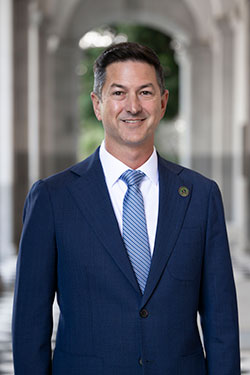
Photo of Chris Ward
D California Assembly · District 78 On the 2026 ballot

Asm. Chris Ward

Compare
Total votes
14,561
all sessions
Attendance
97%
343 missed
Near the chamber average
With party
99%
of cast votes
Near the chamber average
Bipartisan score
0%
crosses aisle rarely
Near the chamber average
Sponsored
1,323
bills & resolutions
Near the chamber average
Committees
12
assignments
1,323 bills and resolutions

Sponsored bills

Total
1,323
Primary
118
Co-sponsor
1,205
This page
1,323
matching current filters
Co-sponsor HR 77
Passed · California Assembly · Co-sponsor
Relative to school governance.

Maddy summaryThis House Resolution declares January 2026 as School Board Recognition Month to honor the nearly 5,000 school board members across California's 1,000 school districts and county offices of education. The resolution recognizes these locally elected officials for their work in guiding public education and serving diverse communities, emphasizing their role in ensuring students' academic, social-emotional, and health needs are met. It calls on community members to join in acknowledging the dedication of school board members and collaborate to improve the education system. The bill has no operational effect beyond this symbolic recognition and does not change any laws or policies.

Passed Feb 5, 2026 1 co-sponsor
Co-sponsor HR 76
Passed · California Assembly · Co-sponsor
Relative to affordable homeownership.

Maddy summaryThis House Resolution formally recognizes the importance of affordable homeownership for California families, particularly those with lower incomes, and highlights how nonprofit-led programs help build generational wealth and reduce economic disparities. The document emphasizes that existing state programs like CalHome support the construction and preservation of affordable homes through competitive funding to cities, counties, indigenous communities, and nonprofit builders such as Habitat for Humanity. While the resolution does not create new laws or funding, it serves as an official acknowledgment of homeownership's role in improving educational outcomes, health, civic participation, and neighborhood stability. The text also notes California's significant housing deficit and racial wealth gaps as context for why expanding affordable ownership opportunities is a priority for state policy.

Passed Feb 5, 2026 1 co-sponsor
Co-sponsor AB 1243
Failed · California Assembly · Co-sponsor
Polluters Pay Climate Superfund Act of 2025.

The California Global Warming Solutions Act of 2006, until January 1, 2031, authorizes the State Air Resources Board to adopt a regulation establishing a system of market-based declining aggregate emissions limits for sources or categories of sources that emit greenhouse gases (market-based compliance mechanism) that meets certain requirements. Existing law establishes the Greenhouse Gas Reduction Fund and requires all moneys, except for fines and penalties, collected by the state board from the auction or sales of allowances as a part of a market-based compliance mechanism to be deposited into the fund and requires the Legislature to appropriate moneys in the fund for the purpose of reducing greenhouse gas emissions in the state, as provided. Existing law, the California Climate Crisis Act, declares that it is the policy of the state both to achieve net-zero greenhouse gas emissions as soon as possible, but no later than 2045, and achieve and maintain net-negative greenhouse gas emissions thereafter, and to ensure that by 2045, statewide anthropogenic greenhouse gas emissions are reduced to at least 85% below the 1990 levels. This bill would enact the Polluters Pay Climate Superfund Act of 2025 and would establish the Polluters Pay Climate Superfund Program to be administered by the California Environmental Protection Agency to require fossil fuel polluters to pay their fair share of the damage caused by greenhouse gases released into the atmosphere during the covered period, which the bill would define as the time period between the 1990 and 2024 calendar years, inclusive, resulting from the extraction, production, refining, sale, or combustion of fossil fuels or petroleum products, to relieve a portion of the burden to address cost borne by current and future California taxpayers. The bill would require the agency, within 90 days of the effective date of the act, to determine and publish a list of responsible parties, which the bill would define as an entity with a majority ownership interest in a business engaged in extracting or refining fossil fuels that, during the covered period, did business in the state or otherwise had sufficient contact with the state, and is determined by the agency to be responsible for more than 1,000,000,000 metric tons of covered fossil fuel emissions, as defined, in aggregate globally, during the covered period. This bill would require the agency, within one year of the effective date of the act, to conduct and complete a climate cost study to, among other things, quantify the total damage amount, which the bill would define as all past and future climate harms and damages to the state from January 1, 1990, through December 31, 2045, inclusive. The bill would require the agency to update the climate cost study, not less frequently than every 5 years, through January 1, 2045, as provided. The bill would require the agency, within 60 days of the completion of the climate cost study, to determine and assess, as provided, a cost recovery demand for each responsible party listed, which represents the responsible party's proportionate share of the total damage amount. The bill would require responsible parties to pay their cost recovery demand, as provided. The bill would require the collected cost recovery demands to be deposited in the Polluters Pay Climate Superfund, which the bill would create in the State Treasury. The bill would, upon appropriation by the Legislature, require moneys in the fund be expended for, among other things, qualifying expenditures, which the bill would define to include expenditures for projects and programs to mitigate, adapt, or respond to the damages and costs caused to the state from climate change. The bill would require all interest earned on moneys that have been deposited into the fund to be retained in the fund for use in implementing the program. The bill would require the agency to determine the initial implementation costs for the act, as provided, and would require the agency to assess an amount allocated equitably among responsible parties to cover those costs. This bill would require the Director of Finance, within 45 days of the effective date of the act, to perform an initial assessment of the reasonable and appropriate initial implementation costs that will be incurred by the agency. This bill would declare that it is to take effect immediately as an urgency statute.

Failed Feb 2, 2026 1 co-sponsor
Co-sponsor AB 1157
Failed · California Assembly · Co-sponsor
Tenancy: just cause termination: rent increases.

(1) Existing law prohibits the owner of a residential real property from terminating a tenancy without just cause, as defined, after a tenant has continuously and lawfully occupied a residential real property for 12 months. Among other residential real properties or residential circumstances, existing law exempts from these provisions a residential real property, including a mobilehome, that is alienable separate from the title to any other dwelling unit if the owner meets specified criteria and the tenants have been provided a specified written notice of the exemption. Existing law repeals these provisions on January 1, 2030. This bill would revise these provisions by removing the exemption for separately alienable residential real property and, instead, only exempting a mobilehome if the above-described criteria are met. The bill would delete the January 1, 2030, repeal date, thereby extending these provisions indefinitely. (2) Existing law prohibits an owner of residential real property, except as specified, from increasing over the course of any 12-month period the gross rental rate for a dwelling or a unit more than 5% plus the percentage change in the cost of living, or 10%, whichever is lower, of the lowest gross rental rate charged for that dwelling or unit at any time during the 12 months prior to the effective date of the increase, as specified. This bill would reduce the permissible gross rental rate increase under these provisions to the lesser of 2% plus the percentage change in the cost of living, or 5%. Among other residential real properties, existing law exempts from these provisions a residential real property that is alienable separate from the title to any other dwelling unit, including a mobilehome, if the owner meets specified criteria and the tenants have been provided a specified written notice of the exemption. This bill would revise these provisions by removing the exemption for separately alienable residential real property and, instead, only exempting a mobilehome if the above-described criteria are met. Existing law repeals these provisions on January 1, 2030. This bill would delete the January 1, 2030, repeal date, thereby extending these provisions indefinitely. (3) Notwithstanding the above-described gross rental rate increase prohibition, existing law, upon the expiration of rental restrictions, as defined, authorizes the owner of affordable housing units that meet certain requirements to establish the initial rental rate for the unit, and also authorizes the owner of an assisted housing development who demonstrates compliance with certain requirements under penalty of perjury to establish the initial unassisted rental rate for units in the assisted housing development. Existing law repeals these provisions on January 1, 2030. This bill would remove the January 1, 2030, repeal date, thereby extending the initial rental rate authorizations indefinitely. By extending provisions that require the owner of an assisted housing development to demonstrate compliance with specified requirements under penalty of perjury, the bill would impose a state-mandated program. (4) The California Constitution requires the state to reimburse local agencies and school districts for certain costs mandated by the state. Statutory provisions establish procedures for making that reimbursement. This bill would provide that no reimbursement is required by this act for a specified reason.

Failed Feb 2, 2026 1 co-sponsor
Co-sponsor SB 684
Failed · California Senate · Co-sponsor
Polluters Pay Climate Superfund Act of 2025.

The California Global Warming Solutions Act of 2006, until January 1, 2031, authorizes the State Air Resources Board to adopt a regulation establishing a system of market-based declining aggregate emissions limits for sources or categories of sources that emit greenhouse gases (market-based compliance mechanism) that meets certain requirements. Existing law establishes the Greenhouse Gas Reduction Fund and requires all moneys, except for fines and penalties, collected by the state board from the auction or sales of allowances as a part of a market-based compliance mechanism to be deposited into the fund and requires the Legislature to appropriate moneys in the fund for the purpose of reducing greenhouse gas emissions in the state, as provided. Existing law, the California Climate Crisis Act, declares that it is the policy of the state both to achieve net-zero greenhouse gas emissions as soon as possible, but no later than 2045, and achieve and maintain net-negative greenhouse gas emissions thereafter, and to ensure that by 2045, statewide anthropogenic greenhouse gas emissions are reduced to at least 85% below the 1990 levels. This bill would enact the Polluters Pay Climate Superfund Act of 2025 and would establish the Polluters Pay Climate Superfund Program to be administered by the California Environmental Protection Agency to require fossil fuel polluters to pay their fair share of the damage caused by greenhouse gases released into the atmosphere during the covered period, which the bill would define as the time period between the 1990 and 2024 calendar years, inclusive, resulting from the extraction, production, refining, sale, or combustion of fossil fuels or petroleum products, to relieve a portion of the burden to address cost borne by current and future California taxpayers. The bill would require the agency, within 90 days of the effective date of the act, to determine and publish a list of responsible parties, which the bill would define as an entity with a majority ownership interest in a business engaged in extracting or refining fossil fuels that, during the covered period, did business in the state or otherwise had sufficient contact with the state, and is determined by the agency to be responsible for more than 1,000,000,000 metric tons of covered fossil fuel emissions, as defined, in aggregate globally, during the covered period. This bill would require the agency, within one year of the effective date of the act, to conduct and complete a climate cost study to, among other things, quantify the total damage amount, which the bill would define as all past and future climate harms and damages to the state from January 1, 1990, through December 31, 2045, inclusive. The bill would require the agency to update the climate cost study, not less frequently than every 5 years, through January 1, 2045, as provided. The bill would require the agency, within 60 days of the completion of the climate cost study, to determine and assess, as provided, a cost recovery demand for each responsible party listed, which represents the responsible party's proportionate share of the total damage amount. The bill would require responsible parties to pay their cost recovery demand, as provided. The bill would require the collected cost recovery demands to be deposited in the Polluters Pay Climate Superfund, which the bill would create in the State Treasury. The bill would, upon appropriation by the Legislature, require moneys in the Polluters Pay Climate Superfund be expended for, among other things, qualifying expenditures, which the bill would define to include expenditures for projects and programs to mitigate, adapt, or respond to the damages and costs caused to the state from climate change. The bill would require the agency to determine the initial implementation costs for the act, as provided, and would require the agency to assess an amount allocated equitably among responsible parties to cover those costs. This bill would require the Director of Finance, within 45 days of the effective date of the act, to perform an initial assessment of the reasonable and appropriate initial implementation costs that will be incurred by the agency. This bill would declare that it is to take effect immediately as an urgency statute.

Failed Feb 2, 2026 1 co-sponsor
Primary AB 1355
Failed · California Assembly · Lead sponsor
Location privacy.

(1) Existing law, the California Consumer Privacy Act of 2018 (CCPA) , grants a consumer various rights with respect to personal information, as defined, that is collected or sold by a business, as defined, including the right to direct a business that collects sensitive personal information about the consumer to limit its use, as prescribed. Existing law defines "sensitive personal information" to mean, among other things, personal information that reveals a consumer's precise geolocation. Existing law, the California Privacy Rights Act of 2020, approved by the voters as Proposition 24 at the November 3, 2020, statewide general election, amended, added to, and reenacted the CCPA. This bill would prohibit a covered entity from collecting or processing the location information of an individual unless doing so is necessary to provide goods or services requested by that individual. The bill would impose various other restrictions on covered entities with regard to location information. The bill would define various terms for purposes of these provisions, including "location information" to mean information that pertains to or directly or indirectly reveals the present or past geographical location of an individual or device, as specified. This bill would require a covered entity to prominently display, at the point where location information is being captured, a notice to individuals stating that their location information is being collected, the name of the covered entity and service provider collecting the information, and a phone number and an internet website where the individual can obtain more information. The bill would require a covered entity to maintain and make available to the data subject a location privacy policy that includes specified information on data usage and management and is subject to a specified notice procedure. This bill would make a covered entity that violates these provisions liable for actual or statutory damages and other specified relief. The bill would authorize the Attorney General or other public prosecutors to bring an action to recover a civil penalty against a covered entity that violates these provisions. This bill would require a business, as defined by the CCPA, to comply with the above-described provisions. (2) Existing law, the Information Practices Act of 1977, prescribes a set of requirements, prohibitions, and remedies applicable to agencies, as defined, with regard to their collection, storage, and disclosure of personal information, as defined. This bill would prohibit a state or local agency, including an agency as defined under the Information Practices Act, from monetizing, as defined, location information. By imposing new requirements on local agencies, this bill would impose a state-mandated local program. (3) The California Constitution requires the state to reimburse local agencies and school districts for certain costs mandated by the state. Statutory provisions establish procedures for making that reimbursement. This bill would provide that, if the Commission on State Mandates determines that the bill contains costs mandated by the state, reimbursement for those costs shall be made pursuant to the statutory provisions noted above. (4) The California Consumer Privacy Act of 2020 authorizes the Legislature to amend the act to further the purposes and intent of the act by a majority vote of both houses of the Legislature, as specified. This bill would declare that its provisions further the purposes and intent of the California Privacy Rights Act of 2020.

Failed Feb 2, 2026 0 co-sponsors
Co-sponsor AB 1433
Failed · California Assembly · Co-sponsor
Education finance: funding: noncredit instruction.

Existing law establishes the California Community Colleges under the administration of the Board of Governors of the California Community Colleges. Existing law establishes community college districts throughout the state, and authorizes these districts to provide instruction at the community college campuses they operate and maintain. Existing law provides for a formula for the calculation of general purpose apportionments of state funds to community colleges. Existing law provides a separate formula for the allocation of apportionments of state funds to community colleges, which uses the numbers of full-time equivalent students as its basis, for use for apportionments for noncredit instruction and instruction in career development and college preparation. Existing law specific the noncredit courses, noncredit classes, and support services that are eligible for state apportionment. This bill would require the board of governors to allocate base funding for designated categorical programs to noncredit colleges, as defined, and noncredit centers, as defined, that meet specified conditions. The bill would specify that the categorical programs eligible for those base funding allocations include, but are not limited to, disabled student programs and services, mental health services, and veteran resource centers. The bill would require the board of governors, in consultation with the office of the Chancellor of the California Community Colleges, to determine the methodology for allocating the base funding.

Failed Feb 2, 2026 1 co-sponsor
Primary AB 1260
Failed · California Assembly · Lead sponsor
Electricity: renewable energy subscription programs.

Existing law requires the Public Utilities Commission (PUC) to evaluate each customer renewable energy subscription program to determine if the program meets certain goals and determine whether it would be beneficial to ratepayers to establish a new tariff or program or modify an existing tariff or program to establish a community renewable energy program consistent with certain requirements, including a requirement that the program provides bill credits to subscribers based on the avoided costs of the program's facilities, as provided. Pursuant to this requirement, the PUC has adopted a community renewable energy program. This bill would revise and recast the requirements for the customer renewable energy subscription program to, among other things, specify that the avoided costs include certain avoided cost values. The bill would impose additional requirements that the program is required to meet, including requiring facilities participating in the program to have no more than 5 megawatts of generation capacity and no more than 5 megawatts of storage, and capping the total program capacity at 5 gigawatts or ending program subscription after 7 years, when either limit is first reached. The bill would require the PUC, on or before September 1, 2026, to adopt or modify the community renewable energy program to ensure consistency with certain requirements, as provided. The bill would require each community choice aggregator and electric service provider, within 180 days of the adoption or modification of the program, to notify the PUC regarding whether it will participate in the program. The bill would authorize a community choice aggregator or electric service provider to begin participating in, or end its participation in, the program at any time by notifying the PUC. The bill would require the PUC, beginning 2 years from the adoption or modification of the program, to evaluate the program to ensure consistency with the program's requirements and would require the PUC to authorize the termination or modification of the program if the PUC determines that the program does not meet those requirements. The bill would require the State Energy Resources Conservation and Development Commission (Energy Commission) to evaluate community solar and storage projects as a load-modifying resource so that those projects may be counted as a load-modifying resource. The bill would require the Energy Commission to undertake the evaluation and issue a determination on or before September 1, 2026, as provided. Under existing law, a violation of the Public Utilities Act or an order, decision, rule, direction, demand, or requirement of the PUC is a crime. Because the above provisions would be part of the act and a violation of a PUC action implementing this bill's requirements would be a crime, the bill would impose a state-mandated local program. The California Constitution requires the state to reimburse local agencies and school districts for certain costs mandated by the state. Statutory provisions establish procedures for making that reimbursement. This bill would provide that no reimbursement is required by this act for a specified reason.

Failed Feb 2, 2026 0 co-sponsors
Co-sponsor AB 1468
Failed · California Assembly · Co-sponsor
Ethnic studies: content standards, curriculum frameworks, instructional materials, and compliance monitoring.

Existing law requires the State Board of Education to adopt statewide academically rigorous content standards in the core curriculum areas of reading, writing, mathematics, history/social science, and science, as specified. Existing law requires the Instructional Quality Commission to, among other things, recommend curriculum frameworks to the state board and develop criteria for evaluating instructional materials. This bill would require the state board to, on or before January 1, 2028, develop and adopt academically rigorous content standards for ethnic studies instruction in high school. The bill would require the commission, on or before January 1, 2028, to review and recommend to the state board curriculum frameworks and instructional materials for ethnic studies instruction in high school, as specified. The bill would require the state board to provide the commission with evaluation criteria to use in providing its review and recommendations. The bill would state the intent of the Legislature to enact subsequent legislation to establish an advisory committee with a majority of the advisory committee's members being experts in African American studies, Asian American and Pacific Islander studies, Native American studies, and Latino and Chicanx studies, to provide input to the state board on proposed content standards and to the commission on proposed curriculum frameworks and instructional materials for ethnic studies instruction in high school. Existing law requires a pupil to complete designated coursework while in grades 9 to 12, inclusive, in order to receive a diploma of graduation from high school. These graduation requirements include, commencing for pupils graduating in the 2029–30 school year, the completion of a one-semester course in ethnic studies meeting specified requirements. Under existing law, the requirement to complete an ethnic studies course may be fulfilled by the completion of, among others, a course based on the model curriculum developed by the Instructional Quality Commission, an ethnic studies course taught as part of a course that has been approved as meeting the A–G requirements of the University of California and the California State University, or a locally developed ethnic studies course approved by the governing board of a school district or the governing body of a charter school. Existing law requires the curriculum, instruction, and instructional materials for these ethnic studies courses to meet specified requirements, including that they not reflect or promote any bias, bigotry, or discrimination against any person or group of persons on the basis of certain characteristics. Existing law makes these provisions relating to ethnic studies courses operative only upon an appropriation of funds by the Legislature for purposes of these provisions. This bill would require the curriculum, instruction, and instructional materials for any high school ethnic studies course, including ethnic studies courses meeting high school graduation requirements, to meet the above-described requirements, and would require the curriculum, instruction, and instructional materials for all high school ethnic studies courses to additionally, among other things, foster multicultural respect and understanding and focus on the domestic experience and stories of historically marginalized peoples in American society. To the extent that the bill would impose new duties on local educational agencies, the bill would impose a state-mandated local program. The bill would require a school district, county office of education, or charter school to provide, on or before June 30, 2026, the State Department of Education with a copy of all curricula, instruction, and instructional materials in ethnic studies that schools offer or plan to offer to pupils in any of grades 9 to 12, inclusive, and the adoption calendar for curricula, instruction, and instructional materials in ethnic studies proposed for adoption by the governing board or body of the local educational agency for instruction to these pupils. The bill would require a local educational agency that does not have an ethnic studies course in place for its pupils in any of grades 9 to 12, inclusive, on or before June 30, 2026, to provide the department with a copy of all curricula, instruction, and instructional materials in ethnic studies that its schools seek to adopt at least 60 days before being first presented at a public meeting of the governing board or body of the local educational agency for instruction to these pupils. The bill would require the department to post the information received pursuant to these requirements on its internet website. To the extent that the bill would impose new duties on local educational agencies, it would impose a state-mandated local program. The bill would require the department to monitor compliance with the requirements of this bill as part of its annual compliance monitoring of state and federal programs and to provide a report to the relevant policy and fiscal committees of the Legislature summarizing the data collected through compliance monitoring, as specified. The California Constitution requires the state to reimburse local agencies and school districts for certain costs mandated by the state. Statutory provisions establish procedures for making that reimbursement. This bill would provide that, if the Commission on State Mandates determines that the bill contains costs mandated by the state, reimbursement for those costs shall be made pursuant to the statutory provisions noted above.


Failed Feb 2, 2026 1 co-sponsor
Co-sponsor AB 1065
Failed · California Assembly · Co-sponsor
Credit card transaction fees: tax payments: Consumer Inflation Reduction and Tax Fairness Act.

Existing law, the Financial Code, provides for the licensure and regulation of various types of financial institutions and transactions. Existing law, the Song-Beverly Credit Card Act of 1971, regulates the issuance, use, and processing of credit cards and credit card transactions. This bill would enact the Consumer Inflation Reduction and Tax Fairness Act, within the Financial Code, to require that the calculation of interchange fees charged by an issuer, a payment card network, an acquirer bank, or a processor not take into account certain state and local taxes and fees, as specified. The bill would define various terms for these purposes. The bill would prohibit a payment card network, an acquirer bank, or a processor from altering the computation of interchange fees, either by increasing the rate or the amount of fees applicable, to circumvent the effects of the act. Existing law, the Unfair Competition Law, makes various practices unlawful and provides that a person who engages, has engaged, or proposes to engage in unfair competition is liable for a civil penalty, as specified. This bill would provide a violation of its provisions is enforceable pursuant to the Unfair Competition Law, as provided.

Failed Feb 2, 2026 1 co-sponsor
Showing 221 to 230 of 1,323 bills
Previous 1 … 22 23 24 … 133 Next