

Existing law, the Knox-Keene Health Care Service Plan Act of 1975, provides for the licensure and regulation of health care service plans by the Department of Managed Health Care and makes a willful violation of the act a crime. Existing law provides for the regulation of disability insurers by the Department of Insurance. Existing law requires a health care service plan or disability insurer to allow an individual to enroll in or change their health benefit plan as a result of a specified triggering event. This bill would make pregnancy a triggering event for purposes of enrollment or changing a health benefit plan. Because a willful violation of this provision by a health care service plan would be a crime, the bill would impose a state-mandated local program. The California Constitution requires the state to reimburse local agencies and school districts for certain costs mandated by the state. Statutory provisions establish procedures for making that reimbursement. This bill would provide that no reimbursement is required by this act for a specified reason.
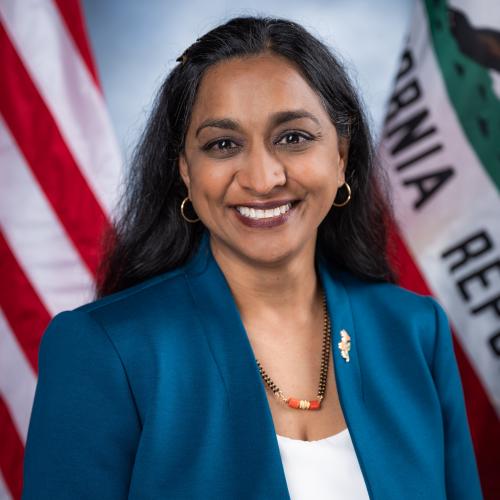
Rep. Darsh Patel
Sponsored bills
Existing law establishes the California State University, under the administration of the Trustees of the California State University, the University of California, under the administration of the Regents of the University of California, the California Community Colleges, under the administration of the Board of Governors of the California Community Colleges, and independent institutions of higher education, as defined, as 4 segments of postsecondary education in the state. This bill would establish the Designation of California Asian American- and Native Hawaiian Pacific Islander-Serving Institutions to recognize campuses of those segments of postsecondary education that excel at providing academic resources to Asian American, Native Hawaiian, and Pacific Islander students. The bill would establish a California Asian American- and Native Hawaiian Pacific Islander-Serving Institutions governing board to designate colleges and universities as California Asian American- and Native Hawaiian Pacific Islander-Serving Institutions and would require the office of the Chancellor of the California Community Colleges to, among other duties, develop the application processes and to process and present initial and renewal applications to receive this designation to the governing board, as specified. The bill would make an initial and renewal designation valid for 5 years.
The Donahoe Higher Education Act sets forth, among other things, the missions and functions of California's public and independent segments of higher education and their respective institutions of higher education. The act requests the Regents of the University of California, and requires the Trustees of the California State University, to require each campus in their respective segments to grant students the right to reenroll in their baccalaureate degree program after withdrawing or stopping out, if the student was in good academic standing with the university. This bill, commencing with the 2027–28 academic year, would require a campus of the University of California, the California State University, or the California Community Colleges, a private postsecondary educational institution, or an independent institution of higher education to adopt a written policy to allow a student to take a voluntary medical leave of absence for a period to be determined by the postsecondary educational institution, or for a period of up to one academic year, whichever is longer. The bill would prohibit the leave of absence policy from, among other things, requiring a student who takes a medical leave of absence to submit an official notice of withdrawal to the postsecondary educational institution. The bill would require a postsecondary educational institution, among other things, to post the medical leave of absence policy on the institution's internet website and notify students and faculty of the location of the posted policy on its internet website by sending an email at the beginning of each academic semester or term. These provisions would apply to the University of California only to the extent that the regents, by appropriate resolution, make them applicable. By imposing additional duties on community college districts, the bill would impose a state-mandated local program. The California Constitution requires the state to reimburse local agencies and school districts for certain costs mandated by the state. Statutory provisions establish procedures for making that reimbursement. This bill would provide that, if the Commission on State Mandates determines that the bill contains costs mandated by the state, reimbursement for those costs shall be made pursuant to the statutory provisions noted above.
Existing law requires various disclosures to be made regarding health care service plan and health insurance benefits and coverages. Existing law generally regulates the conduct of business between health care service plans and solicitors and health insurers and broker-agents, including requirements regarding contracts in which the solicitor represents the health care service plan or the broker-agent represents the insurer. This bill, the Public Agency Benefits Intermediary Compensation Disclosure Act, would require a covered service provider, defined to mean a broker, agent, consultant, or advisor that meets specified criteria, to disclose to a public agency, as defined, or its group health plan the direct and indirect compensation it expects to receive for providing brokerage or consulting services, among other information, before it enters into, extends, renews, or materially amends a contract or arrangement for brokerage services or consulting services with the public agency or its plan. The bill would also require a covered service provider to disclose compensation and material financial interests related to a covered health care benefits arrangement that the covered service provider recommends, places, renews, services, or materially influences for the public agency or its group health plan. Disclosure would be required under these provisions if the covered service provider reasonably expects it would receive $1,000 or more in compensation during the term of the contract or arrangement. The bill would require these disclosures at specified times. This bill would prohibit a covered service provider from requesting, accepting, or receiving direct or indirect compensation in connection with brokerage services or consulting services provided to a public agency or its plan unless the compensation is disclosed, and would prohibit evasion of disclosure requirements.
If state funds are used for a public building or facility or local funds are used for a school or community college building or facility, including a school playground, existing law prohibits a contract from being awarded until the Department of General Services issues a written approval stating that the plans and specifications comply with the intent of provisions governing access to public buildings by physically handicapped persons, including the Americans with Disabilities Act of 1990. Existing law establishes various state grant and funding programs administered by the State Department of Education that may be used for school facilities and related improvements, including school playgrounds. This bill would require the department to curate and maintain an internet resource that demonstrates best practices for inclusive school playgrounds, as provided.
Existing law authorizes an unmarried person who is under 18 years of age to marry upon obtaining a court order granting permission and the written consent of at least one of the parents or the guardian of each underage party to the marriage, as specified. Existing law requires the court, if it considers it necessary, as part of the court order granting permission to marry, to require the parties to the prospective marriage of a minor to participate in premarital counseling, as specified. Existing law provides that 2 unmarried, unrelated adults who have chosen to share one another's lives in an intimate and committed relationship of mutual caring may establish a domestic partnership by filing a declaration with the Secretary of State, if certain requirements are met. Existing law provides that a person under 18 years of age who, together with the person with whom the person proposes to establish a domestic partnership, meets the requirements for a domestic partnership other than the requirement of being at least 18 years of age, is capable of consenting to and establishing a domestic partnership upon obtaining a court order granting permission to the underage person or persons to establish a domestic partnership. Under existing law, registered domestic partners have the same rights, protections, and benefits as spouses. This bill would repeal the authorization for a person under 18 years of age to be issued a marriage license or to establish a domestic partnership, thereby prohibiting a person under 18 years of age from being issued a marriage license or from establishing a domestic partnership. The bill would make conforming changes. Existing law requires the State Registrar to create a document, no later than March 1, 2020, concerning marriage certificates in which one or both of the parties were minors at the time of solemnization of the marriage. Existing law requires the State Registrar to update that document annually, as specified. Existing law requires the local registrar to submit specified information for the purposes of that report. This bill would repeal those provisions.
Existing law requires the State Department of Health Care Services to license and regulate adult alcohol or other drug recovery or treatment facilities that provide residential nonmedical services, as specified, and further requires the department to certify and regulate alcohol and other drug programs, as specified. This bill would require an alcohol or other drug treatment facility and an alcohol or other drug program to participate in a public consumer protection platform, as defined, designated or designed by the department in order to be licensed or certified. The bill would specify that participation in the public consumer protection platform pursuant to these provisions is only required if the department determines that sufficient funding has been appropriated or otherwise secured to cover the costs of participation in the platform, as specified. The bill would authorize the department to charge a reasonable fee to alcohol or other drug treatment facilities and alcohol or other drug programs required to enroll in the platform, as specified, and would prohibit the administrator of the public consumer protection platform from accepting payment from the entities subject to these provisions. The bill would authorize the department to verify compliance with participation in the public consumer protection platform as part of the certification or licensing process. The bill would prohibit participation in the consumer protection platform from being used as a criterion in evaluating bids, proposals, network participation, reimbursement, or contract performance for publicly funded substance use disorder treatment services. The bill would require the consumer protection platform, if managed by an entity other than the department, to collect and publicly display information from each participating treatment provider on the provider's adoption of evidence-based practices in substance use disorder care, as specified. The bill would authorize the department to implement, interpret, or make specific those provisions by means of provider bulletins, written guidelines, or similar instructions.
Existing law, the Reproductive Privacy Act, declares as contrary to the public policy of this state a law of another state that authorizes a person to bring a civil action against a person or entity that engages in certain activities relating to obtaining or performing an abortion. Existing law prohibits the state from applying an out-of-state law to a case or controversy in state court or enforcing or satisfying a civil judgment under the out-of-state law. This bill would specify that the protections applicable to persons who engage in legally protected health care activity, as defined, apply to a person who previously has undertaken one or more acts or omissions while in another United States jurisdiction to aid or encourage, or attempt to aid or encourage, any person in the exercise and enjoyment, or attempted exercise and enjoyment, of rights to reproductive health care services or gender affirming health care services if the acts or omissions were permissible under the laws of the jurisdiction in which the person was located at the time of the acts or omissions. Existing law prohibits a state or local law enforcement agency or officer from knowingly arresting or knowingly participating in the arrest of any person for performing, supporting, or aiding in the performance of legally protected health care activity, if the health care activity is lawful in this state. Existing law prohibits a state or local public agency from cooperating with or providing information to an individual or agency from another state or a federal law enforcement agency, as specified, regarding a legally protected health care activity that is lawful in this state. Under existing law, the Governor may surrender, on demand of executive authority of any other state, any person in this state charged in the other state, as specified, with committing an act in this state, or in a 3rd state, intentionally resulting in a crime in the state whose executive authority is making the demand. This bill would prohibit the Governor from recognizing a request for extradition of a person subject to criminal liability based on the alleged provision or receipt of, assistance in the provision or receipt of, material support for, or in any theory of vicarious, joint, several, or conspiracy liability for any legally protected health care activity, except as specified.
Existing law establishes the State Department of Education and assigns to the department numerous responsibilities relating to the governance of the public elementary and secondary schools in the state. This bill would require the department, on or before October 1, 2027, to create and post to its internet website a standardized template, as specified, for use by school districts, county offices of education, and charter schools when completing programmatic or expenditure reports for competitive state grant programs, except as provided. In drafting the template, the bill would require the department to ensure that the template creates reporting efficiencies for local educational agencies and schools that receive state grants and to consult relevant stakeholders involved in local educational agency reporting, as specified. The bill would require the department, on or before October 1, 2027, to submit the template to the Legislature, as provided, and, commencing January 1, 2028, to issue the template to local educational agencies as part of the notice of award information and again 6 months before the final report due date, and to prepopulate certain local educational agency administrative information. Existing law requires a bill that requires a state agency to submit a report on any subject to either house of the Legislature, a committee or office of either house of the Legislature, or the Legislative Counsel Bureau, to include a provision that repeals the reporting requirement, or makes the requirement inoperative, no later than a date 4 years following the operative date of the bill or 4 years after the due date of any report required every 4 or more years. Existing law requires the Legislative Counsel, in drafting a bill or amendment that includes a reporting requirement as described above, to include a provision repealing the reporting requirement or making the requirement inoperative, as specified, unless directed to do otherwise. This bill, beginning January 1, 2027, would (1) require a bill that would require a school district, county office of education, or charter school to complete a plan or report to include a provision that repeals the planning or reporting requirement, or makes the requirement inoperative, no later than 4 years following the bill's operative date if the planning or reporting requirement has an undefined end date or 4 years after the final due date of any plan or report, and (2) require the Legislative Counsel to include a provision in that bill repealing the planning or reporting requirement or making the requirement inoperative, as specified, unless directed to do otherwise. The bill would require, beginning January 1, 2028, the Legislative Counsel, in drafting a bill or amendment that imposes a new programmatic or expenditure reporting requirement for competitive state grant programs on a local educational agency, except as provided, to include a provision that requires the final programmatic or expenditure report be submitted using the template created by the department, as described above, unless directed to do otherwise.
Existing law makes a person who is a dealer in or collector of junk, metals, or secondhand materials, or their agent, employee, or representative, who buys or receives any wire, cable, copper, lead, solder, mercury, iron, or brass that the person knows or reasonably should know is used by or belongs to specified entities, including a railroad, certain utility companies, or a public entity engaged in furnishing public utility service, without using due diligence to ascertain that the person selling or delivering that material has a legal right to do so, guilty of criminally receiving that property and, in addition to imprisonment, makes that act punishable by a fine of not more than $5,000. This bill would prohibit organized metal theft, described as acting in concert with one or more persons to steal metal materials from one or more of specified materials and items with the intent to sell, exchange, or return those metal materials for value, acting in concert with 2 or more persons to receive, purchase, or possess those metal materials knowing or believing it to have been stolen, acting as an agent of another to steal those metal materials as part of an organized plan to commit theft, or recruiting, coordinating, organizing, supervising, directing, managing, or financing another to undertake acts of theft of metal. The bill would make a violation of organized metal theft punishable as either a misdemeanor or a felony. The bill would make related findings and declarations and state the intent of the Legislature. By creating new crimes, the bill would impose a state-mandated local program. The California Constitution requires the state to reimburse local agencies and school districts for certain costs mandated by the state. Statutory provisions establish procedures for making that reimbursement. This bill would provide that no reimbursement is required by this act for a specified reason.