This measure would call on Congress to enact legislation that restores and strengthens the full protections of the Voting Rights Act of 1965, and it would call on the President to sign the legislation.

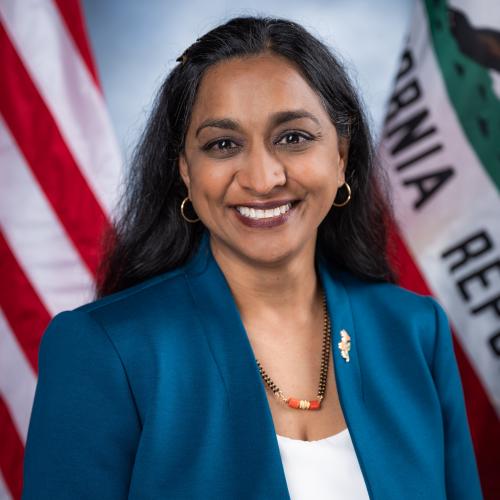
Rep. Darsh Patel
Sponsored bills
Existing law makes it a crime to knowingly or willfully cause another person to engage in the unlawful manufacture of firearms or knowingly or willfully aiding, abetting, prompting, or facilitating the unlawful manufacture of firearms, including the manufacture of assault weapons or .50 BMG rifles or the manufacture of any firearm using a 3-dimensional printer, as specified. Existing law authorizes a civil action against a person who knowingly distributes or causes to be distributed any digital firearm manufacturing code to any person, except as specified. Existing law authorizes the Attorney General, county counsel, or city attorney to bring an action against this person and seek a civil penalty, as specified, for each violation, as well as injunctive relief. This bill would require the Department of Justice to check on a quarterly basis beginning no later than July 1, 2027, whether ASTM International has published industry standards for equipping 3-dimensional printers with firearm blocking technology. The bill would require, if the department determines that ASTM International has published or adopted industry standards for firearm blocking technology for 3-dimensional printers, that the department publish written guidance or regulations within 24 months after making that determination. The bill would require, among other things, the written guidance or regulations to describe minimum performance standards for 3-dimensional printer firearm blocking technology before a printer can lawfully be sold or offered for sale in the state. If, as of July 1, 2029, the department determines that ASTM International has not published industry standards for firearm blocking technology for 3-dimensional printers, the bill would relieve the department of any further responsibility to ascertain whether ASTM International has published or adopted industry standards. The bill would make it unlawful to sell, offer for sale, or transfer for consideration, a 3-dimensional printer in the State of California that is not equipped with firearm blocking technology that also meets the above-described industry standards. The bill would exempt printers used exclusively for the manufacturing of properties (props) in the entertainment industry, and would authorize the department to adopt regulations that provide for additional exceptions to these provisions. This bill would also exempt a person who distributes, or causes the distribution of, digital firearm manufacturing code, solely for the bona fide purpose of, among other things, developing, refining, and testing the functionality of a firearm blocking technology from civil liability. This bill would make these provisions severable.
Existing law requires the Office of the State Fire Marshal to develop and make available on its internet website a Wildland-Urban Interface Fire Safety Building Standards Compliance training intended for use in the training of local building officials, builders, and fire service personnel, as specified. Existing law authorizes the Office of the State Fire Marshal to allow certification of contractors who conduct defensible space, home hardening, fuel reduction, roadside clearance, and other contracting activities for wildlife resiliency efforts and who have completed specified training programs. Existing law requires the Office of the State Fire Marshal to develop and update a Wildland-Urban Interface Products listing of products and construction assemblies that comply with prescribed regulations regarding building in a wildland-urban interface area. Existing law authorizes the Office of the State Fire Marshal to expend funds from the Building Standards Administration Special Revolving Fund, upon an appropriation by the Legislature, for the purposes of researching and developing the products listing and the educational and training provisions. Existing law requires the Office of the State Fire Marshal to establish the State Fire Marshal's Wildfire Mitigation Advisory Committee. This bill would require, on or before January 1, 2028, the State Fire Marshal's Wildfire Mitigation Advisory Committee to develop an implementation plan for a home hardening certification program that identifies home hardening measures, including defensible space, that can be voluntarily implemented during renovation or property improvement projects, or both, to substantially reduce the risk of loss during a fire and bring existing building stock into alignment with state building standards for wildland-urban interface areas. The bill would require the committee, in developing the implementation plan for the home hardening certification program, to provide specified recommendations. The bill would authorize the Office of the State Fire Marshal to expend funds from the Building Standards Administration Special Revolving Fund, upon an appropriation by the Legislature, for the purposes of developing the implementation plan for the home hardening certification program. The bill would require the committee, on or before January 1, 2028, to provide a report to specified legislative committees on its findings and recommendations pursuant to these provisions. The bill would require, on or before January 1, 2029, the State Fire Marshal to establish the home hardening certification program based on the recommendations made by the Wildfire Mitigation Advisory Committee.
Under existing law, there is in the Natural Resources Agency, the Department of Parks and Recreation, conducted under the control of an executive officer known as the Director of Parks and Recreation, charged with administration, protection, and development of the state park system. Existing law designates all parks, public campgrounds, monument sites, landmark sites, and sites of historical interest established or acquired by the state, or that are under its control, as the state park system, except as specified. Under existing law, the Department of Parks and Recreation controls the state park system, which is made up of units. One unit is the San Pasqual Battlefield State Park. This bill would require the state to quitclaim forthwith to the San Pasqual Band of Mission Indians, at no cost to the tribe, and subject to specified conditions, all interests of the state in the land owned within the San Pasqual Battlefield State Park, consisting of 3 parcels of land totaling approximately 3.68 acres. The bill would exempt the land from property taxation. By imposing additional duties on locals in the administration of this exemption, the bill would impose a state-mandated local program. This bill would provide that if the City of San Diego agrees to the transfer, the state would be required, at no cost to the tribe, to relinquish or transfer to the San Pasqual Band of Mission Indians all rights and interests that the state has in those lands through lease, permit, or otherwise, and to take any and all other actions necessary to effectuate the city's transfer of the land to the San Pasqual Band of Mission Indians. This bill would make legislative findings and declarations as to the necessity of a special statute for the San Pasqual Band of Mission Indians. This bill would make legislative findings and declarations related to a gift of public funds. The California Constitution requires the state to reimburse local agencies and school districts for certain costs mandated by the state. Statutory provisions establish procedures for making that reimbursement. This bill would provide that, if the Commission on State Mandates determines that the bill contains costs mandated by the state, reimbursement for those costs shall be made pursuant to the statutory provisions noted above. Existing law requires the state to reimburse local agencies annually for certain property tax revenues lost as a result of any exemption or classification of property for purposes of ad valorem property taxation. This bill would provide that, notwithstanding those provisions, no appropriation is made and the state shall not reimburse local agencies for property tax revenues lost by them pursuant to the bill.
Existing law authorizes any employer or authorized bargaining representative, as specified, whose employee has suffered unlawful violence or a credible threat of violence that can reasonably be construed to be carried out or to have been carried out at the workplace, to seek a temporary restraining order and an order after hearing on behalf of the employee and other employees at the workplace, as described. This bill would, beginning on January 1, 2028, allow any party or witness to a petition for a restraining order to appear remotely at a hearing and would prohibit any fee for appearing remotely. The bill would require the court of each county to develop rules and instructions for such remote appearances and post them on its website. The bill would also, commencing on January 1, 2028, require courts to allow filings related to such protective orders to be submitted electronically, as specified. The bill would make conforming changes. This bill would incorporate additional changes to Section 527.8 of the Code of Civil Procedure proposed by AB 1961 to be operative only if this bill and AB 1961 are enacted and this bill is enacted last.
Commencing January 1, 2027, existing law vests all executive and administrative functions of the State Department of Education in an Education Commissioner. Existing law requires the Education Commissioner, on or before October 1, 2027, to develop findings and recommendations for a 2nd phase of education governance consolidation and streamlining, as specified, and to submit to the Governor and the appropriate policy and fiscal committees of the Legislature (1) an interim report, by June 30, 2027, with a detailed description of the process used to gather required input for the development of those findings and recommendations and (2) a final report, by October 1, 2027, containing its findings and recommendations. This bill would require the Education Commissioner, utilizing those findings and recommendations, to submit a report, on or before October 1, 2028, to the Governor and appropriate policy and fiscal committees of the Legislature on, among other things, progress toward implementation of the recommended actions or activities for education governance consolidation and streamlining and recommendations of any additional steps the Governor and Legislature can take to consolidate or eliminate fragmented or duplicative state requirements and activities that require statutory or budgetary authority.
Existing law, the Protecting Our Kids from Social Media Addiction Act, prohibits an operator of an addictive internet-based service or application from providing an addictive feed, as defined, to a user unless the operator does not have actual knowledge that the user is a minor, as specified, or the operator has obtained verifiable parental consent to provide an addictive feed to the user who is a minor. Existing law, the Digital Age Assurance Act, beginning January 1, 2027, requires a person who owns, maintains, or controls a software application, as defined, to request age bracket data sent by a real-time secure application programming interface or operating system with respect to a particular user from an operating system provider or a covered application store when the application is downloaded and launched. This bill would prohibit a covered platform, as defined, from providing an addictive feature, as defined, to a user who is under 16 years of age and would require a covered platform to implement reasonable measures to ensure that users under 16 years of age are not offered or provided any addictive feature on the covered platform. The bill would also authorize the Attorney General to adopt regulations to implement and enforce the bill in order to further the purpose of protecting minors online, including by altering the scope of "covered platform" if the Attorney General determines that doing so is necessary to ensure that "covered platform" applies to internet websites, online services, online applications, or mobile applications that make addictive features, as defined, available to users under 16 years of age. This bill would impose a civil penalty upon a noncompliant platform and would require its provisions to be enforced by a civil action brought only by the Attorney General or a local public prosecutor, as specified. This bill would also establish the e-Safety Advisory Commission within the Department of Justice as an independent advisory body that is only for administrative purposes to advise state government on certain matters related to online safety and would require the commission to, on or before January 1 of each year, report to the Legislature and the Governor on, among other things, its activities under the bill.
Existing law establishes the Department of Toxic Substances Control, which regulates the handling and management of hazardous waste and hazardous materials, and establishes the Office of Environmental Health Hazard Assessment and the State Air Resources Board. Existing federal law sets action levels for lead in dust and emission standards for asbestos, and existing state law sets workplace standards for asbestos. Existing law authorizes local health officers to take specified actions to protect public health and establishes procedures for the remediation of certain contaminated properties. This bill would require the Department of Toxic Substances Control, in consultation with the Office of Environmental Health Hazard Assessment and other relevant coordinating agencies, on or before December 31, 2028, to develop and adopt regulations pertaining to lead and asbestos testing, remediation, and restoration after a wildfire and, on or before December 31, 2029, to develop and publish guidance pertaining to specified other contaminants, as provided. The bill would require the State Air Resources Board, on or before December 31, 2028, to develop and publish guidance on indoor air contaminants following residential smoke damage from a wildfire, as provided. The bill would provide that, until the adoption of the regulations and guidance, specified lead and asbestos standards shall apply for wildfire-caused lead and asbestos remediation, as provided. The bill would require the department, in collaboration with the State Department of Education and other relevant state agencies, no later than July 1, 2028, to develop advisory, nonregulatory guidance for schools after a wildfire, as provided. The bill would exempt the regulations and guidance from the Administrative Procedure Act. The bill would become operative only if AB 1795 of the 2025–26 Regular Session is enacted and takes effect on or before January 1, 2027.
The Public Employees' Retirement Law (PERL) establishes the Public Employees' Retirement System (PERS) to provide a defined benefit to members of the system based on final compensation, credited service, and age at retirement, subject to certain variations. Existing law creates the Public Employees' Retirement Fund, which is continuously appropriated for purposes of PERS, including depositing employer and employee contributions. Under the California Constitution, assets of a public pension or retirement system are trust funds. The California Public Employees' Pension Reform Act of 2013 (PEPRA) establishes a variety of requirements and restrictions on public employers offering defined benefit pension plans. In this regard, PEPRA restricts the amount of compensation that may be applied for purposes of calculating a defined pension benefit for a new member, as defined, by restricting it to specified percentages of the contribution and benefit base under a specified federal law with respect to old age, survivors, and disability insurance benefits. Existing law, the Teachers' Retirement Law, establishes the State Teachers' Retirement System (STRS) and creates the Defined Benefit Program of the State Teachers' Retirement Plan, which provides a defined benefit to members of the program, based on final compensation, creditable service, and age at retirement, subject to certain variations. This bill, for service performed on and after January 1, 2027, would prohibit the pensionable compensation for calendar year 2027 used to calculate the defined benefit paid to a new member of a retirement system subject to PEPRA who retires from the system from exceeding specified percentages of the contribution and benefit base under the specified federal law with respect to old age, survivors, and disability insurance benefits. The bill would make related, conforming changes to these provisions on pensionable compensation. The bill also would require a new member of STRS to be subject to specified limits of the Teachers' Retirement Law. PEPRA requires each retirement system that offers a defined benefit plan for safety members of the system to use one of 3 formulas for safety members, 2% at age 57, 2.5% at age 57, or 2.7% at age 57. This bill would establish new retirement formulas, for employees first hired on or after January 1, 2027, as 2.5% at age 55, 2.7% at age 55, or 3% at age 55, subject to certain exceptions. For new members hired on or after January 1, 2013, who are safety members, the bill would require employers to adjust the formulas for service performed on or after January 1, 2027, to offer the formula that has the same fraction at age 55 as the fraction at age 57 in the formula the employer offered pursuant to existing law. The bill would authorize a public employer and a recognized employee organization to negotiate a prospective increase to the retirement benefit formulas for safety members and new safety members, consistent with the formulas permitted under PEPRA, including the new formulas described above. This bill would authorize an employer and its employees to agree in a memorandum of understanding to be subject to a higher safety plan or a lower safety plan, subject to certain requirements, including that the memorandum of understanding is collectively bargained in accordance with applicable laws. By increasing the contribution to continuously appropriated funds, and by increasing expenditures from those funds, this bill would make an appropriation.

Existing law, the Knox-Keene Health Care Service Plan Act of 1975, provides for the licensure and regulation of health care service plans by the Department of Managed Health Care and makes a willful violation of the act a crime. Existing law also provides for the regulation of health insurers by the Department of Insurance. Existing federal law, the federal Paul Wellstone and Pete Domenici Mental Health Parity and Addiction Equity Act of 2008 (MHPAEA) , requires group health plans and health insurance issuers that provide both medical and surgical benefits and mental health or substance use disorder benefits to ensure that financial requirements and treatment limitations applicable to mental health or substance use disorder benefits are no more restrictive than the predominant requirements or limitations applied to substantially all medical and surgical benefits. Existing state law requires an individual, small group, or large group health care service plan contract or health insurance policy to provide covered mental health and substance use disorder benefits in compliance with the MHPAEA and specified federal rules, regulations, and guidance. This bill would require the above-described contracts and policies to provide covered mental health and substance use disorder benefits in compliance with specified federal rules, regulations, and guidance as they existed on January 1, 2025. Because a violation of these requirements by a health care service plan would be a crime, the bill would impose a state-mandated local program. The bill would also require the departments to review provisions of the bill that conflict with or materially differ from federal regulations and collaborate with each other to issue guidance on compliance. The California Constitution requires the state to reimburse local agencies and school districts for certain costs mandated by the state. Statutory provisions establish procedures for making that reimbursement. This bill would provide that no reimbursement is required by this act for a specified reason.