

(1) Existing law, the California Fair Employment and Housing Act (FEHA) , establishes the Civil Rights Department to enforce civil rights laws with respect to housing and employment, as prescribed. The FEHA recognizes and declares to be a civil right the opportunity to seek, obtain, and hold employment and housing without discrimination because of a specified characteristic. The FEHA makes certain discriminatory practices based on those characteristics unlawful. The FEHA also declares that its purpose is to provide effective remedies that will eliminate these discriminatory practices. The FEHA defines terms used in connection with unlawful practices. These include "sex," which includes pregnancy or medical conditions related to pregnancy, childbirth or medical conditions related to childbirth, and breastfeeding or medical conditions related to breastfeeding. This bill would include perimenopause, menopause, or postmenopause or other related medical conditions within the above definition of sex. The FEHA separately defines the term "medical condition" to mean either a health impairment related to or associated with a diagnosis of cancer or a record or history of cancer or specified genetic characteristics. The Unruh Civil Rights Act (Unruh Act) establishes that all persons within the jurisdiction of the state are free and equal and, regardless of their sex, race, color, religion, ancestry, national origin, disability, medical condition, genetic information, marital status, sexual orientation, citizenship, primary language, or immigration status are entitled to the full and equal accommodations, advantages, facilities, privileges, or services in all business establishments, as prescribed. The Unruh Act defines "sex" to include, among other things, pregnancy, childbirth, or medical conditions related to pregnancy or childbirth. This bill would provide that "medical condition" as used in the definition of "sex" in FEHA and the Unruh Act includes, but is not limited to, the conditions included in the definition of "medical condition" in FEHA. (2) Existing law requires the Civil Rights Department to provide a poster on discrimination in employment to an employer or a member of the public upon request. Existing law requires the poster to be available at each office of the department and requires each employer to post the poster in a prominent and accessible location in the workplace, as prescribed. This bill would require the department, on or before July 1, 2027, to update the poster to notify people of their rights and protections in regard to perimenopause, menopause, postmenopause, or related medical conditions. (3) This bill would incorporate additional changes to Section 51 of the Civil Code proposed by AB 2563 to be operative only if this bill and AB 2563 are enacted and this bill is enacted last. This bill would incorporate additional changes to Section 12926 of the Government Code proposed by AB 2563 to be operative only if this bill and AB 2563 are enacted and this bill is enacted last.
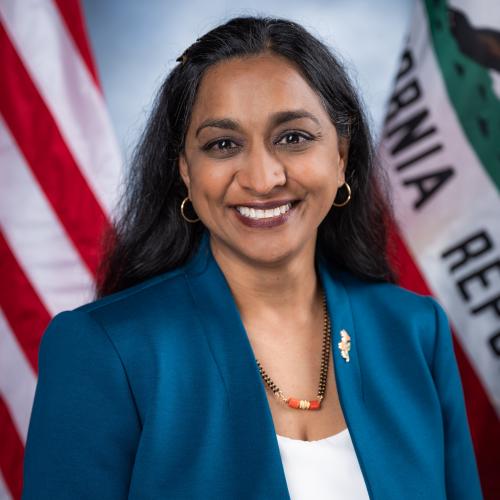
Rep. Darsh Patel
Sponsored bills
Existing law establishes the Medi-Cal program, which is administered by the State Department of Health Care Services and under which qualified low-income individuals receive health care services. The Medi-Cal program is in part governed by, and funded pursuant to, federal Medicaid program provisions. Existing law sets forth a schedule of benefits covered under the Medi-Cal program, including acupuncture, but only to the extent that federal matching funds are provided for acupuncture. Under this bill, acupuncture would instead be a covered Medi-Cal benefit subject to utilization controls and the availability of federal financial participation. The bill would, if federal financial participation is not available for coverage of acupuncture services, make acupuncture a covered benefit subject to an appropriation and utilization controls. This bill would incorporate additional changes to Section 14132 of the Welfare and Institutions Code proposed by AB 1949 and AB 350 to be operative only if this bill and either or both AB 1949 and AB 350 are enacted and this bill is enacted last.
Existing law, the Knox-Keene Health Care Service Plan Act of 1975, provides for the licensure and regulation of health care service plans by the Department of Managed Health Care, and makes a willful violation of the act a crime. Existing law provides for the regulation of health insurers by the Department of Insurance. Existing law requires a health care service plan or health insurer to reimburse a complete claim or a portion thereof within 30 calendar days after receipt of the claim, or, if a claim or portion thereof does not meet the criteria for completeness, to notify the claimant no later than 30 calendar days after receipt that the claim or portion thereof is contested or denied. This bill would grant a claimant no less than 90 calendar days to submit a corrected claim after a health care service plan or health insurer denies a claim or portion thereof or sends a notice of overpayment for a claim based on a defect that may be remedied by submitting a corrected claim. The bill would prohibit a plan or insurer from denying a corrected claim on the grounds that the claim was not submitted within another applicable claim filing deadline. Under the bill, a dispute related to a corrected claim would be required to be eligible for submission to the plan's or insurer's fast, fair, and cost-effective dispute resolution mechanism. Because a willful violation of these provisions by a health care service plan would be a crime, the bill would impose a state-mandated local program. The California Constitution requires the state to reimburse local agencies and school districts for certain costs mandated by the state. Statutory provisions establish procedures for making that reimbursement. This bill would provide that no reimbursement is required by this act for a specified reason.
Existing law, the Community Assistance, Recovery, and Empowerment (CARE) Act, authorizes specified persons, including a person with whom the respondent resides, family members, and first responders, among others, to petition a civil court to create a voluntary CARE agreement or a court-ordered CARE plan and implement services, to be provided by county behavioral health agencies, to provide behavioral health care, including stabilization medication, housing, and other enumerated services, to adults who are currently experiencing a severe mental illness and have a diagnosis identified in the disorder class schizophrenia and other psychotic disorders, and who meet other specified criteria. This bill would authorize a first responder to contact the county behavioral health agency in the county in which the individual resides or is found to request the agency file a petition to commence the CARE process. The bill would require the agency to review the request and determine whether to file a petition within 30 business days. The bill would require the agency, upon completion of the review, to notify the first responder that made the referral of specified information, including whether or not a petition was filed. Because the bill would require a higher level of service from county agencies, this bill would create a state-mandated local program. This bill would require the department to create a referral form to be used by the first responders and would require the department to issue guidance on the procedure to request that the agency file a petition to commence the CARE process. The bill would also require the agency to include specified data in their annual report to the department. The California Constitution requires the state to reimburse local agencies and school districts for certain costs mandated by the state. Statutory provisions establish procedures for making that reimbursement. This bill would provide that, if the Commission on State Mandates determines that the bill contains costs mandated by the state, reimbursement for those costs shall be made pursuant to the statutory provisions noted above.
Existing law creates, in the State Department of Education, the American Indian Education Unit to provide technical support to, and proper administrative oversight of, American Indian education programs established by the state in order to ensure that American Indian pupils attending California public schools are able to meet specified challenging academic standards. Existing law establishes the California Longitudinal Pupil Achievement Data System (CALPADS) , which is maintained by the State Department of Education and consists of pupil data from elementary and secondary schools, as specified, relating to demographic, program participation, enrollment, and statewide assessments, among other things. Existing law requires the system to be used to accomplish specified goals, including to provide school districts and the department access to data, including demographic data, necessary to comply with federal reporting requirements. This bill would require the department to, on or before July 1, 2028, and each July 1 thereafter, post, on the department's internet website, statewide aggregate educational outcome data for the prior school year for pupils who identify as American Indian or Alaska Native, as specified.
Existing law, the Knox-Keene Health Care Service Plan Act of 1975, provides for the licensure and regulation of health care service plans by the Department of Managed Health Care and makes a willful violation of the act a crime. Existing law also provides for the regulation of health insurers by the Department of Insurance. Existing law requires an individual or small group health care service plan contract or health insurance policy to include, at a minimum, coverage for essential health benefits, as specified. Commencing January 1, 2027, if the United States Department of Health and Human Services approves a new essential health benefits benchmark plan for the state, existing law requires essential health benefits to include an annual hearing exam and one hearing aid per ear every three years. This bill, the Let California Kids Hear Act, would require a large group health care service plan contract or health insurance policy issued, amended, or renewed on or after January 1, 2028, to include coverage for hearing aids, as defined, and related services for enrollees and insureds under 21 years of age, if medically necessary. The bill would authorize a large group health care service plan contract or health insurance policy to limit the dollar coverage for each individual hearing aid device to $3,000, as specified. Because a willful violation of these requirements by a health care service plan would be a crime, the bill would impose a state-mandated local program. The California Constitution requires the state to reimburse local agencies and school districts for certain costs mandated by the state. Statutory provisions establish procedures for making that reimbursement. This bill would provide that no reimbursement is required by this act for a specified reason.
Maddy summaryThis bill designates September 2026 as Childhood Cancer Awareness Month. It directly affects state agencies and organizations by encouraging them to recognize this specific month for awareness activities. The measure does not change laws or allocate funding but serves as a formal commemorative resolution.
Existing law, as amended by the Public Safety and Rehabilitation Act of 2016, enacted by Proposition 57 at the November 8, 2016, statewide general election, authorizes the district attorney to make a motion to transfer a minor from juvenile court to a court of criminal jurisdiction in a case in which a minor is alleged to have committed a felony when the minor was 16 years of age or older, or in a case in which a specified serious offense is alleged to have been committed by a minor when the minor was 14 or 15 years of age, but the minor was not apprehended prior to the end of juvenile court jurisdiction. This bill would, consistent with the intent of Proposition 57, authorize the district attorney to make a motion to transfer a minor from juvenile court to a court of criminal jurisdiction when the minor is alleged to have committed certain specified offenses when the minor was 14 or 15 years of age and was previously convicted in a court of criminal jurisdiction and is now subject to resentencing in juvenile court pursuant to specified provisions.
This measure would recognize and affirm the important role of artists, arts organizations, creative arts therapists, and arts for health initiatives in supporting behavioral health, promoting recovery, strengthening community resilience, and contributing to public safety. The measure would encourage and recognize exploration, support, and integration of arts and behavioral health within California's health care, behavioral health, and community-based systems.
(1) Existing law establishes a single system for providing support to local educational agencies and schools and for specified federal educational programs. Existing law provides that the purpose of the statewide system of support is to build the capacity of local educational agencies, as specified. Existing law requires the State Department of Education and the California Collaborative for Educational Excellence to establish a process, administered by the department, to select, subject to approval by the executive director of the State Board of Education, an expert lead agency based on specific expertise in an area of need to conduct activities and build statewide capacity to address that area of need within the statewide system of support, as well as geographic lead agencies for other specified purposes, as provided. This bill would require the department and the California Collaborative for Educational Excellence, through contracts or memoranda of understanding with one or 2 county offices of education, to administer the Supporting Inclusive Practices project. The bill would provide that the purposes of the project are, among others, to improve pupil outcomes by increasing opportunities for pupils with disabilities to access education in general education settings, as provided, and to support the educator workforce to serve pupils with disabilities. The bill would require the collaborative, as part of the project, to administer the universal support components, including providing technical assistance to local educational agencies and charter schools focused on supporting evidence-based practices to increase access by pupils with disabilities to education in general education settings. The bill would require the department, as part of the project, to administer the direct support components by deploying targeted technical assistance to support local educational agencies and charter schools, as provided. The bill would require the department and the collaborative to coordinate their respective components, including a shared referral process by which local educational agencies and charter schools receiving assistance from the collaborative may be referred to the department for direct support, as provided. (2) Existing law appropriates $15,000,000 from the General Fund to the State Department of Education for allocation to the Riverside County Office of Education and the El Dorado County Office of Education in equal amounts in support of the Supporting Inclusive Practices project, as provided. Existing law also appropriates, for the 2026–27 fiscal year, $30,000,000 from the General Fund to the department for allocation to the Riverside County Office of Education and the El Dorado County Office of Education in equal amounts in support of the Supporting Inclusive Practices project, as provided. Existing law requires the Riverside County Office of Education and the El Dorado County Office of Education to submit an expenditure plan to the State Department of Education on or before August 1 of each year that funding is made available, and requires the Supporting Inclusive Practices project to submit a report to the Superintendent of Public Instruction on or before June 30 of each year until the appropriated funds have been fully expended, as provided. This bill would revise those provisions by (A) instead appropriating the $30,000,000 to the department for allocation to the California Collaborative for Educational Excellence for allocation to only the El Dorado County Office of Education for the purposes of implementing the requirements described above in paragraph (1) on behalf of the California Collaborative for Educational Excellence and (B) limiting those expenditure plan and reporting requirements only for purposes of the $15,000,000 appropriation. By changing the terms of a previous appropriation, the bill would make an appropriation.