

Existing law requires the Commission on Teacher Credentialing to establish standards for the issuance and renewal of credentials, certificates, and permits. Existing law requires, as a minimum requirement for a preliminary multiple subject, single subject, or education specialist teaching credential, the satisfactory completion of a program of professional preparation, as specified. Existing law also authorizes the commission to issue a PK–3 early childhood education specialist instruction credential, as provided. This bill would require the commission, on or before March 1, 2027, to develop, establish, and promulgate through the regulatory process efficient routes for (1) teacher candidates to obtain (A) a multiple subject credential, a single subject credential, or a PK–3 early childhood education specialist instruction credential, and (B) an education specialist credential, known as dual credentialing, as provided, (2) existing teachers who hold a multiple subject credential, a single subject credential, or a PK–3 early childhood education specialist instruction credential to obtain an education specialist credential, and (3) existing teachers who hold an education specialist credential to obtain a multiple subject credential, a single subject credential, or a PK–3 early childhood education specialist instruction credential, as provided.
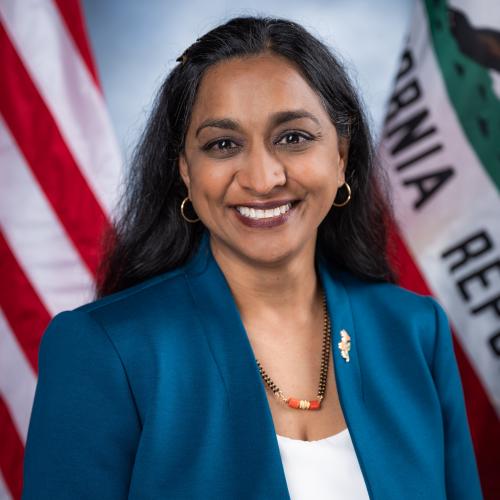
Asm. Darsh Patel
Sponsored bills
Existing law designates specific days as holidays in this state. Existing law designates holidays on which community colleges and public schools are authorized to close pursuant to a memorandum of understanding between the governing board and represented employees, including "Native American Day" on the 4th Friday in September. Existing law entitles state employees, with specified exceptions, and authorizes certain community college and public school employees, to be given time off with pay for specified holidays, as specified. This bill would add "Diwali" to the list of state holidays. The bill would authorize community colleges and public schools to close on "Diwali," as specified. The bill would authorize state employees to elect to take, and would authorize certain community college and public school employees to be given, time off with pay in recognition of "Diwali," as specified. The bill would authorize public schools and educational institutions throughout the state to include exercises acknowledging and celebrating the meaning and importance of Diwali, as specified. Existing law adopts state holidays as judicial holidays, with certain exceptions, including Admission Day and Columbus Day. This bill would add "Diwali" to the list of holidays that are excluded from designation as a judicial holiday. This bill would make related findings and declarations.
Existing law authorizes the State Fire Marshal to make changes as may be necessary to standardize all existing fire protective equipment throughout the state. This bill would require, until January 1, 2031, the State Fire Marshal, in consultation with the Division of Occupational Safety and Health, to develop a working group with specified membership to make recommendations regarding personal protective equipment used in responding to lithium-ion battery fires. The bill would require, at a minimum, the working group to review, and for the purpose of making the recommendations to consider, the latest personal protective equipment to limit exposure to lithium and other heavy metals, technology to clean personal protective equipment, whether different types of personal protective equipment should be used for different types of lithium-ion battery fires, and current decontamination practices at the fire scene, as specified. The bill would require the recommendations to be submitted to the Legislature on or before September 1, 2026.
Existing law establishes the Governor's Office of Business and Economic Development, also known as "GO-Biz," to, among other duties, serve the Governor as the lead entity for economic strategy and the marketing of California on issues relating to business development, private sector investment, and economic growth. This bill would require GO-Biz to develop industry strategies for the strategic sectors identified in the California Jobs First State Economic Blueprint to ensure an industry-specific approach that builds on the strategies outlined in the blueprint and outlines the activities and investments necessary to ensure that these sectors continue to grow in California. The bill would require each industry strategy to include specified elements, including an industry overview outlining the current state of the industry, why it is critical to California, and the specific strategies that would lead to increased jobs and capital investments. This bill would also require GO-Biz to develop an industry strategy for the quantum technology subsector identified in the blueprint and would authorize the department to develop industry strategies for the other subsectors identified in the blueprint. The bill would require GO-Biz to prioritize the industry strategy for quantum technology and submit a copy of the completed industry strategy to the Legislature on or before July 1, 2026, as provided.
Existing law requires the State Air Resources Board to adopt and implement motor vehicle fuel specifications for the control of air contaminants and sources of air pollution. Existing law prohibits the state board from adopting any regulation that establishes a specification for motor vehicle fuel unless that regulation, and a multimedia evaluation conducted by affected agencies and coordinated by the state board, are reviewed by the California Environmental Policy Council. This bill would, notwithstanding that prohibition, authorize blends of gasoline containing 10.5% to 15% ethanol by volume to be sold in the state for use as a transportation fuel until (1) the California Environmental Policy Council completes its review of those blends and (2) the state board either adopts a regulation establishing a specification for those blends or posts an assessment on its internet website demonstrating that it is not possible for a regulation establishing a specification for those blends to meet specified requirements. This bill would declare that it is to take effect immediately as an urgency statute.
(1) The California Constitution provides for the fundamental rights of privacy and to choose to have an abortion. Existing law, the Reproductive Privacy Act, prohibits the state from denying or interfering with a pregnant person's right to choose or obtain an abortion before the viability of the fetus, or when the abortion is necessary to protect the life or health of the pregnant person. Existing law prohibits conditions or restrictions from being imposed on abortion access for incarcerated persons and committed juveniles. Existing laws requiring parental consent for abortion and making assisting in or advertising abortion a crime have been held to be unconstitutional. This bill would repeal those unconstitutional provisions and delete obsolete references to criminal abortion penalties. The bill would make technical changes to provisions authorizing abortion for incarcerated and committed persons. (2) Existing law, the Sherman Food, Drug, and Cosmetic Law, provides for labeling requirements of drugs and devices. The Pharmacy Law requires a pharmacist to dispense a prescription in a container that is correctly labeled with specified information, including the name of the prescriber and the name address of the pharmacy. A violation of the Pharmacy Law is a misdemeanor. This bill would authorize the State Department of Public Health to adopt regulations to include or exclude mifepristone and other medication abortion drugs from the requirements of the Sherman Food, Drug, and Cosmetic Law, but would exclude the drugs from those requirements if the drugs are no longer approved by the United States Food and Drug Administration (FDA) , as specified. The bill would authorize a pharmacist to dispense mifepristone or other drug used for medication abortion without the name of the patient, the name of the prescriber, or the name and address of the pharmacy, subject to specified requirements. The bill would require the pharmacist to maintain a log, as specified, that is not open to inspection by law enforcement without a subpoena, and would prohibit the disclosure of the information to an individual or entity from another state. The bill would prohibit criminal, civil, professional discipline, or licensing action against a pharmacist for manufacturing, transporting, or engaging in specified other acts relating to mifepristone or other medication abortion drugs, and would prohibit the California State Board of Pharmacy from denying an application for licensure or taking disciplinary action against an applicant or licensee for engaging in certain acts relating to mifepristone or other medical abortion drugs. By expanding the scope of a crime under the Pharmacy Law, the bill would impose a state-mandated local program. (3) Existing law establishes various healing arts boards in the Department of Consumer Affairs that license and regulate various healing arts licensees. This bill would prohibit subjecting a healing arts practitioner who is authorized to prescribe, furnish, order, or administer dangerous drugs to civil, criminal, disciplinary, or other administrative action for prescribing, furnishing, ordering, or administering mifepristone or other medication abortion drugs for a use that is different from the use for which that drug has been approved for marketing by the FDA or that varies from an approved risk evaluation and mitigation strategy under federal law, as specified. The bill would state that the laws of another state or federal actions that interfere with the authority of a healing arts practitioner to take specified actions relating to mifepristone or other medication abortion drugs are against the public policy of this state. The bill would prohibit criminal, civil, professional discipline, or licensing actions against an applicant or licensee for manufacturing, transporting, or engaging in certain other acts relating to mifepristone or other medication abortion drugs. (4) Existing law provides for the licensure and regulation of clinics and health facilities by the State Department of Public Health. This bill would prohibit criminal, civil, professional discipline, or licensing action against a licensed clinic or health facility for transporting or engaging in certain other acts relating to mifepristone or other medication abortion drugs that are lawful in California. The bill would prohibit the department from denying an application for licensure or taking disciplinary action against an applicant or licensee for engaging in certain acts relating to mifepristone or other medical abortion drugs. (5) Existing law prohibits a health care provider from knowingly disclosing, transmitting, transferring, sharing or granting access to identifiable medical information related to an individual seeking, obtaining, providing, supporting, or aiding in the performance of an abortion that is lawful under the laws of this state, as specified and subject to specified exclusions. Existing law exempts a health care provider from liability for damages or from civil or enforcement actions for failing to comply this prohibition before January 31, 2026, if the health care provider is working diligently and in good faith to comply with the prohibition. This bill would exempt a health care provider from liability for damages or from civil or enforcement actions for an additional year, until January 31, 2027. (6) Existing law, the Knox-Keene Health Care Service Plan Act of 1975, provides for the licensure and regulation of health care service plans by the Department of Managed Health Care, and makes a willful violation of the act a crime. Existing law provides for the regulation of disability and health insurers by the Department of Insurance. Existing law prohibits a health care service plan contract or a group or individual disability insurance policy or certificate that covers prescription drugs from limiting or excluding coverage of a drug on the basis that the drug is prescribed for a use that is different from the use for which that drug has been approved for marketing by the FDA. Existing law prohibits a contract between a health care service plan or health insurer and a health care services provider from containing any term that would result in termination or nonrenewal of the contract or otherwise penalize the provider based on a civil judgment, criminal conviction, or another professional disciplinary action in another state if the judgment, conviction, or professional disciplinary action is solely based on the application of another state's law that interferes with a person's right to receive care that would be lawful if provided in California. Existing law also prohibits a health care service plan or health insurer from discriminating against a licensed provider solely on the basis of a civil judgment, criminal conviction, or another professional disciplinary action in another state if the judgment, conviction, or professional disciplinary action is solely based on the application of another state's law that interferes with a person's right to receive care that would be lawful if provided in California. This bill would prohibit a health care service plan contract or a group or individual health insurance policy or certificate that covers prescription drugs from limiting or excluding coverage for brand name or generic mifepristone solely on the basis that the drug is prescribed for a use that is different from the use for which that drug has been approved for marketing by the FDA or that varies from an approved risk evaluation and mitigation strategy, except if the state deems it necessary to address an imminent health or safety concern. The bill would require those contracts and policies to include coverage for brand name or generic mifepristone, even if it has not been approved by the FDA if specified requirements are met, except if the state deems it necessary to address an imminent health or safety concern. The bill would prohibit a plan or insurer from contracting with a health care services provider to terminate or nonrenew the contract or otherwise penalize the provider, or from discriminating against a licensed provider, for manufacturing, transporting, or engaging in certain other acts relating to mifepristone or other medication abortion drugs that are lawful in California. Because a violation of these provisions by a health care service plan would be a crime, the bill would impose a state-mandated local program. (7) This bill would incorporate additional changes to Section 4076 of the Business and Professions Code proposed by AB 1503 to be operative only if this bill and AB 1503 are enacted and this bill is enacted last. (8) The California Constitution requires the state to reimburse local agencies and school districts for certain costs mandated by the state. Statutory provisions establish procedures for making that reimbursement. This bill would provide that no reimbursement is required by this act for a specified reason. (9) This bill would declare that it is to take effect immediately as an urgency statute.
This measure would designate November 1, 2025, as Fernando Valenzuela Day, to highlight the positive impact his legacy created in the Latino and Hispanic community.
This measure would recognize the importance of California Native American Day, celebrated this year on September 26, 2025, and the annual California Indian Cultural Awareness Conference, to the enhancement of awareness of California Indian culture.
This measure would declare the Legislature's opposition to the unlawful Executive Order No. 14160, entitled "Protecting the Meaning and Value of American Citizenship," ending birthright citizenship as enshrined in the United States Constitution and would affirm the Legislature's commitment to birthright citizenship, as specified.
This measure would declare the month of March to be March4Water Month in California and would encourage all Californians to participate in activities and programs during March4Water Month to promote awareness, education, and actions that prioritize water as a vital resource for the state's future.