

Existing law makes it unlawful for any owner or operator of a motel, motor court, or like establishment to post or maintain outdoor advertising signs relating to room rates that has any untrue, misleading, false, or fraudulent representations, and specified other requirements on outdoor signs for those establishments. Existing law also prohibits an owner or operator of a hotel or motel from increasing the hotel or motel's rates upon the proclamation of a state of emergency by the President of the United States or the Governor or upon the declaration of a local emergency, as specified. This bill would prohibit a place of short-term lodging, as defined, from advertising or offering a room rate that does not include all fees or charges required to stay at the short-term lodging except taxes and fees imposed by a government on the stay, as specified. The bill would also require a place of short-term lodging to include in the total price to be paid, before the consumer reserves a stay, all taxes and fees imposed by a government on the stay. The bill would make a violation of those provisions subject to a specified civil penalty not to exceed $10,000 and would authorize an action to enforce those provisions to be brought by a city attorney, district attorney, county counsel, or the Attorney General. The bill would make the bill's provisions operative on July 1, 2024.
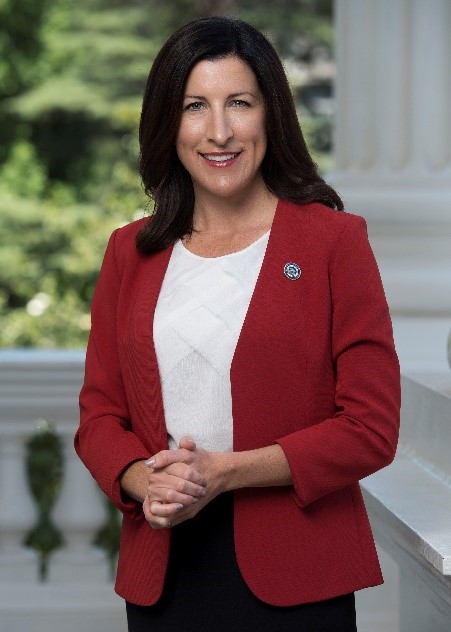
Asm. Cottie Petrie-Norris
Sponsored bills
Existing law prohibits the possession, sale, and transport, as specified, of certain controlled substances. Existing law requires a person granted probation for controlled substance offenses to, as a condition of probation, secure education or treatment from a local community agency designated by the court, if the service is available and the person is likely to benefit from the service. This bill would require the court to order a person granted probation pursuant to those provisions for a violation of specified laws involving any amount of fentanyl, carfentanil, benzimidazole opiate, or any analog thereof, to successfully complete a fentanyl and synthetic opiate education program, if one is available. The bill would prohibit a defendant from being charged a fee for enrollment in that education program. The bill would require a court ordering a defendant to complete those courses to only order the defendant to participate in programs that include, among other things, information regarding the nature and addictive elements of fentanyl and other synthetic opiates and their danger to a person's life and health. The bill would require program providers to report an unexcused absence by a defendant from a fentanyl and synthetic opiate education program to the court and the probation department within 2 business days. The bill would require the court to only refer defendants to programs that are available at no cost to the participants. This bill would incorporate additional changes to Section 11373 of the Health and Safety Code proposed by SB 46 to be operative only if this bill and SB 46 are enacted and this bill is enacted last.
Existing law, the Money Transmission Act, generally prohibits a person from engaging in the business of money transmission, as defined, without a license from the Commissioner of Financial Protection and Innovation. This bill, the Digital Financial Assets Law, would, on and after July 1, 2025, prohibit a person from engaging in digital financial asset business activity, or holding itself out as being able to engage in digital financial asset business activity, with or on behalf of a resident unless any of certain criteria are met, including the person is licensed with the Department of Financial Protection and Innovation, as prescribed. The bill would define "digital financial asset" to mean a digital representation of value that is used as a medium of exchange, unit of account, or store of value, and that is not legal tender, whether or not denominated in legal tender, except as specified. The bill would exempt activity by specified entities, and would authorize the commissioner, by regulation or order, to further exempt any person or transaction, if the commissioner finds the exemption to be in the public interest, as provided. This bill would, among other things, authorize the department to conduct examinations of a licensee, as prescribed, and would require a licensee to maintain, for all digital financial asset business activity with, or on behalf of, a resident for 5 years after the date of the activity, certain records, including a general ledger maintained at least monthly that lists all assets, liabilities, capital, income, and expenses of the licensee. This bill would authorize the department to take an enforcement measure against a licensee or person that is not a licensee but has engaged, is engaging, or is about to engage in digital financial asset business activity with, or on behalf of, a resident in any of certain instances, including the licensee or person materially violates the provisions of the bill, a rule adopted or order issued under the bill, or a law of this state other than the bill that applies to digital financial asset business activity of the violator with, or on behalf of, a resident. The bill would prescribe certain civil penalties for violations of its provisions. This bill would require a covered person, before engaging in digital financial asset business activity with a resident, to make certain disclosures to the resident, including a schedule of fees and charges the covered person may assess, the manner by which fees and charges will be calculated if they are not set in advance and disclosed, and the timing of the fees and charges. The bill would define "covered person" to mean a person required to obtain a license under the Digital Financial Assets Law. This bill would require an applicant, before submitting an application, to create and, during licensure, maintain in a record policies and procedures for, among other things, an information security program and an operational security program. This bill would become operative only if SB 401 of the 2023–24 Regular Session is enacted and takes effect on or before January 1, 2024.
Existing law requires that specified actions for recovery of damages suffered as a result of childhood sexual assault, as defined, be commenced within 22 years of the date the plaintiff attains the age of majority or within 5 years of the date the plaintiff discovers or reasonably should have discovered that psychological injury or illness occurring after the age of majority was caused by the sexual assault, whichever occurs later. Existing law prohibits certain of those actions from commencing on or after the plaintiff's 40th birthday unless the person or entity knew or had reason to know, or was otherwise on notice, of any misconduct that creates a risk of childhood sexual assault by an employee, volunteer, representative, or agent, or the person or entity failed to take reasonable steps or to implement reasonable safeguards to avoid acts of childhood sexual assault, as specified. Existing law revives claims that would otherwise have been barred as of January 1, 2020, because the applicable statute of limitations, claim presentation deadline, or any other time limit had expired and authorizes the claims to be commenced within specified time periods. This bill would eliminate time limits for the commencement of actions for the recovery of damages suffered as a result of childhood sexual assault, as specified. The bill would eliminate the prohibition on certain actions proceeding on or after the plaintiff's 40th birthday unless specified conditions are met. The bill would specify that its provisions apply to any claim in which the childhood sexual assult occurred on and after January 1, 2024.
Existing law authorizes victims of domestic violence, sexual assault, stalking, human trafficking, and elder or dependent adult abuse, and members of their households, to complete an application to be approved by the Secretary of State for the purpose of enabling state and local agencies to respond to requests for public records without disclosing a program participant's changed name or location, subject to specified conditions. Existing law makes it a misdemeanor for any person to make a false statement in an application. This bill, beginning on July 1, 2024, would make victims of child abduction, as defined, and members of their households eligible for the protections of this address confidentiality program. By expanding the scope of the program to include victims of child abduction and their household members, this bill would impose new duties on local public officials and expand the scope of an existing crime, thereby imposing a state-mandated local program. The California Constitution requires the state to reimburse local agencies and school districts for certain costs mandated by the state. Statutory provisions establish procedures for making that reimbursement. This bill would provide that with regard to certain mandates no reimbursement is required by this act for a specified reason. With regard to any other mandates, this bill would provide that, if the Commission on State Mandates determines that the bill contains costs so mandated by the state, reimbursement for those costs shall be made pursuant to the statutory provisions noted above.
Existing law governs the determination of child custody and visitation in contested proceedings. Existing law requires the court, for purposes of deciding custody or visitation, to determine the best interests of the child based on certain factors, including the health, safety, and welfare of the child, and the nature and amount of contact with both parents, except as specified. Existing law also requires the court to determine, under designated circumstances, whether to require that visitation to be supervised, suspended, limited, or denied. Under existing law, if the court finds that a party is staying in a domestic violence shelter or other confidential location, the court is required to design a visitation order to prevent disclosure of the location of the shelter or other confidential location. This bill, among other things, would require the court, in determining whether to require the above-described limitations on visitation, to consider virtual visitation, as defined. The bill would require a court, if it finds that a party is staying at one of the above-described locations due to domestic violence or fear of domestic violence from the other parent, to order in-person visitation only if the court finds that in-person visitation is in the best interest of the child and taking into consideration, among other things, the potential for disclosure of the confidential location. Existing law requires the Judicial Council to develop standards for supervised visitation providers in accordance with specified guidelines. When developing standards, existing law requires the Judicial Council to consider, among other things, the provider's qualifications, experience, and education. Under existing law, the term "provider" includes any individual who functions as a visitation monitor, as well as supervised visitation centers. This bill would authorize superior court locations to serve as supervised visitation and exchange locations, and would also authorize the court to designate employees and contractors to provide supervised visitation and exchange services or assistance with those services. This bill would incorporate additional changes to Section 3011 of the Family Code proposed by AB 957 to be operative only if this bill and AB 957 are enacted and this bill is enacted last.
Existing law, the Menstrual Equity for All Act of 2021, requires a public school, as provided, maintaining any combination of classes from grades 6 to 12, inclusive, to stock the school's restrooms with an adequate supply of free menstrual products, as defined, available and accessible, free of cost, in all women's restrooms and all-gender restrooms, and in at least one men's restroom, at all times, and to post a certain notice, on or before the start of the 2022–23 school year, as prescribed. This bill would extend these requirements, commencing on or before the start of the 2024–25 school year, to instead apply to public schools maintaining any combination of classes from grades 3 to 12, inclusive. By imposing new duties on local educational agencies, the bill would impose a state-mandated local program. The California Constitution requires the state to reimburse local agencies and school districts for certain costs mandated by the state. Statutory provisions establish procedures for making that reimbursement. This bill would provide that, if the Commission on State Mandates determines that the bill contains costs mandated by the state, reimbursement for those costs shall be made pursuant to the statutory provisions noted above.
Existing law classifies controlled substances into 5 schedules and places the greatest restrictions and penalties on the use of those substances placed in Schedule I. Existing law classifies the drug fentanyl in Schedule II. Existing law prohibits a person from possessing for sale or purchasing for purposes of sale specified controlled substances, including fentanyl, and provides for imprisonment in a county jail for 2, 3, or 4 years for a violation of this provision. Existing law also imposes an additional term, and authorizes a trial court to impose a specified fine, upon a person who is convicted of a violation of, or of a conspiracy to violate, specified provisions of law with respect to a substance containing heroin, cocaine base, and cocaine, if the substance exceeds a specified weight. This bill would add fentanyl to the substances for which additional terms or fines can be imposed and would require a defendant who violates those laws with respect to a substance containing heroin, fentanyl, or cocaine, as specified, to know of the substance's nature or character as a controlled substance to be subjected to an additional term and authorized fine. By increasing the penalty for, and by changing the definition of, a crime, the bill would impose a state-mandated local program. The California Constitution requires the state to reimburse local agencies and school districts for certain costs mandated by the state. Statutory provisions establish procedures for making that reimbursement. This bill would provide that no reimbursement is required by this act for a specified reason.
Existing law requires the State Department of Public Health, subject to an appropriation in the Budget Act of 2016, to award funding to local health departments, local governmental agencies, or on a competitive basis to other organizations, as specified, to support or establish programs that provide naloxone or another opioid antagonist to first responders and at-risk opioid users through programs that serve at-risk drug users. Existing law exempts from civil liability a person who, in good faith and not for compensation, renders emergency medical or nonmedical care or assistance at the scene of an emergency other than an act or omission constituting gross negligence or willful or wanton misconduct, as provided. This bill would require each stadium, concert venue, and amusement park to maintain unexpired doses of naloxone hydrochloride or any other opioid antagonist on its premises at all times, and to ensure that at least 2 employees are aware of the location of the naloxone hydrochloride or other opioid antagonist. The bill would exempt from civil or criminal liability a person who, in good faith, administers naloxone hydrochloride or another opioid antagonist by nasal spray or auto-injector on the premises of a stadium, concert venue, or amusement park, other than an act or omission constituting gross negligence or willful or wanton misconduct, except as specified. The bill would exempt from civil or criminal liability a stadium, concert venue, or amusement park, or its employees, or an entity that owns, occupies, or operates a stadium, concert venue, or amusement park, or its employees, for the administration of naloxone hydrochloride or another opioid antagonist, or the failure to administer naloxone hydrochloride or another opioid antagonist, on the premises of the stadium, concert venue, or amusement park, as provided.
Existing law generally prohibits discrimination in the provision of privileges and services on the basis of sex, race, color, religion, ancestry, national origin, disability, medical condition, genetic information, marital status, sexual orientation, citizenship, primary language, and immigration status. Existing law provides a cause of action against any person who denies, aids or incites a denial, or makes any discrimination or distinction on the bases listed, as specified, and permits the recovery of attorney's fees. Existing law establishes the Civil Rights Department (department) and makes it responsible for, among other things, investigating and prosecuting complaints alleging a violation of these provisions. Existing law establishes the Civil Rights Enforcement and Litigation Fund (fund) , to be administered by the department. This fund consists of attorney's fees and costs awarded by a court to the department when the department is the prevailing party in a civil action brought under specified law. Existing law authorizes moneys in the fund, upon appropriation by the Legislature in the annual Budget Act, to be used to offset the costs of the department. This bill would, commencing on March 1, 2025, and annually thereafter, require a covered entity, defined as a venture capital company that meets specified criteria, to report to the department specified information about their funding determinations, including, at an aggregate level, specified demographic information for the founding teams of all of the businesses in which the covered entity made a venture capital investment in the prior calendar year to the extent the information was provided pursuant to a survey the bill would require a covered entity to provide to each founding team member of a business that has received funding from a venture capital company to which the covered entity has acted as an investment adviser, as specified. The bill would require this information to be collected and reported in a manner that does not associate the survey response data with an individual founding team member. The bill would require the department to charge and collect fees to administer these provisions, as specified. The bill would require the department to notify the covered entity that the covered entity must submit the report within 60 days of the notification. If the covered entity has not submitted the report after those 60 days have elapsed, the bill would authorize the department to commence prescribed proceedings seeking specified relief, including a penalty, as specified. The bill would require moneys collected pursuant to these provisions to be deposited in the fund, and would express the intent of the Legislature that these moneys be appropriated in the Budget Act to the department for administration of these provisions. The bill would define various terms for these purposes.