

The California Global Warming Solutions Act of 2006 designates the State Air Resources Board (state board) as the state agency responsible for monitoring and regulating sources emitting greenhouse gases. Existing law vests the Public Utilities Commission (PUC) with regulatory jurisdiction over public utilities, including electrical corporations, as provided. Existing law requires the PUC and the State Energy Resources Conservation and Development Commission (Energy Commission) to undertake specified actions to advance the state's clean energy and pollution reduction objectives. Existing law requires various state entities responsible for the state's energy, climate change, and air quality goals to produce various reports relating to those duties. Existing law finds and declares that the California Council on Science and Technology (CCST) was organized as a nonprofit corporation at the request of the Legislature for the specific purpose of offering expert advice to the state government on public policy issues significantly related to science and technology. Existing law creates the Governor's Office of Business and Economic Development, known as "GO-Biz," and requires GO-Biz to serve the Governor as the lead entity for economic strategy and the marketing of California on issues relating to business development, private sector investment, and economic growth. Existing law authorizes GO-Biz to undertake various activities relating to economic development, including the provision of prescribed information. This bill would request the CCST, in its discretion, every 3 years, to assess the infrastructure project types, scale, and pace necessary to achieve the state's energy, climate change, and air quality goals, as specified. The bill would also require GO-Biz, in consultation with the Energy Commission, the PUC, and the state board, to prepare an assessment of the barriers, challenges, and impediments limiting the deployment and development of clean energy projects, as specified. The bill would require GO-Biz to submit this assessment to the Legislature on or before January 1, 2026. The bill would also require the assessment to be considered and incorporated into the work carried out by the Infrastructure Strike Team convened by the Governor. This bill would declare that it is to take effect immediately as an urgency statute.
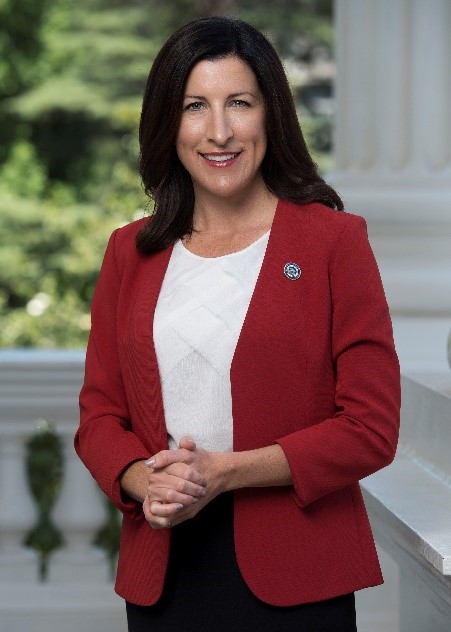
Asm. Cottie Petrie-Norris
Sponsored bills
Existing law establishes the New Motor Vehicle Board in the Department of Motor Vehicles, and requires the board to hear and decide certain protests presented by a motor vehicle franchisee in regard to a dispute with the vehicle manufacturer. Existing law prohibits a franchisor from engaging in specified proscribed business practices. A violation of the Vehicle Code is punishable as an infraction. This bill would prohibit additional acts, including allocating vehicles and parts inconsistent with specified standards. Existing law prohibits a licensed manufacturer, manufacturer branch, distributor, distributor branch, or affiliate from engaging in specified proscribed business practices, including establishing or maintaining a performance standard, sales objective, or program for measuring a dealer's sales, service, or customer service performance, unless specified requirements are satisfied. A violation of the Vehicle Code is punishable as an infraction. This bill would prohibit additional acts, including exercising a right of first refusal in bad faith and implementing or modifying a vehicle reservation system for the sale or lease of motor vehicles that does not comply with specified requirements. This bill would additionally provide that a licensed manufacturer, manufacturer branch, distributor, distributor branch, or affiliate is not unlawfully competing with a franchise by providing an update or repair of motor vehicle software over-the-air at no cost or by creating a new line of motor vehicles and using new or existing franchisees to sell and service those vehicles. The bill would also declare the severability of its provisions. Because a violation of these new provisions would be punishable as a crime, the bill would impose a state-mandated local program. The bill includes legislative findings and declarations and would make other conforming changes. The California Constitution requires the state to reimburse local agencies and school districts for certain costs mandated by the state. Statutory provisions establish procedures for making that reimbursement. This bill would provide that no reimbursement is required by this act for a specified reason.
Existing law authorizes the Department of General Services to perform various duties relating to state real property, including by authorizing the Director of General Services to let a building located at Patton State Hospital to a nonprofit corporation or local government, for a period not to exceed 20 years, for the purpose of providing services to elderly persons. This bill would delete the 20-year lease maximum and would additionally authorize the Director of General Services to lease the building described above for the purposes of providing housing to homeless individuals and providing mental health services to those individuals.
Existing law, the Alcoholic Beverage Control Act, which is administered by the Department of Alcoholic Beverage Control, regulates the application, issuance, and suspension of alcoholic beverage licenses. Existing law, known as tied-house restrictions, generally prohibits specified licensees, or their officers, directors, or agents, from giving or lending money or a thing of value to a person operating, owning, or maintaining any on-sale premises where alcoholic beverages are sold. In this regard, existing law specifically prohibits paying a retailer for advertising. Existing law creates a variety of exceptions to this prohibition, including permitting specified licensees to purchase advertising space and time from, or on behalf of, an on-sale retail licensee that is an owner, manager, agent or major tenant of the owner, or assignee of the owner's advertising rights of certain venues, subject to specified conditions. Existing law requires the purchase of advertising space or time, in this context, to be conducted pursuant to a written contract and, in certain instances, specifically authorizes a contract to be made with the owner, a long-term tenant of the complex, or a licensee of the complex, whether or not the owner, long-term tenant, or licensee holds an on-sale license. In this context, existing law makes certain acts of coercion crimes, including when an on-sale licensee coerces other specified licensees to purchase advertising space or time. This bill would expand the above-described exception to tied-house restrictions that allows for the purchase of advertising by applying it to various facilities that are situated on California State University campuses located in the Counties of San Luis Obispo, Fresno, Sacramento, Monterey, Orange, Santa Clara, and Los Angeles, and on the campus of St. Mary's College of California located in the County of Contra Costa. The bill would additionally expand the exception applicable to a motorsports entertainment complex located in the County of San Bernardino, by reducing the minimum fixed seating capacity from 50,000 to 25,000. By expanding the definition of a crime, this bill would impose a state-mandated local program. This bill would make legislative findings and declarations as to the necessity of a special statute for California State University campuses located in the Counties of San Luis Obispo, Fresno, Sacramento, Monterey, Orange, Santa Clara, and Los Angeles, the campus of St. Mary's College of California located in the County of Contra Costa, and certain facilities located in the County of San Bernardino. This bill would incorporate additional changes to Section 25503.6 of the Business and Professions Code proposed by SB 392 to be operative only if this bill and SB 392 are enacted and this bill is enacted last. The California Constitution requires the state to reimburse local agencies and school districts for certain costs mandated by the state. Statutory provisions establish procedures for making that reimbursement. This bill would provide that no reimbursement is required by this act for a specified reason.
Existing law requires the board of supervisors, following a county's decision to elect its board using district-based elections or following each decennial federal census for a county whose board is already elected using district-based elections, by ordinance or resolution, to adjust the boundaries of all of the supervisorial districts of the county so that the districts are as nearly equal in population as possible and comply with applicable federal law, and specifies the procedures the board of supervisors must follow in adjusting those boundaries. Existing law establishes the Citizens Redistricting Commission in the County of Riverside and the Citizens Redistricting Commission in the County of Fresno, which are charged with adjusting the supervisorial district boundaries for their respective counties. This bill would establish the Citizens Redistricting Commission in the County of Orange, which would be charged with adjusting the boundary lines of the districts of the Board of Supervisors of the County of Orange in accordance with specified criteria. The commission would consist of 14 voting members and 2 nonvoting, alternate members who meet specified qualifications. The bill would require each commission member to attend all public hearings and meetings of the commission, except as specified, and would create specified procedures by which the commission may remove a member for substantial neglect of duty, gross misconduct of office, inability to discharge the duties of the office, or if it is later discovered that the commission member did not meet the required qualifications at the time of appointment or no longer meets those qualifications while serving on the commission. The bill would provide that if the commission is unable to act because it does not have nine voting members to constitute a quorum, then the Auditor-Controller of the County of Orange and the commission must fill the vacancies to bring the commission to nine voting members, as specified. By increasing the duties on local officials, the bill would impose a state-mandated local program. If Assembly Bill 1248 of the 2023–24 Regular Session is enacted and takes effect on or before January 1, 2024, this bill would provide that the provisions of AB 1248 do not apply to the Citizens Redistricting Commission in the County of Orange, which instead would be governed by the provisions of this bill. If Assembly Bill 764 of the 2023–24 Regular Session is enacted and takes effect on or before January 1, 2024, this bill would make conforming changes as specified. This bill would make legislative findings and declarations as to the necessity of a special statute for the unique circumstances facing the County of Orange. The California Constitution requires the state to reimburse local agencies and school districts for certain costs mandated by the state. Statutory provisions establish procedures for making that reimbursement. This bill would provide that, if the Commission on State Mandates determines that the bill contains costs mandated by the state, reimbursement for those costs shall be made pursuant to the statutory provisions noted above.
(1) Existing law, subject to an appropriation of funds for this purpose in the annual Budget Act, requires the State Department of Social Services, in collaboration with the State Department of Education, to administer the California Newcomer Education and Well-Being Program (CalNEW) to provide services for newcomer pupils, English learners, and immigrant families by allocating funding to school districts and county offices of education, as specified. Existing law, for the purposes of CalNEW, defines "newcomer pupils" as individuals 3 through 21 years of age who were not born in any state and have not been attending one or more schools in any one or more states for more than 3 full academic years. This bill would require the State Department of Education to (A) curate and maintain on its internet website information regarding requirements, best practices, and available state and federally funded programs for newcomer pupils and (B) publicly report on an annual basis on its internet website the enrollment of newcomer pupils, as provided. (2) Existing law requires the Instructional Quality Commission to recommend curriculum frameworks to the State Board of Education. This bill would require the commission to consider including content designed to provide teachers with resources to meet the unique academic and English language development needs of newcomer pupils at all grade levels at the next regularly scheduled revision of the curriculum framework in English Language Arts and English Language Development. The bill would also require the commission to ensure that the instructional materials for pupils in kindergarten or any of grades 1 to 8, inclusive, that it recommends to the state board for adoption include resources to help teachers meet the needs of newcomer pupils. (3) Existing law defines "a pupil participating in a newcomer program" as a pupil who is participating in a program designed to meet the academic and transitional needs of newly arrived immigrant pupils that has as a primary objective the development of English language proficiency. Existing law requires local educational agencies to exempt a pupil participating in a newcomer program and who is in their 3rd or 4th year of high school from all coursework and other requirements adopted by the governing body of the local educational agency that are in addition to the statewide coursework requirements necessary to receive a diploma of graduation from high school, unless the local educational agency makes a finding that the pupil is reasonably able to complete the local educational agency's graduation requirements in time to graduate from high school by the end of the pupil's 4th year of high school. Existing law requires local educational agencies to comply with other procedures in relation to pupils participating in newcomer programs, including, among other things, consultation and notice provisions. Existing law requires local educational agencies to issue, and new local educational agencies to accept, full or partial credit for all full or partial coursework satisfactorily completed by a pupil participating in a newcomer program while attending a public school, a juvenile court school, a charter school, a school in a country other than the United States, or a nonpublic, nonsectarian school, as provided. This bill would require that local educational agencies comply with the above-described coursework exemptions, pupil consultation and notice requirements, acceptance of coursework completed at other schools, and other requirements for newcomer pupils, as defined, instead of for pupils participating in a newcomer program. By imposing new duties on local educational agencies, the bill would impose a state-mandated local program. (4) Existing law prohibits a middle or high school pupil who is classified as an English learner from being denied participation in the standard instructional program of a school, as provided. Existing law authorizes certain pupils to be denied access to enrollment in courses that are part of the standard instructional program, including middle school or high schools pupils classified as English learners and who have recently arrived in the United States or who are participating in a program designed to meet the academic and transitional needs of newly arrived immigrant pupils that has as a primary objective the development of English language proficiency, as provided. This bill instead would authorize a middle or high school pupil who is classified as an English learner and who is a newcomer pupil, as defined, or is participating in a program designed to meet the transitional needs of newcomer pupils that has as a primary objective the development of English language proficiency to be denied access to enrollment in courses that are part of the standard instructional program, as provided. By imposing new requirements on local educational agencies, the bill would impose a state-mandated local program. (5) The California Constitution requires the state to reimburse local agencies and school districts for certain costs mandated by the state. Statutory provisions establish procedures for making that reimbursement. This bill would provide that, if the Commission on State Mandates determines that the bill contains costs mandated by the state, reimbursement for those costs shall be made pursuant to the statutory provisions noted above.
Existing law authorizes courts generally to suspend a criminal sentence and make and enforce terms of probation for a period not to exceed 2 years. Existing law authorizes courts in misdemeanor cases to suspend a sentence and make and enforce terms of probation for a period not to exceed one year. This bill would instead authorize a court, for entities with more than 10 employees, to impose a period of probation for a maximum period of 5 years in specified crimes relating to, among other things, dumping in waterways, pesticides, oil dumping and spills, waste management, and animal cruelty. By expanding the punishment for a crime, this bill would impose a state-mandated local program. The California Constitution requires the state to reimburse local agencies and school districts for certain costs mandated by the state. Statutory provisions establish procedures for making that reimbursement. This bill would provide that no reimbursement is required by this act for a specified reason.
Existing law generally regulates classes of insurance, including liability insurance. Existing law defines "liability insurance" to include, among other things, insurance coverage against the legal liability of the insured, and against loss, damage, or expense incident to a claim arising out of the death or injury of any person as the result of negligence or malpractice in rendering professional services by any person who holds a certificate or license issued pursuant to the Medical Practice Act or the Osteopathic Initiative Act, or a license as a community clinic or health facility, as specified. This bill would prohibit an insurer from refusing to issue or renew or terminating professional liability insurance for health care providers, as specified, and from imposing a surcharge or increasing the premium or deductible solely based on any prohibited bases for discrimination, including a health care provider offering or performing abortion, contraception, gender-affirming health care, or care related to those health care services that are lawful in this state but unlawful in another state. The bill would prohibit an insurer from denying coverage for liability for damages arising from offering or performing abortion, contraception, gender-affirming health care, or care related to those health care services, if those services are within the scope of the insured's license, the services are lawful in the state where they are offered or performed, and the policy would otherwise cover liability for damages arising from performing or rendering other professional services within the insured's scope of license.
Existing law prohibits a person from carrying a concealed firearm or carrying a loaded firearm in public. Existing law authorizes a licensing authority, as specified, if good cause exists for the issuance, and subject to certain other criteria including, among other things, the applicant is of good moral character and has completed a specified course of training, to issue a license to carry a concealed handgun or to carry a loaded and exposed handgun, as specified. Under existing law, the required course of training for an applicant is no more than 16 hours and covers firearm safety and laws regarding the permissible use of a firearm. This bill would require the licensing authority to issue or renew a license if the applicant is not a disqualified person for the license and the applicant is at least 21 years of age. The bill would remove the good character and good cause requirements from the issuance criteria. Under the bill, the applicant would be a disqualified person if they, among other things, are reasonably likely to be a danger to self, others, or the community at large, as specified. This bill would add the requirement that the applicant be the recorded owner, with the Department of Justice, of the pistol, revolver, or other firearm capable of being concealed upon the person. This bill would change the training requirement to be no less than 16 hours in length and would add additional subjects to the course including, among other things, the safe storage and legal transportation of firearms. The bill would require an issuing authority, prior to that issuance, renewal, or amendment to a license, if it has direct access to the designated department system to determine if the applicant is the recorded owner of the pistol, revolver, or other firearm. The bill would require an issuing authority without access to that system to confirm the ownership with the sheriff of the county in which the agency is located. By requiring local agencies to issue licenses for concealed firearms, this bill would create a state-mandated local program. The bill would require a licensing authority to provide the applicant notice if a new license or license renewal is denied or revoked. If an application is denied or a license is revoked based on a determination that the applicant is a disqualified person, the bill would permit the applicant to request a hearing to challenge the license denial or revocation, and require the licensing authority to inform the applicant of the ability to seek a hearing. If a new license or license renewal is denied or revoked for any other reason, the bill would authorize the applicant to seek a writ of mandate from a superior court within 30 days of receipt of notice of denial or revocation, and require the licensing authority to inform the applicant of the ability to seek a writ of mandate. By imposing new duties on local licensing authorities, this bill would create a state-mandated local program. Existing law requires an agency issuing a license described above to set forth specified information on the license, including, among other things, the licensee's name, occupation, and reason for desiring a license to carry the weapon. This bill would revise that information to include, among other things, the licensee's driver's license or identification number, fingerprints, and information relating to the date of expiration of the license, and would remove the requirement that the license detail the reason for desiring a license to carry the weapon. Existing law requires an applicant for a license described above to provide fingerprints, as specified. Existing law exempts an applicant from this requirement if they have previously applied to the same licensing authority and the applicant's fingerprints have previously been forwarded to the department, as specified, and instead requires that authority to note data that would provide positive identification in the files of the department, on the copy of any subsequent license submitted to the department. This bill would require the licensing authority to submit fingerprint images and related information to the department for each applicant applying for a new or renewal license. The bill would require the department to notify the licensing authority if the department is unable to ascertain, among other things, the final disposition of an arrest or criminal charge under state or federal law that would prohibit the person from possessing, receiving, owning, or purchasing a firearm. This bill would prohibit a license from being issued or renewed unless the department reports to a licensing authority that the applicant is eligible to possess, receive, own, or purchase a firearm. Existing law requires a licensing authority to charge an additional fee in an amount equal to reasonable processing costs for a new license. Existing law also prohibits a licensing authority from imposing, among other things, a requirement or condition that an applicant pay additional funds or obtain liability insurance. This bill would authorize a licensing authority to charge the additional processing cost fee for a license renewal and would permit the licensing authority to collect the first 50% of the fee upon filing of the application. The bill also removes the prohibition on licensing authority requirements for additional fees or liability insurance. Existing law requires that licenses and applications for licenses be uniform throughout the state, and to be submitted upon forms prescribed by the Attorney General. When revising the standard application form for licenses, existing law requires the Attorney General to convene a committee to review and revise the existing application form. Existing law requires the Attorney General to develop a uniform license that may be used as indicia of proof of licensure throughout the state. Existing law also requires the committee to convene to review and revise the design standard for a uniform license. This bill would authorize the Attorney General to revise the standard form for licenses and the design standard if the committee does not revise the form or issue a design standard within a specified time period. Under existing law, it is a crime to bring a firearm into a state or local building, and makes it a crime to bring a loaded firearm into, or upon the grounds of, any residence of the Governor, any other constitutional officer, or Member of the Legislature. Existing law exempts a licensee from that prohibition if, among other things, the licensee has a valid license to carry the firearm. This bill would remove those exemptions, except as specified. The bill would make it a crime to bring an unloaded firearm into, or upon the grounds of, any residence of the Governor, any other constitutional officer, or Member of the Legislature. The bill would also prohibit a licensee from carrying a firearm to specified locations, including, among other places, a building designated for a court proceeding and a place of worship, as defined, with specific exceptions. By expanding the scope of an existing crime, the bill would impose a state-mandated local program. Existing law prohibits a person from knowingly possessing a firearm in a sterile area of an airport, passenger vessel terminal, or public transit facility, as defined. This bill would additionally prohibit a person from knowingly possessing a firearm in any building, real property, or parking area under the control of an airport or passenger vessel terminal, as specified. By expanding the scope of an existing crime, the bill would impose a state-mandated local program. Existing law, the Gun-Free School Zone Act of 1995, makes it a crime to possess a firearm in a place that the person knows, or reasonably should know, is a school zone. Existing law defines a school zone as an area in, or on the grounds of, a public or private school providing instruction in kindergarten or grades 1 to 12, inclusive, or within a distance of 1,000 feet from the grounds of the public or private school. Existing law provides exceptions to that crime, including if a person with a valid concealed carry license who is carrying the firearm described in the license in an area that is not in, or on the grounds of, a public or private school and when a firearm is an unloaded pistol, revolver, or other firearm capable of being concealed on the person and is in a locked container or within the locked trunk of a motor vehicle. This bill would revise the exception for a person who has a valid concealed carry license to permit them to carry a specified firearm in an area that is not within any building, real property, or parking area under the control of a public or private school, or on a street or sidewalk immediately adjacent to a building, real property, or parking area under the control of that public or private school, as specified. Existing law requires a licensing authority to revoke a license to carry a firearm if the licensing authority is notified by the department or the licensing authority determines that a licensee is prohibited from possessing, receiving, owning, or purchasing a firearm under state or federal law. This bill would also require a licensing authority to revoke a license if, among other things, a licensee has provided inaccurate or incomplete information on their application for a new license or license renewal. Existing law authorizes a licensing authority to impose reasonable restrictions on the time, place, manner, and circumstances when a licensee may carry a firearm capable of being concealed. While carrying a firearm, this bill would prohibit a licensee from, among other things, consuming an alcoholic beverage or controlled substance and from falsely representing that the licensee is a peace officer. The bill would authorize the department to adopt emergency regulations to implement the concealed firearm licensing system, as specified. This bill would make conforming changes. The bill would additionally make various findings and declarations of the Legislature. The bill would state that its provisions are severable. This bill would incorporate additional changes to Section 29805 of the Penal Code proposed by SB 368 to be operative only if this bill and SB 368 are enacted and this bill is enacted last. This bill would also incorporate additional changes to Section 30370 of the Penal Code proposed by AB 135 and SB 135 to be operative only if this bill and either of those bills are enacted and this bill is enacted last. The California Constitution requires the state to reimburse local agencies and school districts for certain costs mandated by the state. Statutory provisions establish procedures for making that reimbursement. This bill would provide that with regard to certain mandates no reimbursement is required by this act for a specified reason. With regard to any other mandates, this bill would provide that, if the Commission on State Mandates determines that the bill contains costs so mandated by the state, reimbursement for those costs shall be made pursuant to the statutory provisions noted above.
Existing law provides for temporary restraining orders or emergency protective orders with respect to domestic violence and elder abuse, as specified. Existing law requires that a temporary restraining order or emergency protective order issued under these provisions be served on the respondent at the request of the petitioner, whether or not the respondent has been taken into custody, by a law enforcement officer who is present at the scene of reported domestic violence involving the parties to the proceeding. This bill would expand these provisions to require service of orders issued after hearing. The bill would also authorize these orders to be served by a law enforcement officer who receives a request from the petitioner to provide service of the order, but would exclude service by specified peace officers, including a parole officer of the Department of Corrections and Rehabilitation or a probation officer. The bill would prohibit a fee from being charged to the petitioner for service of those orders. The bill would require specified peace officers to take into temporary custody any firearm or deadly weapon in plain sight or discovered pursuant to a consensual or otherwise lawful search for the protection of peace officers or other persons present when those officers are at the scene of a domestic violence incident involving a threat to human life or physical assault, serving a protective order pursuant to the above provisions, or serving a gun violence restraining order. By expanding the duties of local law enforcement, this bill would impose a state-mandated local program. Existing law requires a law enforcement agency to enter all firearms that have been reported stolen, lost, found, recovered, held for safekeeping, or under observation into the Automated Firearms System (AFS) . This bill would require law enforcement to enter, or cause to be entered, a firearm into the AFS if the firearm is obtained at the scene of a domestic violence incident or during service of specified orders. The California Constitution requires the state to reimburse local agencies and school districts for certain costs mandated by the state. Statutory provisions establish procedures for making that reimbursement. This bill would provide that, if the Commission on State Mandates determines that the bill contains costs mandated by the state, reimbursement for those costs shall be made pursuant to the statutory provisions noted above.