

Existing law, the Pharmacy Law, establishes the California State Board of Pharmacy within the Department of Consumer Affairs to license and regulate pharmacists. Existing law provides for the licensure and regulation of health care service plans by the Department of Managed Health Care and for the regulation of health insurers by the Department of Insurance. Existing law, the Knox-Keene Health Care Service Plan Act of 1975, requires a pharmacy benefit manager under contract with a health care service plan to, among other things, register with the Department of Managed Health Care. This bill would require the California State Board of Pharmacy to license and regulate pharmacy benefit managers that manage the prescription drug coverage provided by a health care service plan or health insurer, except as specified. The bill would set forth various duties of pharmacy benefit managers, including requirements to file a report with the board. The bill would prohibit a pharmacy benefit manager from, among other things, contracting after January 1, 2024, to prohibit or restrict a pharmacy or pharmacist from disclosing to an enrollee or insured health care information that the pharmacy or pharmacist considers appropriate. This bill would require the board to promulgate necessary regulations and to prepare a report to the Legislature on or before August 1, 2025, and on or before each August 1 thereafter, with aggregate data received from pharmacy benefit managers, establish a data retention schedule, and protect proprietary and confidential information, as specified. Existing constitutional provisions require that a statute that limits the right of access to the meetings of public bodies or the writings of public officials and agencies be adopted with findings demonstrating the interest protected by the limitation and the need for protecting that interest. This bill would make legislative findings to that effect.
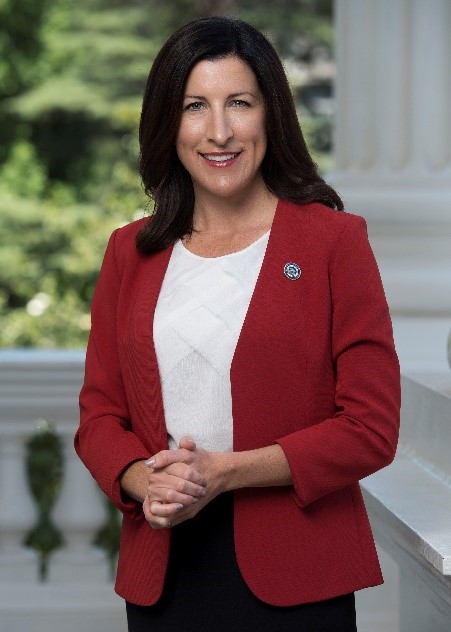
Asm. Cottie Petrie-Norris
Sponsored bills
Existing law makes possession of a firearm by certain classes of persons, including a convicted felon, a person convicted of specified misdemeanors, a person has been found mentally incompetent to stand trial, a person has been found not guilty of specified crimes by reason of insanity, or a person has been placed under conservatorship, a crime. Existing law additionally makes it a crime to sell or give possession of a firearm to these classes of persons prohibited from owning a firearm. Existing law requires the Department of Justice, upon submission of firearm purchaser information by a licensed firearm dealer, to examine its records to determine whether a potential firearm purchaser is prohibited by state of federal law from possessing, receiving, owning, or purchasing a firearm. Existing law requires the department to participate in the National Instant Criminal Background Check System. This bill would require the Department of Justice to develop and launch a secure Internet-based platform to allow a person who resides in California to voluntarily add their own name to the California Do Not Sell List. The bill would require the department to ensure that information on the list is uploaded and reflected in the National Instant Criminal Background Check System. The bill would make it a crime, punishable as a misdemeanor, to transfer a firearm to a person who is validly registered on the California Do Not Sell List. By creating a new crime, this bill would impose a state-mandated local program. This bill would allow a person, after a specified period of time, to request removal from the list. The bill would require the State Department of Public Health to create and distribute informational materials about the California Do Not Sell List to general acute care hospitals and acute psychiatric hospitals. The bill would specify that a person presenting in a general acute care hospital or acute psychiatric hospital who is at a substantially elevated risk of suicide should be presented with these informational materials. The bill would specify that any suicide hotline maintained or operated by an entity funded in whole or in part by the state should generally inform callers on how to access the California Do Not Sell List Internet-based platform. The bill would provide that its provisions are severable. The California Constitution requires the state to reimburse local agencies and school districts for certain costs mandated by the state. Statutory provisions establish procedures for making that reimbursement. This bill would provide that no reimbursement is required by this act for a specified reason.
Existing law authorizes the Secretary of State to appoint and commission notaries public in the number the Secretary of State deems necessary for the public convenience. Existing law requires a notary public to keep one active sequential journal at a time of all official acts performed as a notary public. Existing law authorizes notaries public to act as notaries in any part of the state and prescribes the manner and method of notarizations. Existing law establishes various requirements to ensure the security of notary seals and imposes a civil penalty for a violation of those provisions. The California Public Records Act requires that public records, as defined, be available to the public for inspection and made promptly available to any person. This bill would authorize a notary public or an applicant for appointment as a notary public to apply for registration with the secretary to be a notary public authorized to perform online notarizations by submitting an application that meets certain requirements. The bill would also require an entity to register with the Secretary of State as an online notarization platform or depository before providing an online notarization system or depository, as defined, to an online notary public. The bill would require a representative of an online notarization platform to certify compliance with applicable laws under penalty of perjury. The bill also creates a civil cause of action against an online notarization platform or depository for a violation of those laws. The bill would require the Secretary of State to develop an application for registration and establish rules to implement the bill by January 1, 2028. This bill would authorize the Secretary of State to charge an applicant a fee for an application for registration in an amount necessary to administer the act. The bill would authorize an online notary public to perform notarial acts and online notarizations by means of audiovideo communication. The bill would establish various requirements applicable to an online notary public, including requiring an online notary public to keep a secure electronic journal to record online notarial acts, requiring an electronic notarial certificate to be a specified form that is required to be signed under penalty of perjury, and requiring an online notary public to destroy certain information upon termination of a commission, as specified. This bill would establish various requirements applicable to an online notarization platform, including prohibiting an online notarization platform or depository from accessing, using, sharing, selling, disclosing, producing, providing, releasing, transferring, disseminating, or otherwise communicating the contents of an online notarial act, with specified exceptions. The bill would also make other conforming changes. The bill would impose requirements for ensuring the security of an electronic signature or electronic seal and would make a violation of those provisions subject to civil penalties. The bill would make a violation of those provisions grounds for refusal or revocation of a commission as a notary public. This bill would make it a misdemeanor for any person who, without authorization, knowingly obtains, conceals, damages, or destroys the certificate, disk, coding, card, program, software, or hardware enabling an online notary public to affix an official electronic signature or seal. The bill would make it a misdemeanor for an online notary public to willfully fail or refuse to deliver all notarial records and papers to the Secretary of State within 30 days of when the online notary public resigns, is disqualified, is removed from office, or allows the online notary public's registration to expire. By creating new crimes, and by expanding the scope of the existing crime of perjury, this bill would impose a state-mandated local program. This bill would exempt from the California Public Records Act records of online notarizations maintained by the Secretary of State. Existing law provides that any instrument affecting the title to real property, one year after the same has been copied into the proper book of record, that is kept in the office of any county recorder, provides notice of its contents to specified individuals, notwithstanding any defect, omission, or informality in the execution of the instrument or in the certificate of acknowledgment, or absence of that certificate. This bill would provide that any instrument affecting the title to real property that is acknowledged by online notarization and properly indexed or copied in the proper book of record imparts effective notice without the above-described one year requirement. Existing constitutional provisions require that a statute that limits the right of access to the meetings of public bodies or the writings of public officials and agencies be adopted with findings demonstrating the interest protected by the limitation and the need for protecting that interest. This bill would make legislative findings to that effect. The California Constitution requires the state to reimburse local agencies and school districts for certain costs mandated by the state. Statutory provisions establish procedures for making that reimbursement. This bill would provide that no reimbursement is required by this act for a specified reason.
Existing law establishes the Student Aid Commission as the primary state agency for the administration of state-authorized student financial aid programs available to students attending all segments of postsecondary education. This bill, upon appropriation by the Legislature, would establish the California Public Interest Veterinary Debt Relief Program under the administration of the commission to award funds to California-licensed veterinarians, in relief of their educational loan debt, as defined, who enter into a contract with the commission to provide veterinary services in eligible premises settings, as defined, on a full-time basis, as specified. The bill, upon appropriation by the Legislature, would establish the California Public Interest Veterinary Debt Relief Program Fund as the initial depository of all moneys appropriated, donated, or otherwise received for the program and would require the commission to disburse moneys in the fund for purposes of the program, as provided. The bill would require the commission, on or before March 31, 2026, and each year thereafter, to submit a report to the Legislature that includes specified information on the program, including the number of applicants and program participants and the amount of funds expended for the program.
(1) Existing law prohibits a person subject to a protective order, as defined, from owning, possessing, purchasing, or receiving a firearm or ammunition while that protective order is in effect. Existing law makes a violation of that prohibition with regard to purchasing or receiving a firearm or ammunition punishable by imprisonment in the county jail for up to one year, by imprisonment in the state prison for 16 months or 2 or 3 years, or by a fine not exceeding $1,000, or by both that imprisonment and fine. Existing law makes a violation of that prohibition with regard to owning or possessing a firearm or ammunition punishable by imprisonment in the county jail for up to one year, or by a fine not exceeding $1,000, or by both that imprisonment and fine. After notice and hearing, this bill would, for protective orders, as specified, issued on or after July 1, 2024, prohibit a person subject to the protective order from owning, possessing, purchasing, or receiving a firearm or ammunition within 3 years after the expiration of the order and make a violation of these provision a crime. The bill would require a court, if they find that the person willfully violated that prohibition within 3 years after the expiration of the order, to impose the maximum fine allowed under existing law. (2) Existing law allows a search warrant to be issued upon various grounds, including when the property or things to be seized include a firearm, if the prohibited firearm is possessed, owned, in the custody of, or controlled by a person against whom a specified protective order has been issued, and the person is served with the order and fails to relinquish the firearm as required by law. This bill would expand the grounds for the search warrant to include a person who is subject to any civil or criminal protective order that includes a prohibition on owning, possessing, or having custody or control of a firearm. (3) Existing law requires the Judicial Council to provide notice on all protective orders issued within the state and requires a restraining order requiring a person to relinquish a firearm or ammunition to state on its face that the respondent is prohibited from owning, possessing, purchasing, or receiving a firearm or ammunition while the protective order is in effect. This bill would require the Judicial Council to also include a statement in the notice that the firearm and ammunition prohibition extends for 3 years after the expiration of the protective order that is issued on or after July 1, 2024. The bill would require a restraining order to include a similar statement. By creating new crimes, this bill would create a state-mandated local program. The California Constitution requires the state to reimburse local agencies and school districts for certain costs mandated by the state. Statutory provisions establish procedures for making that reimbursement. This bill would provide that no reimbursement is required by this act for a specified reason.
Existing law requires the Governor to appoint every office whose mode of appointment is not prescribed by law. Existing law also prescribes the manner of the Governor's appointment of those officers. This bill would require the office of the Governor, commencing January 1, 2025, to maintain on its internet website a list of every state board and commission that includes, for each state board or commission, the membership list, stated purpose, duties, meeting frequency, internet website, and vacancies in the membership. The bill would require the office of the Governor, on or before January 1, 2026, and annually thereafter, to create and publish on its internet website a report containing aggregate demographic information of appointments made by the office during the prior calendar year, as specified.
Existing law makes it a crime to possess for sale or purchase for purpose of sale, transport, import, sell, furnish, administer, give away, manufacture, compound, convert, produce, derive, process, or prepare various controlled substances, including, among others, fentanyl, peyote, and various other opiates and narcotics. This bill, Alexandra's Law, would require the court to advise a person who is convicted of, or who pleads guilty or no contest to, the above crimes, as specified, of the danger of selling or administering illicit drugs and counterfeit pills and that, if a person dies as a result of that action, the defendant can be charged with homicide. The bill would require the court to read the advisory statement in a case in which the defendant exchanged a controlled substance containing fentanyl or its analogs for anything else of value, as specified. The bill would require the advisory statement to be included in a plea form, if used, and specified on the record. The bill would require that the fact the advisory was given be recorded in the abstract of conviction and would prohibit the advisement from being used as evidence in the prosecution of a minor in juvenile court.
Existing law, the California Consumer Privacy Act of 2018 (CCPA) , as amended by the California Privacy Rights Act of 2020, an initiative measure, grants to a consumer various rights with respect to personal information, as defined, that is collected by a business, as defined. The CCPA requires a business that controls the collection of a consumer's personal information to inform consumers of the categories of personal information collected, the purposes for which the categories of personal information are collected or used, and the length of time the business intends to retain each category of personal information, as specified. Existing law, the Electronic Communications Privacy Act, generally prohibits a government entity from compelling the production of or access to electronic communication information or electronic device information, as defined, without a search warrant, wiretap order, order for electronic reader records, subpoena, or order for a pen register or trap and trace device, except for emergency situations, as specified. The CCPA grants to a consumer various rights with respect to personal information, as defined, that is collected by a business, as defined, including the right to request that a business delete personal information about the consumer that the business has collected from the consumer. The California Privacy Rights Act of 2020, approved by the voters as Proposition 24 at the November 3, 2020, statewide general election, amended, added to, and reenacted the CCPA. Existing law requires a social media company, as defined, to submit reports, as specified, starting no later than January 1, 2024, to the Attorney General, including, but not limited to, the current version of the terms of service for each social media platform owned or operated by the company, specified categories of content and what policies the social media company has for that platform to address that content, and data related to violations of the terms of service for each platform. Existing law requires the Attorney General to make all terms of service reports submitted pursuant to those provisions available to the public in a searchable repository on its official internet website. This bill would add to those categories of content the distribution of controlled substances. Existing law, until January 1, 2028, requires a social media platform to create and post a policy statement regarding the use of the social media platform to illegally distribute controlled substances, including a general description of its policies and procedures for responding to law enforcement inquiries. Existing law exempts from these requirements a business that generated less than $100,000,000 in gross revenue during the preceding calendar year. This bill would delete the above-described exemption and would require the policy statement to include a general description of the social media platform's policy on the retention of electronic communication information and policies and procedures governing when a platform proactively shares relevant information pertaining to distribution of a controlled substance, as specified. The bill would require a social media platform to retain content it has taken down or removed for a violation of its policy related to controlled substances, as specified, for a period of 90 days, except when the platform has a good faith belief that the content is related to the offering, seeking, or receiving of gender-affirming health care, gender-affirming mental health care, or reproductive health care that is lawful under California law. The bill would specify that it does not alter the rights or obligations established in any other law, including the Electronic Communications Privacy Act and the California Consumer Privacy Act.