

Passed Feb 12, 2024
1 co-sponsor
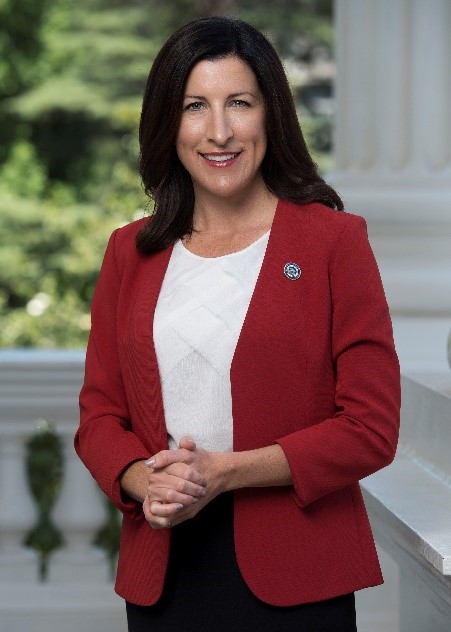
Asm. Cottie Petrie-Norris
Total votes
17,959
all sessions
Attendance
94%
885 missed
Near the chamber average
With party
98%
of cast votes
Near the chamber average
Bipartisan score
1%
crosses aisle rarely
Near the chamber average
Sponsored
1,605
bills & resolutions
Near the chamber average
Committees
10
assignments
1,605 bills and resolutions
Sponsored bills
Total
1,605
Primary
169
Co-sponsor
1,436
This page
1,605
matching current filters
Passed Feb 8, 2024
1 co-sponsor
Medi-Cal: community supports.
Existing law establishes the Medi-Cal program, which is administered by the State Department of Health Care Services and under which qualified low-income individuals receive health care services. The Medi-Cal program is, in part, governed and funded by federal Medicaid program provisions. Existing law, subject to implementation of the California Advancing and Innovating Medi-Cal (CalAIM) initiative, authorizes a Medi-Cal managed care plan to elect to cover community supports approved by the department as cost effective and medically appropriate in a comprehensive risk contract that are in lieu of applicable Medi-Cal state plan services. Under existing law, community supports that the department is authorized to approve include, among other things, housing transition navigation services, recuperative care, respite, day habilitation programs, and medically supportive food and nutrition services. This bill would add fitness, physical activity, or recreational sports programs, activities, or memberships to the above-described list of community supports.
Failed Feb 1, 2024
0 co-sponsors
Personal Income Tax Law: Corporation Tax Law: sale of net operating losses.
The Personal Income Tax Law and the Corporation Tax Law, in modified conformity with federal income tax laws, allow various deductions in computing the income that is subject to the taxes imposed by those laws, including a deduction for a net operating loss, as specified. This bill would allow a startup innovator, as defined, to sell a net operating loss to an unrelated taxpayer, except as provided. The bill would require the sale price of a net operating loss to be at least 80% of the value of the net operating loss being transferred, and would limit a startup innovator to selling no more than $20,000,000 worth of net operating losses in the aggregate, as provided. The bill would provide that a net operating loss sold by a startup innovator would retain the attributes it had in the hands of the seller, including any carryback or carryforward attributes. The bill would allow a purchaser of a net operating loss to apply the net operating loss for taxable years beginning on or after January 1, 2024. The bill would require a startup innovator to certify under penalty of perjury that proceeds received from the sale of a net operating loss are used for specified purposes. By expanding the crime of perjury, the bill would establish a state-mandated local program. The bill would repeal these provisions as of January 1, 2029. The Personal Income Tax Law and the Corporation Tax Law, in conformity with federal income tax law, generally define "gross income" as income from whatever source derived, except as specifically excluded. Those laws also provide various exclusions from gross income. This bill would, for taxable years beginning on or after January 1, 2024, and before January 1, 2029, exclude from gross income any amount received by a startup innovator for the sale of a net operating loss. Existing law requires a bill authorizing a new tax expenditure to contain, among other things, specific goals, purposes, and objectives the tax expenditure will achieve, detailed performance indicators, and data collection requirements. This bill would include additional information required for any bill authorizing a new tax expenditure. The California Constitution requires the state to reimburse local agencies and school districts for certain costs mandated by the state. Statutory provisions establish procedures for making that reimbursement. This bill would provide that no reimbursement is required by this act for a specified reason. This bill would take effect immediately as a tax levy.
Failed Feb 1, 2024
0 co-sponsors
Judicial officers: training: sexual abuse and assault.
Existing law requires the Judicial Council to establish judicial training programs for individuals who perform duties in domestic violence matters. Existing law requires the training programs to include a domestic violence session in any orientation session for newly appointed or elected judges and an annual training session in domestic violence. Existing law requires the training programs to include instruction in all aspects of domestic violence, including, but not limited to, the detriment to children of residing with a person who perpetrates domestic violence. This bill would require the Judicial Council to establish, on or before July 1, 2025, judicial training programs for judges related to best practices related to treatment of sexual abuse and assault victims in courtroom cases. This bill would require the development of the training programs to include input by victim advocacy groups. The bill would require, commencing January 1, 2026, that the training programs be provided to all newly appointed or elected judges and to all judicial officers on an annual basis.
Failed Feb 1, 2024
1 co-sponsor
Department of General Services: drone cybersecurity.
Existing law requires the Department of General Services to perform a variety of duties in connection with the acquisition of goods and services by state agencies, and requires the department to issue rules and regulations in administering its duties. This bill would require the department, in consultation with the Chief of the Office of Information Security, to adopt rules and regulations, by January 1, 2025, to ensure that each unmanned aircraft and unmanned aircraft system used by a government entity, as defined, in part, to include local governmental entities, for any purpose meets appropriate safeguards to ensure the confidentiality, integrity, and availability of any data collected, transmitted, or stored by that unmanned aircraft or unmanned aircraft system, as specified; and to specify requirements for a comprehensive plan to be adopted by a government entity to discontinue the use of noncompliant aircraft and systems, as specified. This bill would, beginning on the date the department adopts the rules and regulations, authorize a government entity to use unmanned aircraft or unmanned aircraft systems it did not previously use only if that aircraft or system complies with those rules and regulations. The bill would, by July 1, 2025, require a government entity that uses a noncompliant aircraft or system to submit to the department a comprehensive plan for discontinuing its use, as specified. By January 1, 2026, the bill would, with certain exceptions, require any government entity to cease the use of unmanned aircraft or unmanned aircraft systems not in compliance with these regulations. The bill would require the regulations to apply to unmanned aircraft operated under contract between a government entity and a third party, as provided. By requiring these regulations to apply to local governmental agencies, this bill would establish a state-mandated local program. The bill would include findings that changes proposed by this bill address a matter of statewide concern rather than a municipal affair and, therefore, apply to all cities, including charter cities. The California Constitution requires the state to reimburse local agencies and school districts for certain costs mandated by the state. Statutory provisions establish procedures for making that reimbursement. This bill would provide that, if the Commission on State Mandates determines that the bill contains costs mandated by the state, reimbursement for those costs shall be made pursuant to the statutory provisions noted above.
died Feb 1, 2024
1 co-sponsor
Theft.
(1) Existing law, the Safe Neighborhoods and Schools Act, enacted by Proposition 47, as approved by the voters at the November 4, 2014, statewide general election, defines and prohibits an act of shoplifting and prohibits prosecution for an act of shoplifting under any other law. This bill would refine the definition of shoplifting and would specifically exclude certain offenses from prosecution as shoplifting, including, among others, the theft of a firearm or vehicle, identity theft, and credit card fraud. (2) Existing law requires, except as excluded, the theft of any property valued below $950 to be charged as petty theft, a misdemeanor. This bill would similarly exclude certain offenses from this provision, including, among others, the theft of a vehicle, identity theft, and credit card fraud. (3) Existing law provides that a person with a prior conviction for specified sex offenses may be charged with a felony for shoplifting or for theft of property not exceeding $950 in value. This bill would require a person convicted of petty theft or shoplifting, if the person has 2 or more prior convictions for specified theft-related offenses, to be punished by imprisonment in the county jail for up to one year, or for 16 months, or 2 or 3 years. (4) Existing law, until January 1, 2026, authorizes a city or county prosecuting authority or county probation department to create a diversion or deferred entry of judgment program pursuant to this section for persons who commit a theft offense or repeat theft offenses, as specified. This bill would authorize a city or county prosecuting authority or county probation department to create a diversion program for persons who commit theft or repeat theft offenses, as specified. (5) This bill would provide that the provisions of the bill that amend Proposition 47 would become effective only upon approval of the voters, and would provide for the submission of those provisions to the voters for approval at the next statewide general election.
Failed Feb 1, 2024
1 co-sponsor
Personal Income Tax Law: Corporation Tax Law: wildfires: exclusions.
The Personal Income Tax Law and the Corporation Tax Law, in conformity with federal income tax law, generally defines "gross income" as income from whatever source derived, except as specifically excluded, and provides various exclusions from gross income. This bill would, for taxable years beginning on or after January 1, 2022, and before January 1, 2027, provide an exclusion from gross income for any qualified taxpayer, as defined, for amounts received for costs and losses associated with wildfires, as provided. Existing law requires a bill authorizing a new tax expenditure to contain, among other things, specific goals, purposes, and objectives the tax expenditure will achieve, detailed performance indicators, and data collection requirements. This bill would include additional information required for any bill authorizing a new tax expenditure. This bill would make findings and declarations related to a gift of public funds.
Failed Feb 1, 2024
0 co-sponsors
State Department of Public Health: pregnancy care and abortion services awareness campaign.
Existing law provides for the licensure and regulation of clinics and health facilities, including, but not limited to, primary care and specialty clinics, by the State Department of Public Health. Under existing law, the department is also responsible for the statewide administration of various programs and policies relating to personal health, including maternal, child, and adolescent health. Existing law requires the department to develop a coordinated state strategy for addressing the health-related needs of women, including implementation of goals and objectives for women's health, as specified. This bill would require the department to conduct an awareness campaign to communicate with local health departments, health care providers, and the public regarding facilities that provide health care services, including, but not limited to, primary care and specialty clinics. The bill would require the awareness campaign to include information about the services the facilities offer, and the activities of the department, relating to pregnancy care and abortion. The bill would require the campaign to make that information available to, among others, health care professional associations and societies and health care employers. The bill would authorize the department to award grants or enter into contracts to perform the functions required to conduct the awareness campaign, as specified. The bill would repeal these provisions on January 1, 2025.
Failed Feb 1, 2024
1 co-sponsor
Controlled substances.
Existing law makes possession of specified controlled substances, including fentanyl, punishable by imprisonment in a county jail not to exceed one year, except as specified. Existing law makes possession of a controlled substance for the purposes of sale of the substance punishable by imprisonment in a county jail for a period of 2, 3, or 4 years. This bill would make the sale of fentanyl on a social media platform, as defined, in California punishable by imprisonment in a county jail for a period of 3, 6, or 9 years. By creating a new crime, this bill would impose a state-mandated local program. The California Constitution requires the state to reimburse local agencies and school districts for certain costs mandated by the state. Statutory provisions establish procedures for making that reimbursement. This bill would provide that no reimbursement is required by this act for a specified reason.
Failed Feb 1, 2024
0 co-sponsors
Ask Maddy
·
AI policy assistant
Ask Maddy about Cottie Petrie-Norris
Scope: CA
Hi! I can help you understand Cottie Petrie-Norris's legislative record. What would you like to know?
Try one of these
i
Maddy answers using official bill text and legislative records. Always verify before sharing.
Sources cited inline