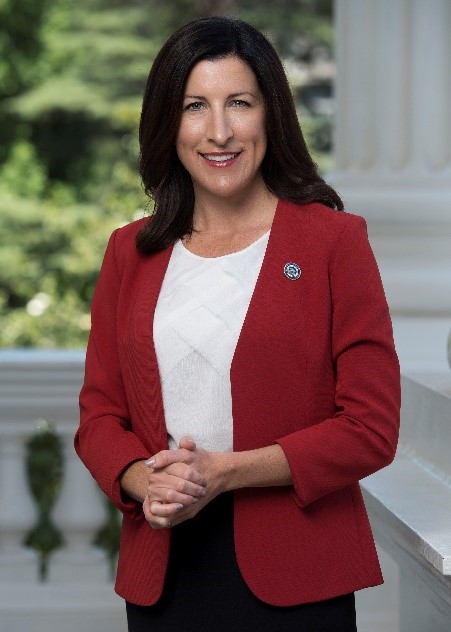
Photo of Cottie Petrie-Norris
D California Assembly · District 73 On the 2026 ballot

Asm. Cottie Petrie-Norris

Compare
Total votes
17,959
all sessions
Attendance
94%
885 missed
Near the chamber average
With party
98%
of cast votes
Near the chamber average
Bipartisan score
1%
crosses aisle rarely
Near the chamber average
Sponsored
1,605
bills & resolutions
Near the chamber average
Committees
10
assignments
1,605 bills and resolutions

Sponsored bills

Total
1,605
Primary
169
Co-sponsor
1,436
This page
1,605
matching current filters
Co-sponsor ACR 204
Signed into law · California Assembly · Co-sponsor
Relative to behavioral health.

This measure would recognize and affirm the important role of artists, arts organizations, creative arts therapists, and arts for health initiatives in supporting behavioral health, promoting recovery, strengthening community resilience, and contributing to public safety. The measure would encourage and recognize exploration, support, and integration of arts and behavioral health within California's health care, behavioral health, and community-based systems.

Signed into law Aug 27, 2026 1 co-sponsor
Primary AB 2044
Signed into law · California Assembly · Lead sponsor
Building standards: approval or adoption: cost of compliance estimate.

Existing law requires every state agency subject to the Administrative Procedure Act to provide an initial statement of reasons for proposing the adoption, amendment, or repeal of a regulation. Existing law requires an initial statement of reasons for a regulation that is a building standard to include the estimated cost of compliance, the estimated potential benefits, and the related assumptions used to determine the estimates, except as specified. Existing law, the California Building Standards Law, establishes the California Building Standards Commission within the Government Operations Agency. Existing law requires any building standard adopted or proposed by state agencies to be submitted to, and approved or adopted by, the commission before codification, in compliance with certain procedures, including, among others, the above-described requirement that an initial statement of reasons for a regulation that is a building standard include the estimated cost of compliance, the estimated potential benefits, and the related assumptions used to determine the estimates. This bill, if the commission finds that the initial statement of reasons is submitted without a completed statement of estimated cost of compliance, as specified, would prohibit the commission from approving or adopting the proposed or adopted building standard. The bill would also make nonsubstantive, conforming changes.

Signed into law Aug 27, 2026 0 co-sponsors
Primary AB 2065
Passed · California Assembly · Lead sponsor
Rates: prohibited cost recovery.

Existing law vests the Public Utilities Commission with regulatory authority over public utilities, including electrical corporations, gas corporations, water corporations, and sewer system corporations. Existing law authorizes the commission to fix the rates and charges for every public utility and requires that those rates and charges be just and reasonable. Existing law prohibits a utility from recording to an above-the-line account, as defined, or otherwise recovering from ratepayers specified costs. This bill would require the commission to find that an electrical corporation, gas corporation, water corporation, or sewer system corporation has engaged in prohibited cost recovery if the corporation records a cost to a regulator-approved financial account and the cost is categorically excluded from ratepayer recovery by statute, commission decision, or commission rule or has already been authorized for recovery through another ratemaking mechanism. The bill would require the commission, upon making a determination that such a corporation has recorded prohibited costs to a ratepayer-funded account in violation of commission rule, tariff, or statute, to disallow recovery of the cost from ratepayers and to impose a financial penalty for prohibited cost recovery equal to the amount of the prohibited cost recovery or 3 times that amount, except as specified. The bill would require each such corporation to submit an annual report to the commission identifying all instances in the prior year in which prohibited cost recovery was identified, the actions that were taken in response to the identification, and any actions that were taken by the corporation to prevent future occurrences. Under existing law, a violation of the Public Utilities Act or any order, decision, rule, direction, demand, or requirement of the commission is a crime. Because the provisions of this bill would be a part of the act and because a violation of a commission action implementing the bill's requirements would be a crime, the bill would impose a state-mandated local program. The California Constitution requires the state to reimburse local agencies and school districts for certain costs mandated by the state. Statutory provisions establish procedures for making that reimbursement. This bill would provide that no reimbursement is required by this act for a specified reason.

Passed Aug 27, 2026 0 co-sponsors
Co-sponsor SB 895
Passed · California Senate · Co-sponsor
California Science and Health Research Bond Act.

(1) Existing law establishes various grant and loan programs for research, including, among others, the California Institute for Regenerative Medicine, California Firefighter Cancer Prevention and Research Program, and the Public Interest Research, Development, and Demonstration Program. This bill would establish the California Foundation for Science and Health Research within the Government Operations Agency. The bill would require the Secretary of Government Operations to oversee the process of appointing the director of the foundation, and would authorize the Secretary of Government Operations to delegate the task of hiring and determining the salaries, bonuses, and benefits of additional personnel to the director, as specified. The bill would require the director and personnel of the foundation to be responsible for implementing the strategic objectives of the California Foundation for Science and Health Research Council, as described below, administering grants, loans, and contracts awarded by the council, and all other duties as deemed necessary for the operation of the foundation. This bill would create the California Foundation for Science and Health Research and Innovation Acceleration Fund and require the moneys in the fund to be used by the foundation to award grants and make loans to, and enter into contracts with, public or private research companies, universities, academic medical centers, institutes, and organizations for scientific research and development and for certain economic sectors, as specified, in specific areas of research, including, but not limited to, biomedical, behavioral health, and climate research. The bill would also create the California Foundation for Science and Health Research and Innovation Acceleration Benefit Fund, to consist solely of private donations. The bill would make the moneys in the benefit fund available for the same purposes as the California Foundation for Science and Health Research and Innovation Acceleration Fund. This bill would require that, prior to the first grant from the foundation and no later than one year from the date the bill takes effect, the council develop various provisions and requirements to facilitate the foundation's goals of affordability and equitable access. The foundation shall impose various requirements on the grantees, loan recipients, and contractors, as specified, including, among other things, developing strategies to promote equitable access to the subject invention in various specified communities and making the data resulting from the bond-funded research available to the broader scientific community, except in cases involving national security interests. The council shall also establish standards requiring that all grants, awards, and contracts be subject to intellectual property agreements that balance the opportunity for the State of California to benefit from the inventions, technologies, patents, royalties, and licenses that result from research funded by certain public and private grants, as specified. This bill would create the California Foundation for Science and Health Research Council, as specified, which shall be vested with full power, authority, and jurisdiction over the foundation. The bill would require the council to, among other things, develop the strategic objectives and priorities of the foundation and provide the opportunity for public comment on the foundation's priorities, as specified, determine the research projects that will be funded by the California Foundation for Science and Health Research and Innovation Acceleration Fund, develop objectives and opportunities that offer support to early career researchers, and adopt certain regulations and standards, as specified. The bill would also require the council to consider how the foundation's research priorities relate to or support various economic and industry considerations, as specified. The bill would provide that a majority of the members of the council constitutes a quorum for the transaction of any business, for the performance of any duty, or for the exercise of any power of the council, except as otherwise provided. The bill would authorize the council to establish one or more scientific peer review panels consisting of experts in specified fields of research for the purposes of reviewing and prioritizing proposals on the basis of the scientific merit of the proposal, the potential benefit to the health and well-being of the population, natural resources, and environment of the state, and the demonstrated background, training, and expertise of the researchers and investigators to conduct the proposed work. This bill would require all research and development funded by the California Foundation for Science and Health Research and Innovation Acceleration Fund to be conducted under established standards of open scientific exchange, peer review, and public oversight. The bill would require the funds and contracts to be awarded on the basis of the research priorities established for the foundation by the council and the scientific merit of the proposed research, as determined by an open, competitive, scientific peer review process that ensures objectivity, consistency, and high quality. This bill would enact the California Science and Health Research Bond Act, which, if approved by the voters, would authorize the issuance of bonds in the amount of $7,500,000,000, pursuant to the State General Obligation Bond Law, to finance grants and loans to fund research and operate and maintain facilities for research. The bill would provide for the submission of the bond act to the voters at the March 7, 2028, statewide primary election. (2) Existing law establishes prohibitions and penalties with respect to ethical obligations and conflicts of interest for public officials, including a prohibition on engaging in activities that are incompatible with their official duties and a prohibition on being financially interested in a contract made by them in their official capacity or the board of which they are a part. This bill would authorize a council member to participate in a decision to approve or award a grant, loan, or contract for the purpose of research into a disease in which the member or their immediate family member has a personal interest, as specified. The bill would provide that service with specified educational institutions and organizations is not incompatible with a council member's duties. The bill would provide that the prohibition on being financially interested in a contract, as specified, does not apply if the council member recuses themself from a decision to award or approve a grant, loan, or contract that would otherwise be subject to the prohibition. The bill would provide that council members are subject to certain disclosure requirements relating to personal investments and potential conflicts of interest, as specified. (3) Existing law, the Bagley-Keene Open Meeting Act, requires that all meetings of a state body be open and public and all persons be permitted to attend any meeting of a state body, with specified exceptions for authorized closed sessions. This bill would require the Bagley-Keene Open Meeting Act to apply to all meetings of the council and scientific peer review panels, except as specified for when the council or scientific peer review panels meet to consider or discuss specified matters in closed sessions, including matters involving information relating to patients or medical or scientific research subjects, the disclosure of which would constitute an unwarranted invasion of personal privacy. Existing constitutional provisions require that a statute that limits the right of access to the meetings of public bodies or the writings of public officials and agencies be adopted with findings demonstrating the interest protected by the limitation and the need for protecting that interest. This bill would make legislative findings to that effect. (4) This bill would declare that it is to take effect immediately as an urgency statute.


Passed Aug 27, 2026 1 co-sponsor
Co-sponsor SB 769
Passed · California Senate · Co-sponsor
The Golden State Infrastructure Corporation Act.

Existing law, the Bergeson-Peace Infrastructure and Economic Development Bank Act, authorizes the California Infrastructure and Economic Development Bank, governed by a board of directors, to make loans, issue bonds, and provide other financial assistance for various types of infrastructure and economic development projects. Existing law establishes the California Infrastructure and Economic Development Bank Fund, a continuously appropriated fund, to support the bank. This bill would enact the Golden State Infrastructure Corporation Act and would establish the Golden State Infrastructure Corporation, within the State Treasurer's Office, as a not-for-profit corporation for the purpose of administering the act and financing infrastructure projects. The bill would require the corporation to be governed by a board of directors, with a prescribed membership, and would require the business and affairs of the corporation to be managed by an executive director appointed by the Treasurer. This bill would prescribe the powers and duties of the corporation, including entering into financing transactions, borrowing money or issuing bonds, and setting and charging fees for obtaining financing from the corporation. Under the bill, the state would not in any way be liable for any obligation of the corporation, and the corporation would not be required to pay any taxes, except as provided. The bill would require the corporation, not later than January 1 of each year, to submit to the Governor, the Legislature, and the Legislative Analyst's Office a report for the preceding fiscal year containing information on the Golden State Infrastructure Corporation Fund, which the bill would create, and the corporation's activities, including specified information. This bill would authorize the corporation to extend financing to either an infrastructure company, a governmental entity, or a combination of those entities, as provided, if the board determines that the financing meets specified criteria. The bill would authorize the corporation, upon board approval, to issue revenue bonds, in a principal amount that the board determines to be necessary, convenient, or desirable to provide moneys for the corporation's purposes, which may include, among others, to provide financing to one or more governmental entities or infrastructure companies for infrastructure projects, as provided. The bill would prescribe requirements for issuing the bonds. The bill would require the board to approve operational policies prior to providing financing for any infrastructure project. The bill would, for purposes of the California Public Records Act, treat the corporation as a state agency, as defined. The bill would, however, exempt from disclosure under that act specified corporate financial records or critical infrastructure information, as defined, furnished to the corporation that have not previously been made public, and would authorize the board, notwithstanding the provisions of the Bagley-Keene Open Meeting Act, to meet in closed session to review or discuss corporate financial records or critical infrastructure information necessary for the board to consider whether to approve or modify a financing, or to discuss the performance of any financing, provided to an infrastructure company for an infrastructure project. This bill would provide that all moneys in the Golden State Infrastructure Corporation Fund are continuously appropriated for the support of the corporation, to be available for expenditure for the purposes stated in the bill. Existing constitutional provisions require that a statute that limits the right of access to the meetings of public bodies or the writings of public officials and agencies be adopted with findings demonstrating the interest protected by the limitation and the need for protecting that interest. This bill would make legislative findings to that effect.

Passed Aug 27, 2026 1 co-sponsor
Co-sponsor AB 1685
Passed · California Assembly · Co-sponsor
Driving privilege: points.

Existing law requires all records of the Department of Motor Vehicles relating to the registration of vehicles, other information contained on an application for a driver's license, abstracts of convictions, and certain abstracts of accident reports to be open to public inspection during office hours, except when a specific provision of law prohibits the disclosure of records or information or provides for confidentiality. Of these records, existing law requires the department to make available or disclose abstracts of convictions and abstracts of accident reports if, for driving under the influence-related violations, the date of occurrence is not later than 10 years. This bill would also require the department to make available or disclose these abstracts or reports within 10 years of the occurrence for a violation of gross vehicular manslaughter while intoxicated and with gross negligence. Existing law establishes that specified convictions, violations, and traffic-related incidents count as points against a driver's record for purposes of the suspension or revocation of the privilege to drive. Existing law imposes 2 violation points against a driver's record for purposes of the suspension or revocation of the privilege to drive if a driver is convicted of vehicular manslaughter while intoxicated but without gross negligence. This bill would impose 3 violation points against a driver's record for a conviction of gross vehicular manslaughter while intoxicated and with gross negligence. This bill would make its provisions operative January 1, 2031.

Passed Aug 26, 2026 1 co-sponsor
Co-sponsor AB 1946
Passed · California Assembly · Co-sponsor
Reporting mechanism: child sexual abuse material.

Existing law requires a social media platform to take certain actions with respect to child sexual abuse material on the social media platform, including requiring the platform to provide, in a mechanism that is reasonably accessible to users, a means for a user who is a California resident to report material to the platform that the user reasonably believes meets certain criteria, including that the reported material is child sexual abuse material and that the reporting user is depicted in the material. Existing law also requires the social media platform to collect information reasonably sufficient to enable the platform to contact, as specified, a reporting user. Existing law defines child sexual abuse material for these purposes to include obscene matter that depicts a minor personally engaging in, or personally simulating, sexual conduct. This bill would revise the definition of child sexual abuse material to instead include an intimate visual depiction, as defined, of an identifiable individual who is a minor. The bill would additionally require the above-described mechanism to be clear and conspicuous, as defined, and would delete the requirement that the reporting user be depicted in the material. The bill would require a social media platform to, among other things, ensure review by a natural person if there is not an established or known hash match to child sexual abuse material with respect to the reported material and the reported material is not otherwise blocked. The bill would require a social media platform to restore availability or functionality of the reporting mechanism if the reporting mechanism is unavailable or nonfunctional. Existing law makes a noncomplying social media company liable to a reporting user for actual damages and statutory damages, as specified. This bill would instead make a social media company liable to a depicted individual, as defined, for actual and statutory damages, as provided. The bill would also impose specified civil penalties on a noncomplying company to be collected in a civil action by certain public attorneys, including the Attorney General. Existing law establishes the Survivor Support Fund within the state treasury and makes moneys in the fund available, upon appropriation by the Legislature, for grants by the California Victim Compensation Board to community-based organizations that provide direct services to vulnerable individuals in areas with a high concentration of sex trafficking. This bill would require any penalty collected in a civil action by the Attorney General under these provisions to be deposited into the Survivor Support Fund. Existing law prohibits a social media platform from knowingly facilitating, aiding, or abetting commercial sexual exploitation, as defined. Existing law deems a social media platform to have knowledge for the purposes of this prohibition if material was reported to the social media platform using the reporting mechanism for 4 consecutive months, as provided. Existing law exempts a social media platform from being deemed in violation of this prohibition if it instituted a specified audit program and provided to each member of its board of directors a true and correct copy of each audit, as prescribed. This bill would remove the requirement that material was reported for 4 consecutive months to deem a social media platform to have knowledge for the purposes of the above-described prohibition. The bill would, in order to be exempt from that prohibition, require the social media platform to also submit the audit to the Attorney General, and if requested, to certain other public officials. The bill would provide that an audit submitted as described above is confidential and shall be exempt from disclosure under the California Public Records Act. This bill would declare its provisions severable. Existing constitutional provisions require that a statute that limits the right of access to the meetings of public bodies or the writings of public officials and agencies be adopted with findings demonstrating the interest protected by the limitation and the need for protecting that interest. This bill would make legislative findings to that effect. The California Constitution requires local agencies, for the purpose of ensuring public access to the meetings of public bodies and the writings of public officials and agencies, to comply with a statutory enactment that amends or enacts laws relating to public records or open meetings and contains findings demonstrating that the enactment furthers the constitutional requirements relating to this purpose. This bill would make legislative findings to that effect.

Passed Aug 26, 2026 1 co-sponsor
Co-sponsor AB 1761
Passed · California Assembly · Co-sponsor
Electricity: calculation methodology: nonbypassable charges: data disclosure.

Existing law vests the Public Utilities Commission with regulatory authority over public utilities, including electrical corporations. Existing law authorizes the commission to fix the rates and charges for every public utility and requires that those rates and charges be just and reasonable. This bill would require the commission to ensure that all data serving as a basis for any decision or ruling issued by the commission, or in any proposal or analysis provided by commission staff, for the determination or application of a calculation methodology for any nonbypassable charge imposed on customers of a load-serving entity to recover costs associated with contracts, electrical corporation-owned generation, or any other resource or value included in that charge and any other charge derived from those costs, is made available to load-serving entities and ratepayer advocates on behalf of customers. The bill would require the commission to require an electrical corporation, member association, load-serving entity, or other party, in submitting a proposal or analysis for the determination or application of a calculation methodology for any nonbypasssable charge imposed on customers of a load-serving entity to recover costs associated with contracts, electrical corporation-owned generation, or any other resource or value included in that charge and any other charge derived from those costs, to make all data serving as a basis for that proposal or analysis available to load-serving entities and ratepayer advocates on behalf of customers. The bill would require that the data exclude any information that can reasonably be used to identify an individual, family, household, residence, or nonresidential customer. The bill would require that the data meet specified requirements, including that it is made available through a public disclosure, except for market-sensitive data, as provided. Under existing law, a violation of the Public Utilities Act or any order, decision, rule, direction, demand, or requirement of the commission is a crime. Because the above provisions would be a part of the act, and because a violation of a commission action implementing the above provisions would be a crime, the bill would impose a state-mandated local program. The California Constitution requires the state to reimburse local agencies and school districts for certain costs mandated by the state. Statutory provisions establish procedures for making that reimbursement. This bill would provide that no reimbursement is required by this act for a specified reason.

Passed Aug 26, 2026 1 co-sponsor
Primary AB 2463
Passed · California Assembly · Lead sponsor
Public Utilities Commission: rates: cost of capital proceeding: authorized return on equity.

Existing law vests the Public Utilities Commission with regulatory authority over public utilities, including electrical corporations and gas corporations. Existing law authorizes the commission to fix the rates and charges for every public utility and requires that those rates and charges be just and reasonable. This bill would require the commission, in any proceeding in which the commission considers and determines the authorized return on equity for an electrical corporation or gas corporation, to be known as a cost of capital proceeding, that results in a decision issued on or after December 31, 2030, to include its own assessment of the proposals submitted by the parties and specified information, including, among other things, an identification of each financial model the commission relied upon in determining the authorized return on equity and an analysis of the relationship between the credit quality of the electrical corporation or gas corporation and the authorized return on equity. If, in any cost of capital proceeding, the commission adopts a methodology for determining the authorized return on equity that differs in any material respect from the methodology disclosed in the most recent prior decision in which the commission determined an authorized return on equity for the same electrical corporation or gas corporation, the bill would require the commission to identify each material departure from the prior methodology and provide a reasoned explanation for each material departure. Existing law requires the commission to develop, publish, and annually update a report containing specified information, including the commission's annual work plan and a summary of deenergization event trends, as specified. Existing law requires the commission to post the report in a conspicuous area of its internet website. This bill would require the commission to include the analysis of the trends in the California corporation credit ratings described above in that annual report to the Legislature, as provided. Under existing law, a violation of an order, decision, rule, direction, demand, or requirement of the commission is a crime. Because a violation of a commission action implementing this bill's requirements would be a crime, the bill would impose a state-mandated local program. The California Constitution requires the state to reimburse local agencies and school districts for certain costs mandated by the state. Statutory provisions establish procedures for making that reimbursement. This bill would provide that no reimbursement is required by this act for a specified reason.

Passed Aug 26, 2026 0 co-sponsors
Showing 21 to 30 of 1,605 bills
Previous 1 … 2 3 4 … 161 Next